• TalkBass has been independent since 1998. Add your voice.
    Create a free account to reply to discussions, view embedded media, and browse with fewer display ads.
    Join freeLog in
    Want zero display ads or expanded classifieds tools? Compare plans.

Reading music and elitism

All kidding aside, tabs have their place, I suppose.

For the novice player, they provide fingerings that will make learning a tune easier (at the expense of learning the valuable skill of transcribing). If that keeps a beginner interested and keeps them playing I see it as a good thing. Perhaps, (hopefully) they will stay interested enough to then put in the work and learn to read standard notation.

Even if they don't, however, if tabs keep someone involved enough to keep playing, it's still a good thing. We live in a culture (in the US, especially) where playing music is not valued highly by most people and I think that anything that gets people to play music is good. Good for them, and good for humanity on the whole.

I feel that learning to read music helped me tremendously as a musician (even though I'm not very good at it anymore). As Jimmy pointed out, I still benefit from it every time I play, but anything - and I mean anything - that gets people to put their hands on an instrument and make music for themselves instead of turning on the radio or watching TV is good for the world.

Sorry... that got a little long-winded, didn't it?
 
I had some great bass teachers but I really taught myself the majority of my music reading skills. It can be done, but you have to work at it.
When you understand playing in positions (1st finger on 5th fret=5th position)it's very easy!
 
All kidding aside, tabs have their place, I suppose.

For the novice player, they provide fingerings that will make learning a tune easier (at the expense of learning the valuable skill of transcribing). If that keeps a beginner interested and keeps them playing I see it as a good thing. Perhaps, (hopefully) they will stay interested enough to then put in the work and learn to read standard notation.

Even if they don't, however, if tabs keep someone involved enough to keep playing, it's still a good thing. We live in a culture (in the US, especially) where playing music is not valued highly by most people and I think that anything that gets people to play music is good. Good for them, and good for humanity on the whole.

I feel that learning to read music helped me tremendously as a musician (even though I'm not very good at it anymore). As Jimmy pointed out, I still benefit from it every time I play, but anything - and I mean anything - that gets people to put their hands on an instrument and make music for themselves instead of turning on the radio or watching TV is good for the world.

Sorry... that got a little long-winded, didn't it?

The novice player?

What about the advanced player that quickly wants to learn a popular rock song? Or doesn't want to take 20 minutes teaching his guitarist a riff when he can just tab it out then play it for him? Or wants to jott down an idea before it is forgotten?

All possible with notation but IMO easier with tab
 
The novice player?

What about the advanced player that quickly wants to learn a popular rock song? Or doesn't want to take 20 minutes teaching his guitarist a riff when he can just tab it out then play it for him? Or wants to jott down an idea before it is forgotten?

All possible with notation but IMO easier with tab

I accept your correction. Your point's perfectly valid.

TAB's been around long enough to qualify as a "standard" form of music notation in it's own right. Not as complete or verasatile as staff, but very expedient.

Court stenographers don't write in standard English for a reason - it's too cumbersom for their particular task. Perhaps a parallel could be made here.
 
Any pedal steel guitarist who knows how to read can figure out where to bar the strings, just as any bassist who knows how to read can figure out where to put their fingers without needing to be told.

There are aspects of playing pedal steel that cannot be notated; things like playing a unison on two strings using a pedal and a knee lever, them opening up that unison in such a way as to have contrary motion, ie, bar moves one note up a half step while the other goes down a half step (while the bar moves up)-that's just the first two beats of a complex little piece of voice leading. Find a good pedal steel player and ask for a tour of the E9 neck-it's not a simple as you evidently think it is.
 
Oh snap!!! Did we run out of caviar???

I would like to remind everyone that music came before notation and tab.
So in that sense this thread = FAIL on all levels.

When I do my gig tomorrow night and read the whole book of bass charts and then read the charts on my recording session Saturday morning I'll remind the producer and bandleader of this fact. It should go over big....
;)
Music did come first, for guitar (more specifically lute) TAB was second, notation as we know it was 3rd. The undeniable fact is that notation is the standard means of communicating with other musicians the world over in the professional arena. I've been doing this for over 40 years and I've never been handed a TAB in a professional work environment.
 
The novice player?

What about the advanced player that quickly wants to learn a popular rock song? Or doesn't want to take 20 minutes teaching his guitarist a riff when he can just tab it out then play it for him? Or wants to jott down an idea before it is forgotten?

All possible with notation but IMO easier with tab

It's easier still with Nashville Number System. Check out my friend Chas Williams' book.
::The Nashville Number System
If your guitar player can read music you can just write out the notes and hand it to him.
 
Elite doesn't have anything to do with money necessarily Jimmy. Elite is just when you consider yourself better than other people because you're part of a group you consider to be better. It can be money, it can also be intellect, skills etc.
 
Elite doesn't have anything to do with money necessarily Jimmy. Elite is just when you consider yourself better than other people because you're part of a group you consider to be better. It can be money, it can also be intellect, skills etc.
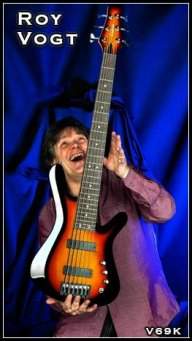
I see nothing wrong with being proud of having worked to achieve a goal. Being an elitist implies you didn't work for it. I worked my ass off for it, trust me, and yeah, it does make me feel more qualified to enter a reading situation than someone like Billy Sheehan who can play circles around me but can't read. Of course, he doesn't care, but how many of us have careers like his? And then you have someone like our buddy Roy Vogt who can hang with Billy AND read, and I'm screwed ;)
 
IMHO, TAB=hobbyist and enthusiast
Notation=professional musician
I know there's a lot of Rock Stars that can't read a lick, but you have to remember that they have won the Music Biz equivalent of the Powerball. I was in a band with a record deal in the late 80s and I can tell you that all those little working gigs reading charts and notation and playing Jazz Tunes made my house payment because the pittance of an advance the label gave us surely wouldn't have.
If you are reading this, you can read music.
 
So stop with this nonsense about reading music being elitist. I'm sick of it, and it's just a lame excuse for not wanting to put in the work. You never see anyone who can read music talking about how much it costs or how elite they are, do you? Nope, only the whiners who resent people for working for it.

We are in complete and total agreement about this, Jimmy Boy. In fact, I would go so far as to state my opinion that tab is a crutch, and ought not to be used by any serious player.

Either learn to read standard notation - and buy the score, if it's available. Or simply train your ear so that you can pick up the part from analyzing the recording - then transcribing, if necessary.

Edit: I now see that I'm on the same page about this as Roy. Good company indeed... :cool:

MM
 
IMHO, TAB=hobbyist and enthusiast
Notation=professional musician
I know there's a lot of Rock Stars that can't read a lick, but you have to remember that they have won the Music Biz equivalent of the Powerball. I was in a band with a record deal in the late 80s and I can tell you that all those little working gigs reading charts and notation and playing Jazz Tunes made my house payment because the pittance of an advance the label gave us surely wouldn't have.
If you are reading this, you can read music.
I'll agree with this. There seem to be a few top session guys who can't read though, but I guess everyone has their place.

It all depends on where you want to be with your playing and if that requires reading or not.

Sure it takes a lot of hard, probably boring and tedious work to be able to sight read. But it would also take a lot of hard work to dig a 20 foot trench in my back yard with a spoon. That doesn't make it a worthwhile use of my time, even if for either option I could give myself a nice pat on the back about how hard I worked. I'm not trying to prove I can work hard as some sort of musician's rite as I get the impression some might be using as some form of ego boost.


But of course if you want to make your living from music and you want reading gigs you'll need to read. That ain't too many people though
 
Well look, I personally think tab is a waste of time when reading takes slightly more effort and tells you way more about what you're playing, but there was this one dude I worked with a long time ago who plays with Brian Howe from the 80's Bad Company now. When I worked with him and he was just coming up, he had totally taught himself from following along with records from tabs. Absolutely brilliant player. Became one of the big guys on the rock scene around here and has been with Brian for about 14 years now.

So it can be done, and while I have knocked it in the past for not giving you any info other than where to put your fingers, there are some people who have made it work for them so I don't knock it nearly as much as I used to.

But you know what? You have to work just as hard to make tab work for you as you do notation, if not harder. He had to follow along with records and couldn't use tabs without them. I had to learn a system of dots and lines, and then I didn't need to follow along with the records anymore. So he spread his work out over time whereas I put most of my work on the front end and was able to coast a little more as time went on ;)
 
90% of the tab's on the net are wrong.
Most are written by people that have no clue. Wrong key wrong notes in a phrase and wrong fingering patters.
If you have a good enough ear to hear where the tab is wrong and correct it, they can be helpful.

The worst thing is learning a song wrong and then having to relearn it.
 
If TAB=hobbyist and enthusiast and that's what you are, there's no harm in staying in your comfort zone. Just know that you'll be cutting yourself off from a lot of the World's Great Music at worst and relying on someone else's opinion of where to play the notes on your bass at best. There are a lot of ways to learn how to imitate that didn't exist even 10 years ago (Youtube, etc.) but to take it to the next level studying reading and theory is what will open a lot of doors really fast.
 
Sure it takes a lot of hard, probably boring and tedious work to be able to sight read.
That's where you're wrong. Only people who never learned to read think that. What is tedious about the whole world of music opening up to you in a way you never dreamed of? The benefits start immediately, too. But unless you've done it, I can't even begin to explain it to you.

But of course if you want to make your living from music and you want reading gigs you'll need to read. That ain't too many people though
That's fine. But if your goal is to make a living from playing music, you can either be a rock star, which happens less to people than winning Lotto and getting hit by lightning on the same day, or you can make yourself available for the reading gigs, which pay considerably better than the non-reading gigs on the average.
 
There are aspects of playing pedal steel that cannot be notated; things like playing a unison on two strings using a pedal and a knee lever, them opening up that unison in such a way as to have contrary motion, ie, bar moves one note up a half step while the other goes down a half step (while the bar moves up)-that's just the first two beats of a complex little piece of voice leading. Find a good pedal steel player and ask for a tour of the E9 neck-it's not a simple as you evidently think it is.
Why can't you just write the notes out, then let the player decide how he or she's going to play it?

Writing out certain things that are unique to the instrument are nothing new in notation. Violins always have bowing instructions along with the notes, we as bass players might get a little instruction from time to time as well. I've seem "T" and "P" indicating a slap part, or a wiggly line to indicate a heavy vibrato, or things like that. I suspect it's the same in steel guitar world as well. I'm sure they have a way of writing out notation that can instruct them exactly what to do with the pedals and the bar. And I'm sure most good pedal steel players don't need the music telling them where to bar or what pedals to push, either...when I give someone a sheet of music, I figure they know how to play their instrument already ;)