While I would agree that A P/J can't get totally nail the phasey Jazz sound for slap, I think it is a good choice for those of us who need the Motown sound, a rock sound, and some funk all in the same set. With my horrible spine, weight has been a consideration for me, and a passive bass with a 1.5" nut width with a flatter C shape and 9.5" - 10" fretboard radius are my sweet spots.
Early this year, I finally found an excellent condition, 1998 Fender CA Series Precision Deluxe which came with a red label 90's Fender case made by SKB. (These basses made only from 1997-1998). This has been the best PJ for my current needs, to date, and I like using an MXR M81 pre-amp/DI pedal to fine tune the sounds for the different styles.
What I like about this model are the following:
* It is relatively light in weight (average 8.75 - to - 9.5 lbs, stock)
* Mine has a barely-perceptible dead spot and only a touch of neck dive--don't know if this is the norm
* It has a combination of vintage and modern features to get the tone I want:
-- An alder body with rosewood fretboard (solid maple necks were also made)
-- VVT controls
-- A fast, not-too chunky, matte-finished Jazz neck with a singing metal truss rod that can be adjusted at the nut, no graphite stiffening bars, clay dot markers, medium frets, and a 9.5" fretboard radius
-- A vintage style, low mass bridge for "the thud"
-- An anodized aluminum pickguard to help with shielding
-- A very thin poly finish that makes the instrument feel better to me
-- A side input jack with plate.
What I don't like are the coarse, Mexi-style, short-shaft tuners, which I am changing to Gotoh Res-O-Lites. I am also replacing the heavy, chrome-plated, brass barrel knobs with Knobeez. I think I can shave almost a pound off the bass with a few changes and remove the trace of neck dive.
Here are some of my sometimes peculiar thoughts on other kinds of P/J basses mentioned in this thread (I've owned or played most of them and, as always, YMMV):
* I owned and heavily played the passive Mexi version of the CA P Special (with must-have mods of upgraded pickups and pots). The previous owner had also played the heck out of it. The construction and parts were not as nice as the US model, and the neck profile was thicker/rounder. The rosewood fretboard kept deforming with changing humidity (not my first MIM Jazz neck to do this). When fretboard end lift set in, as it has in several of my basses over the years, the highest frets had to be shaved down. This model was made for at least five years and can be found at decent prices. Purchasing one of these may cost a bit more than modding a new Squier, but with mods and a good setup, this is a winner. Prices have increased on these over the past several years and one can still find sellers who may price these really low.
* I really like the G&L SB-2, have played four of them, and may eventually order one. My only issues with the G&L SB-2 model is that this model doesn't have a tone control pot, the 1.5" nut neck options are limited to either a 7.25" or 12" radius, and only the really old ones seems to be light in weight.
* I have yet to play the Lakland 44-64 Skyline and would like to try one. I did not bond with the other Precision and Jazz Skyline models I played (found them to be a bit sterile), but will echo comments here that they are well-constructed, if a bit pricey.
* The Carvin SB PJ 4 is another well-regarded option for a passive PJ and are lightweight if not messed with too many options. I played a five string active version that was heaaaavy, due to crazy custom wood choices (many used Carvins are the rejected, bloated dreams of overly-adventuresome people). Note that the nut width on the SB4 is 1.54", the standard neck is oiled, the standard fretboard radius is 14", and the standard controls are now VBT. Some of the options for the SB4 includine a VVT control, different woods and finishes on the body, neck and fretboard, and different fretboard radiuses. Option costs add up quickly. However, Carvin will occasionally have pre-built models on their website at considerable savings (and they will report the instrument's weight).
* I really like the Fender Jazz Bass Special--while the concept may not seem right, it is really fun to play. I prefer it with upgraded pickups and for cutting through a mix on loud rock 'n roll, because it has pronounced mids and 'honks.' This is the famous "Duff" basss, and he played a first-or-second year model with the black-painted Precision-style neck and a SD 1/4 pounder neck pickup and Hot Stack bridge pickup. I had two--one a player and one a minty backup. I sold my player. The JBS has a skinny jazz neck with a thin, 7.25" radius, rosewood fretboard and skinny frets. The softer basswood bodies guarantee neck dive and much wear on most of the used ones up for sale. I like the convient pickup selector switch an the VVT controls. Note that the tone control is a TBX that will not provide vintage tones. Also note that late 80's models often were made with parts lying around, including some lame pickups and a high mass bridge. Some of these later models also had Miami Vice colors. These have been steadily increasing in price for several years.
* The Fender Jaguar bass is an active/passive bass with a ton of tone-shaping that looks cool. For me, it is heavy, perplexing, and has an awkward, unbalanced shape. Older import models had pickup noise issues that the new, USA models have attempted to address.
* I really like the late 80's Hohner P/J bass, if you can find one at a good price before I do.
* I have played many Fender Aerodynes have never totally clicked with this model They have a the thin, basswood, jazz-shaped body that doesn't work with my body shape. The Aerodynes I played were relatively lightweight. The models for the US are a fingerprint magnet that come only in black, have a 7.25" fretboard radius with no fingerboard top inlays, and have fugly smoke chrome hardware that seems to degrade quickly. Japanese models have pretty, transparent colors. The pickups really sound modern and bright to me.
* I have owned a mid-80's passive, basswood, neck-divey, Ibanez Roadstar II PJ. I have played a few of these over the years and can say that I prefer the maple-necked earlier series with the thin, slab body. The nut width was about 1.58" on the ones I played, and the necks are relatively thin and feel great. These Roadstar II basses did not really sit for me in a mix. This may explain that most of them one finds have had the pickups and bridges swapped out, when the real problem, IMHO, was the lack of mass in the bodies. An affordable alternative might be to find a beater '81-'82 Blazer in ash, sen, or mahogany and route a jazz pickup for it, especially if it comes with the vintage DiMarzio split pickup. Prices on Blazers have gone up a whole lot as of late, while Roadstar II prices are all over the map and can generally be had for at least $100 less.
* Another PJ of interest is the rare, late 70's Greco Hard Puncher, which I believe has a sen body. The jump in prices over the last decade for Greco instruments has reached a fever. These are quality instruments, but I would hesitate to pay near four figures for a chipped and rusted Greco with changed pickups, knobs and a bridge.
* There are many oddball Fender active P/Js from the late-80's-to-mid-90's with skinny headstocks, questionable wood choices and body shapes, and dubious pickups and electronics. I owned a mahogany Precision Lyte Deluxe that looked and felt great, but that didn't sound right with any music genre. I discovered that the bridge soapbar pickup was a unique size and would require a custom build to upgrade. The neck on the deluxe model was thin, tung-oiled, and fast, with a 7.25" radius and skinny frets. The bridge was high mass, and the hardware was gilded. This bass felt warm and fast to play and was lightweight, but I constantly had fret buzz issues (probably due to the finish and the climate I live in) and I always fretted out on bends. Other oddballs I've tried are the regular MIJ Precision Lyte, the sad MIM Zone bass, the love-it-or-hate it Cowpoke (with a thin, 1.625" nut neck), and the dreaded JP-90 (sharp edges, poplar, and an annoying sound). Of these, P Lytes seem to be the most popular, and recent prices have reflected this.
* Be advised that the Godin Shifter PJ mentioned earlier has a very flat, 16" fretboard radius and a basswood body.
* The Hot Rodded Precision from 2000ish has a hot jazz pickup, which is cool, and a very punchy sound. However, this bass also has a Precision neck, as do the recent Hot Rod Vintage Precision, the Deluxe Precision, and the reissue Duff Jazz Bass Special models.
Best wishes in your search for a passive PJ with a Jazz neck--I know just how difficult this quest can be, and I will never be done searching!


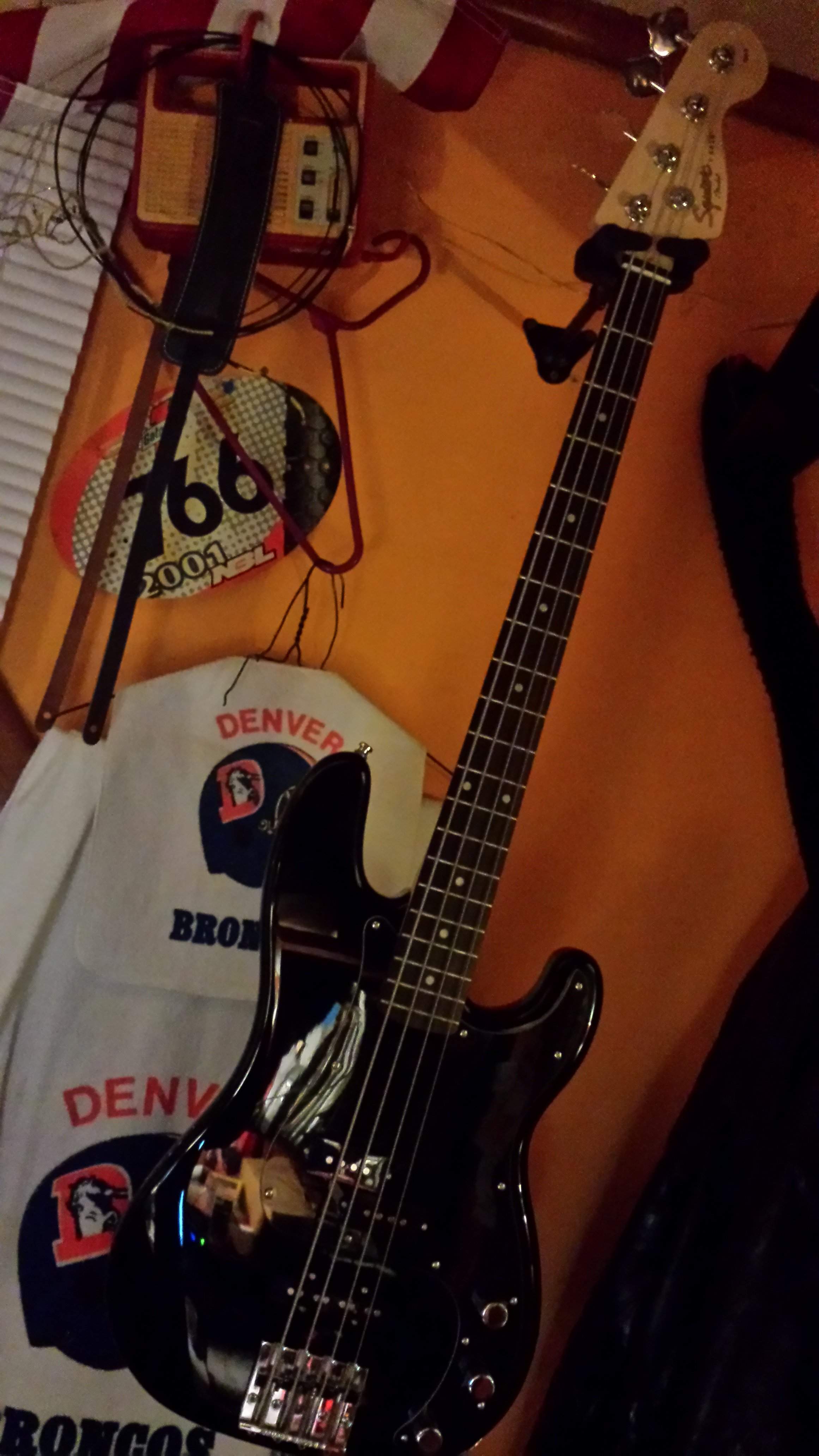





 My two EBMM Sterling 4H's aren't doing it for me in these situations so it's time to say goodbye to one of them which is gathering dust. What has been working surprisingly well is an 80's Ibanez Roadstar P/J with a decent set of pickups. So I'm on the hunt for a well built (preferably American) passive P/J with a 1.5" nut width in the $800 used range and I'm not aware of much. The G&L SB-2 comes immediately to mind but then I draw a blank. It doesn't ultimately need to be P/J, I just need big, deep and warm and much prefer the versatility of 2 pickups, plus that split P fits so well in the music I am playing.
 lol
lol