• TalkBass has been independent since 1998. Add your voice.
    Create a free account to reply to discussions, view embedded media, and browse with fewer display ads.
    Join freeLog in
    Want zero display ads or expanded classifieds tools? Compare plans.

Recording acoustic bass guitar

Hello friends!

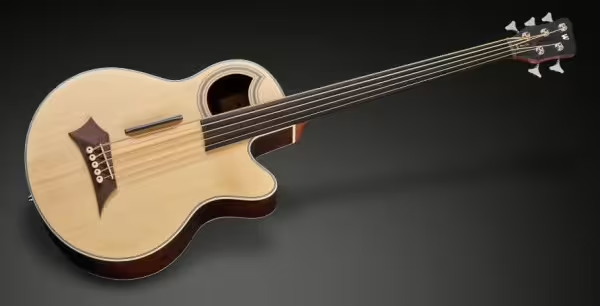
I have a Warwick Alien fretless 5 string acoustic bass guitar that I want to record for an upcoming release that I'm involved with. We record guitars and bass at home, and drums at a "proper" studio. Vocals TBD.

Anyway, recording my usual electric basses is something that I feel I have under control. But when it comes to recording my ABG, I'm not so confident. So I come here looking for advice.

I plan to record one track with the signal from the piezo pickup on the bass. This should work fine the same way that I record my electrics. However, I also want the acoustic sound of the instrument.

I have the following microphones available:
  • Shure SM7B
  • Shure SM57
  • Behringer CB 100 clip-on mic
Which one to use, and how to place them, eludes me.

Picture of the bass in question:

1740230990741.png


Any advice would be much appreciated.
 
That's exactly how I like to do mine - stereo recording, and then piezo and close mic if it has piezo, or close mic and far mic if not.

The thing you want most, I think, for ABG is a large sensitive diaphragm. None of what you have are great, but I'd go with the SM58. I'd place maybe 12"-18" away from the soundhole, pointed straight at it except not from a dead-on 90 degree angle, slightly off to the side. Finicky details, I don't know why, just me, no technical reason, but works for me. I do like the results, especially with true stereo effects like a slight chorus or phase....
 
That's exactly how I like to do mine - stereo recording, and then piezo and close mic if it has piezo, or close mic and far mic if not.

The thing you want most, I think, for ABG is a large sensitive diaphragm. None of what you have are great, but I'd go with the SM58. I'd place maybe 12"-18" away from the soundhole, pointed straight at it except not from a dead-on 90 degree angle, slightly off to the side. Finicky details, I don't know why, just me, no technical reason, but works for me. I do like the results, especially with true stereo effects like a slight chorus or phase....
Thanks for the feedback!

Something I forgot to mention is that I could also get a new mic, if what I have is not appropriate, as long as it is not massively expensive. If so, advice on what to get would be great :)
 
  • Like
Reactions: C Stone
Yeah, the mic is the critical stage here, for sound quality. I went a bit over the top (for an amateur one room studio) with a pair of Shure KSM-32s. Not "massively" expensive, more like "moderately". But still.

I'll let others comment on the current state of things for "bang for the buck" recording mics for acoustic instruments.
 
Last edited:
  • Like
Reactions: eyvindwa
As for "massively expensive", yeah.

I just googled "best acoustic instrument recording mic 2025" - which led me to the

Neumann U 87 Ai Large-Diaphragm Condenser Microphone Nickel

Which runs a mere.... $3,595.00 :eek::eek::eek: hehe
 
  • Wow
Reactions: eyvindwa
Point the SM7B at the sound hole but off axis. Take the 57 and aim it at the neck joint at a perpendicular angle from the 7B - kind of like an "x"

The SM7B will have enough extended low end to get some warmth from the sound hole, the 57 will give you some articulation from the sound board. Then being in the piezo to taste.

Alternately, you could mix the front of the bass - like the top panel where as typical sound hole would be - but you're likely to get a lot of right hand noise from that.
 
Point the SM7B at the sound hole but off axis. Take the 57 and aim it at the neck joint at a perpendicular angle from the 7B - kind of like an "x"

The SM7B will have enough extended low end to get some warmth from the sound hole, the 57 will give you some articulation from the sound board. Then being in the piezo to taste.

Alternately, you could mix the front of the bass - like the top panel where as typical sound hole would be - but you're likely to get a lot of right hand noise from that.
oh yeah, OP did say SM-7B not SM-58, don't know how I made the "B" into an "8". Eyes sometimes want to see what they're expecting to see haha....
 
Now that's funny, about the SM-7B, now that I'm reading it correctly - before I got the 2nd KSM-32, I used my SM7-B as the "far" mice of the stereo pair - I remember thinking it did way more than "just ok" in that role.
 
Out of those three mics, I would use the SM7B.
If you get a new one and don't want to spend alot, try the Electro Voice RE20.
Agreed on both counts.
Something I forgot to mention is that I could also get a new mic, if what I have is not appropriate, as long as it is not massively expensive. If so, advice on what to get would be great :)
The Röde NT-1 is a really good value for a large diaphragm condenser mic. Does it sound as good as a Neumann? Well, no, it doesn’t but it sounds pretty darned good for what it costs. It will be much more sensitive than either the SM-7B or an RE-20 and it’s a great, inexpensive, general purpose studio mic.
 
My best house acoustic recordings were using a RODE NT-1 large diaphragm condenser along with an OKTAVA MK-012 lipstick condenser then depending on your room size/treatment you will just have to try different positions for large condenser mic, with a lipstick condenser I always place it aimed pretty much at the top of the sound hole favoring the fretboard just a bit 8-12-ish inches from the bass and if you want more string noise/attack favor the board. If your bass has DI out you could probably get away with the DI and a decent lipstick condenser then just submix them to your liking. GL!
 
  • Like
Reactions: Lo-E
ive been doing alot of ABG recordings at home now over the past 4yrs, in general start with a large diaphragm condenser mic. (you'll obviously need to be setup with an interface that supplies PP48v) You don't need to 'break the bank' with a high end mic but I'd avoid the low end (sub 200 range) mics. I compared several, including the SR (monoprice tube LDC). While they can all do the job, if this is for a recording you'll want to use your budget accordingly. The 250-500 range will get you a great mic and if you have the budget, a 400-700 range will get you something you can use forever. Rode NT series and the Oktavas are really nice.

I have tried alot of condensers and after alot of A/B testing Ive really grown to love the WA47jr LDC. It's warm and I really like the way it captures the low end of the ABG. Also the WA14 and AT4050 LDC were nice and gave a bit more mid and 'bite' but didnt have that 'full bodied warmth' of the WA47jr.

Ive also compared doing the classic stereo XY and AB setups with the SDC Studio Project C4mkIIs (currently my favorite in the 250-500 range SDC pairs). There is definitely more "stereo spread" with this kind of setup, but for ABG in the mix of a band, a mono LDC will get you great (if not better) results. And if you have a pickup, it can be mixed in too.

Methods:
  • Placing the mic about 16" off the soundboard (approx wrist to elbow distance) will be a good 'starting point'.
  • With your headphones on, move your orientation to the mic and listen to the subtle differences. You'll make out a "sweet spot" that is pleasing to you. Notice: when moving the mic closer to the 12th fret position will give you more detail and "string", moving towards the bridge will deepen/darken the tone. *Don't overlook placing the mic above or below the centerline of the corpus. Im currently placing my mic just above the CL with the capsule tilted just slightly down. (I found it helped avoid/reduced picking up your breathing on the track.)
  • raise mic pre to a level just before you pick up the "noise floor in your space". And obviously adjust for proper gain staging in DAW. (Im always targeting about -18dBFS, but with my ABGs most tracks fall in the -24dBFS range.)
  • Recording in 48k/32float will get you a clean recording with the ability to mix and raise the levels without artifacts or loss.

Hope that helps. Please post your results :thumbsup:
 
Last edited:
  • Like
Reactions: eyvindwa
I've also done two large diaphragm condensers (Rode NT-1s, like mentioned above great value for money, and super low noise), though technically not an ABG but a deep hollowbody electric I recorded acoustically. If you can get two matching mics, stereo image is nice during parts when the bass is exposed.

If you have enough mics and channels, ideally a close mono mic, piezo just in case, and two more distant ones for stereo image and a bit of natural reverb. If you really have a bunch of mics and channels, you could also do the old trick for getting a good one-mic mono drum sound - record a bunch of different close mics at once and pick the best-sounding one afterwards.
 
  • Like
Reactions: C Stone
Thank you all for your input! The album in question is now out, and here's an example of how the acoustic bass ended up sounding:


(start at around 6:00 if the link doesn't take you there directly)

Warning: the music is a bit noisy, so probably not for everyone 😅

nice. stylistically its definitely dense. I too might have opted for a little more 'dry' bass signal (more tone/less room) to 'tighten it up' but the effect makes for a reminiscent/nostalgic vibe for that melody. (aka Led Zeppelin)
 
  • Like
Reactions: eyvindwa