• TalkBass has been independent since 1998. Add your voice.
    Create a free account to reply to discussions, view embedded media, and browse with fewer display ads.
    Join freeLog in
    Want zero display ads or expanded classifieds tools? Compare plans.

Reminiscences of Paul Samwell-Smith

Michedelic

MId-Century Modern
Jun 18, 2013
29,450
72,219
Yucca Valley/Joshua Tree
Not necessarily mentioned as much as his contemporaries, his playing certainly went far beyond roots and fifths in almost a "lead bass" style, especially on that Five Live Yardbirds album with Clapton. But "Shapes Of Things" had some real inspiring lines, as the band prefigured the future with Beck on dual leads.
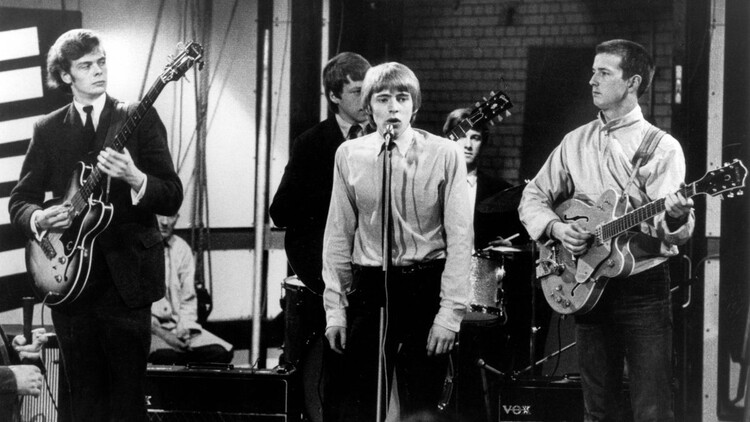

On that "Lost Woman" song, he actually doubles his bass part, I don't think that had been done before, so theoretically, that's the first 'chorused' bass.
The For Your Love and Having A Rave-Up With The Yardbirds albums, as seen in the U.S., didn't exist in the U.K., and were cobbled together from singles, British EP's, and selected tracks from Five Live.
 
Last edited:
Not necessarily mentioned as much as his contemporaries, his playing certainly went far beyond roots and fifths in almost a "lead bass" style, especially on that Five Live Yardbirds album with Clapton. But "Shapes Of Things" had some real inspiring lines, as the band prefigured the future with Beck on dual leads.


On that "Lost Woman" song, he actually doubles his bass part, I don't think that had been done before, so theoretically, that's the first 'chorused' bass.
The For Your Love and Having A Rave-Up With The Yardbirds albums, as seen in the U.S., didn't exist in the U.K., and were cobbled together from singles, British EP's, and selected tracks from Five Live.
Thanks for the Memories!!!!!!
 
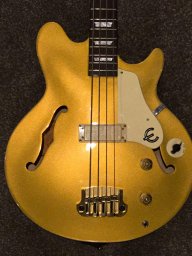
samwell-smith and chas chandler were the reasons why i got a 62 rivoli back in my youth.

the yardbirds seemed to enjoy more success in the US than in the UK.

as @GretschWretch alludes to, they were a massive influence on the US garage punk bands, in particular their rave up version of 'i'm a man'.

the count five's 'psychotic reaction' has the yardbirds written all over it!

great band.

 
Not necessarily mentioned as much as his contemporaries, his playing certainly went far beyond roots and fifths in almost a "lead bass" style, especially on that Five Live Yardbirds album with Clapton. But "Shapes Of Things" had some real inspiring lines, as the band prefigured the future with Beck on dual leads.


On that "Lost Woman" song, he actually doubles his bass part, I don't think that had been done before, so theoretically, that's the first 'chorused' bass.
The For Your Love and Having A Rave-Up With The Yardbirds albums, as seen in the U.S., didn't exist in the U.K., and were cobbled together from singles, British EP's, and selected tracks from Five Live.

That Apple Music article doesn't mention the doubled bass lines in Lost Woman - an unfortunate omission, because they're as creative in their way as the feedback/non-solo that Beck plays in the instrumental section.
The Apple article does describe the IV-V (doubled) bass parts in the choruses but doesn't adequately convey how wacky those bass lines are. In the rave-up section, one line is a pedaled G while the other climbs the neck. They converge for a while and then, in the run-up to the final verse and chorus, they're pedaled G notes an octave apart.


Paul Samwell-Smith​


At age 74 having heard all the great music from the 60s, Paul was way beyond as a bass player. A big influence!

A Yardbirds song that's not widely known, I'M NOT TALKING. At 0:59 seconds into the song and 1:39, Beck goes off into a killer guitar solo and Paul goes off on a fantastic bass run! The 1:39 bass run is the best.

Outstanding bassist! Paul Samwell-Smith (Thanks for this TB thread!)

 
Threads like this are why I love TB. Now I have a whole new music rabbit hole to dive down.
Well, keep in mind the trajectory of the band, and the changes they went through. They started out like many British outfits of that era, young enthusiasts of the exotic American blues music. They had an earlier lead guitarist, Top Topham, who bowed out due to his young age.
Then they picked up Eric Clapton, who was still developing his style. After an initial live album, they were faced with getting a hit single(they really hadn't generated any original material). A manager picked a tune written by Graham Gouldman(a one-man hit factory and eventual member of 10CC), "For Your Love", which apalled blues purist Clapton, he split soon after. They gained Jeff Beck, a blues fan but experimentally-minded. That was their golden era, the 18 months he was in the band.
They had a number of sizable hits, more songs from Gouldman and then some band-written epics, "Shapes Of Things" being one that pre-figured psychedelia. Singer Keith Relf wasn't the best vocalist, but he had charm as a frontman. Unfortunately he had asthma and a drinking problem; one gig in 1966 proved to be disastrous, and Samwell-Smith decided to leave(there were other complications from money and management). Beck's friend, session player Jimmy Page was brought in to take over bass, but soon switched roles with second guitarist Chris Dreja. For a brief moment, they were in overdrive with a dual-lead guitar format, releasing a single that was too ahead of the times, "Happenings…". It was a relative failure, being months before the psych explosion.
Beck had some issues, split, and Page was left to soldier on, exploring the power trio plus vocals format, developing ideas he would later use in Led Zeppelin. The remaining original members bailed after a year, having hit a point of diminishing returns. Page reorganized, the rest is history.


I've read that same sentiment -that Keith Relf was not a great singer-a number of times over the decades. Yet as a kid digging the Yardbirds, I don't think I would ever have thought, 'this song is cool but they need a different singer'.

I suspect the corallary to that would be that hiring Robert Plant as vocalist for the new band was some kind of coup, yet that man's screechy, womanish voice was always one of the things I disliked about the super group.

Band had a good bass player though 🤗
 
Well, keep in mind the trajectory of the band, and the changes they went through. They started out like many British outfits of that era, young enthusiasts of the exotic American blues music. They had an earlier lead guitarist, Top Topham, who bowed out due to his young age.
Then they picked up Eric Clapton, who was still developing his style. After an initial live album, they were faced with getting a hit single(they really hadn't generated any original material). A manager picked a tune written by Graham Gouldman(a one-man hit factory and eventual member of 10CC), "For Your Love", which apalled blues purist Clapton, he split soon after. They gained Jeff Beck, a blues fan but experimentally-minded. That was their golden era, the 18 months he was in the band.
They had a number of sizable hits, more songs from Gouldman and then some band-written epics, "Shapes Of Things" being one that pre-figured psychedelia. Singer Keith Relf wasn't the best vocalist, but he had charm as a frontman. Unfortunately he had asthma and a drinking problem; one gig in 1966 proved to be disastrous, and Samwell-Smith decided to leave(there were other complications from money and management). Beck's friend, session player Jimmy Page was brought in to take over bass, but soon switched roles with second guitarist Chris Dreja. For a brief moment, they were in overdrive with a dual-lead guitar format, releasing a single that was too ahead of the times, "Happenings…". It was a relative failure, being months before the psych explosion.
Beck had some issues, split, and Page was left to soldier on, exploring the power trio plus vocals format, developing ideas he would later use in Led Zeppelin. The remaining original members bailed after a year, having hit a point of diminishing returns. Page reorganized, the rest is history.


Oh wow that Think About It track is killer. It's almost like a Cream song but with Page instead of Clapton on guitar, awesome.
 
Oh wow that Think About It track is killer. It's almost like a Cream song but with Page instead of Clapton on guitar, awesome.
That solo was way beyond what Clapton would even attempt. It was basically a sketch for what Page would do after the spacey middle part of "Dazed And Confused", when Bonham and Jones come back in. In fact, the entire song got an early rough sketch…

Yeah, even though they gave it a shot, the other three were great at what they did early on, but they weren't a good fit for where Page wanted to go. Plus, by '68 they were burned out. Page was very aware of what Jeff Beck had gone off to do with Rod Stewart.
I've gotten less and less impressed with Clapton over the years, starting with 461 Ocean Blvd. Beck was definitely the visionary guitarist in the Yardies, but his weakness was keeping a band together afterwards.
 
That Apple Music article doesn't mention the doubled bass lines in Lost Woman - an unfortunate omission, because they're as creative in their way as the feedback/non-solo that Beck plays in the instrumental section.
The Apple article does describe the IV-V (doubled) bass parts in the choruses but doesn't adequately convey how wacky those bass lines are. In the rave-up section, one line is a pedaled G while the other climbs the neck. They converge for a while and then, in the run-up to the final verse and chorus, they're pedaled G notes an octave apart.


Amazing bass line from an underrated bassist!

The James Gang covered this song for their first album in 1969. The bassist was a guy named Tom Criss who played a Gibson EB-3 in the style of Jack Bruce. Please advance to 3:00 for one of the most underrated bass solos in hard rock! Bonus that Tom Criss and pre-Eagles Joe Walsh (on guitar and vocals) tuned to D Standard.

The James Gang version of this song song taught me that I can drone on one of my strings while playing a melody on the highest string at the same time. I took a lot of inspiration from that over the years. But Paul Samwell Smith did it first, so my inspiration really came from him! :D
 
Last edited:
  • Like
Reactions: Guitalia and jerry
Amazing bass line from an underrated bassist!

The James Gang covered this song for their first album in 1969. The bassist was a guy named Tom Criss who played a Gibson EB-3 in the style of Jack Bruce. Please advance to 3:00 for one of the most underrated bass solos in hard rock! Bonus that Tom Criss and pre-Eagles Joe Walsh (on guitar and vocals) tuned to D Standard.

The James Gang version of this song song taught me that I can drone on one of my strings while playing a melody on the highest string at the same time. I took a lot of inspiration from that over the years. But Paul Samwell Smith did it first, so my inspiration really came from him! :D

On "Lost Woman" Paul double tracked his dual parts, not play notes at the same time. On the main riff, which was, umm, heavily appropriated from Snooky Pryor…

…he starts out as a standard single bass, then a second identical line is faded in, in a 'chorus' manner.
When they get to the middle jam part, one bass track is a quick rhythmically picked root note, the other bass track matches Chris Dreja's minor riff, played slower, while Keith Relf goes off on harmonica and Beck does feedback drones and slashing power chords.
What Criss was doing(and I remember it from back in the day, but I think I had already heard "drone bass" somewhere else)was based on what Samwell-Smith had done, but with an entirely different approach.

They did do the original song live, on a radio broadcast, with a bare bones arrangement…
 
Last edited:
  • Like
Reactions: MrAB4003
Amazing bass line from an underrated bassist!

The James Gang covered this song for their first album in 1969. The bassist was a guy named Tom Criss who played a Gibson EB-3 in the style of Jack Bruce. Please advance to 3:00 for one of the most underrated bass solos in hard rock! Bonus that Tom Criss and pre-Eagles Joe Walsh (on guitar and vocals) tuned to D Standard.

The James Gang version of this song song taught me that I can drone on one of my strings while playing a melody on the highest string at the same time. I took a lot of inspiration from that over the years. But Paul Samwell Smith did it first, so my inspiration really came from him! :D

That was one of "the" basslines to know when I first started in 70/71. Samwell Smith was such a great producer too.
 
  • Like
Reactions: MrAB4003