• TalkBass has been independent since 1998. Add your voice.
    Create a free account to reply to discussions, view embedded media, and browse with fewer display ads.
    Join freeLog in
    Want zero display ads or expanded classifieds tools? Compare plans.

Double Bass Repair broken neck on upright bass

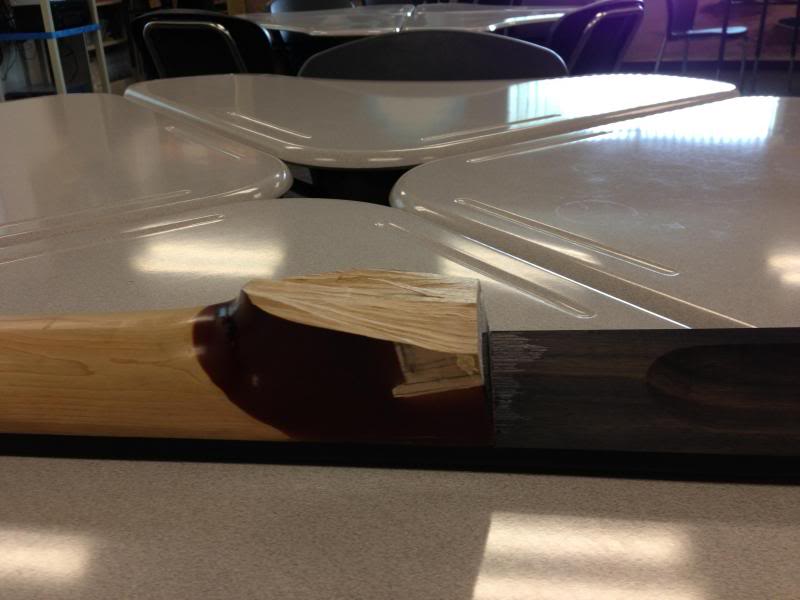
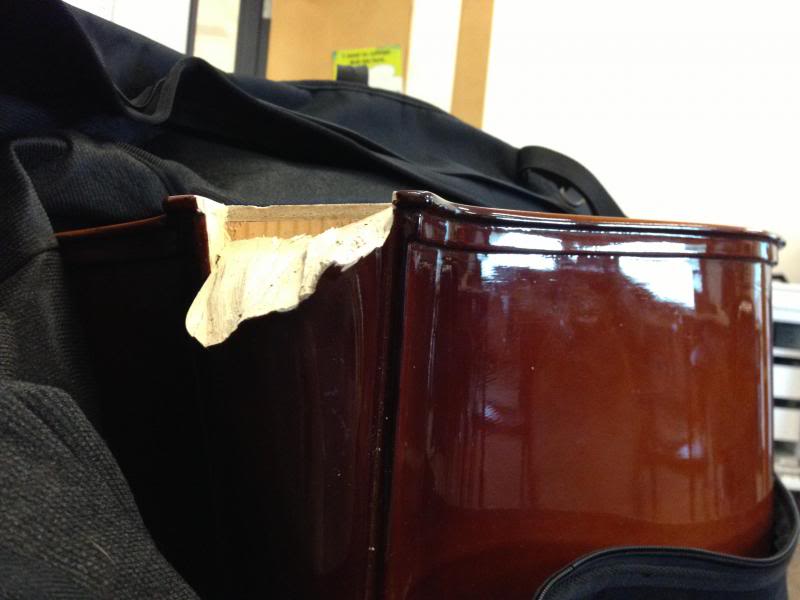
I've been tasked with repairing an upright bass for my school's band director. The neck is snapped right off.

How would you go about repairing this? It's broken along the grain, so I'm thinking that it should make a decent glue joint with minimal clean up (I have some T-88 structural epoxy on hand).

Do I need to go further & plane/chisel the pocket out & replace the removed wood? That seems like overkill and a good way to introduce error into the joint.

IMG_0186_zpsb6bcbe0d.jpg
[/URL][/IMG]

IMG_0185_zps14b332e7.jpg
[/URL][/img]

IMG_0182_zpsd7062cc0.jpg
 
There's a little bit of splintering. I haven't really had a chance to check the fit closely. I'm taking it home today. Once I get it in my shop, I'll clean out the splinters & test the fit (with some clamps, probably, to see how tight it is).

My gut says epoxy as is should be strong enough. Just checking to see what the experts think. I've repaired furniture pieces before, but I don't think I've done anything that will have to take the kind of stresses a neck like this will.
 
First, go to the repair/setup sub forum on the double bass side of the site. Those guys will have solid advice and experience to share. With the amount of force pulling on a double bass neck if it broke there once it will break there again. Coupled with the fact that this is most likely a cheaper Chinese bass the wood is probably questionable to begin with and if that's the case its certainly possible to break again close to the same spot in the future. Just glue alone isn't gonna cut it for a long term repair. I would find a large diameter dowel of some good hardwood to pin the repair in at least 2 or even three spots to counteract the shearing forces against that area. Epoxy would be good if you are missing material from the break but if everything still fits tight I would go with yellow glue personally.
 
  • Like
Reactions: DJ Bebop
I'll check the other forum. Didn't realize that was there... Thanks.

I thought about pinning with a dowel, too, but I have no idea how I would line everything up straight, unless I clamped it together & drilled right through the back of the neck's tail (director said he really doesn't care how it looks, so that might be an option).

It's almost certainly a cheap, student-model bass. The neck seems to be some kind of maple, though.
 
  • Like
Reactions: DJ Bebop
If you want to line it up good you could hammer a small brad nail in the pocket where you wanna pin it, cut the top off to leave a sharp pin top and then press the neck in position. If done right you should have a little poke mark. Pull the nail and then you have two center points to drill pins. No drill marks on the outside
 
No, no, no. Do not put metal into the neck joint, first of all. Second, pinning the neck is a subject of some controversy. Many believe that by removing original wood from the neck heel to insert a dowel you end up weakening what is left of the original wood. When the glue eventually fails, you will be left with a weakened neck with a nice fat pivot in the middle of the heel.

Some luthiers have reported success in using three or more chopsticks as pins, as the wood is strong, fibrous and flexible. In any case, to pin the neck heel properly the fingerboard will have to come off. If that is a Chinese cheapo, God only knows what kind of glue it's attached with.

Leave the yellow glue on the shelf.

James Condino, who's fixed many neck heel breaks, told me once that strong hide glue applied properly should be enough to hold that break closed. Other folks say that marine epoxy can do the job while others say epoxy's tendency to creep over time means eventual irreversible failure.

Sorry to be Debbie Downer, but that bass may be toast. Is there a bass or violin luthier nearby you could bring it to for an in-person inspection and maybe even some free advice?
 
  • Like
Reactions: DJ Bebop
If it s a Chinese cheapy, you don't have much to loose. The advantages of hide glue are that is strong, does not creep, can give a less visible repair, and it is possible to open the joint again if you get it wrong. The last may be difficult in this case. The disadvantages are that you have to have a glue pot and know what you are doing when mixing it and that it has a very fast set time.

I have heard good things about West System's epoxy, specifically that it does not have creep issues. Epoxy will have somewhat better gap filling abilities. It also has a slower set time than hide glue. The down sides are a more visible glue line and that you only get one shot at the repair.
 
Hi.

Not the easiest of repairs when starting the wonderful journey on DB repairs, that's for sure.

How much time are You willing to spend on it?
How severe will the blame on You be when you botch it?

Even if it holds for a year or so, in the end YOU will be the one who repaired it incorrectly, and even during the time it does hold, there will be several people who will question the method YOU used and claim it ruined the instrument.
THAT I can assure You from personal experience :).


IMLE/IMHO the quick and dirty repair can be only pulled off by a competent luthier with a good tool compliment, not to mention the skills to use them.

Unless You use a wood screw through the FB, THAT can be done by anybody :D.

Sure, You can squirt some epoxy in there and clamp it, but more likely than not it will either not hold, or the alignment will be off.
With epoxy or white glue used, that'll mean that the re-repair is impossible without crafting a new neck.
With hide glue, You'll get a second chance.

I'd try to either steam the heel or the FB off (most likely the FB after viewing the damage in person) and use the chopstick method kungfusheriff eplained earlier.

Even though I do love CCB's and BSO's in general, there's no need why they couldn't be used as somewhat disposable practice-pieces, and repaired with using correct methods.

Good luck.

Regards
Sam
 
Well applied hot hide glue may well hold the joint together, but usually the rest of the daily forces and abuses that we put our basses through will win the battle and break it again. Hot hide glue can also be taken apart later and corrected if neede or you don't get a good fit. With epoxy, some would claim the mechanical strength will work well, but you'll compromise the joint for all eternity and won't have any second chance options for you or farther down the line. Unless you make a tapered dowel in a tapered pocket- all out of end grain, so that the movement is in the same plane as the rest of the neck, you may actually weaken the neck. A common hardware store dowel throught the whole thing tends to give the false sense that it strengthens things, but the perpendicular grain actually tends to move counter to the rest of the neck so everything is weaker. I see a lot of those prior repairs that eventually fall apart.

Often for a cheap student import bass like this, hardware like metal bolts or lag screws is a "necessary evil". Try to do the best you can and recognize that it was never designed to last 100 years. Whatever choice you do end up with, pleeeeaaaasseeeee at least take the fingerboard off first so you do not give it the lowbrow drywall screw throught the ebony fingerboard "fix". A visually rough heel is one thing, but going through the fingerboard is a whole different level of poor choices and one that can affect the playability of the bass.

On the other hand, have you ever seen how fascinating it is to watch a broken double bass set on fire and burned up??????:hyper::):smug: They will all eventually wind up in the landfill.....

j.
www.condino.com
www.kaybassrepair.com
 
  • Like
Reactions: JBarz
James, thanks for weighing in. I apologize if I misunderstood and/or misrepresented the advice you gave me.

My first major repair was a '39 King with a bunch of metal through the neck heel and into the block that was intended to repair a similar break, among other problems. It barely worked, but there wasn't much I was capable of doing about it considering my skill level and how badly the bass had been messed up.

RSB, you don't need a glue pot to effect decent repairs with hide glue. I've done pretty well with a baby food jar, a saucepan and a digital probe thermometer. It's a redneck rig but it's a decent fake double boiler.
 
Well applied hot hide glue may well hold the joint together, but usually the rest of the daily forces and abuses that we put our basses through will win the battle and break it again. Hot hide glue can also be taken apart later and corrected if neede or you don't get a good fit. With epoxy, some would claim the mechanical strength will work well, but you'll compromise the joint for all eternity and won't have any second chance options for you or farther down the line. Unless you make a tapered dowel in a tapered pocket- all out of end grain, so that the movement is in the same plane as the rest of the neck, you may actually weaken the neck. A common hardware store dowel throught the whole thing tends to give the false sense that it strengthens things, but the perpendicular grain actually tends to move counter to the rest of the neck so everything is weaker. I see a lot of those prior repairs that eventually fall apart.

Often for a cheap student import bass like this, hardware like metal bolts or lag screws is a "necessary evil". Try to do the best you can and recognize that it was never designed to last 100 years. Whatever choice you do end up with, pleeeeaaaasseeeee at least take the fingerboard off first so you do not give it the lowbrow drywall screw throught the ebony fingerboard "fix". A visually rough heel is one thing, but going through the fingerboard is a whole different level of poor choices and one that can affect the playability of the bass.

On the other hand, have you ever seen how fascinating it is to watch a broken double bass set on fire and burned up??????:hyper::):smug: They will all eventually wind up in the landfill.....

j.
www.condino.com
www.kaybassrepair.com


+1. Not to mention that epoxy "creeps". This is probably not an issue here, but is there ever a reason to not use hot hide glue? Getting the fingerboard off may seem daunting, but it will make fitting the break back together so much easier that it will be well worth the trouble.
 
I'm a huge fan of West System epoxy. It penetrates (though maple is notoriously tight-grained), won't creep, and that joint will be there for the ages if properly done. I wouldn't blind-dowel, as you've got a very clean break and I don't know how likely it is that the joint will mate up well without a slight sliding motion, which would be prevented by the dowel(s). The big trick will be in devising some sort of jig to hold everything aligned and secure during clamping.

PM me if you need more info on West.
 
I have a set of wood dowel tap and die thread makers. I'm considering using them for the next broken neck I have to deal with. The extra "purchase" of the threading would allow better grain to grain orientation. Also, I make my own dowels. This will allow me to choose a wood that has good properties for this application. The hardest wood might not be the best. Hide glue might work it's way into a softer wood better. Thus a stronger joint repair.
 
  • Like
Reactions: james condino
Wow. Lots to consider. And here I was thinking it'd be a quick & easy repair.

I have several years woodworking experience, but I've just started getting into instrument making. I built an electric bass by taking the neck & parts from my old student model thing & making a new cherry body for it. I hope to make some guitars & basses from scratch, and I really want to try my hand at making an EUB.

I don't think the director is looking for any miracles. The bass is unusable as is--if I get it playable & it lasts a year or two, that's better than nothing.

Don't worry--I won't use any metal... I considered a dowel or two, but that seems to be more trouble than its worth, and I agree with the person who said dowels are more a placebo than anything. There'd be very little long grain to long grain contact, so little added strength.

I've used hide glue in the past--both hot hide & the bottled liquid hide. Liquid hide glue is one of my favorites for building small tables and other pieces for some of the reasons listed here, including repairability. I have some hide glue granules on hand and might go that route (I use a glass jar in a $7 hot pot w/water as a poor man's glue pot).

Does anyone think it would make sense to remove some wood, make two flat, smooth, parallel surfaces, and add a small block of maple or something to replace the wood taken, rather than just gluing to the rough, broken faces? It'd certainly be more work, but I think I could do it. I'd clamp the pieces together & mark some parallel lines, then cut to those with chisels & planes (I'm primarily a hand tools guy anyway).