
Some other boutique E or B strings also have the 36.5" scale, including the special order B strings Ken Smith gets from GHS; and I think La Bella as well (36.5" or 36.75") to specifically fit traditional Fender-style instruments with 34-inch scale, top-load plate bridge, and 4-in-line tuners.I've researched this particular bass enough to know the low B needs to be between 37" and 37.75" in winding length to fit properly thru-body. "Long Scale" by most major manufacturers (GHS, Ernie Ball, D'Addario, Dunlop, Rotosound, SIT, etc.) are 37"-37.25" these days, so that should fit this bass just fine. The only notable exception is Elixir, whose "long scale" is 36.5", which is long enough for top-loading but probably a bit too short for thru-body on this bass.

Enjoy the benefits of a premium membership!
Upgrade Account
-
TalkBass has been independent since 1998. Add your voice.
Create a free account to reply to discussions, view embedded media, and browse with fewer display ads.
Join free Log in
Want zero display ads or expanded classifieds tools? Compare plans.
You are using an out of date browser. It may not display this or other websites correctly.
You should upgrade or use an alternative browser.
You should upgrade or use an alternative browser.
Replacing new strings question.
- Thread starter Just go for it
- Start date
More options
Who Replied?


Is there something special about stringing this bass? Take the old strings off, put the new strings on, wind 'em up to pitch, stretch 'em out, wind 'em up to pitch, stretch 'em out, wind 'em up to pitch, stretch 'em out, wind 'em up to pitch, good to go.
You're absolutely right, but I thought some extra tips would make it even easier.

You're absolutely right, but I thought some extra tips would make it even easier.
There are plenty of resources available on this forum or on YouTube regarding the mechanical process of installing bass strings properly.
One thing you do need to decide for yourself is what brand/type of strings should go on that bass of yours to suit your own personal playing style and tonal goals based on the type of music you play. One's tonal goals and string preference are a very subjective thing.
D'Addario EXL-170 are my favorites on the BB735a
There you go...
So, your original question was about how to go about installing a new set?
You might want to check out "Hardware, Setup & Repair" for the "how to" instructions.
By the way, as I mentioned before, if you want to install a new set of D'A EXL170-5, you can get the standard "long scale" instead of having to look for "super long".
By the way, as I mentioned before, if you want to install a new set of D'A EXL170-5, you can get the standard "long scale" instead of having to look for "super long".
Why does Yamaha recommend this type of string?
I just put a set of Cobalt Flats on my BB435. First set of these I've ever played. It really sounds like a different Bass. XL's last about 2 months for me and then die a very quick death.When I get my own BB735A, the first thing I'll be doing is to change out those strings. Not a fan of D'A XL Nickels myself.

The hypothesis is that if you somehow twist the string while putting it on it will affect its tone. So when putting it on be extra careful as you lay it down over the saddle, through the nut, and into the tuning peg so as not to twist it. Can't hurt.I read something about twisting and making the strings sound dead. Can someone tell me more about that. (hence my question)
(sorry for my bad English)
Thanks for your contribution, good information.The hypothesis is that if you somehow twist the string while putting it on it will affect its tone. So when putting it on be extra careful as you lay it down over the saddle, through the nut, and into the tuning peg so as not to twist it. Can't hurt.
Yes, I can see that because the body of this bass is an Alder/Maple/Alder sandwich, this might drop the low mids response just enough and have that little extra zing on the top end that D'A XL's might not sound the best on this bass. Yes, for this particular bass, I would choose a string known for a little more mids or roundness in their characteristic tone, starting with GHS Boomers and going from there.
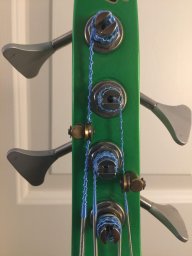
I read something about twisting and making the strings sound dead. Can someone tell me more about that. (hence my question)
(sorry for my bad English)
The string will have a natural bend to it from being coiled. I make sure that the string curves in the up/down direction when installed, not side to side on the bass. Effectively, before I tighten the string, it will bow out away from the bass - as the natural bow of the string from it’s packaging.
After the string is in place, I like to give it a little push over the bridge saddle so it seats in there a little better. Not too hard. Not trying to kink the string.
And yes, if you get the ball end locked in to the bridge, don’t twist the string.

I think this is definitely something to be aware of. A twisted string might lose some overtones/harmonics or not intonate properly. On the other hand, you don't need to be afraid of destroying the string accidentally... just wiggle it a bit once the ball end is seated and before you string it through the tuner to see whether there is a twist or not.The string will have a natural bend to it from being coiled. I make sure that the string curves in the up/down direction when installed, not side to side on the bass. Effectively, before I tighten the string, it will bow out away from the bass - as the natural bow of the string from it’s packaging.
After the string is in place, I like to give it a little push over the bridge saddle so it seats in there a little better. Not too hard. Not trying to kink the string.
And yes, if you get the ball end locked in to the bridge, don’t twist the string.
The slight pushing it over the bridge saddle (and potentially the same over the nut) is to correctly establish the witness points.
Good luck!
I think this is definitely something to be aware of. A twisted string might lose some overtones/harmonics or not intonate properly. On the other hand, you don't need to be afraid of destroying the string accidentally... just wiggle it a bit once the ball end is seated and before you string it through the tuner to see whether there is a twist or not.
The slight pushing it over the bridge saddle (and potentially the same over the nut) is to correctly establish the witness points.
Good luck!
Thanks!

Ric5
Inactive
- Jan 29, 2008
- 29,772
- 30,452
- Disclosures
- I like 5, 8, 10, and 12 string basses
Does anyone have any good advice on replacing strings on a 5 string trough body bass? Thanks in advance.
1 - detune
2 - then remove old strings
3 - install new strings
4 - trim ends
5 - tune it up
6 - play it
then sell the old strings on ebay for $25
Hi The strings will twist when you tighten turn the tuners to tighten the string. Usually it gives a chorusy sound. after you wrap the string loosen it a few turns and make sure the ball end is loose. usually you will see it untwist. Then tighten it again.. Hope this helps...I read something about twisting and making the strings sound dead. Can someone tell me more about that. (hence my question)
(sorry for my bad English)

I've owned both a BB435 and a BBP35 - if you want to string thru the body you need Extra Long strings. The factory strings are D'Addario EXL170-5
That said, talk to almost any luthier and they will tell you that stringing through the body is a waste of time.
I suggest you watch this entire series of videos by Fodera, especially on setting the truss rod
https://www.youtube.com/playlist?list=PLdpbBpdDIbuGhkAcXZEgjtBUS2f4qumwy
That said, talk to almost any luthier and they will tell you that stringing through the body is a waste of time.
I suggest you watch this entire series of videos by Fodera, especially on setting the truss rod
https://www.youtube.com/playlist?list=PLdpbBpdDIbuGhkAcXZEgjtBUS2f4qumwy
Last edited:

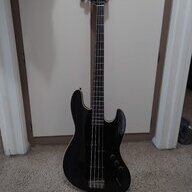
It is a Yamaha bb735a with D'Addario EXL-170-5SL Product number: 133633 strings
I dint read others reply here, but less worry on BB 735(435)through body load since she has less load angle than other bass which has 90 degree angle.
But you need check the silk thickness on B string ball end (like EB group flat B and Cobalt flat B string ) , maybe need trim to make it load through ferrule freely.
Hopehelp


