
Just so I understand: these are one piece necks without a glued on fretboard?
Sire website says roasted maple neck with matching fretboard

TalkBass has been independent since 1998. Add your voice.
Create a free account to reply to discussions, view embedded media, and browse with fewer display ads.
Join free Log in
Want zero display ads or expanded classifieds tools? Compare plans.
Just so I understand: these are one piece necks without a glued on fretboard?

So the back of the neck doesn't have the transitioning color on it?Sire website says roasted maple neck with matching fretboard



Nada, which is curious and raises the question of how deep into the neck the dark roast is? Certainly can't tell from the pix--maybe once it's in the flesh....So the back of the neck doesn't have the transitioning color on it?
Nada, which is curious and raises the question of how deep into the neck the dark roast is? Certainly can't tell from the pix--maybe once it's in the flesh....


The wood is roasted before it is made into a neck.And......don't forget that the neck and headstock are gradually thinner so depending how the heat is applied, is likely to absorb more quickly and deeply on the headstock and first few inches of the neck?
Just an observation and hunch, based on a 12 months per year BBQ climate.......lol
Thanks for the article. Interesting passage: "This colour change occurs due to chemical reactions between the wood’s proteins and its natural sugars, and torrefied maple can range from soft amber to a deep reddish brown that is closer to cherry or even walnut." It would seem this bass has that going on in spades, but multiple shades in one guitar neck? Would be telling, perhaps, to have seen the rough-cut hunk 'o maple that this neck came from.The “roast” is necessarily 100% deep into the neck. All the way through. That’s the whole point. The process takes place in a vacuum kiln, which in addition to preventing combustion draws the moisture out of the entire piece of lumber, not just the surface. This is a pretty good article that does a good job explaining the process as it pertains to our interests. All about… Torrefaction | Guitar.com | All Things Guitar

You lucky dog! That bass is gorgeous!So my long-awaited D5 finally showed up at Sweetwater. In reviewing the pix (see enclosed) before I finalize the purchase, however, I noticed that there appears to be a huge variation in color--much darker--from the headstock down into the seventh fret. Coloration on the back of the neck looks pretty uniform. My SW rep says he sees this occasionally on roasted necks, that it does not present any structural issues, is within spec and has been cleared by their set-up team. I'm no luthier and I trust their expertise, but it would seem that the neck wasn't uniformly dried, which could affect stability and possibly sound. Structural/sound concerns or just an aesthetic consideration? Appreciate any thoughts. Thanks.
View attachment 4585861 View attachment 4585858


That’s essentially a unicorn/one-of-a-kind bass. It’s really special looking. Congrats. I hope you love it.So my long-awaited D5 finally showed up at Sweetwater. In reviewing the pix (see enclosed) before I finalize the purchase, however, I noticed that there appears to be a huge variation in color--much darker--from the headstock down into the seventh fret. Coloration on the back of the neck looks pretty uniform. My SW rep says he sees this occasionally on roasted necks, that it does not present any structural issues, is within spec and has been cleared by their set-up team. I'm no luthier and I trust their expertise, but it would seem that the neck wasn't uniformly dried, which could affect stability and possibly sound. Structural/sound concerns or just an aesthetic consideration? Appreciate any thoughts. Thanks.
View attachment 4585861 View attachment 4585858


Not at all. I love it.So my long-awaited D5 finally showed up at Sweetwater. In reviewing the pix (see enclosed) before I finalize the purchase, however, I noticed that there appears to be a huge variation in color--much darker--from the headstock down into the seventh fret. Coloration on the back of the neck looks pretty uniform. My SW rep says he sees this occasionally on roasted necks, that it does not present any structural issues, is within spec and has been cleared by their set-up team. I'm no luthier and I trust their expertise, but it would seem that the neck wasn't uniformly dried, which could affect stability and possibly sound. Structural/sound concerns or just an aesthetic consideration? Appreciate any thoughts. Thanks.
View attachment 4585861 View attachment 4585858
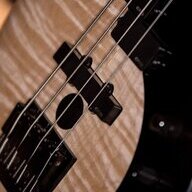
So my long-awaited D5 finally showed up at Sweetwater. In reviewing the pix (see enclosed) before I finalize the purchase, however, I noticed that there appears to be a huge variation in color--much darker--from the headstock down into the seventh fret. Coloration on the back of the neck looks pretty uniform. My SW rep says he sees this occasionally on roasted necks, that it does not present any structural issues, is within spec and has been cleared by their set-up team. I'm no luthier and I trust their expertise, but it would seem that the neck wasn't uniformly dried, which could affect stability and possibly sound. Structural/sound concerns or just an aesthetic consideration? Appreciate any thoughts. Thanks.
View attachment 4585861 View attachment 4585858

Mmm. I love charcoaled marshmallows. I realize I’m in the minority, but I catch ‘em on fire on purpose.Thanks. My weak analogy is roasted marshmallows: big difference in taste and texture between golden brown and charcoaled.