
Enjoy the benefits of a premium membership!
Upgrade Account
-
TalkBass has been independent since 1998. Add your voice.
Create a free account to reply to discussions, view embedded media, and browse with fewer display ads.
Join free Log in
Want zero display ads or expanded classifieds tools? Compare plans.
You are using an out of date browser. It may not display this or other websites correctly.
You should upgrade or use an alternative browser.
You should upgrade or use an alternative browser.
Rock n Roll lost something after 1959
- Thread starter ElectroVibe
- Start date
More options
Who Replied?

There is truth in talking about youth learning rock, rock kinda "peaked" somewhen (we r here friendly arguing about the exact peak, but only by 10 or 15 years). So there is new rock, but it is heavily influenced by old music, and it is mostly not super popular.
This was true of me as a teen in the 80s, most of the hit parade stuff, I just didn"t like it. Then I found old Led Zeppelin and Black Sabath and became obsessed.
Interesting (to me) thing is many of my age range can't follow my taste in music, and my theory is asking them what their parents listened to. If they didnt hear any Elvis as a kid seems to explain it.
Grunge was great, for a very brief time, rock made a comeback, and it was a creative one. Sad it did not last.
Now my daughter expands my horizons with obscure indie rock bands. Some of them are amazing, and I direct her to the influences they clearly have from the old greats.
Few of these new players are in anyway popular, Rock has peaked, maybe a few times, but to really rock, you need a multigenerational overview of certain music. So its now obscure instead of popular, and I don't think that is gonna change.
This was true of me as a teen in the 80s, most of the hit parade stuff, I just didn"t like it. Then I found old Led Zeppelin and Black Sabath and became obsessed.
Interesting (to me) thing is many of my age range can't follow my taste in music, and my theory is asking them what their parents listened to. If they didnt hear any Elvis as a kid seems to explain it.
Grunge was great, for a very brief time, rock made a comeback, and it was a creative one. Sad it did not last.
Now my daughter expands my horizons with obscure indie rock bands. Some of them are amazing, and I direct her to the influences they clearly have from the old greats.
Few of these new players are in anyway popular, Rock has peaked, maybe a few times, but to really rock, you need a multigenerational overview of certain music. So its now obscure instead of popular, and I don't think that is gonna change.

I feel that the further back you go, closer to the blues and jazz era, when many studio cats were seasoned jazz players, there are more examples of a swing feel in the music. Not a bad thing, but definitely a mutation has occurred.
With those cats in mind ….
This was a bridge to the past in a modern context at the time in 1959. These session players were all schooled in Jazz and Big Bands.

The Platters. Elvis Presley. Jerry Lee Lewis. Little Richard. Mahalia Jackson.
There was just more depth in some of the music.
There was just more depth in some of the music.

There was depth in some of the music...and some of that music was fluff and dreck.The Platters. Elvis Presley. Jerry Lee Lewis. Little Richard. Mahalia Jackson.
There was just more depth in some of the music.
Same thing for all the time since then and up to present time.
There was depth in some of the music...and some of that music was fluff and dreck.
Same thing for all the time since then and up to present time.
But this music was also impacting history. Changing people.

But this music was also impacting history. Changing people.
That's not exclusive to one period of time. Music always has had that effect.

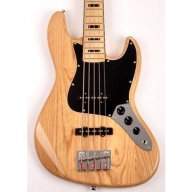
Bass playing, and especially electric bass playing, obviously, evolved a great deal after Leo introduced his Precision fretted bass in the 1950's. Beyond the popularization of a brand new type of instrument, evolving recording techniques also had a big impact - Ron Carter has said that his own playing (on upright, naturally) evolved because it became easier to hear the bass when it was recorded with newer methods and technologies. So he could play what he wanted to and be heard (cue choir of angels  ) Not hard to see why, for a lot of bass players in particular, the 50's were not where it's at.
On the other hand, famed record producer/talent scout John Hammond (Billie Holiday, Charlie Christian, Aretha Franklin, Bruce Springsteen, SRV, and so many more [Wow!]) long bemoaned the introduction of stereo recording techniques, feeling that overall the change from capturing a performance to instead building up tracks and mixing and tweaking took something away from the music. It's certainly a difference, in any case, and perhaps relates to the OP point.
I actually tend toward the Hammond view myself, sort of. A lot of my favorite music and favorite recordings are simply about capturing a peformance - there's something about that live interaction that can't quite be replicated with individual multitracks. Then again, there's Sgt Peppers, Steely Dan, and on and on, genuinely great records not done as a performance. So all roads lead to Rome I always say. But that live element, as heard in those 50's recordings, can bring a certain snap, crackle, and pop to the proceedings.
) Not hard to see why, for a lot of bass players in particular, the 50's were not where it's at.On the other hand, famed record producer/talent scout John Hammond (Billie Holiday, Charlie Christian, Aretha Franklin, Bruce Springsteen, SRV, and so many more [Wow!]) long bemoaned the introduction of stereo recording techniques, feeling that overall the change from capturing a performance to instead building up tracks and mixing and tweaking took something away from the music. It's certainly a difference, in any case, and perhaps relates to the OP point.
I actually tend toward the Hammond view myself, sort of. A lot of my favorite music and favorite recordings are simply about capturing a peformance - there's something about that live interaction that can't quite be replicated with individual multitracks. Then again, there's Sgt Peppers, Steely Dan, and on and on, genuinely great records not done as a performance. So all roads lead to Rome I always say. But that live element, as heard in those 50's recordings, can bring a certain snap, crackle, and pop to the proceedings.
So, if you want to play the G/C/D major scale walking lines or the upright slappa-da-bass style then there'y'go, but what came after is something else.
Dryly … You forgot E and A Major keys, 4/4, 12-bar progressions and shuffles.

Them too.Dryly … You forgot E and A Major keys, 4/4, 12-bar progressions and shuffles.
Though major scales and 4/4 are generic and span genres.
There was depth in some of the music...and some of that music was fluff and dreck.
Same thing for all the time since then and up to present time.
What music? ....the music of the 40's and 50's?But this music was also impacting history. Changing people.
You don't think the music of the 60's was impacting history?....changing people? .....really?

Diversity. That is what set the music apart. And if that is what Sha Na Na was about, then they were certainly on to something great. I've never listened to them but maybe I'll pay more attention to people like that.
And it's sad if they weren't cool. No, wait a minute. It's really not. Cool is overrated.
Rock music died in the 1960s. It had one face and they all looked the same.
And it's sad if they weren't cool. No, wait a minute. It's really not. Cool is overrated.
Rock music died in the 1960s. It had one face and they all looked the same.
Rock music just started getting interesting in the 1960s.
Sad that you can't appreciate it but to each his own. I still eat cold pizza and like it.
Sad that you can't appreciate it but to each his own. I still eat cold pizza and like it.

Rock music died in the 1960s. It had one face and they all looked the same.
Rock'n'Roll may have been overtaken by events at the end of the '50s, but rock in the wider sense was just finding its feet in the early '60s. By the end of the '60s the diversity was heading off the scale, and has continued to expand ever since.
Rock'n'Roll may have been overtaken by events at the end of the '50s, but rock in the wider sense was just finding its feet in the early '60s. By the end of the '60s the diversity was heading off the scale, and has continued to expand ever since.
I think pop and R&B got more interesting in the 60s.
Rock music grew explosively in the 60's and it's musical diversity became huge.Diversity. That is what set the music apart. And if that is what Sha Na Na was about, then they were certainly on to something great. I've never listened to them but maybe I'll pay more attention to people like that.
And it's sad if they weren't cool. No, wait a minute. It's really not. Cool is overrated.
Rock music died in the 1960s. It had one face and they all looked the same.
There is still massive musical diversity happening as a result of what happened in the 60's.
Sha Na Na was a nostalgia act covering songs from the past, where is the diversity in that? They were not new and original by design...fun, but not original.
Pop and R&B did get more interesting in the 60's, just like almost every genre of music during that time period and beyond.
Rock'n'Roll may have been overtaken by events at the end of the '50s, but rock in the wider sense was just finding its feet in the early '60s. By the end of the '60s the diversity was heading off the scale, and has continued to expand ever since.
I think you've hit on something with the differentiation between "rock and roll", and "rock". Keith Richards talks about this sometimes in interviews, saying that for his taste, as rock and roll evolved into rock during the later sixties and into the seventies, it turned into "marching music"
 . Had the rock, but not so much the roll. When asked in 2008 to name his favorite bands, Keith started with Elvis' band (Scotty Moore, Bill Black, and DJ Fontana), followed by Dave Bartholomew's band (backing Fats Domino, Little Richard, Lloyd Price, etc. - that rolling Louisiana backbeat), and then of course The Beatles, because ... well, they were the effing Beatles fer gawds sake .
So that's just Keith's opinion, and he says lots of stuff, but there's something to what he says there, even if others' tastes may bend more toward the rock side of things. He's describing an evolution that took place, with rhythm, and of course in other ways as well (like, say volume
). Something to think on, anyway.


