• TalkBass has been independent since 1998. Add your voice.
    Create a free account to reply to discussions, view embedded media, and browse with fewer display ads.
    Join freeLog in
    Want zero display ads or expanded classifieds tools? Compare plans.

Roscoe Classic Owners Club

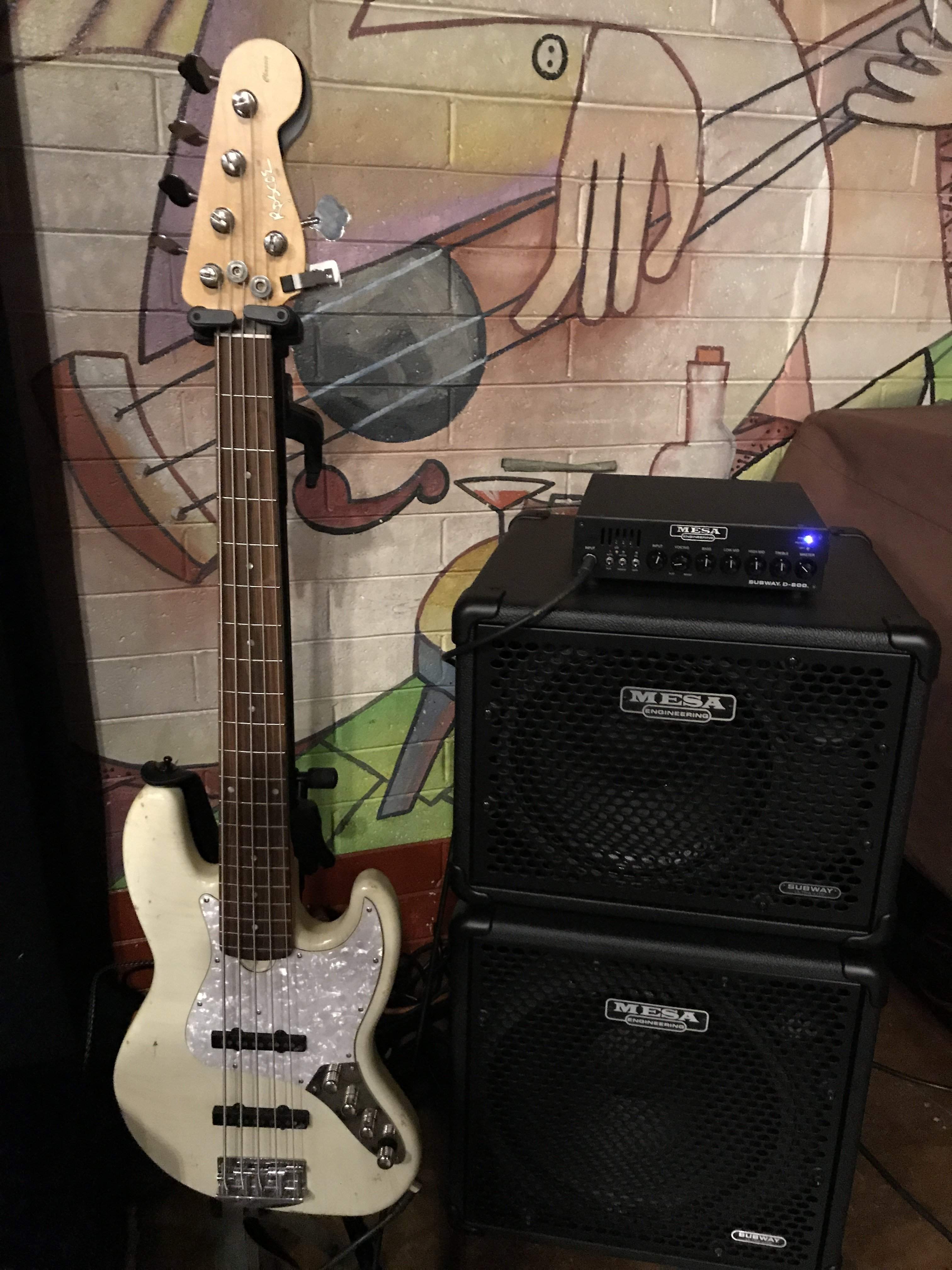
Played on Sunday. Worked great. I am glad to have a fender style bass that plays better than a fender. Having been through many basses this is on top of the heap. Glad to have it in my arsenal
IMG_3806.JPG
 
Why does it play better than a Fender?
How exactly does the posi-trac rear end on a Plymouth work? It just does. -It just does.

I digress to quotes from Joe Dirt. The only Fender I have played that has come close to the neck stability and low action of my Roscoe Classic was a $4,500 Fender Custom Shop and it was flawless and sounded really good. I don't recall what I paid for my Custom Classic 4JJ but it was far less than $4,500.
 
How exactly does the posi-trac rear end on a Plymouth work? It just does. -It just does.

I digress to quotes from Joe Dirt. The only Fender I have played that has come close to the neck stability and low action of my Roscoe Classic was a $4,500 Fender Custom Shop and it was flawless and sounded really good. I don't recall what I paid for my Custom Classic 4JJ but it was far less than $4,500.
That's my dream bass, so I was curious to hear your opinion. Bassist, Orlando Thompson, allowed me to
check out his Roscoe CC prior to them becoming available to the public. I'm no expert, but I could
tell that the bass was extremely well constructed. The tone of Orlando's Roscoe CC P/J was killer!
 
Why does it play better than a Fender?

A lot of things can be subjective, personal preference, and opinion based.
"Little" things that add up on the Roscoe are fretwork, neck pocket, neck profile.
I really like that Roscoe uses a recessed hex bolt for the neck attachment. I hated when the screws on the neckplate were stripped and the sharp edges would cut me or a shirt. Not that this was often but I have had it happen. The hex looks less traditional but is definitely more functional in my eyes.

I also wasn't trying to dis Fender with my statement. I have had many American and Mexican fender basses that I really liked. But most of them had a dead spot somewhere and I was not impressed with the B-string on a 5 string precision I had. It was not as present as the other strings. I had to take a hack saw to the intonation screw on the B-string of the 5 string fender precision because I could not lower the action enough with the bass setup for the rest of the strings.

The Roscoe B-string is on par with the rest of the strings in volume and tension, which is partly due to the 35" scale as opposed to fenders 34" scale. But I have had other brand 35" scale basses where the B-String did not impress me either.
I can get my action and setup on the Roscoe how I like it, without really compromising between string height and fret buzz. This is the straightest I have ever gotten a neck without it turning into a buzzing bee.

I am sure there is some great Fender custom shop stuff, but I am happy with the quality and price point of what Roscoe has to offer.

That was long and a little rambling...
 
  • Like
Reactions: Mr_O'B
I may have to try one somehow. I have been playing my passive G&L JB-2 and I like the "rawness" to the tone, and I use the B string often enough to miss it.

When I pick up my Century 5 I LOVE the neck and the tone - while maybe a tish too modern for my ear these days and for the cover band - is so nice. With a little we tweaking I can take some of the "edge" off it.

So I'm thinking a classic, passive 5 string PJ would be right in my wheelhouse - especially for the cover band. I have never played a passive B string I liked, but maybe Keith has solved that issue.

Thing is, I love the feel of my Century neck and I'm not sure if I'd like the more "traditional" shape of the classic neck.

Thoughts?
 
A lot of things can be subjective, personal preference, and opinion based.
"Little" things that add up on the Roscoe are fretwork, neck pocket, neck profile.
I really like that Roscoe uses a recessed hex bolt for the neck attachment. I hated when the screws on the neckplate were stripped and the sharp edges would cut me or a shirt. Not that this was often but I have had it happen. The hex looks less traditional but is definitely more functional in my eyes.

I also wasn't trying to dis Fender with my statement. I have had many American and Mexican fender basses that I really liked. But most of them had a dead spot somewhere and I was not impressed with the B-string on a 5 string precision I had. It was not as present as the other strings. I had to take a hack saw to the intonation screw on the B-string of the 5 string fender precision because I could not lower the action enough with the bass setup for the rest of the strings.

The Roscoe B-string is on par with the rest of the strings in volume and tension, which is partly due to the 35" scale as opposed to fenders 34" scale. But I have had other brand 35" scale basses where the B-String did not impress me either.
I can get my action and setup on the Roscoe how I like it, without really compromising between string height and fret buzz. This is the straightest I have ever gotten a neck without it turning into a buzzing bee.

I am sure there is some great Fender custom shop stuff, but I am happy with the quality and price point of what Roscoe has to offer.

That was long and a little rambling...
You weren't rambling, I appreciate your response! What you said was insightful! I don't get overly excited or gassed up about most basses, but I do get excited about the Roscoe CC P/J.

I can't speak for Fender 5 string basses, but both of my non custom shop 4 string Fenders (American & Mexican) are very well constructed. This was confirmed by my luthier who is one of the best luthiers in the U.S.

I am never envious of other brands because I will put my two Fenders up against any jazz bass out there regardless of price. It's all good!
 
  • Like
Reactions: Tomservo-Crow
For sure.
Fenders have been a mainstream brand for a long time, and for a good reason. They make great basses, that sit in a band mix very well.
Most of the things I brought up were me really nit-picking, and I tend to let those things bug me. Which is usually why I moved on from the Fenders I had at one point or another.
But if The only choice I had was a Fender 4 String precision bass... I wouldn't complain.
 
  • Like
Reactions: Mr_O'B
I may have to try one somehow. I have been playing my passive G&L JB-2 and I like the "rawness" to the tone, and I use the B string often enough to miss it.

When I pick up my Century 5 I LOVE the neck and the tone - while maybe a tish too modern for my ear these days and for the cover band - is so nice. With a little we tweaking I can take some of the "edge" off it.

So I'm thinking a classic, passive 5 string PJ would be right in my wheelhouse - especially for the cover band. I have never played a passive B string I liked, but maybe Keith has solved that issue.

Thing is, I love the feel of my Century neck and I'm not sure if I'd like the more "traditional" shape of the classic neck.

Thoughts?

I had a G&L L2500 that I enjoyed playing in a band. It was a powerful bass!
The fretboard radius was 12" I believe and after a while it felt a little to flat to me.
I am not sure what the radius is on the Century bass, but the 4 and 5 string classics have a 9.5" radius. For me that is kind of the sweet spot. Not to round and not to flat.
As far as neck shape goes, I would say it is something like a flat D. Being narrow enough to move quick on while not being too narrow. It is definitely not a chunky traditional shape.
 
I also have a SX J Bass with the 70's pickup placement. Alder body, Maple neck, Maple fingerboard with inlay, Fender 70's single coils pickups and I also installed a East J-Tone. The bass plays amazing, I spent more on having Keith PLEK this bass than what I paid for the bass. It has one little slight buzz spot where a fret was pressed in too far around the 17 fret on the G string. I thought about having the one fret replaced and will probably get around to it before the end of the year. This bass plays better than the $1,800 Fender at Guitar Center and the neck is as straight as an arrow. The only thing I don't like about the SX is the color, I don't really like the color black on a bass, a grand piano yes, a bass, no.
Rowyko Kustoms in Durham, NC paint the bass Emerald or Purple Metallic? Stike painted my Shell Pink Roscoe and does absolutely wonderful work.

gallery016a.jpg


gallery078.jpg
 
I may have to try one somehow. I have been playing my passive G&L JB-2 and I like the "rawness" to the tone, and I use the B string often enough to miss it.

When I pick up my Century 5 I LOVE the neck and the tone - while maybe a tish too modern for my ear these days and for the cover band - is so nice. With a little we tweaking I can take some of the "edge" off it.

So I'm thinking a classic, passive 5 string PJ would be right in my wheelhouse - especially for the cover band. I have never played a passive B string I liked, but maybe Keith has solved that issue.

Thing is, I love the feel of my Century neck and I'm not sure if I'd like the more "traditional" shape of the classic neck.

Thoughts?

Keith adjusted the profile on the 5 string Classics, you know you are playing a Roscoe, very comfy neck. If you go passive you can always add a East J-Tone. The J-Tone has a true bypass circuit. I went with the Vol/Vol stack, Bass/Treble stack and Passive Tone which works in passive and active modes. I run active with the treble set flat and the bass between 1-2 o'clock, after that I only end up adjusting the passive tone control.
 
I had a G&L L2500 that I enjoyed playing in a band. It was a powerful bass!
The fretboard radius was 12" I believe and after a while it felt a little to flat to me.
I am not sure what the radius is on the Century bass, but the 4 and 5 string classics have a 9.5" radius. For me that is kind of the sweet spot. Not to round and not to flat.
As far as neck shape goes, I would say it is something like a flat D. Being narrow enough to move quick on while not being too narrow. It is definitely not a chunky traditional shape.


The radius on the "modern" design Roscoe basses is 16", so pretty flat. You are correct that the Classic & Classic Custom is 9.5".
 
I have been to a lot of concerts this summer where a passive 4 string Precesion bass was played and sounded really good. I've debated a Precision for a while. I have a passive G&L JB-2 that I like the sound of, but, much as I try to convince myself that I'm Pino or Jamareo, I really like use and "need" that B string. I have the G&L string with TI flats for my "jazz combo" gigs and it's great for that.

Never heard a passive B string I like, but again, I figure if anyone will have a good one it would be Roscoe. So I'm thinking if I'm gonna try a passive bass, it should be a Roscoe, probably a 5 string and probably a PJ model. Why stray from what I love.

The last thing in my debate with myself is active or active/passive. I have my Century 5 (soaps) and Century 6 (jazz) with Bart pre so I guess I have the active part covered. Still, the A/P option is tempting. For those who have either/both versions, what are the trade offs, benefits, etc.

If it were you, what would you choose?
 
Last edited:
  • Like
Reactions: Tomservo-Crow