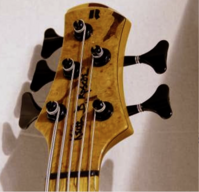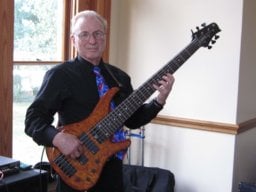
Nice ... and the body wood?
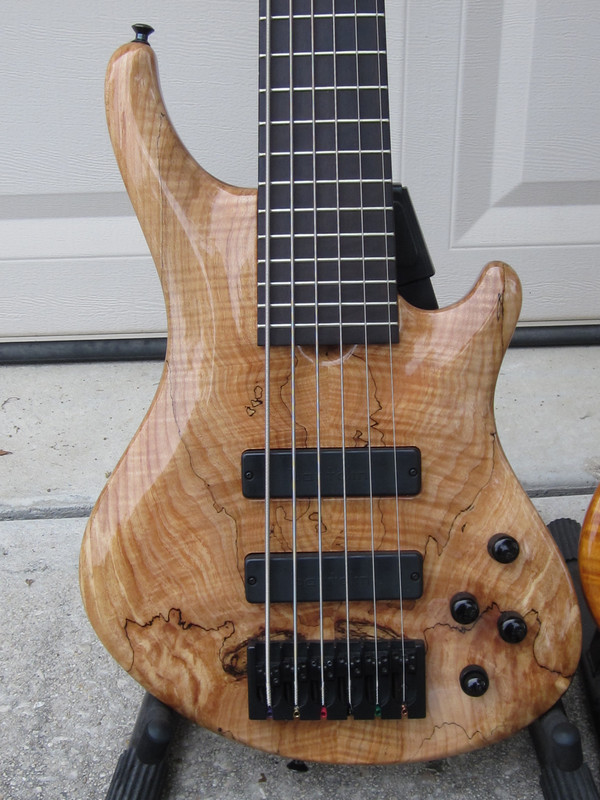
Spalted Maple top, I believe. Same as the top on my SKB 3006. The body on my bass is Mahogany.

TalkBass has been independent since 1998. Add your voice.
Create a free account to reply to discussions, view embedded media, and browse with fewer display ads.
Join free Log in
Want zero display ads or expanded classifieds tools? Compare plans.
Nice ... and the body wood?
Nice ... and the body wood?
Spalted Maple top, I believe. Same as the top on my SKB 3006. The body on my bass is Mahogany.

Thanks for the idea, Chuck. It actually crossed my mind at one point but I’ve had her for ~25 years so she is not going anywhere. I’ll find a way, it’s worth it.There is one other possibility you may not have considered. You could offer to trade your bass for another Roscoe that has woods that are acceptable for shipping to Europe.
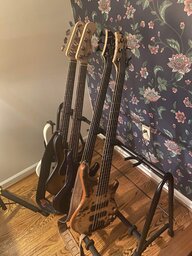
 And that’s a different type of Roscoe hanging on the left, one you are probably familiar with. I’ve since sold it however.
Mine? That bass has an ash body and a spalted maple top. Almost all of my Roscoe’s have ash bodies. Only my fretless SKB is Mahogany and my incoming LG is Spanish Cedar.
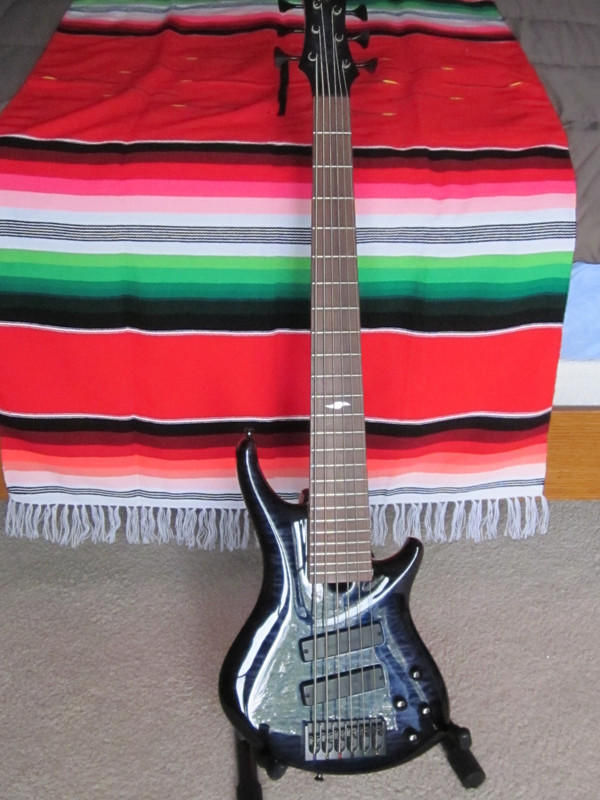
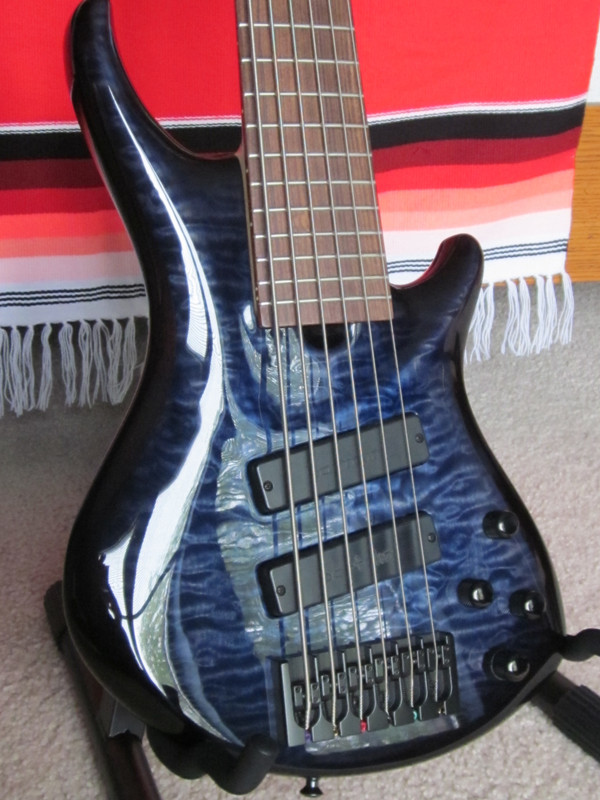
A while back I was kicking myself for selling the blue SKB 3006 with the slant PU's and the mahogany body. I sold it because it weighed more than 11 pounds...but it was a wonderful sounding bass. Well, my new to me SKB 3006 has the same body woods and it sounds just as I remember the blue one sounding. I am so happy with this bass. Here is the blue one:
and the newer one you probably have already seen:
The SN of my SKB 3006 is 6813. The bass came to me without the paperwork that is included with new basses. I asked Keith for details about the build and he said he cannot access the information so I thought I would ask if any of you own a Roscoe with a SN close to mine and if so please tell me when it was built. Keith said my bass is a recent one and I can say that I looked in the control cavity and it has the newer single Bartolini module instead of the two modules used previously.
I appreciate any help you can give me.
Thanks!
Chuck

The SN of my SKB 3006 is 6813. The bass came to me without the paperwork that is included with new basses. I asked Keith for details about the build and he said he cannot access the information so I thought I would ask if any of you own a Roscoe with a SN close to mine and if so please tell me when it was built.

Looks like the Roscoe shop did the refret, so it should be done rightWow. That is certainly the bass but it has frets now. Thanks very much.

I believe when the classic 5 bass necks have been described, they are what the kids call “thicc”So a Classic 5 string jazz will have a 35” scale and 19mm spacing, correct? It will not feel like my Century Standard 5 neck, except they are both 35” scale. Asking because that Classic 5 with the J/MM pickups is intriguing.
 So if you’re not digging that Sadowsky neck, you may want to try one of these first. I have not played one myself, just going off what others have said. ), but if you’re looking for a Century necked Lakland, this probably ain’t it.
Looks like the Roscoe shop did the refret, so it should be done right
So a Classic 5 string jazz will have a 35” scale and 19mm spacing, correct? It will not feel like my Century Standard 5 neck, except they are both 35” scale. Asking because that Classic 5 with the J/MM pickups is intriguing.
I love both my Roscoes and my Sadowsky 5’s… both very playable for me
I had a classic PJ5 for a heartbeat- the neck was unplayable for me. Thick was a good description of it. Shame as I wanted to love that bass….
Looks like the Roscoe shop did the refret, so it should be done right
View attachment 4705508
I believe when the classic 5 bass necks have been described, they are what the kids call “thicc”
Something else to consider is the MM pickup, while it does look to be in the Lakland spot (and NOT the stringray spot), that Aguilar pickup is NOT splittable, so you won’t get the Lakland 60/70’s bridge pickup options (which is the reason for that spot and a splittable pickup). Not trying to talk you out of buying that bass (you’ll probably talk yourself in and out of buying it dozens of times
And since I’m posting Roscoe fb screen shots….
View attachment 4705512
When seeing your response to the Roscoe birthday post, your disappointment of fretted conversion was apparent. .Thanks so much for finding this. I was feeling bad that it was a refret. .
True. In contrast, I have long thought the opposite in that wood density and overall weight have positive tonal effect. While some recent playing experiences disprove this, weight is not my deciding factor for a bass. Tone is king for me, regardless of weight. And, certain woods with high density will never be light, unless they are used in the thinnest veneer, in which case they have little to no tonal contribution (like adding a single grain of salt to a big pot of spaghetti sauce).. . reason why someone might sell: it weighs 10 pounds, 10.5 ounces. .
Agree. Savor, praise, play in joy, repeat : )Now the bass is in my hands and is here to stay. It is a fantastic bass to look at and even better to play. I prefer lighter basses but the tone of this bass is extraordinary. I was not thinking about the weight while playing it in church yesterday morning. I was thinking about how blessed I am to have this magnificent sounding/playing bass and how it sounded in the mix. The gentlemen at Roscoe really knocked it out of the park with this bass but I feel that way about my other two Roscoe basses.
Concur with all points/suggestions, adding good balance on strap, or without, as an additional element.IMO Keith would sell a lot of Classic 5 Roscoes if he optioned 17 or 18mm string spacing, and neck profile similar to his Custom and STD models. I'd also prefer a dinky style Jazz body.