
Wow, haven’t seen that J/mm in a while. It might be my #3 favorite Roscoe. Still looking for my quilt 5JJ Custom that I stupidly sold.


TalkBass has been independent since 1998. Add your voice.
Create a free account to reply to discussions, view embedded media, and browse with fewer display ads.
Join free Log in
Want zero display ads or expanded classifieds tools? Compare plans.
Wow, haven’t seen that J/mm in a while. It might be my #3 favorite Roscoe. Still looking for my quilt 5JJ Custom that I stupidly sold.
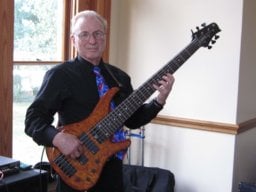
Wow, haven’t seen that J/mm in a while. It might be my #3 favorite Roscoe. Still looking for my quilt 5JJ Custom that I stupidly sold.
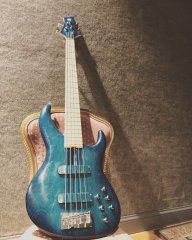
selling my roscoe SKB 3006 x2. Please check my thread out if interested and DM me. Thank you!
https://www.talkbass.com/classifieds/2024-roscoe-skb-3006-cocobolo.1663924/
https://www.talkbass.com/classifieds/2023-roscoe-skb-3006-quilted-maple.1663923/
What is it about the wenge neck that you don't like Tom The ones that I've owned had a wonder tone. Is it the open grain feel of the neck or the sound?Its been quiet here. A whole week?
I thought I'd throw this out to the Roscoe hive first. I have a Century Signature I'm looking to trade for an LG or SKB. It has a koa top and ash body, 3 pc wenge neck, BEM board, Bart pickup and pre, black hardware, Dunlop straploks, etc. Looking for custom or Signature, bubinga or cocobolo top or other dark wood with BEM or some figured sapwood fretboard, I'd prefer a straight up trade but +/- cash is always a possibility.
I'm just not getting along with the wenge neck and the body size. It's a beautiful instrument, plays great and sounds great. Could use a setup.View attachment 7122202View attachment 7122205
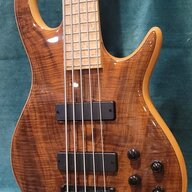
It's mostly the open pore texture, especially from frets 3-7 where I play most of the songs we do at church. I'm pretty hesitant to do any mods on the bass so sanding the neck makes me a little nervous. Resale value, blah blah blah.What is it about the wenge neck that you don't like Tom The ones that I've owned had a wonder tone. Is it the open grain feel of the neck or the sound?
The reason that I ask is I've sanded and oiled several of my Roscoe necks to get a smoother feel. The neck finish on Roscoes tend to get a bit shinny and sometimes tacky as they age. Sanding with a progression of sandpaper (low to high grit) really makes them feel smooth again.
Totally understand. Of course if you sanded it properly it would feel so much better and it wouldn’t devalue the bass at all. It would also look new again and not have all the shiny areas on it (and you wouldn’t feel the grain as you currently do).It's mostly the open pore texture, especially from frets 3-7 where I play most of the songs we do at church. I'm pretty hesitant to do any mods on the bass so sanding the neck makes me a little nervous. Resale value, blah blah blah.
Gotcha. Still up in the air about the bass and I'll let you know about how gritty to get.Totally understand. Of course if you sanded it properly it would feel so much better and it wouldn’t devalue the bass at all. It would also look new again and not have all the shiny areas on it (and you wouldn’t feel the grain as you currently do).
Keith seals them well prior to spraying the finish and the sealer penetrates deep into the wood.
If you decide to keep the bass let me know and I’ll provide the progression of sand paper that I use.



I just picked up this beauty on a trade here on TB.
Build quality is amazing!
It has given me ideas for what I would want in a custom built Roscoe in the future.
View attachment 7150048
Ive used 2 things: a nice furniture wood 'lemon-scented' mineral oil, and Dunlop 65, which is about the same thing. I'm not an expert, but after 10 years of caring for the spalted purpleheart (and 30 years of various fretboard species, turned wood products, and charcuterie care), nothing has gone wrong/rancid/wrecked when I use mineral oil. Spalted purpleheart still seems as purple as ever, and hasnt browned/aged like some from some other photos I've seen (non-Roscoe). Food grade for the charcuterie, of course.For those of you who have a purpleheart fretboard, what do you use to condition it? Fret Doctor conditioner?
I use Music Nomad F-one oil. I’ve used it on ebony, wenge, Pau Ferro and Purple Heart and it works great.For those of you who have a purpleheart fretboard, what do you use to condition it? Fret Doctor conditioner?
I use Music Nomad F-one oil. I’ve used it on ebony, wenge, Pau Ferro and Purple Heart and it works great.
https://www.sweetwater.com/store/de...5aAvWUMzCvBuoWeNif98myYYiGg7mWoBoCQrsQAvD_BwE
I use Music Nomad F-one oil. I’ve used it on ebony, wenge, Pau Ferro and Purple Heart and it works great.
https://www.sweetwater.com/store/de...5aAvWUMzCvBuoWeNif98myYYiGg7mWoBoCQrsQAvD_BwE
Ah, yes I have that one, too. After a little research, this one has 'ultra-refined' tree and seed oils, and has no mineral oil, I believe. Had it for 4 years, so probably used it several times by now. Forgot about it until Joe mentioned it.