• TalkBass has been independent since 1998. Add your voice.
    Create a free account to reply to discussions, view embedded media, and browse with fewer display ads.
    Join freeLog in
    Want zero display ads or expanded classifieds tools? Compare plans.
Router Planing Fixtures

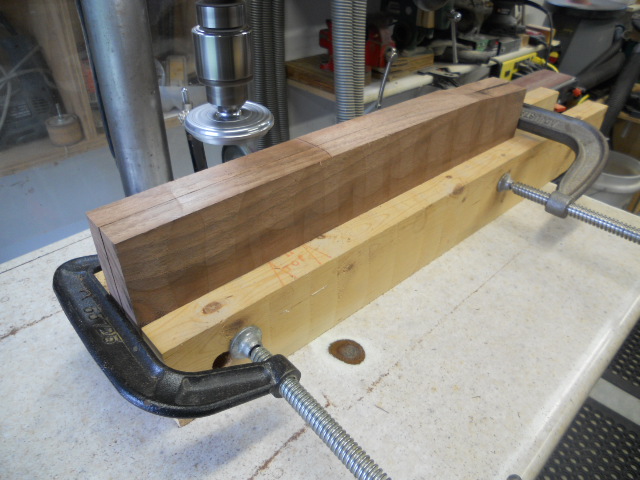
My attraction to a router planing jig is that I'm making use of a small power tool that I already have, the sled/fixture is table top and can be stored when not used and I can make different fixtures or one adjustable fixture to do larger width boards.
Where a thickness planer needs its own footprint in the shop and you would need a big one to thickness wide boards.
If I had a planer and the space for it, I'd use it. But I can make due with the router.
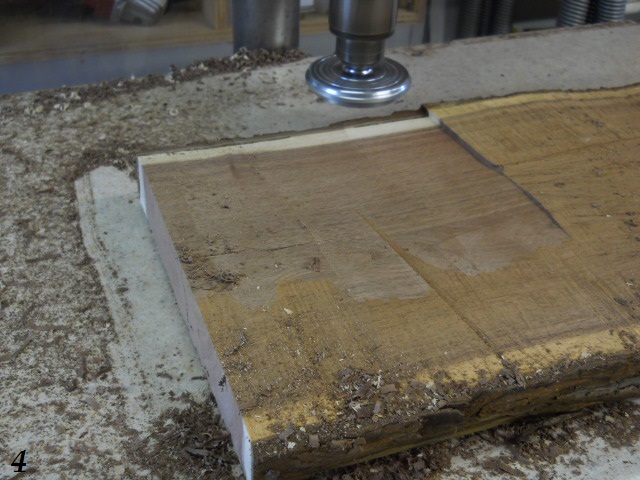
There's a lot to be said for that. It was my rationale for adopting the Safe-T-Planer / drill press pairing over 30 years ago.

JUxk50K.jpg
 
Twould be potentially overkill but you could combine the vacuum board and pins into a single piece if you have the holes spaced to match your expected pin hole spacing... But that's basically redundant systems for keeping work pieces in place... And set up would be a bit of a pain (covering all the open holes to create suction).

But I tell you what, that wood ain't movin'! :D
 
The Safe-T-Planer is an interesting tool. There's a group of people, including Rudy, who have been using them for years with great results. And there's a large group who have tried them and found them to be completely useless. I'm not sure what the technical reason is some people can get them to work correctly, and many can't. I'm curious.

I have a Safe-T-Planer, which was given to me by a Luthier friend. He bought it new, tried it a few times, and didn't like it at all. One of these days, I'm going to give it a test run and try to figure it out. I'm thinking of trying it in one of my milling machines, where I can really control the speed and feed. See what it does and likes.

A longer-term idea is to build a complete new bridge assembly for the Super Router Planer, which has the Safe-T-Planer in it. Direct drive by an electric motor. Then I could swap it onto the Super Router Planer's bed and do direct comparison testing against the router bridge.
 
The Safe-T-Planer is an interesting tool. There's a group of people, including Rudy, who have been using them for years with great results. And there's a large group who have tried them and found them to be completely useless. I'm not sure what the technical reason is some people can get them to work correctly, and many can't. I'm curious.

I have a Safe-T-Planer, which was given to me by a Luthier friend. He bought it new, tried it a few times, and didn't like it at all. One of these days, I'm going to give it a test run and try to figure it out. I'm thinking of trying it in one of my milling machines, where I can really control the speed and feed. See what it does and likes.

A longer-term idea is to build a complete new bridge assembly for the Super Router Planer, which has the Safe-T-Planer in it. Direct drive by an electric motor. Then I could swap it onto the Super Router Planer's bed and do direct comparison testing against the router bridge.

Yup, there's lots of folks from both sides of the use issue for the STP. If you ever get around to experimenting with it then start a topic here. I'm happy to jump in, as I'm pretty sure I've probably logged more square feet / board feet of planing time with mine then just about anyone. I've done everything from dressing lumber from my local milling guy to thicknessing head stock overlays and everything between.
The main issues I see that users have are trying to use a really cheap drill press and expecting precision results, not running at the appropriate speed (it likes to generally run around 3000 rpm), trying to use it with dull cutters, and first and foremost, not knowing how to work with the grain direction of the wood.

I have some usage examples posted on my Youtube website and also quick demos for sharpening the cutters. The original STP specified the cutters as being made from a specialty air hardening steel that it was impossible to grind the temper out of. I've ground mine hundreds of times and never had any problem. Because of the unique cutting geometry it's actually quite easy to sharpen them, but many users think this is a difficult task.

Since the original manufacturer has retired there have been a few others that have taken over marketing. StuMac even makes a version, but they use a specialty cutter with TWO cutting edges that might preclude the ability to sharpen them. I don't have the StuMac so I can't say how the cutters are designed to mount. If they mount like it looks like they mount then the tool is designed to extract a lot of money on replacement cutter sales. I've never been able to get a straight answer for that question and the last time I checked they still had the original instructions for the Wagner version posted, which is NOT the same planer.
Along with a few simple jigs my STP gets used for surfacing, tapering, edge jointing, and a whole bunch of general woodworking tasks.
uGE1sFZ.jpg
 
Last edited:
I was genuinely considering getting a Safe-T-Planer but when I was looking all I could find were the StewMac ones and only new from StewMac then the pin router came up and I figured I should work that out instead. However, @rudy4444 jig in the picture looks like it would be easily adaptable to the pin router to use it for jointing and it’s similar to what I was picturing. Thanks Rudy! Do you have some additional pictures somewhere?
 
  • Like
Reactions: MovinTarget
I was genuinely considering getting a Safe-T-Planer but when I was looking all I could find were the StewMac ones and only new from StewMac then the pin router came up and I figured I should work that out instead. However, @rudy4444 jig in the picture looks like it would be easily adaptable to the pin router to use it for jointing and it’s similar to what I was picturing. Thanks Rudy! Do you have some additional pictures somewhere?
I do, but they are mixed in with literally hundreds that I previously included with musical instrument construction guides that I used to market. Those would be specific tasks for specific instruments. Examples of those types of tasks would be thicknessing guitar sides, truing banjo rim layers prior to glue up, planing fretboard blanks, dimensioning headstock overlays, etc. I even use mine to pre-thickness bone saddles and nuts. Tons more uses, but the idea here is the STP is adaptable to many, many tasks. It's really a matter of developing a simple jig to adapt the tool to do what you require.

Here's an example from my Youtube channel:


Sharpening cutters:

 
Last edited:
It's funny, even ShopSmith made a Safe-T-Planer back in the day. I think the ShopSmith one was actually a rebranded Wagner version, in ShopSmith red of course! They can still be found on the Evilbay from time to time.

Interesting. As long as the design wasn't different it would have been truly a safe tool. Sears jumped on the "rotary planer" bandwagon, but used their own design. That rotary planer attachment was possibly the most ill-conceived and most dangerous tool ever sold by anyone.
 
Some new development is going on in the world of Router Planing Fixtures! Just when you thought we'd already built every possible fixture combination.........I'm off exploring a new direction of experimental development.

I talked out the concept a few pages back. I'm making a kit to make the Super Router Planer into...the Super Pin Router Planer. It will operate as a specialized pin router with a long narrow bed. A new fixture will slide under the router head, guided by a pin in the bed. I'm building it specifically to rapidly and precisely cut the flat gluing surfaces on the strips that I laminate into my necks.

I just finished building the main part:

IMG_9276B.jpg


It's a 48" long bed made from 3/4" MDF. It has two 4" high side rails/walls.

IMG_9278B.jpg


The two ears are for clamping down the bridge, and the notch on the left side is for clearance of the bearing guide rail. And there's a single pin installed right in the middle of the bed. It's a piece of 3/16" stainless rod, a cutoff of the stock I make my truss rods from. I have plenty of that around.

IMG_9279B.jpg


And here's the bed installed into the bed of the Super Router Planer. It clamps right into the bed under those aluminum strips that I built in. You can see the main reason for the 4" high side rails; to raise the whole bridge up, to give me more height for the new sliding fixture. I end up with 3" of working height.

IMG_9280B.jpg


The whole bridge and router assembly will sit stationary in that spot, and be clamped down.

IMG_9281B.jpg


Here's what it looks like inside. The bridge is just sitting on there right now, but I'll be lining up the cutter accurately centered on the pin, and then clamping the bridge in position. I'll make up some kind of gauge to make the alignment quick.

That's about it for the machine. It will now operate as a special purpose pin router, through a long narrow bed.

Now I've got to build the sliding fixture that holds the wood strips.
 
So, on the keep it simple side of things, I have a simple table saw sled. It's a 24" x 24" piece of MDF that I attached some 1x4 oak ends to. Some oak runners with some wax on them, and it's a simple but effective sled.

I also have a simple router jig for my truss rods. It's about 12" x 48" and has some 1x2 that is fitted for the base of my router and a slot down the middle routed with a 1/2" bit. Again, simple but effective.

What I've figured out, is that combining the two gives me a very effective router planing fixture. The only limitation is the length of the router bits that I own. Here it is in action.
20230325_145814.jpg


I'm planning a V2 of this, where I'll add t-track to the sled, and some removable rails on the truss rod jig (may remake it to be more solid) to improve the whole thing.
 
So, on the keep it simple side of things, I have a simple table saw sled. It's a 24" x 24" piece of MDF that I attached some 1x4 oak ends to. Some oak runners with some wax on them, and it's a simple but effective sled.

I also have a simple router jig for my truss rods. It's about 12" x 48" and has some 1x2 that is fitted for the base of my router and a slot down the middle routed with a 1/2" bit. Again, simple but effective.

What I've figured out, is that combining the two gives me a very effective router planing fixture. The only limitation is the length of the router bits that I own. Here it is in action.
View attachment 5029160

I'm planning a V2 of this, where I'll add t-track to the sled, and some removable rails on the truss rod jig (may remake it to be more solid) to improve the whole thing.

Sure, you've got all the basic components. One thing I'd recommend is to stiffen up the bridge. It looks like it might be a little springy if you push down on the router. That's not good for routing flat surfaces. I recommend adding strips of plywood to the sides of your TR slot routing fixture, like 4" high. It can even be 1/4" or 1/2" plywood, as long as it has some height to it.
 
There've been home handyman shows on PBS for as long as it's existed, and while they tend to put a high value on having an immaculate workspace and owning All The Tools (especially the ones provided by the sponsors) there hasn't been an emphasis on getting fancy about it (in fact, one of PBS's longest-running shows is "The Woodwright's Shop", which has run for almost 45 years and is specifically about building everything without power tools). No point in worrying about something that shows no signs of happening.

Turns out Nick Offerman and Amy Pohler hosted a crafts competition reality show for a couple years, called "Making It". Never saw it so maybe it's good. But it doesn't seem to have moved the needle regarding how people generally want to do up their workspaces.
 
  • Like
Reactions: MovinTarget
There've been home handyman shows on PBS for as long as it's existed, and while they tend to put a high value on having an immaculate workspace and owning All The Tools (especially the ones provided by the sponsors) there hasn't been an emphasis on getting fancy about it (in fact, one of PBS's longest-running shows is "The Woodwright's Shop", which has run for almost 45 years and is specifically about building everything without power tools). No point in worrying about something that shows no signs of happening.

Turns out Nick Offerman and Amy Pohler hosted a crafts competition reality show for a couple years, called "Making It". Never saw it so maybe it's good. But it doesn't seem to have moved the needle regarding how people generally want to do up their workspaces.

Just wait till HGTV gets involved... My wife is addicted to that channel, and things are just overdone...
