A few months ago my brother was delivering a floor clock, and he called me from the lady's house to tell me that she was selling an upright bass. She had just sent the local HS music teacher packing when he offered $350 for it. She was FIRM on the $500 price, and said it had been handed down from her mother who had bought it from a friend many years ago after it had been left as collateral on a rooming-house debt.
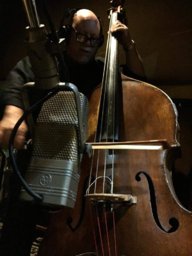
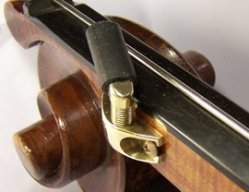
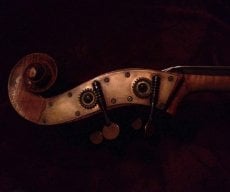
After a few questions, I thought I knew what we were looking at and told him to pay her and send it to me. When I got it, it was a Kay swingmaster, blonde finish, about an 8 out of a possible 10 in condition. It was a 1941 model, before they were in Kay's catalog. The surprise was that it was an S-5, the 'thin" or "dance band" model with the engraved tuner plates and a nice macassar ebony fingerboard and tailpiece.
I strung it up with Evah weich's, took out the wire tailpiece hanger, and am intrigued with it. What was the idea of a thinner body? It obviously has a few less cubic inches, and has a bit less presence at the low end, but has a really nice voice especially under the bow. I wonder what a "dance band" bass player would be doing that made a smaller instrument attractive?
I would not use this in an orchestral setting, and maybe not even for bluegrass, but it sure is a nice old bass, and a bit easier to fit through a doorway! NWD
After a few questions, I thought I knew what we were looking at and told him to pay her and send it to me. When I got it, it was a Kay swingmaster, blonde finish, about an 8 out of a possible 10 in condition. It was a 1941 model, before they were in Kay's catalog. The surprise was that it was an S-5, the 'thin" or "dance band" model with the engraved tuner plates and a nice macassar ebony fingerboard and tailpiece.
I strung it up with Evah weich's, took out the wire tailpiece hanger, and am intrigued with it. What was the idea of a thinner body? It obviously has a few less cubic inches, and has a bit less presence at the low end, but has a really nice voice especially under the bow. I wonder what a "dance band" bass player would be doing that made a smaller instrument attractive?
I would not use this in an orchestral setting, and maybe not even for bluegrass, but it sure is a nice old bass, and a bit easier to fit through a doorway! NWD