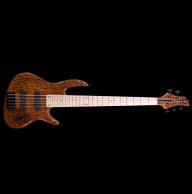
Lucky man you are!I have two SA200s
And what is you least powerful SS amp?My least powerful solid state amp is louder then my SVTs run flat out.

TalkBass has been independent since 1998. Add your voice.
Create a free account to reply to discussions, view embedded media, and browse with fewer display ads.
Join free Log in
Want zero display ads or expanded classifieds tools? Compare plans.
Lucky man you are!I have two SA200s
And what is you least powerful SS amp?My least powerful solid state amp is louder then my SVTs run flat out.
Lucky man you are!
And what is you least powerful SS amp?

KT88s definitely require more bias than EL34s. The amp has a bias potentiometer, but I don't know if it is ranged for KT88s without modification. If a mod is required, it probably just entails replacing one resistor to increase the available bias.
The bias procedure specifies measuring for 25-30mV across the cathode resistors regardless of tube type. I would not bias the amp too much hotter than this without consulting Koch Amps or getting guidance from Sadowsky, because the transformers and power supply may not be able to handle the extra load.
I wouldn't expect a huge increase of power by changing tube types, but I am curious if the sound changes much.
I had a PV VB-2 with EL34s and could not EQ out the baked in "guitar" sound. I swapped tubes out for 6CA7s and it hardly changed at all. A lot of people LOVED that amp and praised the "solid tone" but I could not find it. I traded it off first chance. Similar experience happened with a Mesa 400+. I even had one long ago that I sold off (kinda forgot and got wishful about the second one). I "ME", would shy away from the Sadowsky unless I played one and it changed my mind. Maybe with KT88s, it would have what I like. For reference, I love the Reeves C225 and Sunn 2000S because of their solid bottom. "Almost" a solid state type punch with tubes- if that makes any sense.
 .
.  .
."
.
."Tom has indicated, in the above referenced thread, that he intends to try the KT88 when he can find the time...KT88's a a big sounding punchy loud clean tube. I don't know if any bias adjustments would need to be done, I assume so, but if the circuit has the range to do it without mods, I bet it would pump this amp up nicely. Curious if it was ever tried @tombowlus
Roger Sadowsky is now recommending the KT88 for power tube replacement, and made no mention of any required mod's.KT88s definitely require more bias than EL34s. The amp has a bias potentiometer, but I don't know if it is ranged for KT88s without modification. If a mod is required, it probably just entails replacing one resistor to increase the available bias.
The bias procedure specifies measuring for 25-30mV across the cathode resistors regardless of tube type. I would not bias the amp too much hotter than this without consulting Koch Amps or getting guidance from Sadowsky, because the transformers and power supply may not be able to handle the extra load.
I wouldn't expect a huge increase of power by changing tube types, but I am curious if the sound changes much.
Regarding use of the KT88, here is what Roger has to say:
The Un-Official Sadowsky SA200 Thread...
Tom has indicated, in the above referenced thread, that he intends to try the KT88 when he can find the time...
Roger Sadowsky is now recommending the KT88 for power tube replacement, and made no mention of any required mod's.
I wrote yadda yadda, because I had and still have absolutely no idea what you mean by "nervous touch." Your example of hooking up some keyboard means next to nothing. You are still making claims about the class of amplifiers without having actual experience with many of them, thus suggesting a conclusion on your part, which is unsupported.
If what you write were true, then 100% of all current live acts on big stages would be "dead and lifeless....terrible;" because every single one of those is now using exclusively Class D for the mains. Perhaps, you actually feel that way. I simply disagree; which disagreement we can agree on.

Can you explain to us how a bass amp needs to reproduce >20kHz when the average bass speaker rolls off <5kHz and even with a tweeter rolls off at 15kHz?I didnt yadda yadda, I wrote most have
have a nervous touch.
I actually owned several and i still own and use a Labgruppen IPD2400.
Most of those amps filter noise way to low, reason being the filtering, which is technically complex and expensive, at least it was. So if you connect F.E. a Nord Piano it sounds dead and lifeless, in one word: terrible.
As soon as you plug the same Piano same sound same settings in to the Sadowsky, it sounds very good. The Lab sounds pretty good but still has that touch I personally dont like.
Stage Subs dont have that problem because the re low passed at 18 or 24dB per octave around 50Hz, where our amps are much closer to a fullrange system. Cutting above 20kHz, cuts the hamonic content, thats why it becomes lifless.
Because pretty much all the Class D amps work that way, it isnt the SMPS or the Class D amp which is the problem, its the filtering for high frequency noise you get from that technology. The better the filter, the better the amp. the reason why they dint come out on a large scale after it was invented was the cost of the filtering.
if the filter is really good a conventional amp has no dice.
I have two SA200s. One of the them will push the output tubes into distortion, and the other just gets more and more compressed. The amp that will push into distortion is slightly louder. I cant' say for sure, but perhaps the difference is the tubes. I haven't done any tube rolling on these amps; they both sound incredible. They are running stock Koch labeled output tubes, but I don't know if the small signal tubes are all stock.
Something to keep in mind, I read that Sadowksy was intent the amps would exceed their 200W power rating so they had to produce a minimum of (something like) 205W to meet factory spec. Spec for an SVT is 300W at 3% THD, but all of the bench tests I have read or seen on YouTube measure <265W at 5% THD.
My SVTs are definitely a bit stronger and louder than my SA200s, but it is not a huge difference if we are discussing clean power. I think the difference would be more significant under overload conditions as you suggest, so no argument, SVT wins if the contest is brute power. But I have several tube amps that will make an SVT beg for mercy, and don't get me started on solid state versus tube. My least powerful solid state amp is louder then my SVTs run flat out.
The reason to get an SA200 is not to satisfy a need for brute power...track down an SA200 if you're after sweet tone and a very functional and musical EQ. Also, the preamp does some nice drive that might suit your needs if you are into distortion...but it's not like the grind you get from an SVT.

One other thing; I also noticed that you were asking about cabs. I'm pretty sure that at least some of the Bergantino NV series would be great matches; and if I were rigging up an SA-200, I'd go straight for an NV610T. FWIW.Looks like you didnt really read it all I guess in times of cells thats normal... =)
Besides you cant compare cheap small consumer products with those amps used for stages, consumer grade do costs only a fraction.
I know hard to describe sound...
If you hook up a SA200 and Lab IPD to the same cab you will know what I mean.
Same with the Keyboard.
How do you know I have no experience ?
Thats just you asuming something.
just tto let you knoe, I got about 40 years of experience in this field =)
You better adjust the bias, and not it doesnt pump up the amp, at least not as much and not in a way as you would expect, unfortunately. Mods are not really possible with that supply.KT88's a a big sounding punchy loud clean tube. I don't know if any bias adjustments would need to be done, I assume so, but if the circuit has the range to do it without mods, I bet it would pump this amp up nicely. Curious if it was ever tried @tombowlus
The transformer better not saturate, not only does this not sound very good but gets thin and distorted as well as being very hard on output tubes.The distortion could be the 1 stage driving second stage tho hard, or the whole chain driving the inverter tube to hard. It could also be the balance or both, its kind a tricky to adjust the balance right, at least with my analog scope it is. Depending in which way I looked at it, the crossover of the phases looked right but it wasnt.
it doesent make a huge difference but it does clearly make one.
Im guessing the tubes in you amp are the Koch EL34s ?
Last time measured it produced 214w.
Of course will a transistor always be louder if it has the same power rating, but unless it has a transformer output, it does not have "the wall of concrete sound" coming at you.
A very good example for that "concrete wall" sound would be a Dumble.
A transistor starts to sound thinner and sharper when turned up, and in the last 20 percent you feel and hear the saturation, transformer delivery curve knee. ( dont know that in english)
unless there is e overkill PS inside usually there isnt.
Not the ClassD, those usually just deliver until the limiter. The SA200 just gets through out tha Band equally louder.
Which ones makes em begging a Hexavalve, Mesa 400 or a DB728 ?
No, I read your post. It just contained a number of statements that seemed based on conjecture, and which I had difficulty putting into the context of a bass amp. The importance of frequencies above 20 kHz to the bass guitar sounds like a dog whistle to me.
the numbers are not right for a bass at first glancer yes, but there is always the harmonics right ?
Great =)But, I will admit that I have not performed high pass listening tests to know that one way or the other. I just know that my amps have plenty of high frequency harmonic content, more than enough for my needs.
Also, your statement that the Class D FOH systems get by because the subs are low passed seems disconnected. But, what do I know?
Most consumer products and especially bass amps. possibly it became better lately, but when I last checked, it wasnt really that much better.Furthermore, your continued assertion of the effect of the high frequency filter on ALL Class D amp platforms still lacks actual experience.
I think I tried most of them at some point.I'm glad you have owned a few. I suspect you haven't gigged the type I am using; but, could be wrong, since you haven't specified your exhaustive list. Heck, I've been playing for 48 years, and I haven't played them all.
Me neither, and I do thanks. I just think its one of the best Amps I played so far.Anyhow, look, I'm not really interested in some kind of dick measuring contest over amps. That got old a long time ago. I'm glad you like your SA-200. As I said, it certainly has a great rep. Enjoy it.
Yep...FYI, I asked Roger some question about running KT88s earlier today:
The Un-Official Sadowsky SA200 Thread...
@Wasnex, if I remember correctly, you have used the Mesa Titan. How does it compare against the SA200? Even if I doubt these two beasts don't have much in common
The distortion could be the 1 stage driving second stage tho hard, or the whole chain driving the inverter tube to hard. It could also be the balance or both, its kind a tricky to adjust the balance right, at least with my analog scope it is. Depending in which way I looked at it, the crossover of the phases looked right but it wasnt.
it doesent make a huge difference but it does clearly make one.
Im guessing the tubes in you amp are the Koch EL34s ?
Last time measured it produced 214w.
Of course will a transistor always be louder if it has the same power rating, but unless it has a transformer output, it does not have "the wall of concrete sound" coming at you.
A very good example for that "concrete wall" sound would be a Dumble.
A transistor starts to sound thinner and sharper when turned up, and in the last 20 percent you feel and hear the saturation, transformer delivery curve knee. ( dont know that in english)
unless there is e overkill PS inside usually there isnt.
Not the ClassD, those usually just deliver until the limiter. The SA200 just gets through out tha Band equally louder.
Which ones makes em begging a Hexavalve, Mesa 400 or a DB728 ?
Can you explain to us how a bass amp needs to reproduce >20kHz when the average bass speaker rolls off <5kHz and even with a tweeter rolls off at 15kHz?

Also, your comment about limited bandwidth may have been accurate 20 years ago but today's class D amps typically have a bandwidth of 50kHz-80kHz with a switching frequency of >500kHz.

Also, most subs used in pro audio are low passed at 80-100Hz and highpassed at 30-40Hz. What you neglected to mention is that the high frequency sections of PA are also class D and they have no problem accuracy reproducing high frequency at 20kHz with <0.01% THD.
 .
.Also, your comments about speaker damping does not accurately reflect reality. It is possible for a modern ported speaker to be underdamped, critically damped or overdamped depending on the intent and skill of the designer.