
Enjoy the benefits of a premium membership!
Upgrade Account
-
TalkBass has been independent since 1998. Add your voice.
Create a free account to reply to discussions, view embedded media, and browse with fewer display ads.
Join free Log in
Want zero display ads or expanded classifieds tools? Compare plans.
You are using an out of date browser. It may not display this or other websites correctly.
You should upgrade or use an alternative browser.
You should upgrade or use an alternative browser.
Sanding relief
- Thread starter MPU
- Start date
More options
Who Replied?

Thanks Lo-E. I like to test new things and learn something new.
Here’s the neck before sanding between coats. I sanded and sprayed two more coats after this.
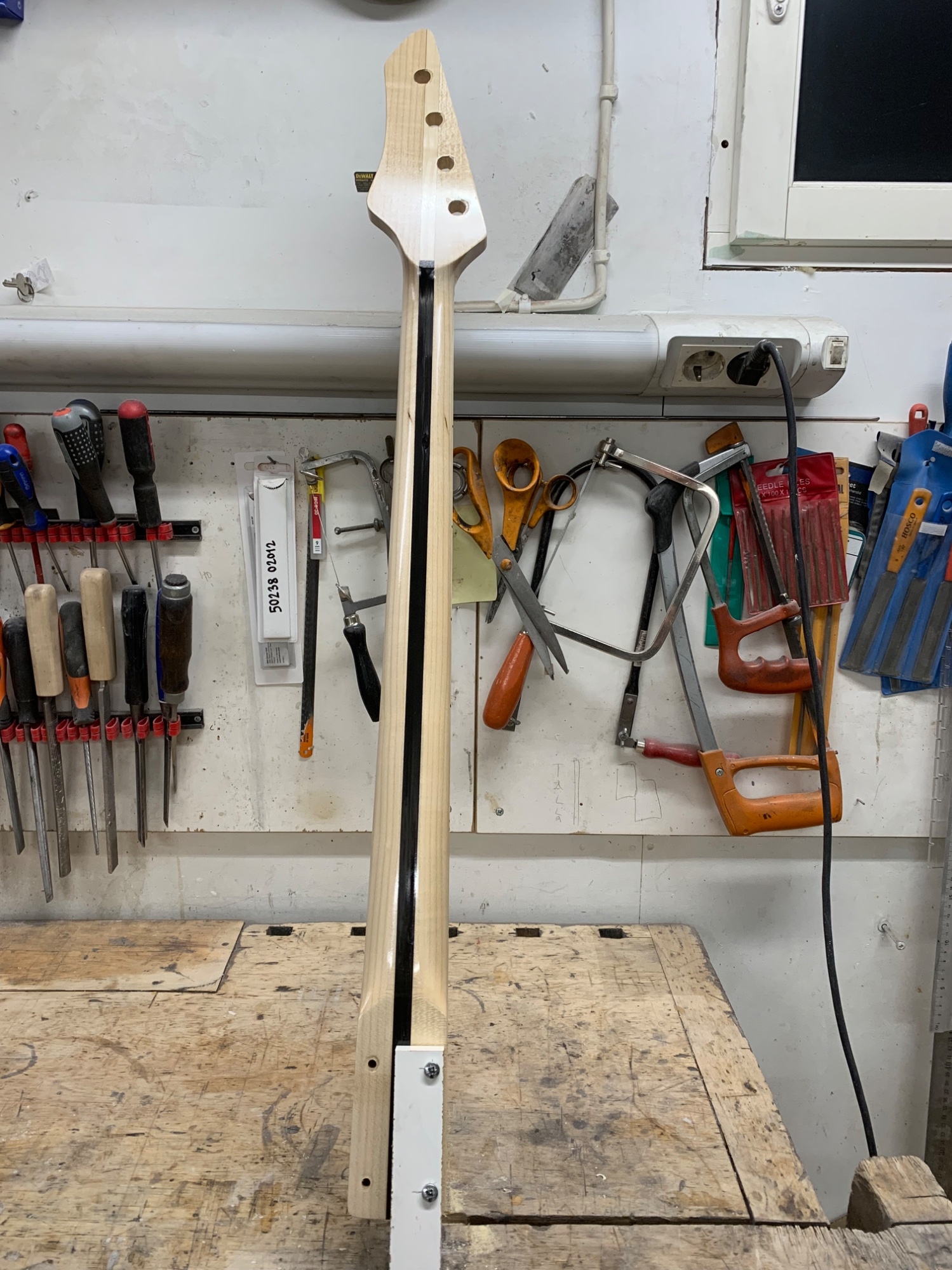
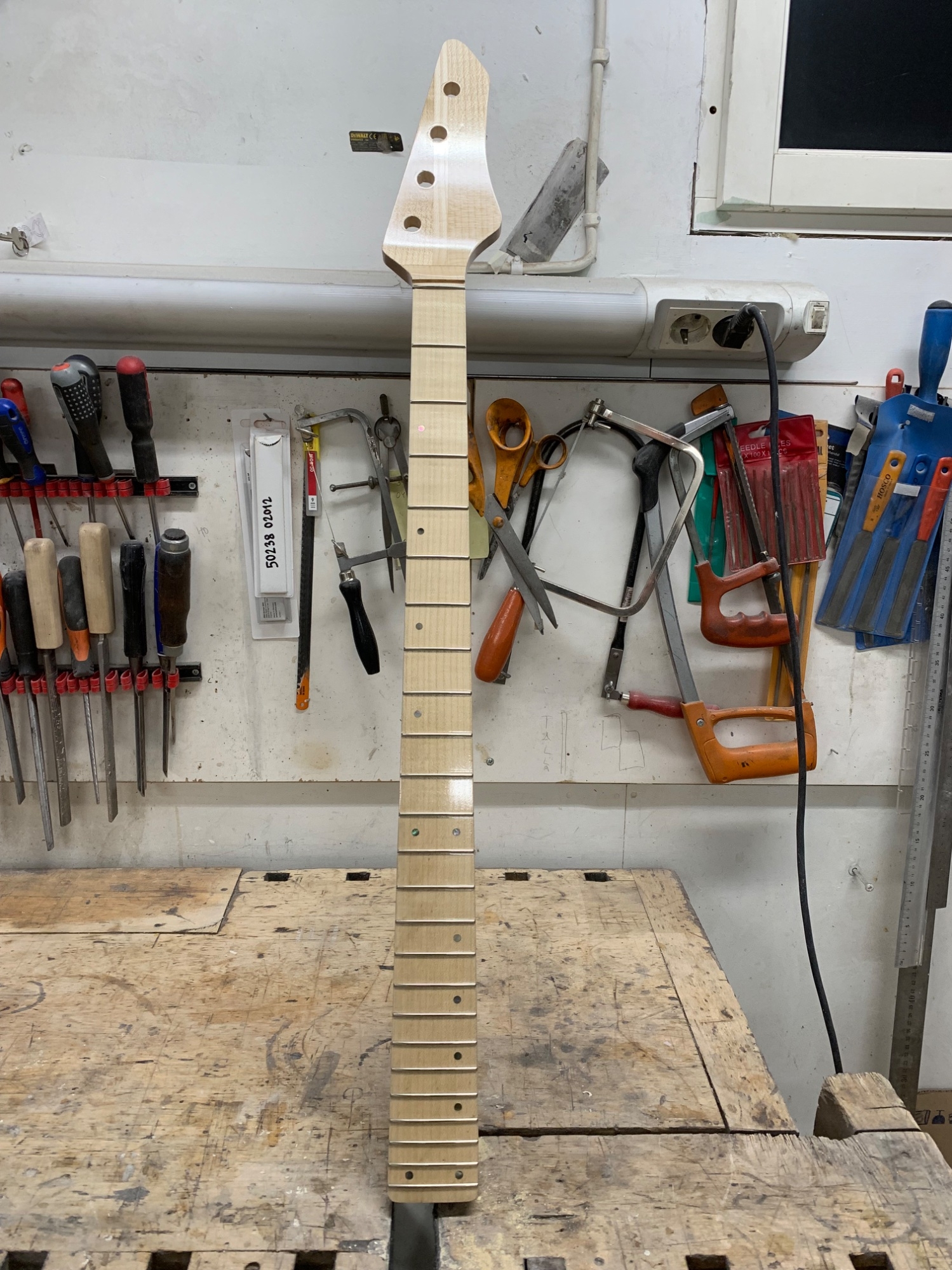
Here’s the neck before sanding between coats. I sanded and sprayed two more coats after this.
Frets leveled and crowned and the bass assembled. Some small adjusting and fine tuning left.
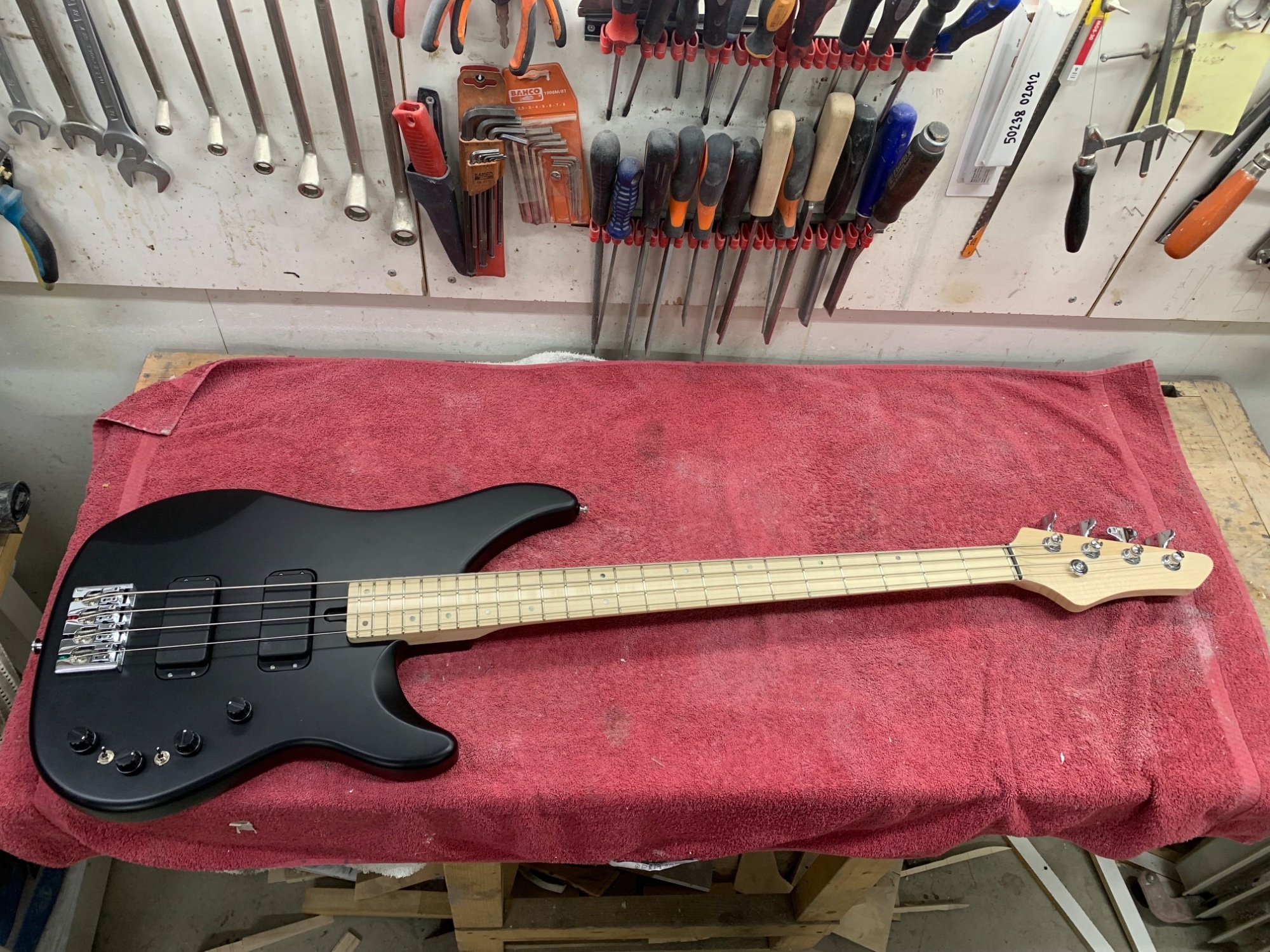
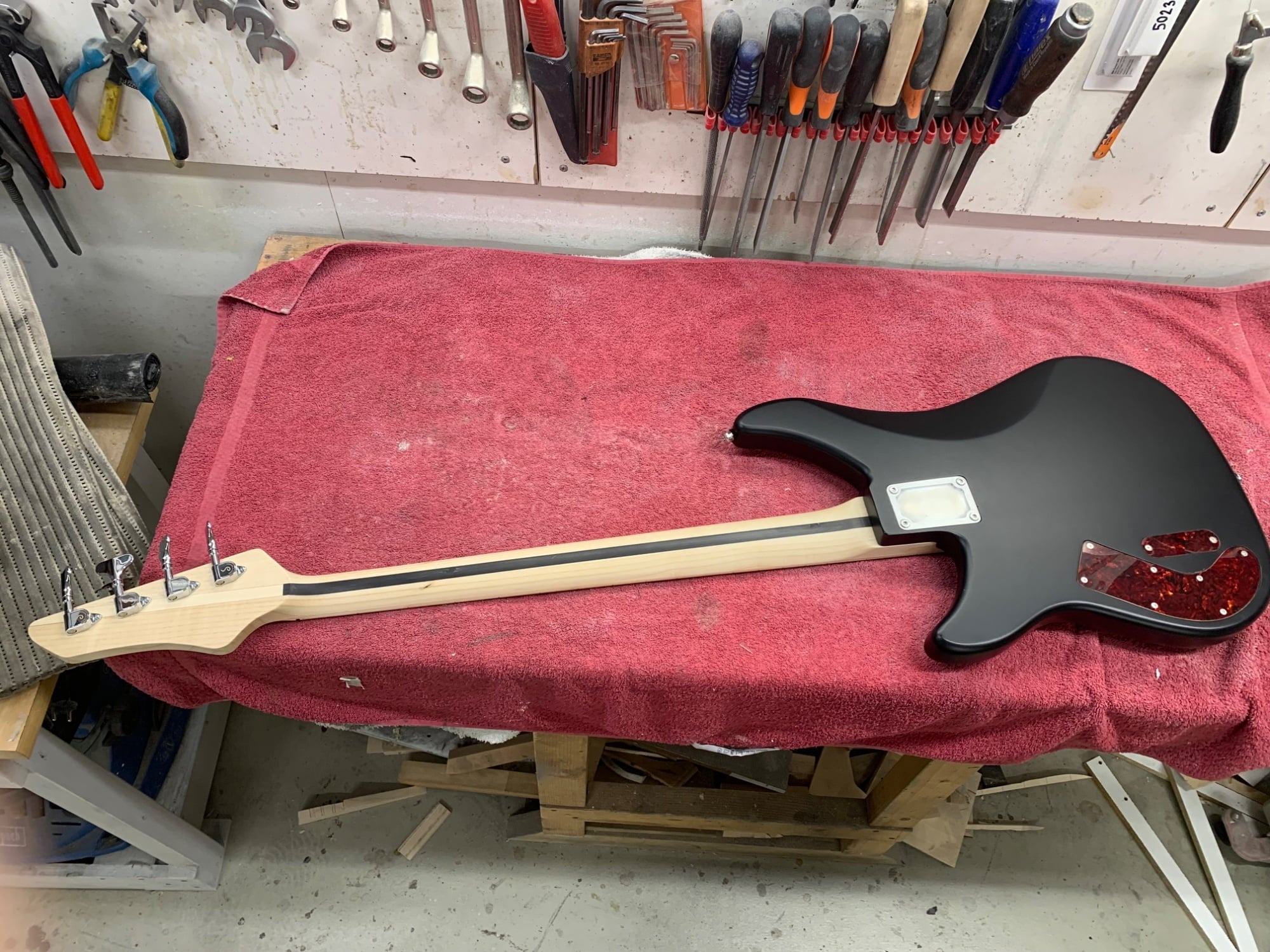

Frets leveled and crowned and the bass assembled. Some small adjusting and fine tuning left.View attachment 7379833
View attachment 7379832
It looks clean and professional grade, as usual for your projects!
What did you end up doing for the relief?
Nothing so far. I did not measure but it looks like the neck has a very slight front bow that’s enough as relief. I’ll take measurements tomorrow when I get new strings.
Ah, so you did your engineering correctly!
I’d say pure good luck!Ah, so you did your engineering correctly!
I personally believe that good luck is the result of good engineering. Being in the right place at the right time, prepared, recognizing an opportunity when it appears, and grabbing it before it gets away.I’d say pure good luck!
Bad luck is the opposite.
Sure, it’s by no means just luck. I took measurements from Vigier neck pics to see how much cf they put in their necks and sort of reverse engineered that. The knowledge I’ve gathered while making the 50 something basses plays a great role as well. For sure if I hadn’t worked with cf before there would have been way more guesswork included. May be not luck, more like ”we’ll see how this works if it works”. A bit of uncertainty at the least.
After some fine tuning (including sanding a bit relief on the frets) and new strings the bass plays great. No fret buzz, no dead spots, just clear and even thru the neck with tons of sustain. I’d say a very succesful experiment!

I am particularly impressed with this build, Marko.After some fine tuning (including sanding a bit relief on the frets) and new strings the bass plays great. No fret buzz, no dead spots, just clear and even thru the neck with tons of sustain. I’d say a very succesful experiment!
Perhaps this is all in my head, but I can’t help but think this design would be best suited to a fretless.
With a very reliably stable neck (of the dozens of basses I have built only a few can be described as such), I like to run close to zero relief on a fretless. If I really want to get that sweet mwah in the lower register, I kinda consider this necessary.
Last edited:
This neck accepts the lowest string height I’ve had in the basses I’ve made so far. I don’t know if it’s because of the rigidity, stability or the quality of fretwork or all those combined. I think this contruction would make a great fretless neck.
This neck accepts the lowest string height I’ve had in the basses I’ve made so far. I don’t know if it’s because of the rigidity, stability or the quality of fretwork or all those combined. I think this contruction would make a great fretless neck.
Yes, that's no surprise. A rigid neck will vibrate and flex less while the string is cycling. So the action and relief can probably be adjusted lower before the string starts hitting a fret. Plus, with the neck being more rigid, you probably did a more accurate job leveling the frets.
It’s for sure very difficult or nearly impossible to accidentally bend this neck when leveling frets. That’s probably the reason for such accurate leveling. The neck feels quite a lot like the Steinberger or Status headless necks I’ve had. Neither of those had a truss rod and they were very stiff too.
I'm looking at doing a copycat build of some persuasion, inspired by your efforts. I don't have the experience with composites that you do, so you would mind telling me whether you think four of these laminated (probably with 3mm laminates of wood between them) would be structurally sufficient? Carbon Fibre Pultruded strip - 30 x 3 x 1000mmThis neck accepts the lowest string height I’ve had in the basses I’ve made so far. I don’t know if it’s because of the rigidity, stability or the quality of fretwork or all those combined. I think this contruction would make a great fretless neck.
It occurred to me that on a fretless, one could do without a fretboard, allowing the aesthetic of the rear of the the neck could be carried though to the front, which could create something fairly unique.
I suppose four of those strips would be just as stiff as two 6mm bars. I would laminate them to a one bar without wood between them.
Last edited:

It would look cool but I'd worry about how it affects the tone. Material choices for fingerboards are fairly easy to hear, and my first thought is that this would lead to bright-sounding middle strings relative to outer strings.It occurred to me that on a fretless, one could do without a fretboard, allowing the aesthetic of the rear of the the neck could be carried though to the front, which could create something fairly unique.
It would look cool but I'd worry about how it affects the tone. Material choices for fingerboards are fairly easy to hear, and my first thought is that this would lead to bright-sounding middle strings relative to outer strings.
Yes, building a neck to be very rigid definitely affects the overall tone. A softer, more flexible neck adds warmth and background coloration in the low-mid range. The rich, "wooden" sound. It's caused by the neck flexing and vibrating along with the string. When the neck is rigid, the sound character is almost entirely from the flexing of the string. More metallic sounding; high ringing; higher sustain.
You may or may not want that on a fretless bass. Do you want bright zinging slides like Jaco, or warm rich slides like Ron Carter on an upright? It's your choice.
We play sort of progressive light alloy metal so more metallic, string sound is exactly what I’m looking for. Single coil pickups with filter preamp for each pickup gives a very wide sound palette. I like this bass a lot; nice, modern looks, it’s nicely balanced, quite lightweight, plays easily, has very even sound thru the fretboard and gives sounds I like a lot. It has way more potential I’m ever able to use but hey, why not drive a Ferrari, especially when I can make it myself for reasonably cheap. I have to admit myself that I can make way, way better basses than what I could ever buy. The main difference to commercial basses is the neck, whether it’s like this or one with Bruce’s truss rod and mounting block design. These necks just sound and behave way better than anything else. I’ve been disappointed many times with necks that have dead spots, are very reactive to humidity or are flexy like rubber.


