• TalkBass has been independent since 1998. Add your voice.
    Create a free account to reply to discussions, view embedded media, and browse with fewer display ads.
    Join freeLog in
    Want zero display ads or expanded classifieds tools? Compare plans.

Scale Length - Why Does It Matter?

It seems that amongst bass players, scale length is more of a big deal that it is with guitar players. Witness the fact that Gibson and Fender generally have different scale lengths in their electric guitars with Gibson being 24.75" and Fender 25.5" With bass players, I see a lot more derision for short and medium scale instruments than on guitar forums. What is the reason for this? If short and medium scale basses are so bad, why are they still being made and played?
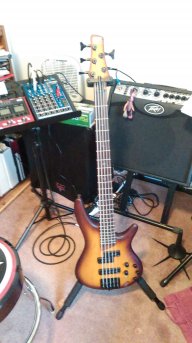
 
The differences in bass scale can be as much as 6 inches and this has quite an affect on string tension and tone. This is especially true with the low B which requires length to enhance tension. Short answer the standard scale (34) produces a sonic pallet that a short scale (30 or less). I think the derision comes from some assuming the shorter scales are for kids, as some are marketed. Short scales can be used effectively, especially four strings. I play a standard scale and short scale Fender--depends on the sound I want and the notes I have to play (no lower than E).
 
24.75 and 25.5 are pretty much like the debate here between 34 and 35.

I suspect if you talked to guitar players about 22" scale guitars you'd find the same derision as you get here towards 30 and 32" basses.
 
24.75 and 25.5 are pretty much like the debate here between 34 and 35.

I suspect if you talked to guitar players about 22" scale guitars you'd find the same derision as you get here towards 30 and 32" basses.

Probably true. I know that I have heard many recordings done with medium or short scale basses and I don't have any problem with the tone. In fact, quite the opposite. I own a short scale bass myself and after if was properly set up, it plays and sounds great, to my ears and hands, anyway.
 
Hi:

I have a few 5 strings, most of which have a 34" (standard) scale length. My Peavey Millennium 5, however, has a 35" scale length. You would think that 1 extra inch would not make much of a difference, but it makes a huge diference - especially for the B string. Much "tighter" sound, more focused.
 
With guitars, many people agree that a guitar with a 24.75 scale guitar will be more difficult to solo on, especially if it's 24 frets, than a 25.5 scale guitar. The frets on the shorter scale would be spaced closer together and while that makes rhythm playing easier, soloing is harder because the frets are so close together (My guitarist friends agrees with this).

On bass, I believe the scale length has a lot to do with tone and playability. The standard 34" has good tension and fret spacing, but those with smaller hands or those who simply prefer a short scale may find the 30" scale basses more comfortable.

I've seen a few boutique 4-strings with a 35" scale, but never played one. I assume just wider fret spacing and higher tension is the draw to those (Drop tuning? I dunno). 35" seems to be standard for a 5 string, though it isn't necessary. Lots of people say the Music Man/Sterling/S.U.B.s have good B strings despite being a 34".
 
With my short scale, the E was pretty loose out of the box but after a set up and restring with Chromes, it was much better. My choice was more to do with comfort and ergonomics. Although, had the tone been crap, I wouldn't have kept the bass. Luckily for me, the tone is very good.
 
For me, the left hand stretch on a 34" bass is a bit tough(I am 6'2" but an injury slightly limits my left hand span); 35" is really uncomfortable. 30 or 32 inches might be nice but I've been doing 34" for 35 years and am pretty set in my ways.
30, 32 and many other scales are still being built because they are perfectly fine. No one(whose opinion means anything)says there's anything inherently *wrong* with them.
 
Personally, I think it's a preference thing. I have played both. Squier Bronco, Squier Jaguar Shortscale, some vintage short scale, the basses aren't bad at all. I definitely am supportive of short scale basses. The standard scale is 34" I've played basses that were 32" scale. It's really all about preference, much like....the whole fingers or pick debate..there IS no right or wrong way to play.
 
Personally, I think it's a preference thing. I have played both. Squier Bronco, Squier Jaguar Shortscale, some vintage short scale, the basses aren't bad at all. I definitely am supportive of short scale basses. The standard scale is 34" I've played basses that were 32" scale. It's really all about preference, much like....the whole fingers or pick debate..there IS no right or wrong way to play.

I'm in agreement on this. I'm well beyond the age where I care what people think of what bass or guitar I play. That said, my original post was more a question of why, from a technical perspective, short and medium scale basses might be less desirable.
 
Scale length matters more on bass than guitar because electric bass pushes the limits of string physics in ways that guitars don't.

Acoustic and electric guitars are essentially the same scale. So are Strats and Les Pauls. The difference is only 3/4". Upright bass strings are 8" longer than normal electric bass strings. A foot longer than short scale basses. That's a huge difference.

The lowest string on a Dingwall is 7" longer than the lowest string on a short scale bass. Also a huge difference.

Longer strings make low notes better.
 
:cool:

For comfort it matters. I prefer 34" scale.
But have a 32" scale bass that is wonderful.
I don't like 30.5" short scale. to cluttered in the upper frets.
If a Bass is well made, there should be great tone with any scale.
 

Latest posts