• TalkBass has been independent since 1998. Add your voice.
    Create a free account to reply to discussions, view embedded media, and browse with fewer display ads.
    Join freeLog in
    Want zero display ads or expanded classifieds tools? Compare plans.

SG & EB Bass Club

No lurrvvv for the letter Q, so it's time to RRock!
*R
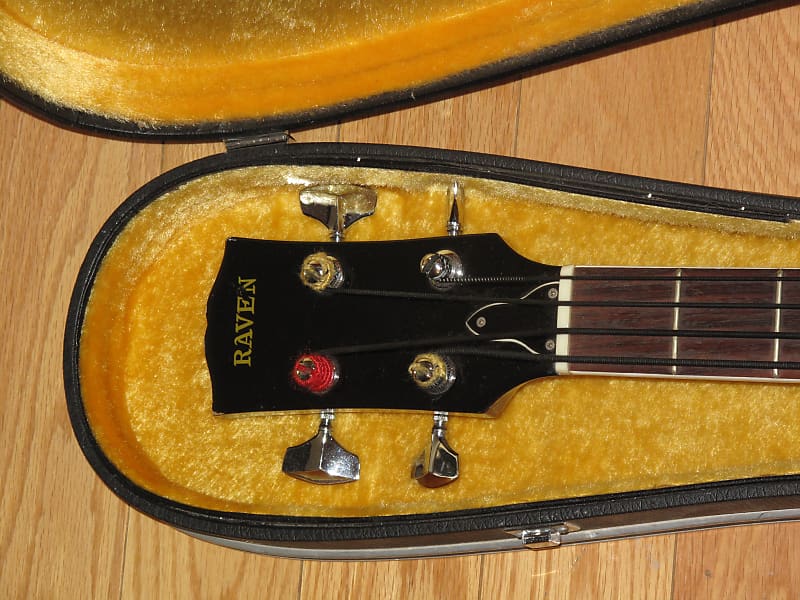
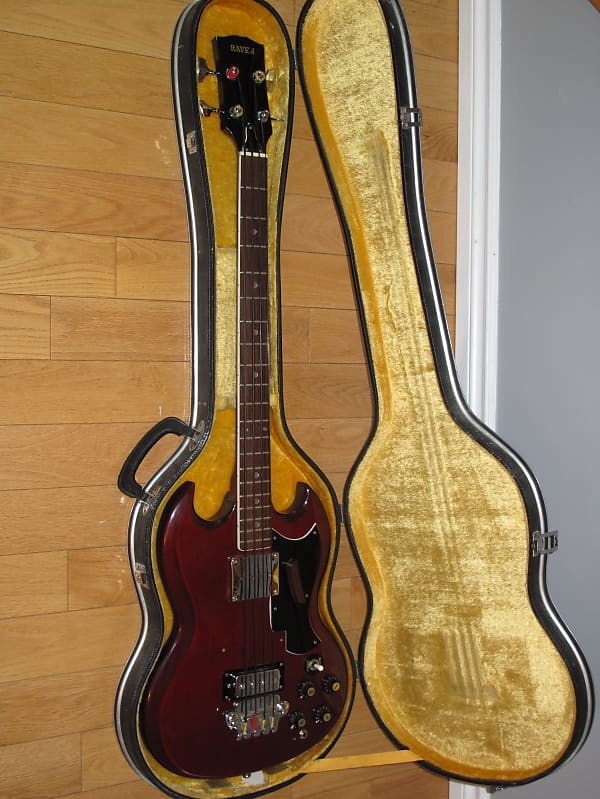
Raven ( Matsumoku)
Raven 1.jpg

Raven 2.jpg


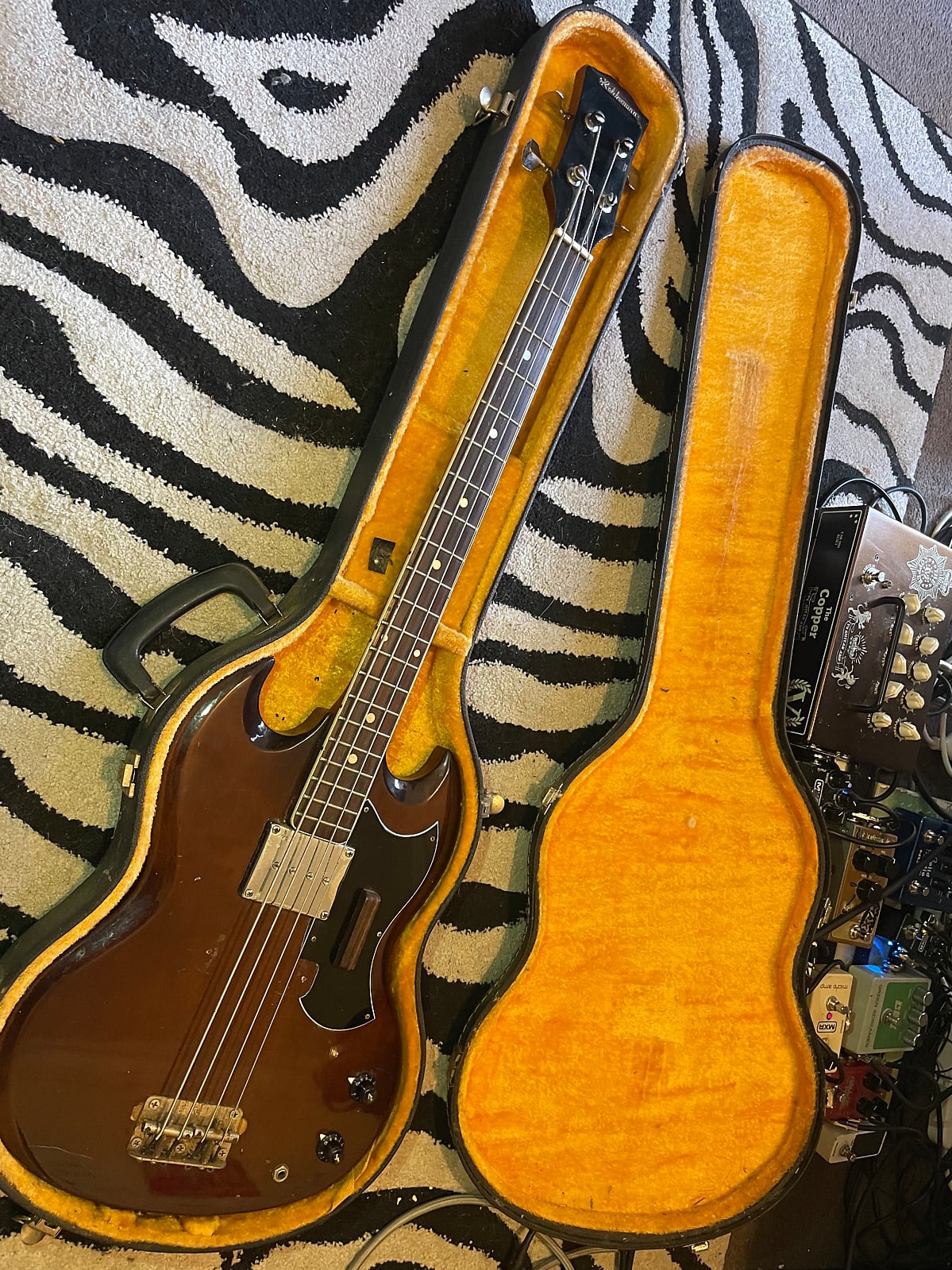
Rokkomann (?)
Rokkomann.jpg


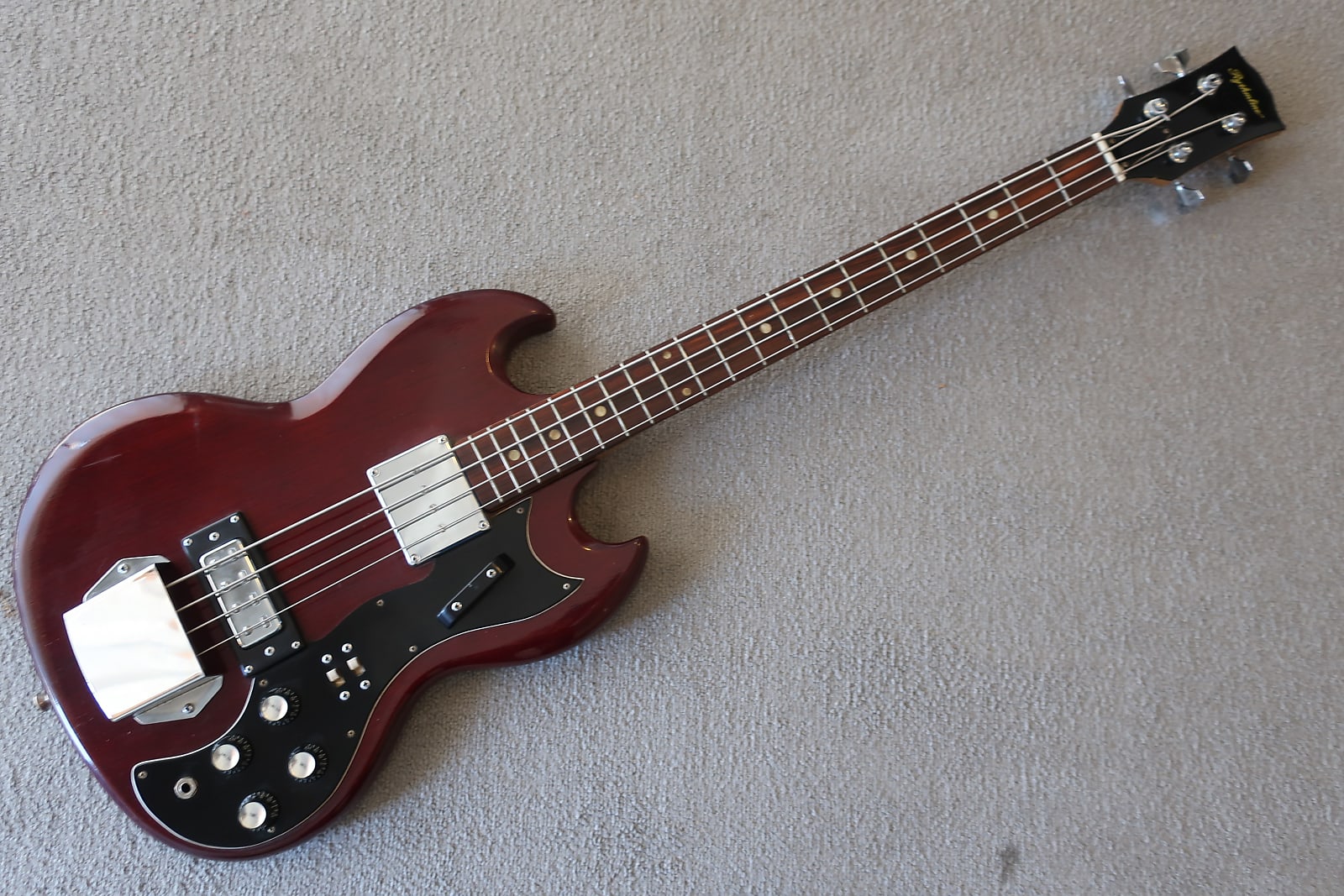
RythymLine ( not a typo) (Kawai/Teisco ?)
RythmLine.jpg
 
@dmt Another thing I was thinking about; a humbucker has a pretty wide magnetic field as far as I know. Even if the whole "harmonic node" thing isn't just a bunch of hocus pocus, it seems like exact placement might not be that important. You mentioned that bisonic having its neck side pole pieces aligned with the harmonic. But even if it was, would it even matter, considering the wide magnetic field? :eyebrow:

The BiSonic is a large single coil, so there is only one row of polepieces that sense the string.

What looks like a set of smaller polepieces is really the polepiece height adjusting screws. It's an overly elaborate design (but sounds killer!).
 
Just for interest sake on my two basses ( only 2! Oh no he he) the split coils are placed under what would be a hypothetical 30th and 33rd frets on one. Which would be approximately multiples of the fundamental for E and A strings for coil 1. The other coil under the 33rd would be a multiple of the septimal flat 7th). On the other bass with reverse split P, coil 1 is under a hypothetical 31st fret and a multiple of the perfect 5th for E and A strings whilst coil 2 is under a hypothetical 27th fret and a multiple of the septimal flat 7th for D and G.
 
Last edited:
The BiSonic is a large single coil, so there is only one row of polepieces that sense the string.

What looks like a set of smaller polepieces is really the polepiece height adjusting screws. It's an overly elaborate design (but sounds killer!).
Oh it's a single coil? Weird. Yeah that's a confusing design. I would have bet my life that was a humbucker just from looking at it. Oh well, learn something new everyday.
 
Ok that makes sense I think. But when you fret the string all that goes out the window, right?

Yes, exactly! Which is why the idea of some kind of "optimal" or "scientific" pickup positioning is pointless anyway….
 
Ok so the the science and physics is real. It just doesn't really affect anything lol. That made me chuckle lol.
It probably has some effect, but may be over emphasized. Like with the pickups on the two basses I mentioned pickup positions. They are placed under hypothetical frets but except for 1 coil on one of the basses, the pole pieces are not directly under the harmonic multiple ( equal temperament a factor, but prob just "looks ok there" thingie) On one, the coil would have to be moved to a hypothetical 29th fret to be exactly under a multiple of the fundamental. So pickup placement has flexibility depending on what you are trying to achieve I spose. Science wise if you tapped the harmonic 29.76" from the nut on the EB-0 it would be a node of the 4th octave of the open string. If you put pole pieces a little under an inch from that point back towards the neck, they would be under the anti-node of the harmonic and by rights, the point of greatest amplitude of the harmonic frequency at that point
 
Last edited:
  • Like
Reactions: Supernaute
It probably has some effect, but may be over emphasized. Like with the pickups on the two basses I mentioned pickup positions. They are placed under hypothetical frets but except for 1 coil on one of the basses, the pole pieces are not directly under the harmonic multiple ( equal temperament a factor, but prob just "looks ok there" thingie) On one, the coil would have to be moved to a hypothetical 29th fret to be exactly under a multiple of the fundamental. So pickup placement has flexibility depending on what you are trying to achieve I spose. Science wise if you tapped the harmonic 29.76" from the nut on the EB-0 it would be a node of the 4th octave of the open string. If you put pole pieces a little under an inch from that point back towards the neck, they would be under the anti-node of the harmonic and by rights, the point of greatest amplitude of the harmonic frequency at that point

But only for open strings. Fret a note and the whole shebang shifts towards the bridge.
 
  • Like
Reactions: Supernaute
But only for open strings. Fret a note and the whole shebang shifts towards the bridge.
Yeh.
Looking at this 74 Gibson EB-3 the poles look about 2 inches from the G saddle, which would be around the scale length. And that would put them under the 16th node of the 4th octave of the fundamental, about 29.76" from the nut. Hard to get accurate dimensions from a pic. Do you have an EB-3 you could measure distance from nut to pole pieces of bridge pickup?
1974 Gibson EB-3.jpg
 
  • Like
Reactions: dmt and Supernaute
@dmt Another thing I was thinking about; a humbucker has a pretty wide magnetic field as far as I know. Even if the whole "harmonic node" thing isn't just a bunch of hocus pocus, it seems like exact placement might not be that important. You mentioned that bisonic having its neck side pole pieces aligned with the harmonic. But even if it was, would it even matter, considering the wide magnetic field? :eyebrow:
This guy, who gets into the math of pickup placement, says (talking about guitar pickups in this quote, I believe), "Pickups do not sense the string at a single point source, but rather over an area due to the width of the magnetic field. This sensing area is called the "aperture" of the pickup and is about an inch wide on a thin single coil pickup and about 2.5 inches wide on a wider pickup such as the Gibson humbucker.": Response Effects of Guitar Pickup Position and Width

However, I'll add that magnetic fields are not of uniform strength over the whole field; strength decreases rapidly with distance (inverse square law), and the highest strength will be over the polepieces, iiuc. But yeah, humbuckers are known to have a more spread out field than single coils.

Meanwhile, it seems to me that, considering that string length (and thus harmonics positions) is constantly changing as we play different fretted notes, placement under an open string harmonic is largely for reference, to have a reference point to work with. I mean, as you saw when you decided to go ahead with putting a bridge pickup in, the question immediately raises itself of, "But where?", and then "But where exactly? I only get one chance at this and want to do it right." You could copy someone else, but where did they get it? There's got to be some fundamental reasoning to one position or another. "Give me a number, man. And some plausible reason for that number, and then I can start cutting with a clear conscience."

Using a harmonic is mathy, sounds cool, is fun to play with and "seems like it makes sense" :D

FWIW, I would put it under a harmonic. There's some sort of comfort with having some basis like that. But now that I've seen that simple little homemade pickup placement testing jig, I would make one of those and move the pickup around and see where I liked it, first. The big question to me would be, am I putting the bridge pickup in more for a blended sound, or for a second soloed pickup sound. I'm not completely sure how that would affect things, but I'm thinking that the farther towards the P sweet spot the second pickup is, the more I'd probably like it on its own. Like you, I know that I don't need a soloed pickup sound from right by the bridge. But maybe a wider spacing between pickups would work better for a blended sound?

And then what about the various possible volume settings when blending (not to mention tone knob settings), or with a series push-pull installed? One could go batty contemplating the possibilities, which brings me back to the ol' under-a-harmonic idea. Still remembering that the main point is to put it somewhere you like it.

So to wrap up my completely non-expert thoughts here, I'd say move the pickup around with that little jig and put it where you think it sounds best. If that combines with a harmonic, cool beans — comfort level goes even higher. Alternatively, if you can't decide where it sounds best (very possible — there's surely more than one good position), go with a harmonic per one of the three positions in my previous post, and don't look back :bassist:

Good luck!

PS - Oh yeah, and now we'll be wanting updates, of course :)
 
Last edited:
@dmt Well, the first thing I need to do is install a blend pot, which I was going to do anyways. And I'm still deciding on where I want to put it. Installing another pickup and another pot means removing, modifying, or replacing the pickguard. Still deciding on that too.

But I've found some wood pieces that I think I can use to make a jig with. I think I'm going to try and test it that way, although I'm skeptical I'll be able to accurately test it unless I can do it in playing position. Because just plucking strings while it's lying down on the bench seems kinda lame. And not very helpful. We shall see.
 
When I routed my Epi/KB-1 pickup I used a Jazz bridge PU and placed it as close to the bridge as I could I could to get the brightest tone to mix in with the Epi sidewinder. I dial it in just enough to add those bright sounding harmonics. The sub-rumble is still there but the Jazz PU adds the string definition.
View attachment 5170704
That looks super cool man. Do you have a pic with the bridge and strings on and stuff?
 
  • Like
Reactions: SubHuman
@dmt Well, the first thing I need to do is install a blend pot, which I was going to do anyways. And I'm still deciding on where I want to put it. Installing another pickup and another pot means removing, modifying, or replacing the pickguard. Still deciding on that too.

But I've found some wood pieces that I think I can use to make a jig with. I think I'm going to try and test it that way, although I'm skeptical I'll be able to accurately test it unless I can do it in playing position. Because just plucking strings while it's lying down on the bench seems kinda lame. And not very helpful. We shall see.
Maybe, after first trying it on its back on a bench to get some initial impressions, put some stick-on felt under the wood blocks and have a friend slide the pickup back and forth as you play the bass in normal playing position. Of course the jig would get in the way of your right (non-fretting) hand, but you could probably get a better idea of the final sound with some playing technique and realistic lines/riffs involved. Just a thought…
 
The Fender spacing wasn't perfect but doesn't seem to alter the G string volume. I usually play both PU's blended but that's true on my EB-3 too.
View attachment 5170711
Damn that looks good. I'm such a sucker for black and chrome.

I also considered a J bass pickup. I have a few extras lying around from when I was testing out pickups for my J bass. But the string spacing issue steered me away. It doesn't seem to effect yours though so that's good. The pickup I'm installing has rails so that shouldn't be an issue.
 
  • Like
Reactions: SubHuman
Damn that looks good. I'm such a sucker for black and chrome.

I also considered a J bass pickup. I have a few extras lying around from when I was testing out pickups for my J bass. But the string spacing issue steered me away. It doesn't seem to effect yours though so that's good. The pickup I'm installing has rails so that shouldn't be an issue.
Thanks man! Right now it's wired VVT but I am looking at wiring it with a blend and putting a Bisonic in there. It's fun to Mod and not that expensive of a hobby.
 
  • Like
Reactions: dmt and Supernaute

Latest posts