• TalkBass has been independent since 1998. Add your voice.
    Create a free account to reply to discussions, view embedded media, and browse with fewer display ads.
    Join freeLog in
    Want zero display ads or expanded classifieds tools? Compare plans.

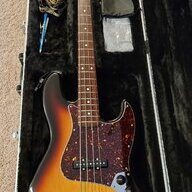
Shielding a jazz bass for the first time

My Jazz’s hum is starting to bother me. Is shielding the answer? If so, anyone know of a video walkthrough that’s at regular speed? Everything I found online is sped up and not too helpful to a newbie. Looking for a way to use the copper tape without unwiring anything.

 
Mixing your two pickups together will kill hum. Just crack the one you don’t want to use open a tad and you’ll hear the hum drop off without colouring the tone much.

not sure I follow. If my volume knobs are at the same level, I don’t get hum. But if they’re at different levels I get hum. I tend to play with both knobs maxed so it’s not an issue but lately I’ve been enjoying other combos or bridge pup only and then I get the hum. Don’t hear it with a band but at home it’s noticeable.
 
  • Like
Reactions: Killing Floor
not sure I follow. If my volume knobs are at the same level, I don’t get hum. But if they’re at different levels I get hum. I tend to play with both knobs maxed so it’s not an issue but lately I’ve been enjoying other combos or bridge pup only and then I get the hum. Don’t hear it with a band but at home it’s noticeable.
That’s because when both your single coil pickups are working they form a “hum bucker”. That’s where the term comes from.
 
  • Like
Reactions: One Way
That’s because when both your single coil pickups are working they form a “hum bucker”. That’s where the term comes from.

been out of town and just got back to test the hum again. If both volume knobs are maxed, no hum. Otherwise, hum. If one knob is maxed and I open the other one ever so slightly, hum. Does this mean shielding still wouldn’t help?
 
been out of town and just got back to test the hum again. If both volume knobs are maxed, no hum. Otherwise, hum. If one knob is maxed and I open the other one ever so slightly, hum. Does this mean shielding still wouldn’t help?
Personally I shield all my basses. I don’t see a negative. How bad is the hum you’re hearing when both pickups are on and you dial one back slightly?
 
Personally I shield all my basses. I don’t see a negative. How bad is the hum you’re hearing when both pickups are on and you dial one back slightly?

the hum is audible at home but if I’m playing with a drummer it’s not an issue. The hum is the same volume at any combo of the two knobs besides both being maxed. I’ve never shielded a bass before so I’d rather not go through the hassle unless it was going to make a difference.
 
  • Like
Reactions: Killing Floor
Shielding won’t stop hum. If it really bugs you that much get hum-cancelling j pickups. I fretted about whether a hum cancelling p-90 type would impair my Les Paul’s sound and it really didn’t change it enough to matter ( to me at least)
 
  • Like
Reactions: Derek Kay
Shielding might help knock down how noticeable the noise is in some situations, but 50/60Hz hum is an inescapable side-effect of single-coil pickup design. As others have said above, if it's bothering you enough it may warrant a pickup change (I'd vote for Wilde J-45s, they're microcoils so noiseless). That said, even if you put hum-canceling pups in there, you'll still benefit from shielding the bass.

Copper tape shielding is easier to do than you might think... so long as you have tape with conductive adhesive to start with, you don't necessarily need to pull all the electronics out to shield the cavities. I was able to do it without completely taking everything out of my jazz bass, I did unscrew pretty much everything (pickups, grounding screws, control plate, pickguard) but never had to pull it fully out. (Worth mentioning also that I was doing this with the neck off.)

Should also note I'm an idiot about this, but can seem like I know what I'm saying thanks to this thread over on the Pro Bench: https://www.talkbass.com/threads/shielding-whats-to-know.1415932/
 
Last edited:
  • Like
Reactions: Stagelab
been out of town and just got back to test the hum again. If both volume knobs are maxed, no hum. Otherwise, hum. If one knob is maxed and I open the other one ever so slightly, hum. Does this mean shielding still wouldn’t help?

Shielding will not address that hum. That is single coil noise and expected operation. Shielding is for the hum that stops when you touch strings/bridge/metal on the bass. Some folks say shielding helps reduce single coil noise. Sensible folks say "all basses should have good shielding." Based on what you've described, your shielding might be totally fine. Hard to say without a multimeter and/or opening the instrument.

Lots of good advice in this thread. I don't have much more to add. Pretty much everything I know on the subject can be read in the link in my signature.
 
  • Like
Reactions: Derek Kay
Copper tape shielding is easier to do than you might think... so long as you have tape with conductive adhesive to start with.
Just a caution - I have dealt with numerous cases where the conductivity of the adhesive lessened over time to the point where conductivity was entirely compromised. Best to tack solder each piece of copper foil to its neighbour.
 
  • Like
Reactions: psyched
Just a caution - I have dealt with numerous cases where the conductivity of the adhesive lessened over time to the point where conductivity was entirely compromised. Best to tack solder each piece of copper foil to its neighbour.

Ha, I knew I didn't know nearly enough about this. Thanks for the much-needed note of warning, I've seen that too (didn't link to the pro bench thread without reading it first!). I was suggesting the OP ensure the copper tape adhesive is conductive so tack soldering wasn't the only way to have shielding continuity, making for a much sadder shielding experience. Different sense of victory when the tack soldering is an insurance policy... :)
 
Ha, I knew I didn't know nearly enough about this. Thanks for the much-needed note of warning, I've seen that too (didn't link to the pro bench thread without reading it first!). I was suggesting the OP ensure the copper tape adhesive is conductive so tack soldering wasn't the only way to have shielding continuity, making for a much sadder shielding experience. Different sense of victory when the tack soldering is an insurance policy... :)
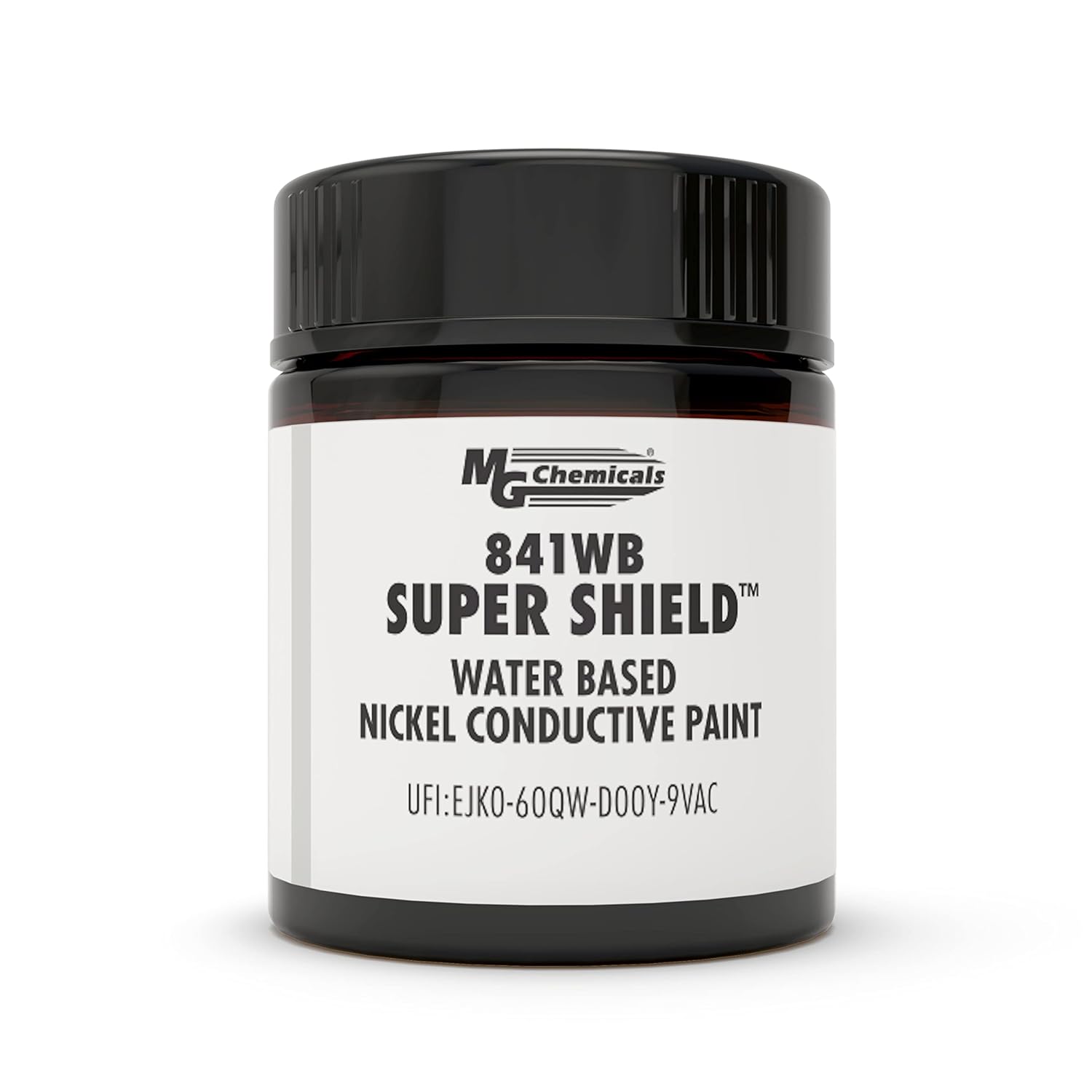
Frankly, though I used copper foil in the past, I now only use nickel shielding paint. Not only is it equally effective, it is easier to install and doesn't develop conductivity issues. The water based variety is an easy-to-use 1-part water-based system that is non-flammable, low VOC, and low odor. It may be brush or sprayed on.
 
  • Like
Reactions: Grinderman
red-up-arrow.png


61N9eE7aB9L._SL1500_.jpg
 
First you should understand how a pickup works. A pickup uses electromagnetic induction to create a voltage. As a magnetic field changes in space, a coil in the pickup turns that changing field into a voltage which gets amplified. That's what electromagnetic induction means. Now the metal strings are moving through a magnetic field which exists because a pickup has a magnet (or magnets). Those strings cause the magnetic field to move in sync with them. So they are producing the moving magnetic field that the pickup coil is turning into a voltage.

In summary: you pluck a string - causes magnetic field to move - coil responds to moving field - voltage is produced - amplifier makes voltage stronger - speaker makes it heard.

Now if there's EMF radiation in the room, that EMF includes a magnetic component. EMF = electromagnetic field. So that magnetic component is a moving magnetic field. You see where this is going I hope. That moving magnetic field *also* induces a voltage in your pickup coil. Note that this is impossible to prevent unless you turn off the source of that EMF which is usually not an option. That EMF is usually the product of our AC power systems and various electrical devices using that power. That's why people talk about 50 or 60-cycle hum. Our AC power systems are oscillating at that frequency.

Why does the hum go away when both pickups are on? There's a trick. One pickup produces the voltage with positive and negative voltage in a certain phase and the other pickup generates the same voltage in the opposite phase. Together the voltages cancel each other out. This is how humbucker pickups work. It's also how two single coil pickups combine to create essentially a humbucker pickup.

So the short answer is IMO shielding the pickup cavity is a waste of time. It won't hurt anything so feel free to shield. You may even feel after putting in the work that it's quieter, so that's a plus. Mostly the end result is about feeling better (again IMO).
 
Last edited:
  • Like
Reactions: Derek Kay
First you should understand how a pickup works. A pickup uses electromagnetic induction to create a voltage. As a magnetic field changes in space, a coil in the pickup turns that changing field into a voltage which gets amplified. That's what electromagnetic induction means. Now the metal strings are moving through a magnetic field which exists because a pickup has a magnet (or magnets). Those strings cause the magnetic field to move in sync with them. So they are producing the moving magnetic field that the pickup coil is turning into a voltage.

In summary: you pluck a string - causes magnetic field to move - coil responds to moving field - voltage is produced - amplifier makes voltage stronger - speaker makes it heard.

Now if there's EMF radiation in the room, that EMF includes a magnetic component. EMF = electromagnetic field. So that magnetic component is a moving magnetic field. You see where this is going I hope. That moving magnetic field *also* induces a voltage in your pickup coil. Note that this is impossible to prevent unless you turn off the source of that EMF which is usually not an option. That EMF is usually the product of our AC power systems and various electrical devices using that power. That's why people talk about 50 or 60-cycle hum. Our AC power systems are oscillating at that frequency.

Why does the hum go away when both pickups are on? There's a trick. One pickup produces the voltage with positive and negative voltage in a certain phase and the other pickup generates the same voltage in the opposite phase. Together the voltages cancel each other out. This is how humbucker pickups work. It's also how two single coil pickups combine to create essentially a humbucker pickup.

So the short answer is IMO shielding the pickup cavity is a waste of time. It won't hurt anything so feel free to shield. You may even feel after putting in the work that it's quieter, so that's a plus. Mostly the end result is about feeling better (again IMO).
This overlooks the EMF induction into the components other than the pickups. That noise can be induced into the wiring, the pots and the cap - all parts of the high-impedence circuit are susceptible to EMF noise. Shielding in the cavity will block the noise from getting into the other components, but it cannot block it from entering the pickups. If the shielding blocked the pickups they would never "see" the string vibration.