- Apr 3, 2003
- 35,515
- 19,945
- Disclosures
- Editor-in-Chief, Bass Gear Magazine
People still seem to be able to make 42" double bass fingerboards from ebony.
Nope. That is all done with smoke and mirrors.


TalkBass has been independent since 1998. Add your voice.
Create a free account to reply to discussions, view embedded media, and browse with fewer display ads.
Join free Log in
Want zero display ads or expanded classifieds tools? Compare plans.
People still seem to be able to make 42" double bass fingerboards from ebony.


People still seem to be able to make 42" double bass fingerboards from ebony.
42" scale on my DB equates to roughly 34" of fingerboard; said 4 string DB fingerbaord is wider than most electric 5's.
YMMV, etc.

I had Rob custom route the bass and put the EQ card from the Deep 4 in this little guy. Just in case the tone wasn't good enough, now I have that much more power over the sound.
Do tell. The regular Mouse just has a treble rolloff on the control cover (set to roll off just the highest frequencies) what tone controls are on the Deep series?
I asked RA if he could give me the cool fingerboard extension for my MB-2, and he said he couldn't get a long enough piece of ebony. but I love mine anyway, and spend most of my time playing on the neck, anyway, so it doesn't really matter. I should have asked for a bass knob on mine, though. It would be cool if I could turn down the bass without touching my amp
Well that answers the question as I am definitely looking for an ebony board, so it looks like the fingerboard extension is out. BTW, it is going to be a 4-string, someone above was assuming it would be a fiver...I'm a traditional kind of guy!
Perhaps Rob might be able to attempt that. I think he can also try 32" scale if you'd be into a thuddier tone. As far as I know, I thought he only had problems with this in ebony. This is just my 2 cents, but not a huge fan of ebony due to the sensitivity from changes in humidity. With Rob's strings, durability isn't an issue whatsoever and other fingerboards are a lot warmer sounding. Other than visually pairing well with the black lines of spalted maple, I usually steer clear.
I am a big ebony board fan and tolerate its temp / humidity quirks in exchange for its sound which I love and is part of my tone. I love the tight, punchy lows and clear highs that it imparts. Thanks so much for the input. I will post more after I speak with Rob (hopefully later today).

Can somebody elaborate on ebony and temperature and humidity ?
Are basses with ebony fingerboards very sensitive to temperature and humidity ? Meaning lots of trussrod tweaks ?
Andy (who after acquiring a Deep 5 is now looking into other ebony-fingerboard fretless basses)
I live in Arizona, what would be considered reasonable levels? Would I be able to get away with using just a case humidifier?Nothing to do with truss rod tweaks. Ebony can dry out and crack if not kept at reasonable hummidity levels...
I live in Arizona, what would be considered reasonable levels? Would I be able to get away with using just a case humidifier?
Having owned a Rob Allen with an Ebony board, and now one with the standard Mouse board (I can't remember the name of the wood... sort of Rosewoody in appearance.. Alveras something or other), I agree with some of the above posts that the fretboard material (and actually the wood choices in general) make much less of a difference on the Rob Allens versus other basses. My guess is, this has to do with the tapewound flats that are pretty much always used on these basses.
Unless for purely aesthetic reasons, I wouldn't spend a ton of 'thought time' or money on custom wood options, etc. Even Rob says all his basses (within models anyway) sound pretty much the same, regardless of spec.
IMO and IME.
Can somebody elaborate on ebony and temperature and humidity ?
Are basses with ebony fingerboards very sensitive to temperature and humidity ? Meaning lots of trussrod tweaks ?
Andy (who after acquiring a Deep 5 is now looking into other ebony-fingerboard fretless basses)
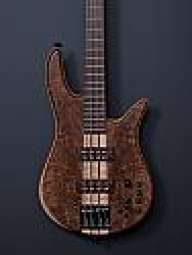
Early last week I sent Rob some images (many lifted from this thread!) of tops that he's done that I have really liked so that he would have an idea of what I am looking for. Yesterday I got an email from Rob with several options for top wood. Although I was initially thinking Koa, he sent me an image of one of the nicest pieces of figured walnut I have ever seen and so it looks like my MB-2 is going to have a Claro Walnut top. Let me know what you guys and gals think...this is the one!