
Enjoy the benefits of a premium membership!
Upgrade Account
-
TalkBass has been independent since 1998. Add your voice.
Create a free account to reply to discussions, view embedded media, and browse with fewer display ads.
Join free Log in
Want zero display ads or expanded classifieds tools? Compare plans.
You are using an out of date browser. It may not display this or other websites correctly.
You should upgrade or use an alternative browser.
You should upgrade or use an alternative browser.
Double Bass Simandl and You
- Thread starter Rama Temmink
- Start date
More options
Who Replied?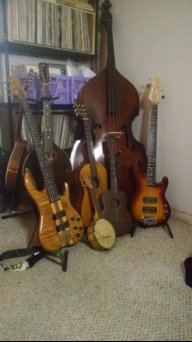
My other one. Most likely mid 1920s. Could be earlier or later. The copyright is 1904, but I’m pretty certain it’s not nearly that old. If someone would like to try and pinpoint better, I’m all ears...
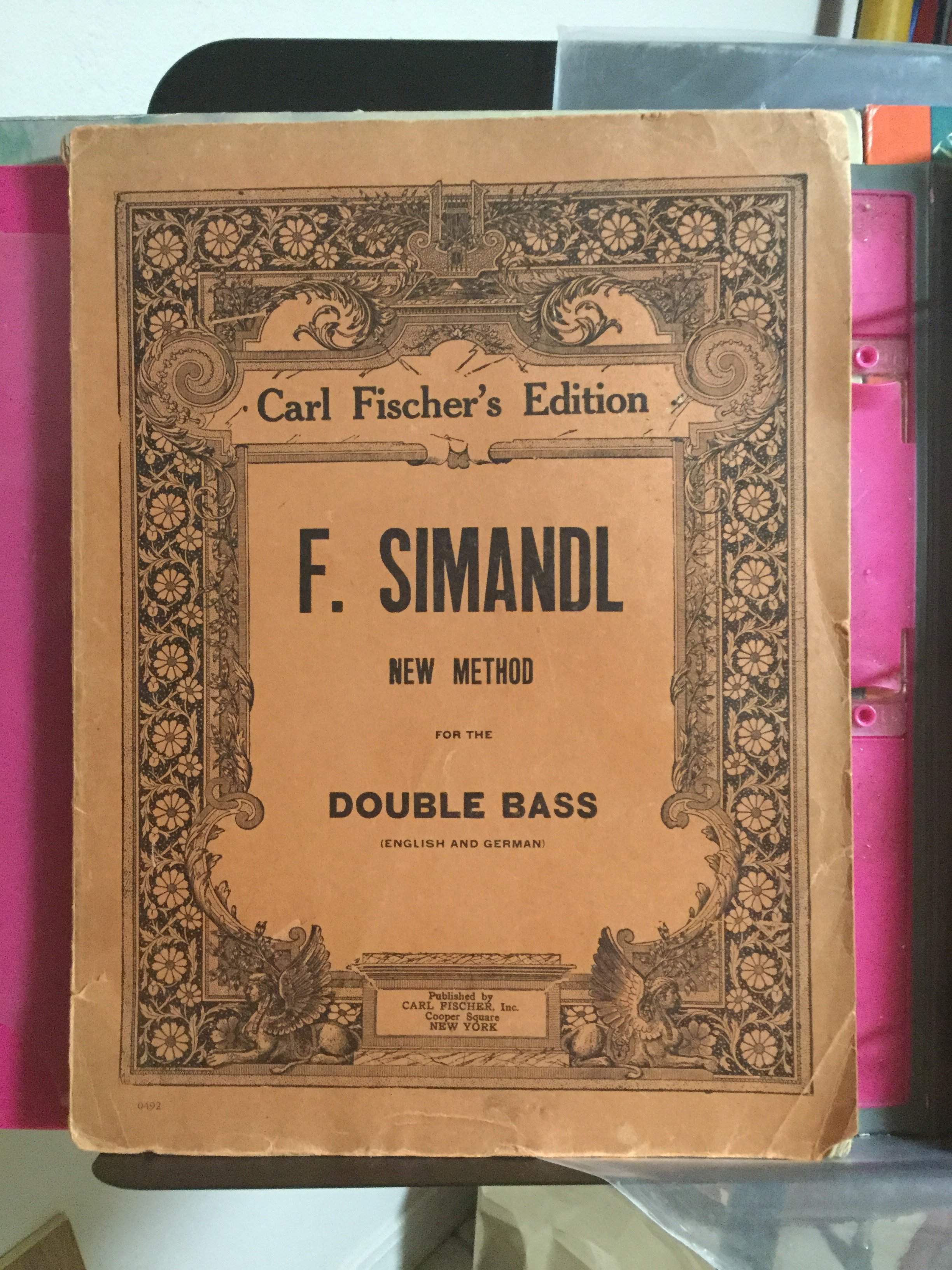
Last edited:

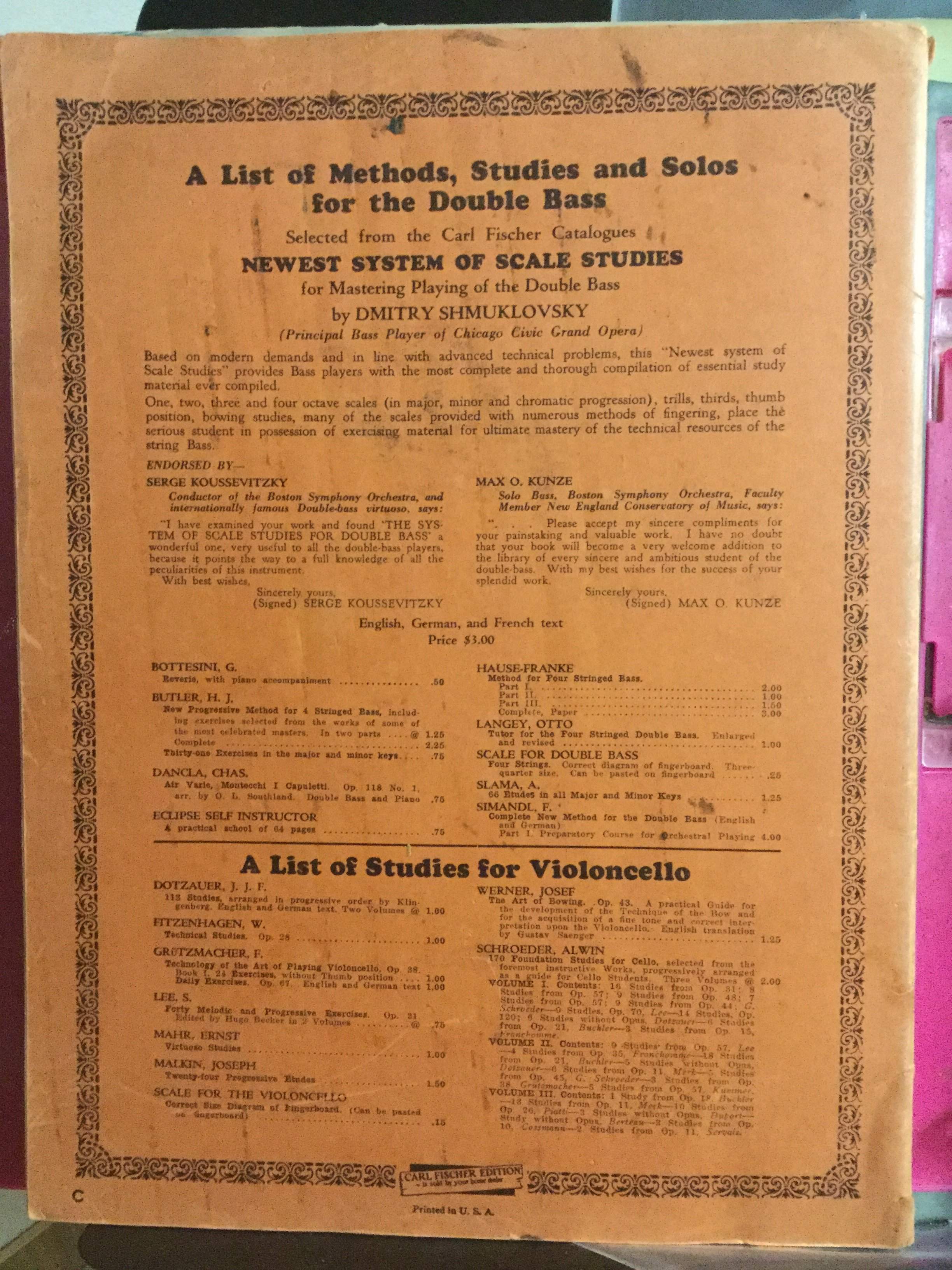
Back cover. Notice the price- four dollars. That’s why I think 1920s. A decade earlier or later and it would be much cheaper. Many people lose sight of that aspect of the “Roaring Twenties”. I have been collecting books, Lps and ephemera for a while...
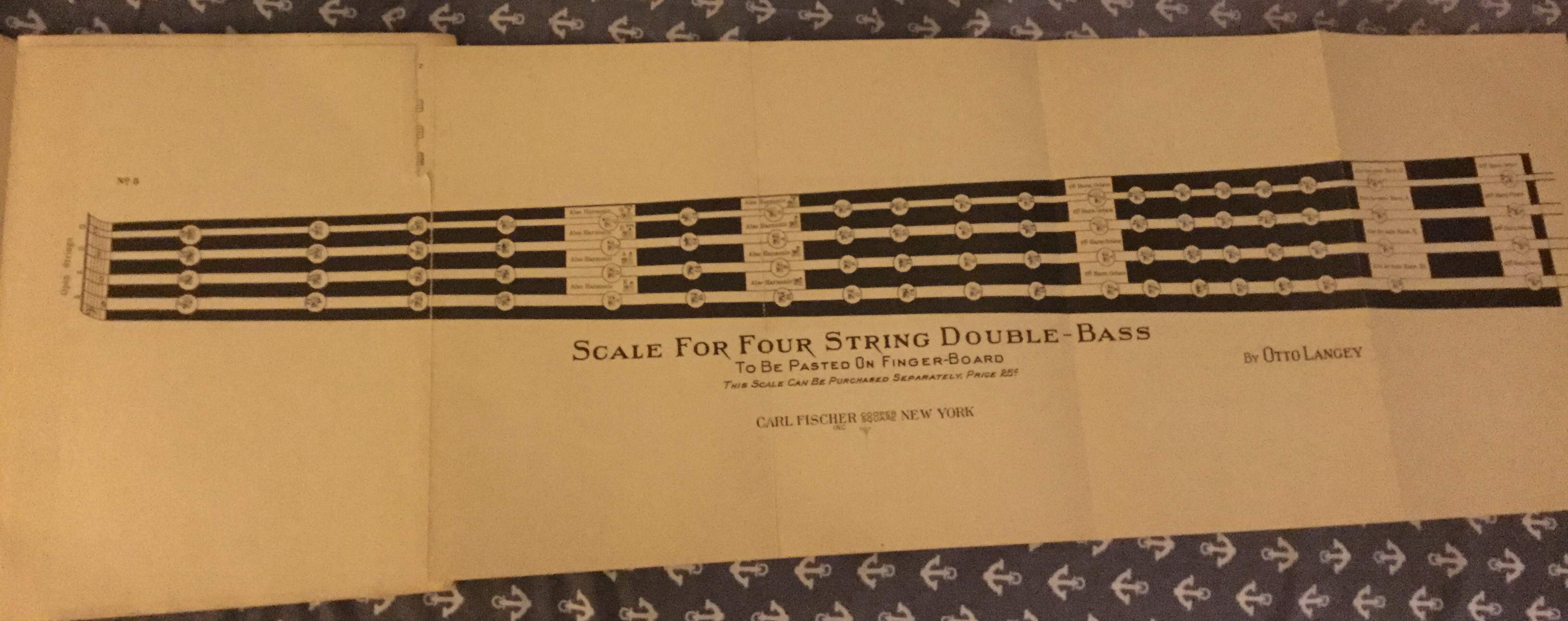
The much vaunted full-scale fingerboard chart insert:

Beautiful books you all have got there!
Now the renditions!
Sorry, I’d like to contribute but I’m still working on page 9 and I just replaced my SBW Dirty Guts D/G with some Artones. It might be another 3-6 months before I can even consider turning the page!
Here's mine - I bet it is the newest! Just got delivered Sat - an early Dad's Day gift. Notice the virgin, uncracked spine!

I dunno what all the fuss is about. This old bluegrasser has made his way all the way through page 6 - heck, I'm ready to gig!

Trying to teach this old dog some new (old) tricks!
My first thought was,"how did Don Kasper get a hold of my copy?". I seem to remember something about Mr. Suzuki of the suzuki teaching method having something to do with the Japanese language version but I don't know if this is true. I'd be curious to know how many of the etudes any of you can play from memory after x number of years.


My dog ate my homework. I'm glad you people can enjoy it though. Really!... the famous page ten of the classic red book.
My dog ate my homework. I'm glad you people can enjoy it though. Really!
I have started playing through p. 10 and 11. My sight reading has improved to the point that I can play through the études at ~75bpm but my intonation is not good enough to record and post on the internet! Sincerest apologies!
I have also been using John Goldsby’s jazz bowing book (it’s excellent!) and the open string exercises as warm up’s have improved my ability to cross strings and get more resonance out of the instrument with the bow. It’s helping my Simandl exercises sound less worse.
Last edited:
I seem to remember something about Mr. Suzuki of the suzuki teaching method having something to do with the Japanese language version but I don't know if this is true.
It was explained to me at the time that Simandl was used as the foundational technical method for Suzuki instruction because no Suzuki bass method existed, as it did for Violin, etc.

I’ve had a few copies but mine were all blue. What’s the difference?
I have the blue one. It's published by International Music, edited by Stuart Sankey. It's the one my teacher told me to get, but I don't know why. The [in]famous "Bowing Variations" are on page 73 in this edition, not page 69.
A student of mine has just found a copy of an English- Japanese version. One thing I noticed during a quick skimming is a lot more bowing indications, frequently down,down-up,up.
I've said this before, but the music is the key part to Simandl. You should use multiple fingerings and bowings.
Would having more bowing indications make it more usable for Suzuki teaching? Maybe Suzuki himself did edit this version. I do prefer the older version I have. It gives you more opportunity to figure out your own options.
I have the blue one. It's published by International Music, edited by Stuart Sankey. It's the one my teacher told me to get, but I don't know why. The [in]famous "Bowing Variations" are on page 73 in this edition, not page 69.
Thanks. That was the one my teacher told me to get too some 30 years ago. I see a lot of the Red book in the past several years.
The killer thing about the "Various examples and combinations of bowing" page is that the fingerings have to be different depending on the bowing patterns. I'm only through #7... I've memorized the exercise but changing the fingerings is challenging.
FYI - I was taught to use the same fingering for all bowing patterns to expose and exaggerate the challenges of controlling and using the bow to execute the string crossings/slurs/shifts, etc.The killer thing about the "Various examples and combinations of bowing" page is that the fingerings have to be different depending on the bowing patterns. I'm only through #7... I've memorized the exercise but changing the fingerings is challenging.
For example - in variation#1 - measure #1 - beat 3 - the Upbow F slurred to G: DON'T finger the G - use the Open G string, (after playing the closed F on the D string.)
I agree - it is Killer, but it will make you a better person/player for it. (Later on, you can alter the fingerings to your advantage, when playing Real Music.)
IMO, of course, as always.
Let's see what others may say.
Thanks.


