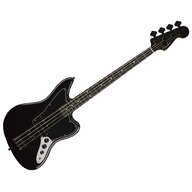
Ok, so I'm sure this topic has been covered 1000x over. But I'm lazy and maybe there are recent products since released that I will learn about.
I have a MIJ '54 Precision reissue with a Basslines (Seymour Duncan) Quarter Pounders and the clarity is fantastic, even with flatwounds, but they're so noisy almost no matter where I play.
Just wondering what is my best route for fixing this. I know power conditioners and noise gates MAY help, probably shielding would be best if I want to keep the existing pickup. I'm not opposed to throwing a new pickup in there either, but am afraid to lose everything I like about the single coil if I find a hum canceling pup to replace it with.
Thoughts? Suggestions? Solutions?
If you are getting EMI/RFI interfrence, grounded shielding will help (does the interference intensity change when you stand & turn with the bass slowly? yes? then that is probably your issue).
Make sure FIRST the bridge is correctly grounded to a pot (most often the tone pot on a P), use a multi meter set to the connection beep or ohms.
Stock shielding on most basses it pretty dire and often (e.g. on two of my MIMs with not conductive paint) non functional or not done at all.
If turning as above makes a difference &, as you appear to,
like the SD QPs, I'd suggest trying shielding = the cheap method first. It is fully reversible.
I had SD QPs loaded in a P years ago and we had a practice room with really bad EMI issues - among other things three phase 440v lead to the building ran in a channel under the floor, florescent lighting etc. The QP was intolerable. I copper tape shielded & grounded the the PU route, pickgruard & grounded the pole pieces. Voila, very tolerable & 100% noiseless elsewhere.
- Use Copper tape with *
conductive* glue => if you want to save money, the copper tape sold as anti snail/slug protection is perfect.
- Shield the P split coil rout and around the rout, extend the tape around the rout down to the where the bottom pickguard screws hold the pickguard (so the PH shielding will also be grounded).
- On the pickguard, shield generously around the P cutout and down to the bottom screw holes used to attach the pick guard
- With two thin strips of copper tape, to which you have soldered a wire to each before attaching them, attach each across the bottom of the pole pieces. Make sure there is no contact with the Pickup lead wires. [If you are very unlucky and there is a winding short to one of the pole pieces, that spilt coil will become silent - if so, find out which pole piece has the issue and remove the tape from that pole - three poles grounded are better than none].
- Attach a wire to the copper shielding in the rout (solder to the tape or via a short screw *only in the
side of the PU rout* *not* the bottom (if the screw is too long it will go through the back, have seen that here a couple of times), connect your pole piece grounding wires to the same point and solder the other end of the wire to the common ground on one of your pots (e.g. where the ground wire for your bridge is).
- Test the PUs BEFORE putting the pickguard back on, plug the bass into an amp with the volume LOW, and tap on each pole with a screwdriver lightly, you should hear a "clack". If one of the
coils is silent, you may have a wire shorted to a pole piece or the grounding tape to the PU leads. Check and adjust as necessary.
Generally the above points should be sufficient alone.
There are a bunch of YT videos & via a TB search pictorials here.
Some people get worried about creating a faraday cage, you won't be, you are not shielding the top of the pickups from the strings. Some people may say you will loose a tiny bit of high end, possible, but take your pick chainsaw or a tiny bit of top end (unless the only song on your set list is James Taylor's "Little David", you will probably want to have a slight possible sacrifice of the latter - and then adjust the EQ accordingly on your amp for it

). .
You can do other things like twist the +/- leads to the P QP, shield the cable channel and control cavity - they latter can cause issues if you accidentally end up e.g. grounding the positive pin on the jack, so if you do, be cautious.
-Henry