• TalkBass has been independent since 1998. Add your voice.
    Create a free account to reply to discussions, view embedded media, and browse with fewer display ads.
    Join freeLog in
    Want zero display ads or expanded classifieds tools? Compare plans.

Single Cut Basses Love or Hate?

This thread needs a poll.
Aesthetically, I don’t like the look. It’s just not my style. I’m more of a traditionalist which is likely a byproduct of my age and the era that I grew up in. To my eyeballs, it looks a bit goofy.
I like the Les Paul/Gretsch shape on a guitar or bass but the body/neck joint at the 12th fret(ish) style just doesn’t work for me.
I like upper and lower horns.
To each their own though.
 
It depends…
I don't like all the current Single Cuts, especially some Foderas which are really "asymmetric" in terms of design, but I'm in love with my two Ken Lawrences.
262E0B1C-FA9B-4D60-8F94-61DA52FDC649.jpeg
E8B9BBDE-5FF0-4F23-A035-D697E6270C74.jpeg
 
Last edited:
Never really cared much for solid bodied sc basses , must where not visually appealing and any I had tried where not comfortable to play until I go a chance to play a Sadowsky SC at his shop. It was a comfortable bass sitting or standing, it would probably be the next bass I purchase.
 
  • Like
Reactions: Frank Kreber
Another big fan here. I've owned two (still have one--my only bass guitar). It's purely an aesthetic thing for me: I just think they look awesome. Some executions are more pleasing to my eyes than others: I agree with @mikewalker that the Ritter R8 Concept is the single-cut Platonic ideal. I also dig designs like the Marleaux Contra, Marleaux MBass, Fodera Imperial MG Elite, and Skjold Whaleback.

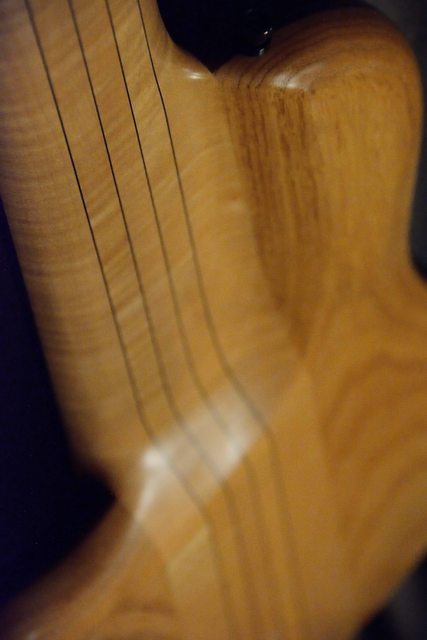
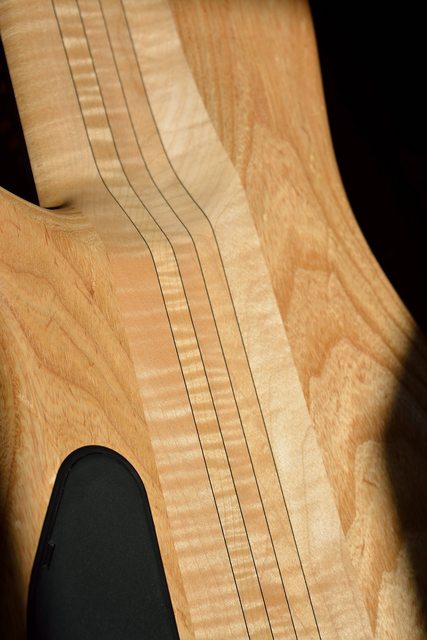
As other have said, there is no limitation in left-hand access to the upper register; if anything, access is improved over traditional, Fender-style builds because single-cuts often have deeper cutaways on the treble size and are neck-thru so there's no bolt joint to hinder one's thumb (pictures below). It is, of course, very possible to have a double-cut bass with a deeper treble-side cutaway and neck-thru or set-neck construction. It's just more frequently the case with single-cuts because of their modern aesthetic. I've read all the stuff out there about the single-cut having a stiffer neck (probably true) and therefore more sustain (impossible to test because wood between basses, even of the same model, varies too much and the same bass cannot be both single-cut and double-cut--unless you tested it as a double-cut, introduced a bass-side cutaway, and retested I suppose).
OSoc4lGl.jpg
WT1WZe9l.jpg
hbshJiXl.jpg
 
The genuine rationale for the SC bass gets steamrolled every time I post it, but the interest of truth over feelings here it is. This was published in Bass Player Magazine years ago.

Anthony Jackson and Vinny Fodera were trying to come up with a way to create a stiffer neck on a six string bass without relying on composite materials. Anthony preferred a very straight neck and was looking for the best way for a bass guitar to support that.

The result was a design sketch of the singlecut design seen on the first SC Anthony Jackson Presentation bass. The ideas were collected and built into a bass, which worked very well for its intended purpose and was widely imitated. I remember when Anthony started bringing that bass around in NYC and it really caused a big splash.

Tone, looks, weight, or feel weren’t primary concerns - reliable stability was. Many companies present ad copy that mentions the contrary, but ad copy is what it is and those companies did not pioneer the SC design.
 
Last edited:
I don't like them aesthetically. The Sadowsky implementation isn't overly offensive to my eyes, but I'd still prefer the non-SC version of any SC bass they produce. Warmoth had a short scale version of the G4 with a single cut option that is similar. I don't flat out hate it, but the non-SC version would be my preference if given the choice. A Telebass is okay and looks appropriate for the style, but is also not something I'm into for a traditional body style when J, P and MM options are plentiful.
 
I have seen some very cool looking single cut basses.
But thought the big horn for lack of a better term would get in the way of fretting below the 12th fret. It's been years since I tried one so not sure that is a true statement or just felt different because it wasn't what I was use to. (Like going from a 4 to 5 type of a thing.)
What is the theory behind the design of these basses?
More wood provides a deeper tone?

Please Feel free to educate away and show your cool basses.
It depends.
 
  • Like
Reactions: Maxi Funkl
What is the theory behind the design of these basses?
I answered this question six years ago on another thread asking the same question.
What is the advantages of Single Cut Basses?

This man,Anthony Jackson,single-handedly pushed the development of the six string Contrabass.
Anthony.jpg


For those who are interested............The history of Anthony Jackson's development of the six string Contrabass.
And the reasons for the singlecut.
http://www.melvinleedavis.com/images/Contrabass Conception.pdf

Quoting Anthony Jackson:
"In early 1989 I had expressed concern about neck instability. A few weeks later Vinnie said he wanted to try a single cutaway with the horn extending much higher up than normal to grab hold of and stiffen the neck. I remember being miffed; it’s going to look clumsy and be too heavy.
He assured me he would carve the back of the cutaway for minimal mass increase. Two weeks later, he came in with a full architectural drawing, and I almost fell to the floor! It was so beautiful and exquisite, I thought, if this works it will be one of the most beautiful guitars ever conceived........"


Do singlecut basses look pretentious?
Why do you love single cut basses?
 
Last edited:
Serves no functional purpose so I suppose it is a matter of taste. I do not like most I see.
Don't know that I agree. Having built a couple basses myself and listening to what much more experienced luthiers have said, the increased size of the body to neck connection does have an impact on tone and sustain of the assembly. There's no denying that. So it does serve a purpose, and that's actually why they exist. ;)
Any time you stiffen the joint, you change the tone. That's why neck-thru builds sound different than bolt-on builds. That's why a wenge neck sounds different than a maple neck. And so on and so on.
The single-cut has a functional purpose, it's just a matter of whether you want that result or not.