
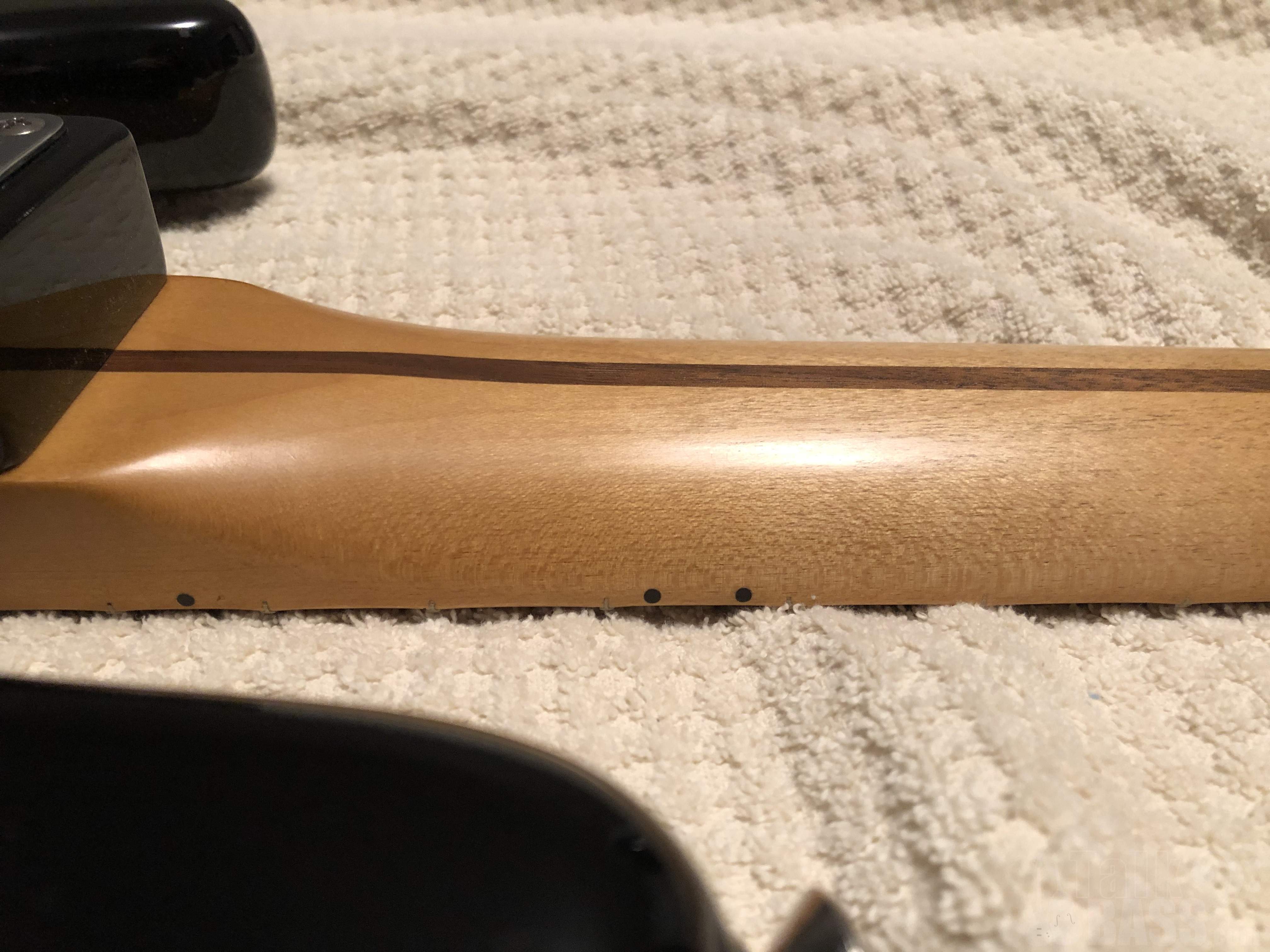
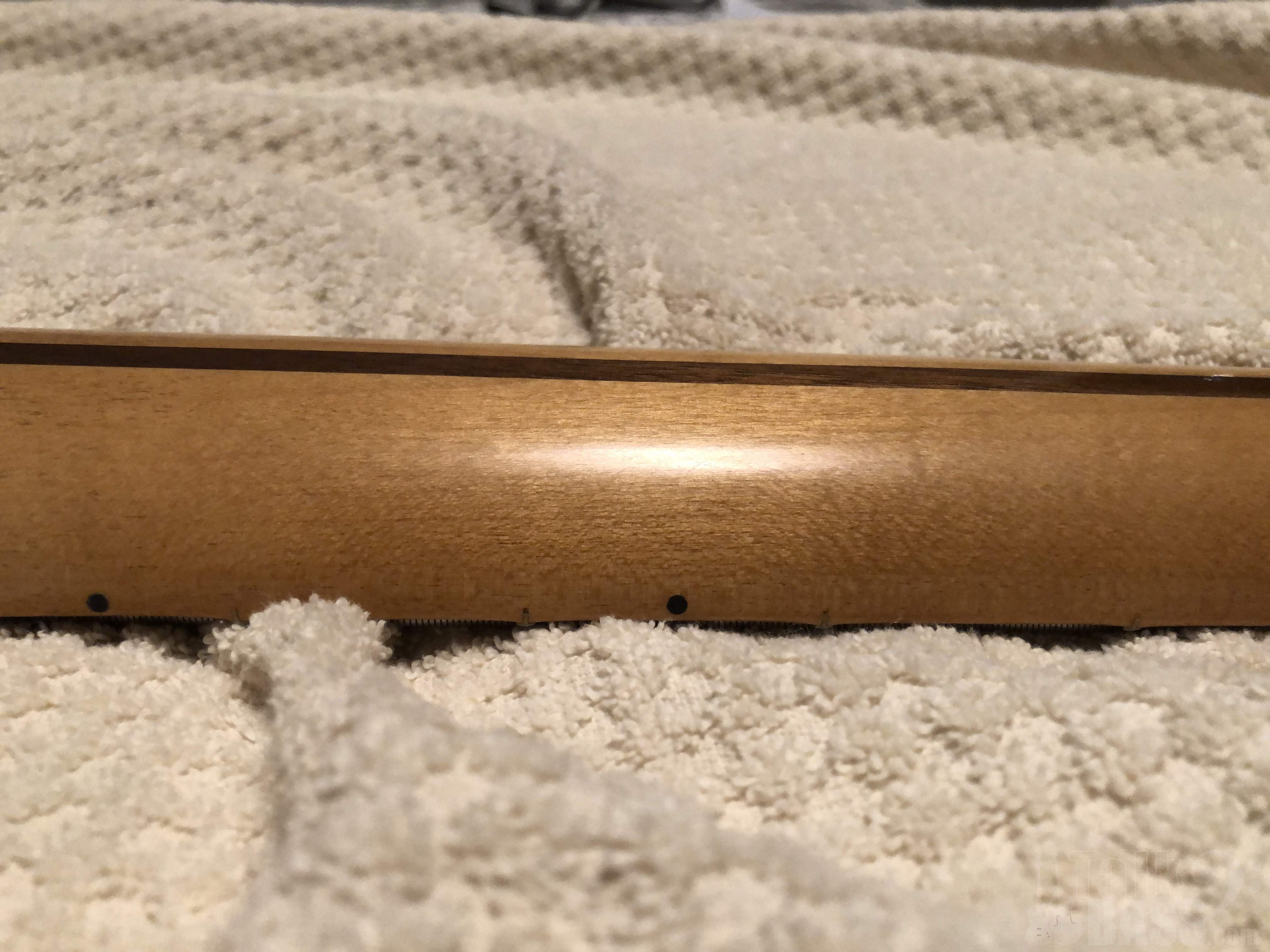
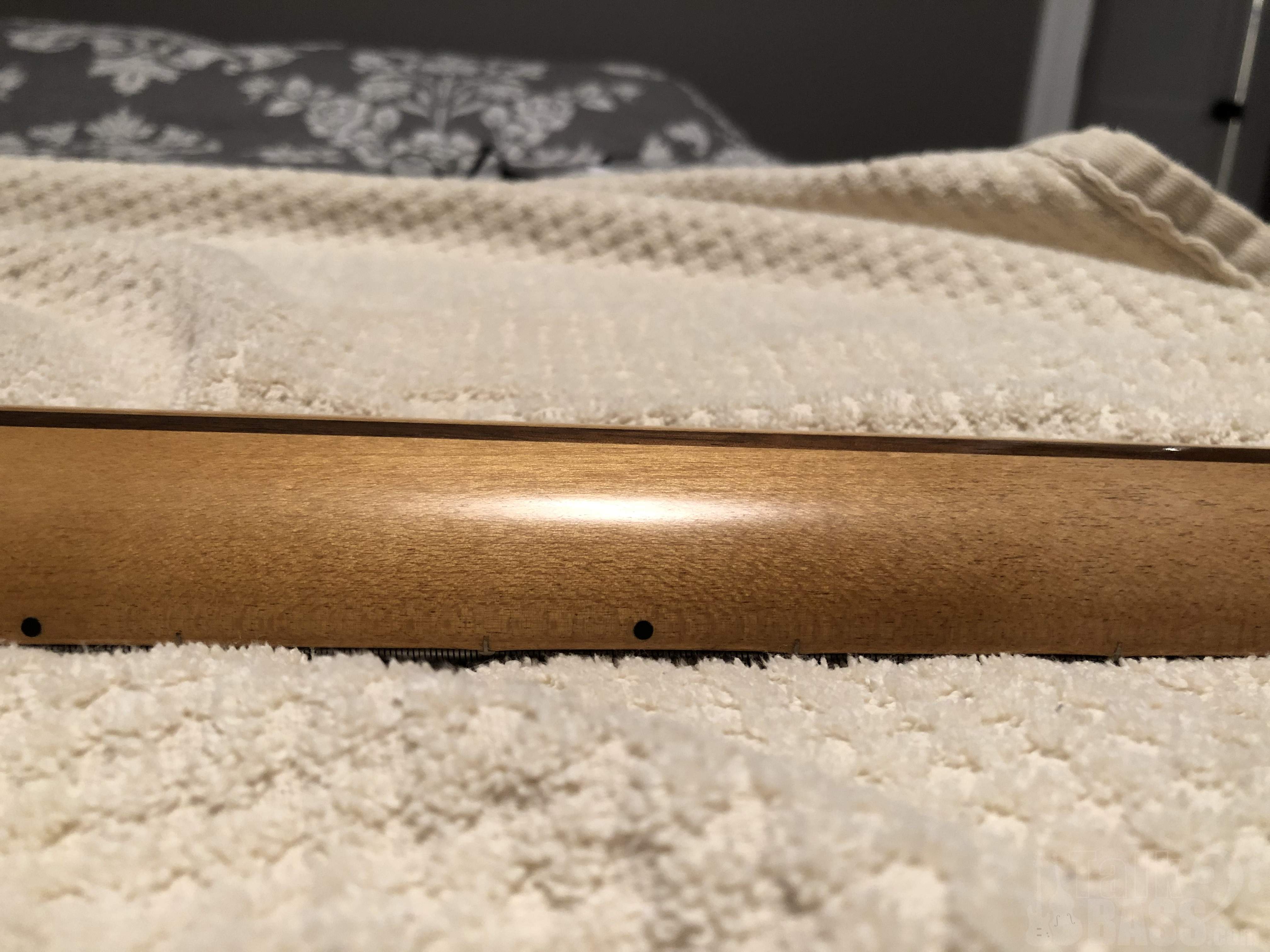
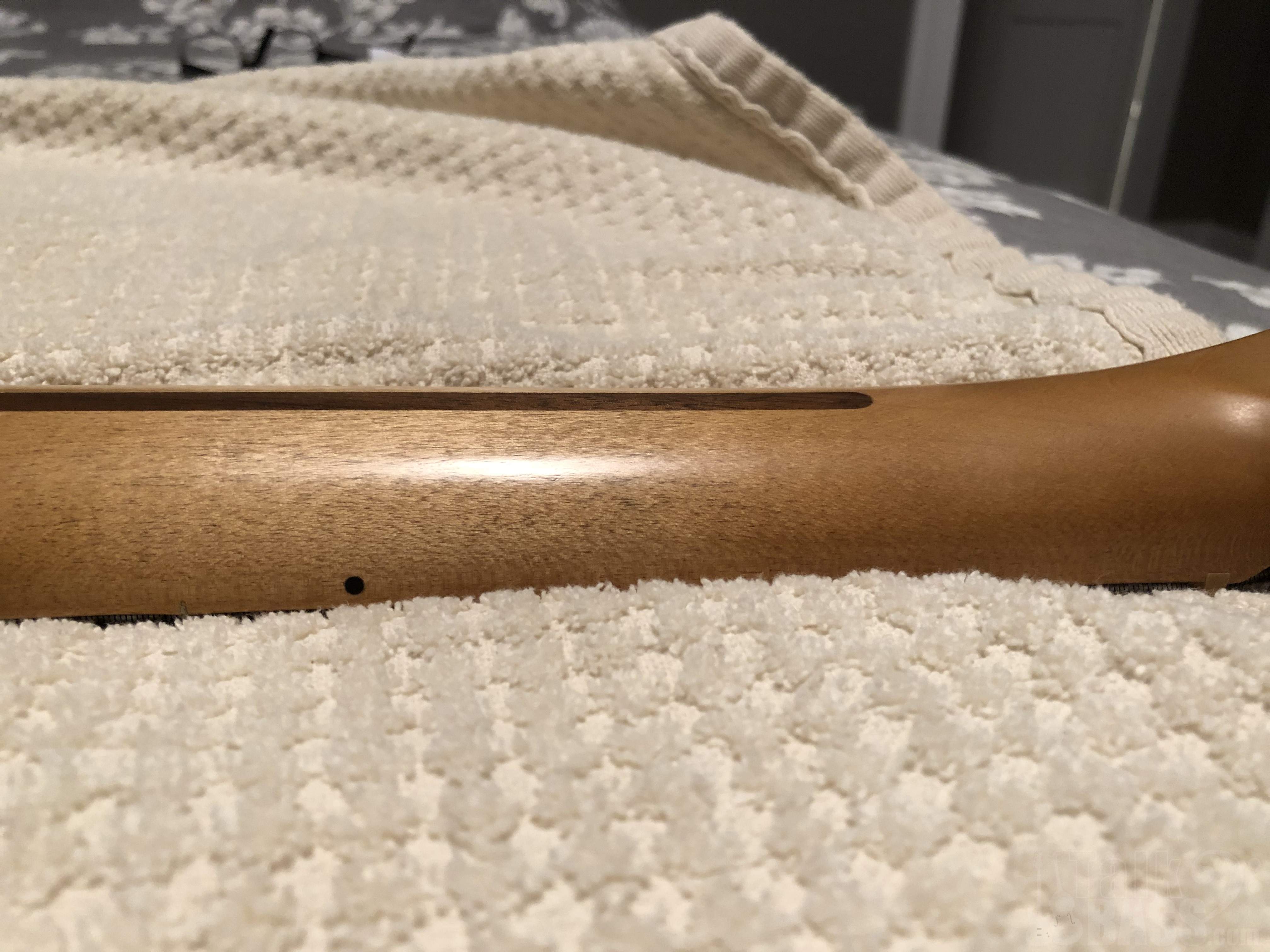
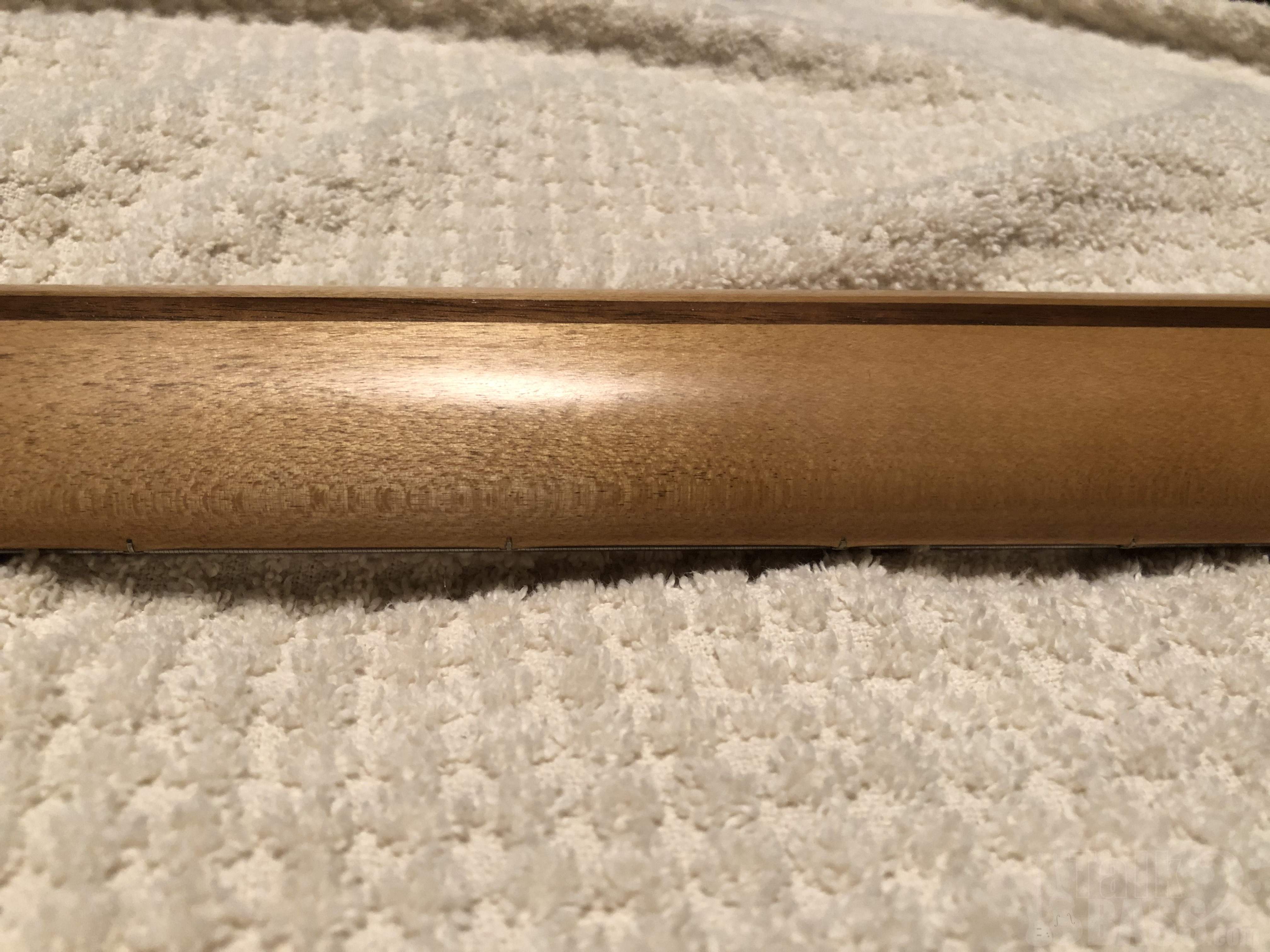
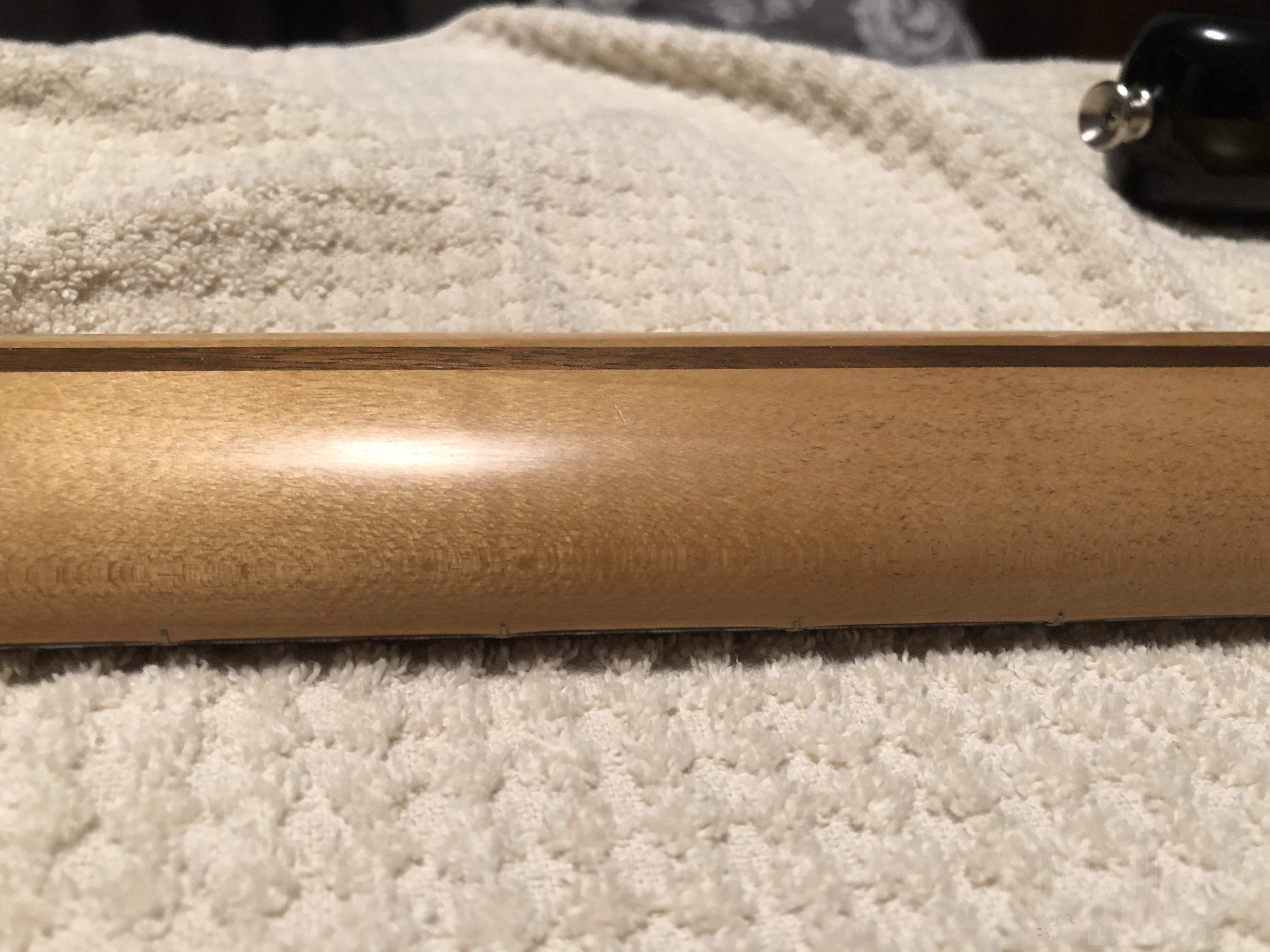
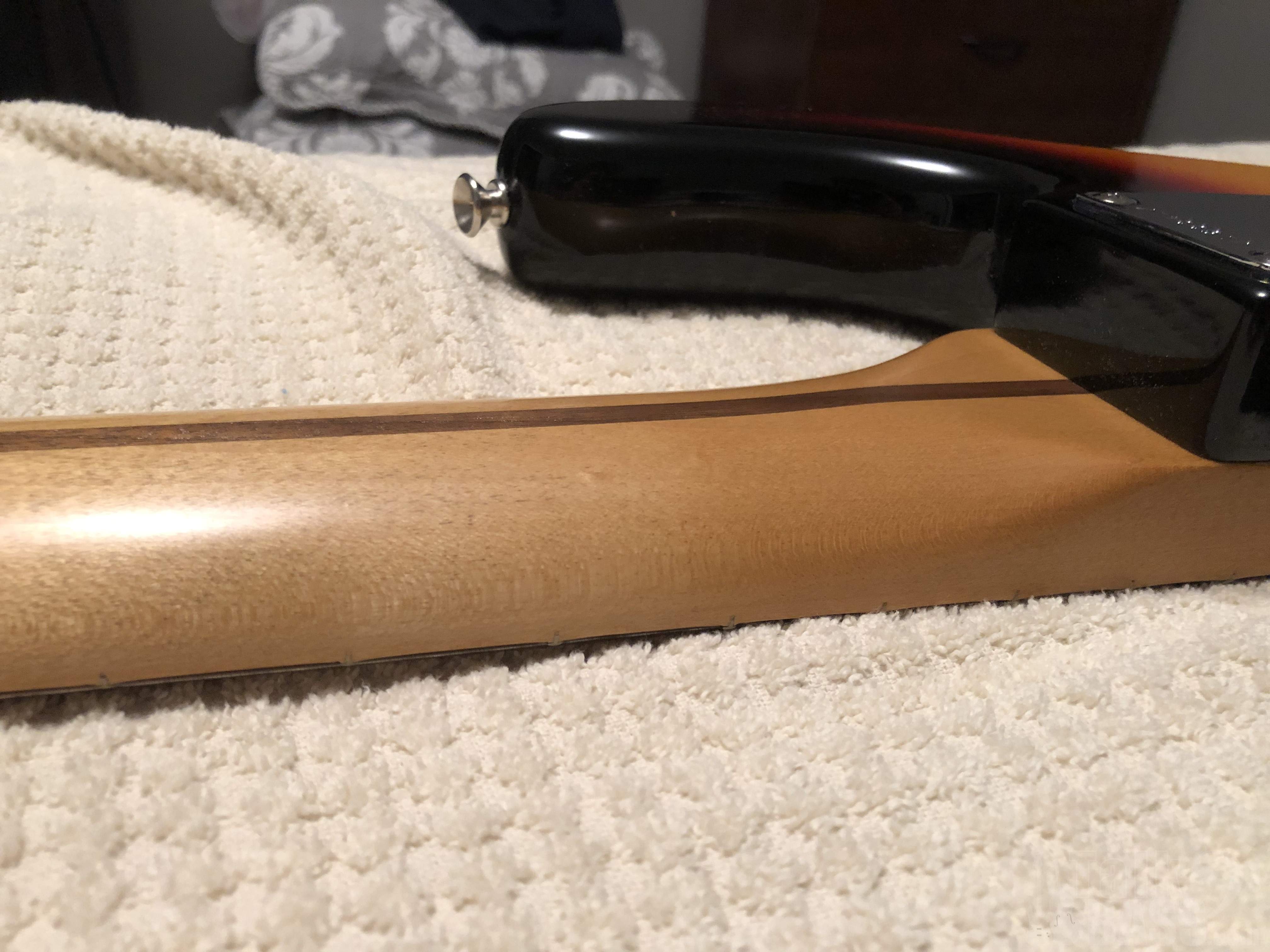
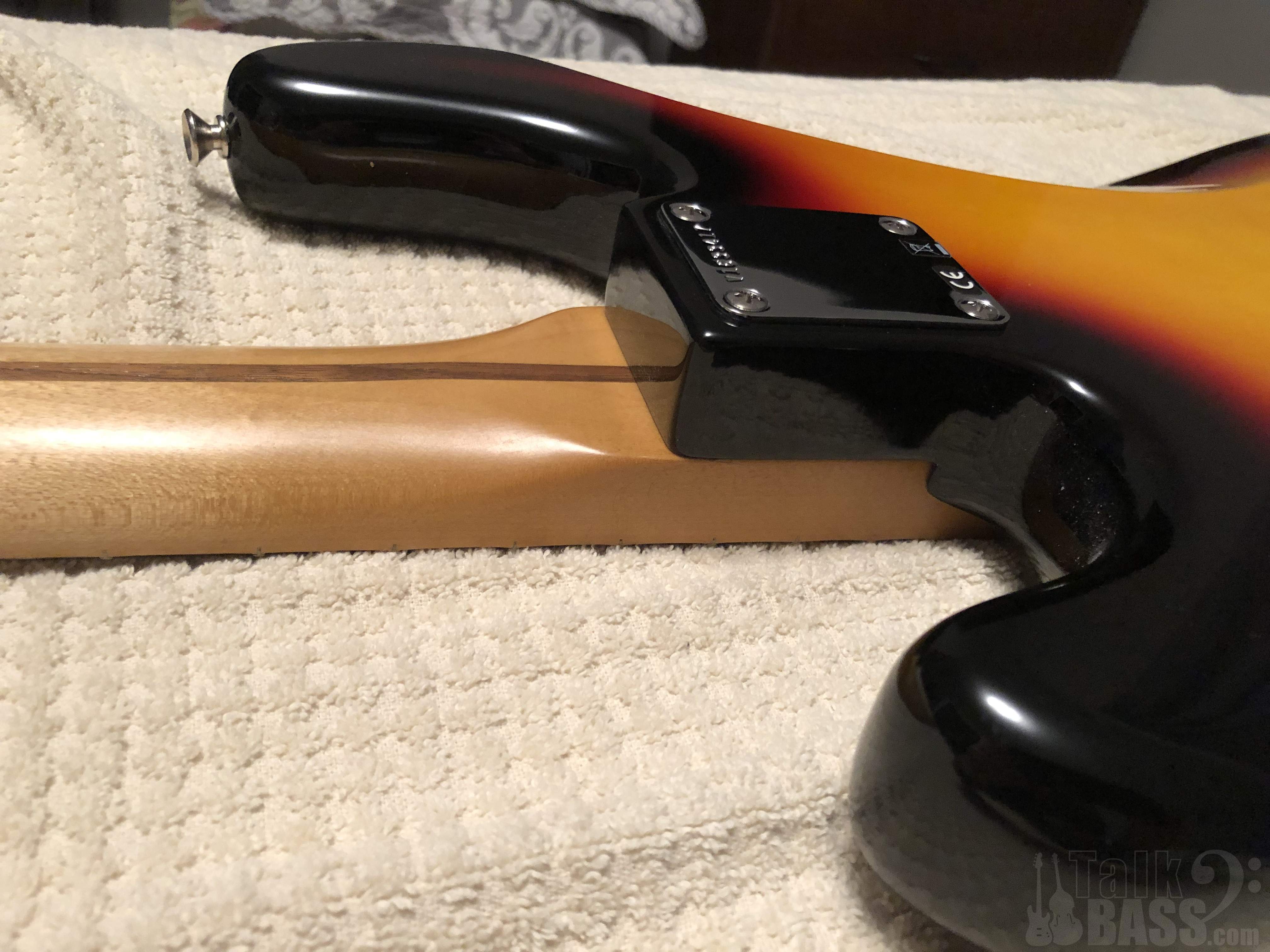
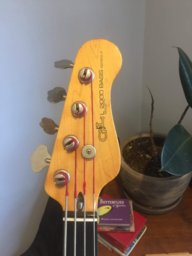
Here's some Pics of What I think is pretty High up on the "Good" side of Necks. Plus It plays nice on the '63 AVRI Body.

Enjoy the benefits of a premium membership!
Upgrade Account
-
TalkBass has been independent since 1998. Add your voice.
Create a free account to reply to discussions, view embedded media, and browse with fewer display ads.
Join free Log in
Want zero display ads or expanded classifieds tools? Compare plans.
You are using an out of date browser. It may not display this or other websites correctly.
You should upgrade or use an alternative browser.
You should upgrade or use an alternative browser.
Sizing up a Neck - quality evaluation
- Thread starter Turnaround
- Start date
More options
Who Replied?
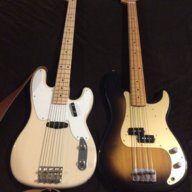
Is that the roadworn neck?. The warm finish bears some resemblance to my roadworn example in #34. I’ve read on multiple occasions that they hand selected better quality woods for that line (at least in the early runs anyway).Here's some Pics of What I think is pretty High up on the "Good" side of Necks. Plus It plays nice on the '63 AVRI Body.
View attachment 3263163
View attachment 3263164
View attachment 3263165
View attachment 3263166
View attachment 3263167
View attachment 3263168
View attachment 3263169
View attachment 3263170
Yes it is a Roadworn. The pictures don't do it justice as far as how sweet the Grain is. The grain is so tight up and down each side. The 1st 1/2 inch running parallel with the fingerboard is tight and has tons of Fleck.Is that the roadworn neck?. The warm finish bears some resemblance to my roadworn example in #34. I’ve read on multiple occasions that they hand selected better quality woods for that line (at least in the early runs anyway).
I would have never have known how to size up a Flat-sawn without this thread. I had another MIM Mark Hoppus neck that was nowhere near this good as far as Grain/Fleck. It still was a very sweet neck as many MIM necks are.
This neck is also nearly identical on each side of the Skunk Stripe. Almost like it was book matched but it is one piece.

I have run across several discussions that suggest that a quarter-sawn neck is better than a flat sawn one. The claim is that quarter-sawn is stiffer than flat sawn. But that's a myth. There are many studies that have shown that there is no significant difference in stiffness of quarter sawn vs flat sawn wood- The Journal of Wood Science and Technology (April 2005), tests done by Forest Products Research, Unite Mixte de Recherche Ecologie des Forets de Guyane (Jan 2017), etc. you can look them up. Or here's a simple test you can perform yourself.
In this test I used a piece of oak dowel, 36" long and 3/4" in diameter. I used dowel because it has the same cross-sectional size regardless of how it is oriented along its long axis. I fixed one end in a vise, drove a nail into the other end to act as a pointer and set up a scale at the free end to measure deflection. I adjusted the scale so that the pointer on the dowel was right at an inch mark. Then I suspended a 250 gram weight from the dowel, 2" from the free end, and measured the deflection on the scale.
When you orient the end grain in a horizontal position the flex load will be against the grain orientation of a flat-sawn board. Rotate the dowel 90 degrees and the deflection will be as that on a quarter-sawn board. Perhaps some pics will help. I first tested in the flat sawn orientation. Here's a view of the end of the dowel in the vise:
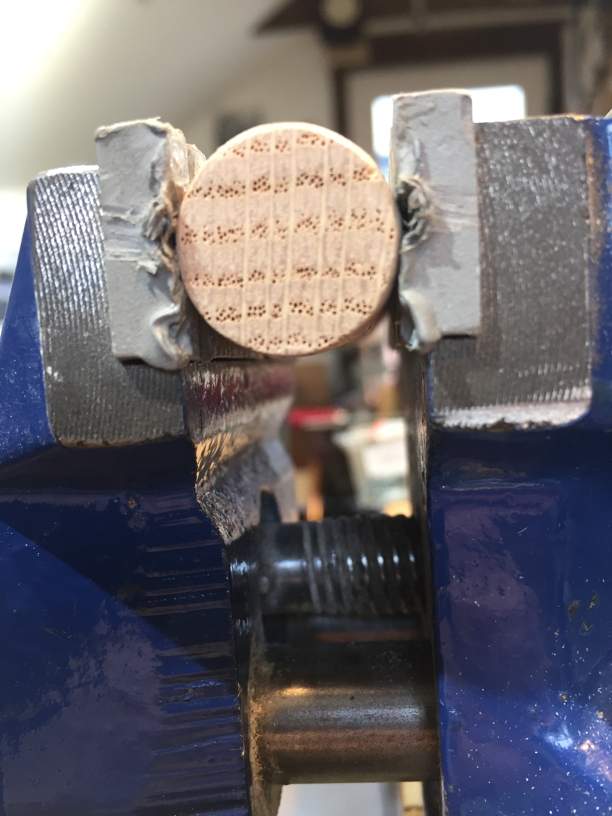
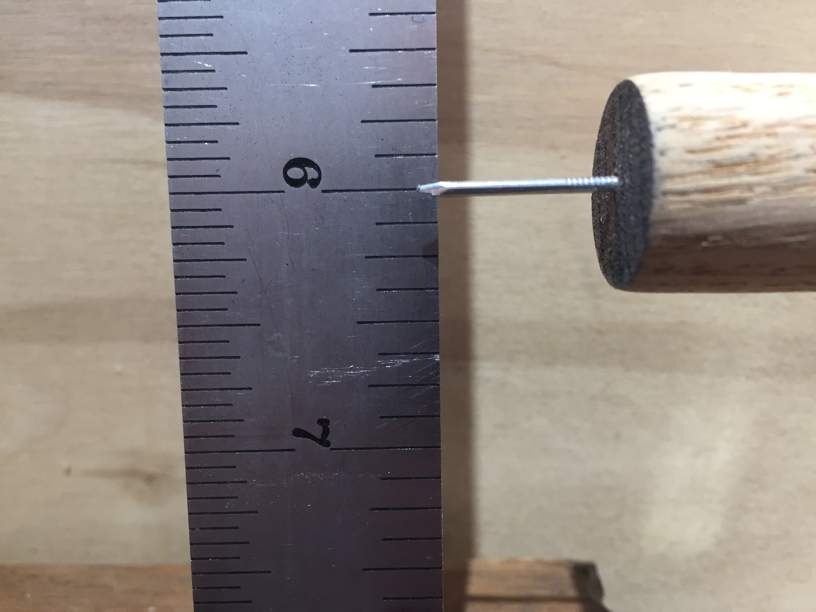
The grain (growth rings) are positioned horizontally the same way that would be in a piece of flat sawn wood lying on a table. Once clamped I adjusted the rule at the other end so the pointer was at the 6" mark:
Then I hung the weight 2" back from the pointer and the deflection looked like this:
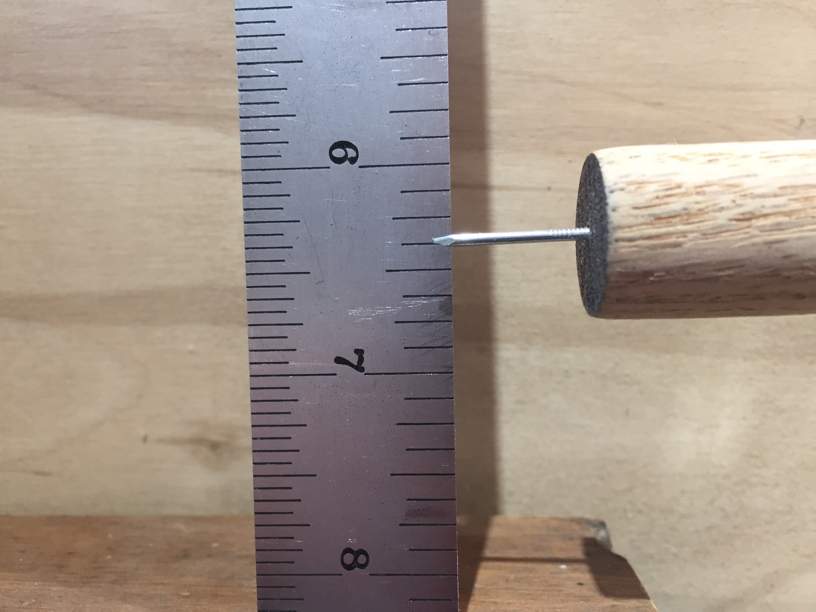
About 3/8" deflection. I re-oriented the dowel so that it would be in a quarter sawn position:

I zeroed the pointer end again at the 6" mark and added the weight to the same position. The result:
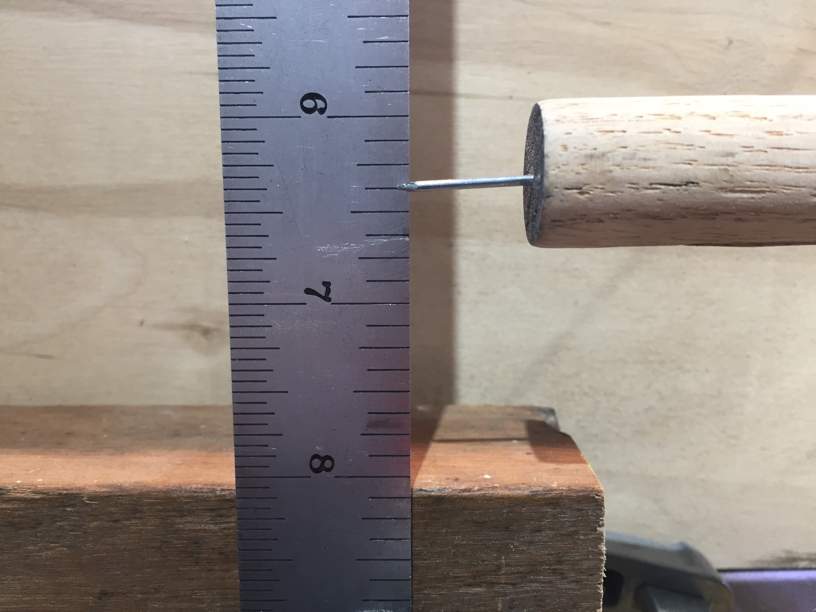
3/8" deflection.
I intended to run the same test on different species to show here, but ran out of time today. Maybe later.
In this test I used a piece of oak dowel, 36" long and 3/4" in diameter. I used dowel because it has the same cross-sectional size regardless of how it is oriented along its long axis. I fixed one end in a vise, drove a nail into the other end to act as a pointer and set up a scale at the free end to measure deflection. I adjusted the scale so that the pointer on the dowel was right at an inch mark. Then I suspended a 250 gram weight from the dowel, 2" from the free end, and measured the deflection on the scale.
When you orient the end grain in a horizontal position the flex load will be against the grain orientation of a flat-sawn board. Rotate the dowel 90 degrees and the deflection will be as that on a quarter-sawn board. Perhaps some pics will help. I first tested in the flat sawn orientation. Here's a view of the end of the dowel in the vise:
The grain (growth rings) are positioned horizontally the same way that would be in a piece of flat sawn wood lying on a table. Once clamped I adjusted the rule at the other end so the pointer was at the 6" mark:
Then I hung the weight 2" back from the pointer and the deflection looked like this:
About 3/8" deflection. I re-oriented the dowel so that it would be in a quarter sawn position:
I zeroed the pointer end again at the 6" mark and added the weight to the same position. The result:
3/8" deflection.
I intended to run the same test on different species to show here, but ran out of time today. Maybe later.

Thanks for the excellent information here. I used to have a 70s maple fingerboard P-bass when I was younger and I've been casually on the lookout for one again and this is very helpful.
Are there any specific things to look out for when looking at a "one-piece" maple neck/fingerboard?
Are there any specific things to look out for when looking at a "one-piece" maple neck/fingerboard?
Same things apply for one-piece neck/fboard pieces. Straight, close-grained, little runout.Thanks for the excellent information here. I used to have a 70s maple fingerboard P-bass when I was younger and I've been casually on the lookout for one again and this is very helpful.
Are there any specific things to look out for when looking at a "one-piece" maple neck/fingerboard?
Sometimes "pretty" is only "pretty bad".
Last edited:
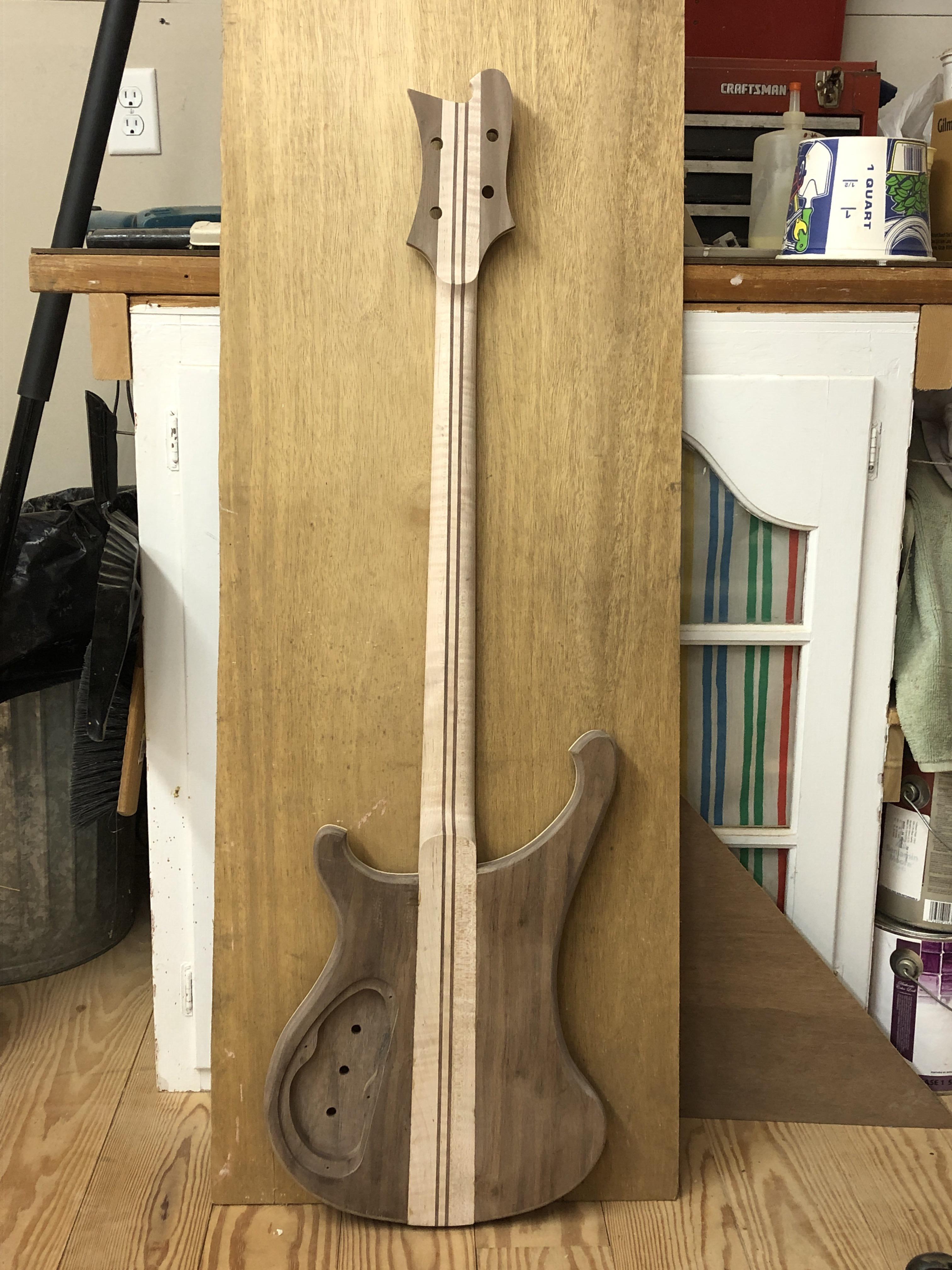
To further muddy the waters, there's the whole subject of laminated multi-piece necks, often done as much for visual decorative effect as stability issues. I'm wondering how much of the undesirable grain characteristics can be negated by the presence of the glue itself, and by mirror-image use of grain orientation? On this Ric clone in progress, I arranged the grain pattern to please my eye, and how I'd seen it done on other instruments, hoping that just the fact of laminate construction would stiffen and stabilize the whole structure, but with no real understanding of what this may do long-term.
Looking at it more closely, although both maple outer laminates have some similar figure, they are also a bit different. The walnut stringers are just flat sawn lumber.
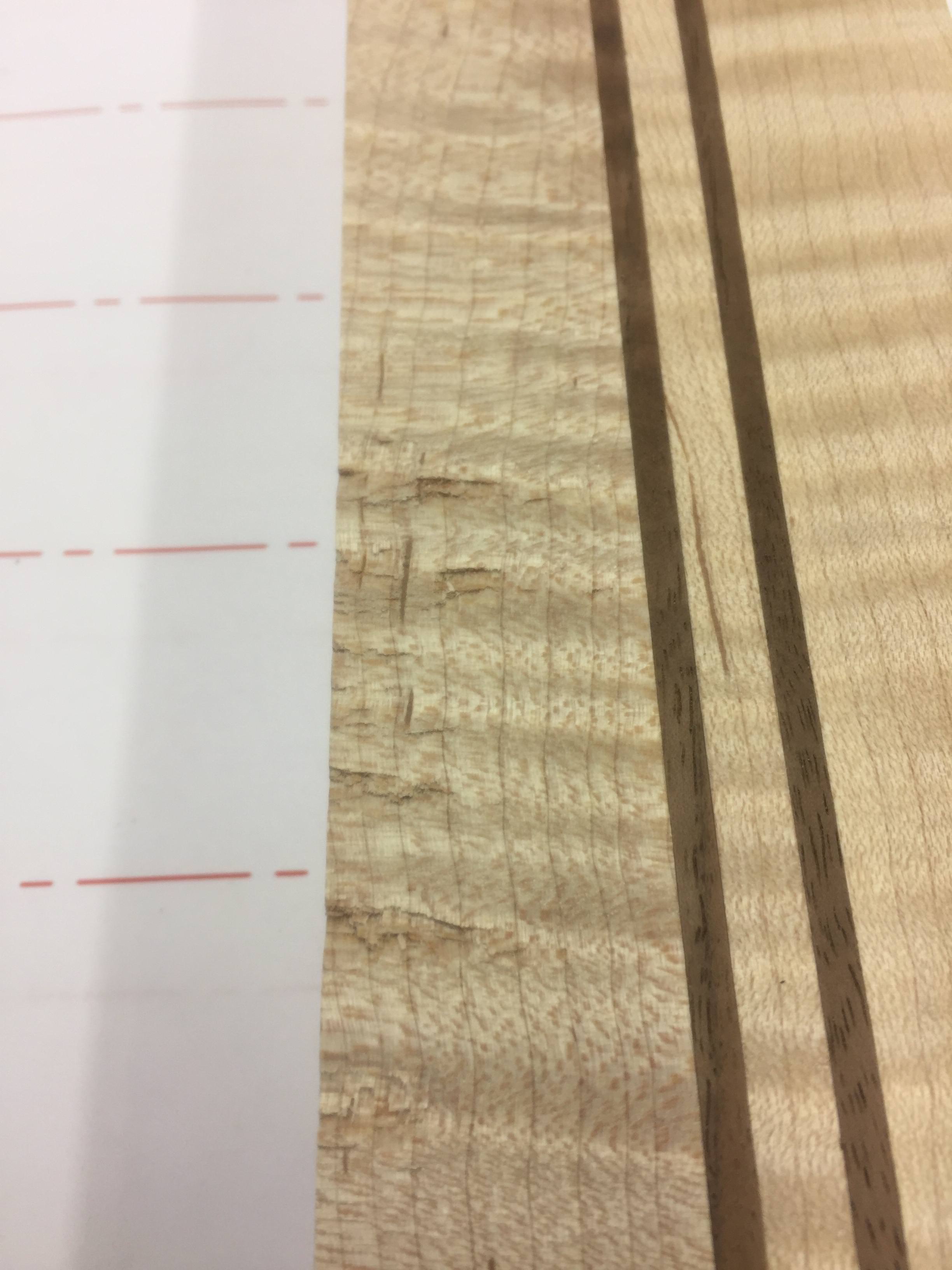
Looking at it more closely, although both maple outer laminates have some similar figure, they are also a bit different. The walnut stringers are just flat sawn lumber.
There is a science to creating "laminated" wood for structural stability.
Fist rule is not to mix quarter-sawn with flat sawn pieces. Where it originally seemed like a good idea, there were structural failures discovered as early as the 1920's that showed that this was not a good practice.
Secondly, for best stability the laminated piece is cut from a single board, not two different boards put together. The board is cut end to end and one piece is flipped, either end to end, face to face, or both, and reglued in that orientation.
Thirdly, the introduction of other species in the laminate has the tendency to reduce structural integrity. Probably not significant in a bass neck though.
Fist rule is not to mix quarter-sawn with flat sawn pieces. Where it originally seemed like a good idea, there were structural failures discovered as early as the 1920's that showed that this was not a good practice.
Secondly, for best stability the laminated piece is cut from a single board, not two different boards put together. The board is cut end to end and one piece is flipped, either end to end, face to face, or both, and reglued in that orientation.
Thirdly, the introduction of other species in the laminate has the tendency to reduce structural integrity. Probably not significant in a bass neck though.
Well, i broke two of those rules, alternate species stringers from flat sawn. I did cut all the maple from one board. Go me! It does look purdy, hope it works long term.
I'm no expert in roasting wood, but I have been fascinated by the process and outcomes for some time. Here's what I have learned.
The roasting of wood has been around since about 800 A.D., used by the Vikings in the building of their ships. They found that the roasted wood stood up to the ravages of water far better than unroasted wood.
The process of roasting, also known as torrefaction, exposes the wood to high temperatures in an oxygen-free environment. Removing oxygen from the environment keeps the wood from burning. The high heat causes chemical changes in the wood. First it drives the moisture content to zero. In normal wood drying, a zero percent moisture content is not desirable - the wood will absorb moisture again when exposed to a normal environment until it reached its equilibrium moisture content - that is where it is in balance with it's environment. That's because wood is "hygroscopic", meaning that it absorbs and releases moisture in relation to its environment. And that brings us to the second characteristic that roasting brings to the wood - it changes it so it is not hygroscopic. The wood no longer reacts to humidity in it's environment.
So what's the big deal if its hygroscopic or not? Well, it is a big deal. As the wood absorbs moisture, the fibres swell. And that changes the dimensions of the wood. And since wood is not a homogenous substance, the swelling will not be even throughout the mass, and this can lead to bending and other distortions. Reducing the wood's reaction to environmental moisture has obvious benefits for an instrument builder.
What's actually happening as the wood is roasted is that there are changes to the properties of the major components of the wood; cellulose, lignin, and resins. The cellulose is partially crystallized, and this is the most significant contributor to the inhibiting of moisture absorption. Similarly the lignin is crystallized and that strengthens the bonds between the wood fibres. The resins in the wood are largely evaporated and degraded in the process which increases the wood's resistance to rot and insect infestation, not really significant for instrument builders.
The reduction of water in the wood to close to zero percent moisture content reduces the weight of the wood significantly. At the same time it makes the wood more resonant, partly because of the reduced mass, but also because the water moisture acts as a bit of a vibration damper. And the strengthening of the bond between wood fibres caused by the changes to the lignin adds to the rigidity of the wood. The result is a lighter, more resonant and stiffer wood, all desirable properties for a bass neck.
I mentioned that roasting contributes, but doesn't guaranty, the stability of the wood. The reason is that to achieve 100% stability requires the wood to be highly torrefied. That would leave the wood in a state where it is very brittle and also leads to machining and gluing problems. So roasted wood is really partially torrefied wood- (fully torrefied wood is also known as charcoal). So being only partially torrefied, it only partially gains the desired characteristics. And roasting will not make a poor piece of wood into a good one. So the result is dependent upon the quality of the wood to begin with and the degree to which it is roasted. And that degree of roasting can be a tricky balance.
I have heard of some folks roasting their own wood in their kitchen oven. The process may impart a nice toasty colour to the surface of the wood, but it will really only affect the surface of the wood. Proper torrefaction effects the wood throughout, and to do that you need to maintain high temperature in an oxygen-free environment. If just the surface is treated the only benefit likely to be gained is that of the toasty colour, and to some that's not even a desirable characteristic.
There is a maker in Japan that used thermal wood. I figure it is something like roasated wood. One of the guys I know personally at the biggest guitar store in Japan told me that, this thermal wood is actually really brittle.
He has had 3 people with cracked necks. All of them just cracked for reason at all. Warranty didnt cover it so he told me that the store would gradually be phasing this type of instrument out.
I am just not sure if roasted is the same as thermally treated wood. The process sounds the same but the guitar maker (I forget which one) said it was some proprietary method.
You can call it "roasted", "toasted", "thermal treated" or "torrified" - I think it is all the same. But the process is tricky.
When you expose the wood to high temperatures (relatively speaking) moisture is driven out of the wood. When that happens, the cell structure can collapse causing internal fractures as well as external cracks. When kiln drying wood, moisture is injected into the kiln at times during the process. This keeps the wood from drying too fast. If the drying process is slowed down the wood structure adapts gradually to the change in its moisture content and that allows the internal stresses to even out.
The same kind of care must be taken when roasting. Simply heating it up to a toasty temperature will introduce stresses in the wood that can also cause fractures and cracks. I have acquired some roasted maple from a premier supplier and, though it looked good on the surface, when milled the wood showed internal cracks and it began to warp quite badly. It's tricky!
When you expose the wood to high temperatures (relatively speaking) moisture is driven out of the wood. When that happens, the cell structure can collapse causing internal fractures as well as external cracks. When kiln drying wood, moisture is injected into the kiln at times during the process. This keeps the wood from drying too fast. If the drying process is slowed down the wood structure adapts gradually to the change in its moisture content and that allows the internal stresses to even out.
The same kind of care must be taken when roasting. Simply heating it up to a toasty temperature will introduce stresses in the wood that can also cause fractures and cracks. I have acquired some roasted maple from a premier supplier and, though it looked good on the surface, when milled the wood showed internal cracks and it began to warp quite badly. It's tricky!

@Turnaround ...Thank you for such an invaluable lesson....I wish I had seen this thread a month ago!
But what great knowledge you have shared
I am a bit surprised this thread seemed a bit hidden before I found it....should be a sticky in the Bass guitars forum
But what great knowledge you have shared
I am a bit surprised this thread seemed a bit hidden before I found it....should be a sticky in the Bass guitars forum
This is really useful and informative when you are sizing up definitions of quarter sawn etc, thanks for posting!When you talk to a winemaker they will tell you that fine wine begins in the vineyard. It is the same thing with guitars made of wood. A fine guitar starts in the forest. Straight trees that have regular growth rings will produce the best wood if it is harvested and sawed correctly. That is the job of the sawyer.
There are a number of different strategies when cutting a log. The choice of which to use is driven by the goal of the company. Most often that is to maximize the yield by using a method called live sawing. It is sometimes referred to as slab sawing. Imagine a cylinder that is simply sliced tangent to the side and continue the sawing to the other side. The result is:
View attachment 2853520
Live sawing maximizes the use of the tree. All three patterns of lumber are present using this method:
View attachment 2853521
Note that there is significant run out in flat sawn lumber. Rift sawn has some. There is very little run out in quarter sawn lumber.
So this would be the best way to use the tree? It depends. If the goal is to sell a lot of lumber, then yes. Or if the goal is to minimize waste the answer is yes. Here's why:
View attachment 2853561
True quarter sawn lumber leaves a lot of waste. (So called "modern" quarter and rift sawn incorporate both cuts to minimize waste. However, the yield of quarter sawn lumber will be greater using true quarter sawing methods.)
So why is all of this lumber mill information so important? It is because one of the most important goals when building a neck is stability. Quarter sawn lumber from a straight log is inherently more stable than any other cut. Here's what can happen to the various cuts of wood once the wood is cut and after the neck is shaped:View attachment 2853570
Quarter sawn lumber tends to be the most stable.
As an aside, multi-laminate necks imitate quarter sawn lumber. Phil Kubicki used multi-lam construction in his X Factor instruments. Framus used multi-lam necks in the fifties. (Framus went out of business in the seventies but the owners son started his own company and called it Warwick.) These necks are among the most stable of necks, rivaling composite construction like Steinberger and Status.
As you can see, great necks start in the forest and the lumber mill.
Is there study on difference of humidity absorption rom various cuts?
For example, quarter sawn absorbs less than flat sawn?
Also I still don't get one thing. How could humidity possibly get through lacquer? It's coated in some sort of polymer and I always thought it was literaly water proof. Finger board is less than 25% of the neck and some are lacquered, some aren't. So if I have a maple neck with maple fingerboard, theoretically it's totally sealed. No moisture can get in or out. Can a fingerboard affect the bow/back bow of the neck this much?
The proof is, the body. I have yet to hear of anyone telling me that their body warped.
Why does the neck bend depending on humidity when it's mostly painted? Could it be the strings reacting to humidity and temperature?
For example, quarter sawn absorbs less than flat sawn?
Also I still don't get one thing. How could humidity possibly get through lacquer? It's coated in some sort of polymer and I always thought it was literaly water proof. Finger board is less than 25% of the neck and some are lacquered, some aren't. So if I have a maple neck with maple fingerboard, theoretically it's totally sealed. No moisture can get in or out. Can a fingerboard affect the bow/back bow of the neck this much?
The proof is, the body. I have yet to hear of anyone telling me that their body warped.
Why does the neck bend depending on humidity when it's mostly painted? Could it be the strings reacting to humidity and temperature?
If there’s no finish at all the neck is very susceptible to warping from all the moisture going in and out seasonally. This is why Warmoth won’t guarantee necks that you don’t put a solid finish on . Oil is not good enough for them to guarantee (at least with maple anyways). Solid finishes are very good at keeping those exchanges down but over time moisture does get in and out, possibly mainly from the fret slots alone. I don’t believe the different cuts absorb water differently, but they do behave differently from those exchanges. A quartersawn neck will swell or contract width wise, while flatsawn will go up and down.Is there study on difference of humidity absorption rom various cuts?
For example, quarter sawn absorbs less than flat sawn?
Also I still don't get one thing. How could humidity possibly get through lacquer? It's coated in some sort of polymer and I always thought it was literaly water proof. Finger board is less than 25% of the neck and some are lacquered, some aren't. So if I have a maple neck with maple fingerboard, theoretically it's totally sealed. No moisture can get in or out. Can a fingerboard affect the bow/back bow of the neck this much?
The proof is, the body. I have yet to hear of anyone telling me that their body warped.
Why does the neck bend depending on humidity when it's mostly painted? Could it be the strings reacting to humidity and temperature?

Really interesting thread! I am now deathly afraid to scrutinize the necks on my basses....
...But I'll be more knowledgable in the future!
...But I'll be more knowledgable in the future!
Flatsawn swells and shrinks primarily across its width, while quartersawn swells and shrinks primarily in thickness.If there’s no finish at all the neck is very susceptible to warping from all the moisture going in and out seasonally. This is why Warmoth won’t guarantee necks that you don’t put a solid finish on . Oil is not good enough for them to guarantee (at least with maple anyways). Solid finishes are very good at keeping those exchanges down but over time moisture does get in and out, possibly mainly from the fret slots alone. I don’t believe the different cuts absorb water differently, but they do behave differently from those exchanges. A quartersawn neck will swell or contract width wise, while flatsawn will go up and down.
There is no difference in moisture absorption based on the angle of the saw cut.Is there study on difference of humidity absorption rom various cuts?
For example, quarter sawn absorbs less than flat sawn?
Also I still don't get one thing. How could humidity possibly get through lacquer? It's coated in some sort of polymer and I always thought it was literaly water proof. Finger board is less than 25% of the neck and some are lacquered, some aren't. So if I have a maple neck with maple fingerboard, theoretically it's totally sealed. No moisture can get in or out. Can a fingerboard affect the bow/back bow of the neck this much?
The proof is, the body. I have yet to hear of anyone telling me that their body warped.
Why does the neck bend depending on humidity when it's mostly painted? Could it be the strings reacting to humidity and temperature?
Lacquer is water resistant, not waterproof. Have you ever seen a white ring on a table top where someone left a wet glass? Water got through the lacquer finish.
A good water resistant finish will inhibit moisture exchange. Lacquer is pretty good, poly is better, oil is mediocre at best and wax is poor on its own. Glossy finishes tend to be better than satin. And in every case thicker is better. So a thick glossy poly is a good choice for a neck. Except of course that many folk hate thickly finished glossy necks. Care for a compromise anyone?


