
Enjoy the benefits of a premium membership!
Upgrade Account
-
TalkBass has been independent since 1998. Add your voice.
Create a free account to reply to discussions, view embedded media, and browse with fewer display ads.
Join free Log in
Want zero display ads or expanded classifieds tools? Compare plans.
You are using an out of date browser. It may not display this or other websites correctly.
You should upgrade or use an alternative browser.
You should upgrade or use an alternative browser.
So our sound guy comes to band practice...
- Thread starter murph7489
- Start date
More options
Who Replied?

You're projecting quite a bit...I don't see anywhere in the OP that mentions "old country", or the sound guy being a "ding dong", or requesting "clanky strings".
You're projecting a bit also. The OP never mentioned the soundguy was "specifically asked to stop by to make suggestions to help them sound better". Sounds to me like he just stopped by. If he was asked, it might be a different story.

Glad this guy wasn't around when James Jamerson was alive. Think of all the great music he could have ruined.
You could also ponder the same question with John Entwistle as the bassist, in which case a fresh set of strings would have helped make BETTER music.

MDBass
Supporting Member
- Nov 7, 2012
- 8,590
- 14,892
- Disclosures
- Endorsing Artist: Dingwall-Fender-Bergantino-Dunlop-Tech 21-Darkglass-Nordstrand
A good sound man, probably so when mixing FOH at a venue. But nowhere in the original post is he described as "good". For all we know, he's just a guy who owns a PA, or someone's buddy. In my book, a good sound man would say something like, "Are you happy with your tone? Are you going for a warm sound or something brighter? Would you be interested in my opinion? How often do you change your strings? Do you have a brand preference?" and so on. Listening to a rehearsal then giving instructions is not the way to go about it. I might go see a band and think the guitar tone is horrible; I don't jump up on the stage and start messing with the amp, no matter if I'm "right" or not.
Your definition of a "good soundman" sure requires a whole lot of handholding

An employee of the band, who the OP finds qualified enough to trust his initial assessment, was invited to a rehearsal to help the band sound the best they can.
I've dealt with my share of idiots "doing sound tonight", so I certainly understand the shared frustration of someone wholly unqualified getting in the way, but that's not the situation as described here at all.

MDBass
Supporting Member
- Nov 7, 2012
- 8,590
- 14,892
- Disclosures
- Endorsing Artist: Dingwall-Fender-Bergantino-Dunlop-Tech 21-Darkglass-Nordstrand
You're projecting a bit also. The OP never mentioned the soundguy was "specifically asked to stop by to make suggestions to help them sound better". Sounds to me like he just stopped by. If he was asked, it might be a different story.
In what fantasy world does an employee of a band stop by rehearsal uninvited and demand the band make changes against their will?
I made an educated assumption based on the described circumstances, projecting is something else entirely

I've played around with a lot of strings and I always come back to [Invalid or Expired Link Removed]. Yes, they're bright, but not overly so. I play a Sterling MusicMan which has a pretty bright default tone, but with the amp on flat, onboard volume at about 7, bass at 7, mid around 4ish and treble at no more than 2, you get the growl, nice deep tone, but every now and then, that metallic clang, which I find adds a certain je ne sais quoi...
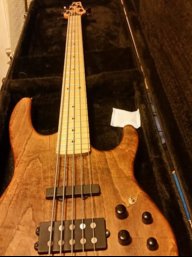
He is right...I was already going to change strings anyway...I love bright. I like treble too...he was right...

I don't think it would bother me, but if a sound guy told me what kind of strings to put on my bass I would be a least a little annoyed, for a few seconds at least. Then I would do nothing. I guess it's the band "sound guy" so it's a bit different......but I still wouldn't like it. Our drummer tells me all the time that "treble is trouble" and I just say fine and keep my tone bright. He says he likes it!
Having said that, my strings are DR SS lo riders and I like it bright.
Having said that, my strings are DR SS lo riders and I like it bright.
Last edited:
MDBass
Supporting Member
- Nov 7, 2012
- 8,590
- 14,892
- Disclosures
- Endorsing Artist: Dingwall-Fender-Bergantino-Dunlop-Tech 21-Darkglass-Nordstrand
He is right...I was already going to change strings anyway...I love bright. I like treble too...he was right...
There we have it!

You're going to be amazed, and perhaps temporarily horrified, at how your bass sounds with new strings.
Keep in mind , if it sounds superbright and jangly, that most of that is lost in the band mix. And, you have a tone knob. : )
Keep in mind , if it sounds superbright and jangly, that most of that is lost in the band mix. And, you have a tone knob. : )

well here is the way I look at things...I hear what I think I hear...but the sound guy hears something different..because he is not standing next to my amp...He has no reason to advise me to change strings other than he isn't hearing me cut through the mix as he thinks he should...he has been doing sound for over 25 years...he knows his poopie. I am not afraid of hearing a suggestion..he hasn't asked me to change my tone...clearly he thinks it will be better by getting new strings...I agree. There is a reason guys like Geddy lee changes strings every night...well two...one is because they can...two he likes bright good sounding strings and I believe that an instrument sounds its best with new strings on it....call me crazy...
James jamerson was a studio guy...those guys like flat strings without the zing, I'm assuming it makes for a better recording..also he played most of his career doing motown geared music..which if I am not wrong, features a sound with more bottom then treble...so it makes sense that he saw no need to change strings...

The first thing he says after listening to us play 5-6 songs....murph, how long have you had those strings on that bass....I start thinking, then I say, half stammering..,uh...like I don't know...well, I bought the bass with them on it...and I think they were on it before that ...so a year plus...lol...he says yeah you should get new ones...you need more brightness out of strings and those sound dead... I have no idea what kind of strings are on them...I know they are stainless, rounds...maybe..lol could be nickel but I'm thinking stainless...So I need a new set of stainless bright strings...
Our sound guy, member of the band, in my mind, runs the sound at rehearsals.
Sound system and truck, owned by the guitarist and keyboardist. Our sound guy does load in /load out. We worry about our instruments and amp unloading, but more importantly playing music.
Having done sound in the 80's and 90's, it's a good idea. You know the way the band plays and sounds rather than just showing up the night of a show. You also know what sounds best when mixing, because you've heard the band and the interplay.
We has a band get useful feedback on what is working and what isn't, plus, he won't be surprised with a different amp or instrument if it's added.
Obvious not everyone can afford to do this but maybe something should be worked out for the weekend warriors do the sound guy doesn't show up "cold"!
Consider yourself lucky your guy takes the time to do the homework, most don't.
Sound guys have a vested interest in making you sound good. The thing I hated the most doing sound was the stage volume being so excessive because "certain people with six strings, and occasionally 4" would refuse to turn down to a reasonable level so the house system was just "filling in" those instruments that were normal volume. There was even a few occasions where the stage sound was so still oppressive with the house sound OFF!
Can we say Marshall stacks people..........

It's how you can tell the difference between a good sound man and just another dude with an opinion. Or some guy posting in an online forum.Your definition of a "good soundman" sure requires a whole lot of handholding
Please show me where he's described as an employee of the band. Or invited to the rehearsal. Did we read the same initial post?An employee of the band, who the OP finds qualified enough to trust his initial assessment, was invited to a rehearsal to help the band sound the best they can.
I've dealt with my share of idiots "doing sound tonight", so I certainly understand the shared frustration of someone wholly unqualified getting in the way, but that's not the situation as described here at all.
If the OP wants to follow what this guy recommends, whatever. He's certainly free to do as he likes. But there are plenty of other people who have posted in this thread that they would not appreciate unsolicited advice. Anyone with experience in dealing with musicians understands that tact is always important.

I'd tell my sound guy to pack sand! On a couple of my basses I prefer dead strings.
If you want that thumpy dark vintage sound, you should be playing flats of some description (half rounds, pressurewounds, etc...). Dead rounds are for amateurs and people who just dont give a
I've been finding out the sound guys in particular can be clueless when it comes to bass, I listened to sound soundboards from the last couple of shows we did and the the guys had the bass so low in the mix it actually pissed me off. It was buried way beneath everything.
First of all, why would you assume sound guys don't know about bass? It's their job to understand how different instruments fit into a mix, and how they create the sounds they create. MOST are also musicians of some kind, perhaps even multi instrumentalists. Any good ones probably know more about bass than the bass player.
And the reason the bass was low in a soundboard recording was probably because it was way too loud on stage (only one person to blame for that). In fact, you could have still been too loud in the room overall.
He probably would have stroked out if I told him I was using ten year old flats on my Alembic SCSD and have no intention of changing them anytime soon.
Flats are a whole different thing, because the tone doesn't change significantly over time. But even so, they should still be changed semi-regularly because they DO get physically worn out which will cause intonation and feel issues.
Plenty of "sound guys" just sitting in with the band want to establish power and worth, so instead of working with what is there, they give members errands. Not saying this is the case, but maybe think about it.
Sorry, but this is just nonsense. 9 times out of 10 if the sound guy tells you there's an issue with the band's sound, it's because there is and they are trying to fix it.
There is so much more to your signal chain than the age of your strings. If that's the first place he jumped to, I would take his advice with a grain of salt. It could be the materials and construction of your bass for all we know.
LOL, what "materials and construction" of a bass can make fresh roundwound strings sound dead? Sorry but you are WAY off here and no one should listen to any of that.
I could easily make an older set of strings sound brighter without changing them
No, no you cannot. You might be able to make the best of a bad situation, but you cannot really make dead strings sound fresh. You can probably make them sound a little LESS dead. That's about it.
i change my strings atleast 1 time a month..2 times if im gigging a lot..and i change them on all my basses.
That's probably slightly TOO much unless you are playing multi-set gigs multiple times a week on the same bass.
Obviously, playing style, frequency, etc... will make a difference. But with a "main" bass, played multiple times a week (maybe not for 3 or 4 hours at a time, but at least daily practice sessions), fresh rounds usually sound REALLY bright for about a week (some of which is wear, some of which is time), sound great for about a month or so, start to sound a little faded in months and 2 or 3, and then start to sound a bit dead and plateau in months 3-6. 3-6 months between changings is probably realistic for most people that aren't full time musicians. Which probably equates to a couple hundred hours or so. If you had a bass that you played an hour a month and it was in the case in a climate controlled room the rest of the time, you might get years out of the strings before needing to change them, but that's an extreme example.
Or, better still, save yourself the money and just tell him, "Yep, these new DR's should be nice and bright now!" and see if he notices the difference.
Why would you want to sound awful for longer? Just for spite?
I wouldn't tell him to pack sand. I'd give him a raise. Seriously.
Exactly! Thank you! Most of the posters here seem to be missing that the guy correctly guessed that the strings were old, based on how they sound. Who knows how the guy is with an EQ or a compressor, but at least he's got the ears to hear what's going on and that's a lot better than you get with a lot of people.
Glad this guy wasn't around when James Jamerson was alive. Think of all the great music he could have ruined.
Fresh flats would not have ruined any of that stuff. The bass was usually low enough in the mix anyway that minor tonal changes wouldn't have been that noticeable. Jamerson's penchant for old dead strings was not part of some kind of magic, it was just an eccentric quirk of a talented musician that if anything got in the way of BETTER recordings of what he was doing.
Also...why all the assumptions that the OP is playing a style of music that actually benefits from a dark/dead bass sound?
Indeed. Especially since most don't.
I do sound professionally. 9 times out of 10, the bass sound is too muddy to start with. People crank the bass and turn down the highs on stage not knowing that means their sound is completely lost in the room. If you don't have something in the mids (maybe (600-1500 or so) and then some highs (in the 3-5k range), you are not so much putting out "notes" as much as sort of a boomy humming sound. Unless you're in a very sparse mix. Having that little bit of bite in the highs is what gives life and individuality to the notes. So some tasteful brightness from fresh strings helps a lot.
I've never understood why some musicians are so uptight...it was just a suggestion..he didn't order me to get new strings...If I had said no, he would of said nothing.. omg..one time I saw this band and the drummer was out front with a hand held thing with multiple pads on it that triggered drum sounds...during a set break I went up to him and told him I loved his band..they were very good...and then I said, so do you ever play a real set of drums anymore or do you just play that...He became really offended and said listen, these are real drums.! and walked away from me..lolol...I was like what a dick...he knew what I meant...I wasn't trying to offend him but apparently he has a thin skin when it comes to that stuff...I would of totally answered that differently...I would of said, yeah I hate carting around a bunch of acoustic drums miking them, and setting them up..so I use this and it sounds great...which it did...I wouldn't of gotten all butt hurt...no more than I did when our sound guy suggested new strings...

I don't get the point of this topic... you already know you have dead strings, you already wanted to change them and you like AND use bright tones in your band, right?
so what's the matter with the soundman? he didn't discover anything special, just noticed that you had old strings, even a deaf can hear that if he knows you have and use a bright tone in your band, he just told you to use that tone instead of a "dead round tone".
I also don't get all the fuss about it: some bands need dead rounds (Ben Shepherd of Soundgarden never changes his dead GHS Boomers... some think they die in a couple of hours...), some other need bright stainless, and some need flats.
sometimes it's just "the song" that nees one or another sound, not the entire band... so what are we fussing about?!
if I were playing Tool or another modern sounding band with bright guitar-like bass sound even a week old rounds would be crap and kill my tone.
I play in a Blues Brothers tribute and I use flats or dead rounds, and sometimes the soundman cuts my highs even on the Gibson SG bass...
when I played in a grunge band I used overdrive and big muff, and any string sounded the same through all the distortions...
so what's the matter with the soundman? he didn't discover anything special, just noticed that you had old strings, even a deaf can hear that
if he knows you have and use a bright tone in your band, he just told you to use that tone instead of a "dead round tone". I also don't get all the fuss about it: some bands need dead rounds (Ben Shepherd of Soundgarden never changes his dead GHS Boomers... some think they die in a couple of hours...), some other need bright stainless, and some need flats.
sometimes it's just "the song" that nees one or another sound, not the entire band... so what are we fussing about?!
if I were playing Tool or another modern sounding band with bright guitar-like bass sound even a week old rounds would be crap and kill my tone.
I play in a Blues Brothers tribute and I use flats or dead rounds, and sometimes the soundman cuts my highs even on the Gibson SG bass...
when I played in a grunge band I used overdrive and big muff, and any string sounded the same through all the distortions...
The point of the topic is to be open to suggestions from others...and I guess its a sub topic that I am lucky to have a good sound guy for my band that knows what he is doing...and you all should too..


