
Enjoy the benefits of a premium membership!
Upgrade Account
-
TalkBass has been independent since 1998. Add your voice.
Create a free account to reply to discussions, view embedded media, and browse with fewer display ads.
Join free Log in
Want zero display ads or expanded classifieds tools? Compare plans.
You are using an out of date browser. It may not display this or other websites correctly.
You should upgrade or use an alternative browser.
You should upgrade or use an alternative browser.
So what does "punch" mean, anyway?
- Thread starter darwin-bass
- Start date
More options
Who Replied?

That whole EP is nice, IMHOThanks, DJ!!

Is the Guild used throughout?
But you see that is the problem. True communication relies on words having consistent meanings. We can’t define them however we like and have a meaningful conversation.
And that's exactly the point I'm trying to make - "punchy" or other cute-sounding words we use to describe tone have no real, objective meaning. Just look at all the "definitions" offered up so far in this thread.
"This bass tone has a strong, lower-midrange presence with the top-end rolled back" seems like a reasonably objective description of tone. "This bass sounds punchy/sizzling hot/medium rare" does not. My opinion, of course.
Last edited:
That whole EP is nice, IMHO
Is the Guild used throughout?
Yup! That was the Starfire on all 4 tracks. It was a little rushed, so we didn't spend as much time as I may have liked with mixing and mastering, but we were just eager to get some material out there. Hoping to record another 4 tunes in early 2021!

wouldnt call this punchy either...but it does sound clear and pianoesque...if thats a word
Just goes to show that each person has their own idea of what punch means. For example, I don't find the video in post #70 punchy because of the nature of the attack and shape of the note envelope. I would say the attack is a bit soft and the note blooms a bit after the initial attack. With a punchy tone, you have a harder attack and the notes decay after the attack...the decay does not necessary have to be fast, but they can.
Interestingly, a lot of people say an Ampeg SVT and 810 is fast and punchy. The first bass rig I ever bought was a brand new MTI era amp and 810, and I would describe it as slow and bloomy. It was special ordered and when it arrived I thought something must be wrong with it because the sound did not match all of the reviews I had read.
Over the years, I have plugged into a bunch of SVT and 810s and they always sound pretty much the same, I am just not a fan of the way the 810 handles the high mids and treble. No disrespect to all the SVT/810 lovers...it's a great rig just not for me...by the way I own a 69 and 87 SVT so I am not a total heretic
 .
.
Liked it very muchYup! That was the Starfire on all 4 tracks. It was a little rushed, so we didn't spend as much time as I may have liked with mixing and mastering, but we were just eager to get some material out there. Hoping to record another 4 tunes in early 2021!
At the rate we're going, looks like you'll have plenty of time in 2021!
Nope. To me that is clanky. Not punchy,.
Nope. To me this is Bark, not punch.
I'd say something like this, maybe with a tad more mids (300 Hz):
Oh, and I think that punch has a lot to do with the dynamics of the note. A quick rise time.
I could see that as punchy as it has a fast, hard attack and the notes immediately decay after the attack. But I would be more inclined to call it thuddy. It's a perfect sound for that particular recording.
Regarding the John Entwistle clip: As I mentioned in my response, I was a bit suprised by how punchy that recording was because I expected a lot more clank. IMHO saying it's punchy is relative. It's punchy for John Entwistle
, but I would not normally describe his tone as punchy.
A 'punch' to the chest, you feel it. ... I hear it as a low mid thing in the attack of your playing. ... An attitude, if you will, in your playing that comes through, regardless of your gear. ... It originates in your hands and is pumped out through the dialing up of your amp. ... It's taking it to the next level.
And that's exactly the point I'm trying to make - "punchy" or other cute-sounding words we use to describe tone have no real, objective meaning. Just look at all the "definitions" offered up so far in this thread.
"This bass tone has a strong, lower-midrange presence with the top-end rolled back" seems like a reasonably objective description of tone. "This bass sounds punchy/sizzling hot/medium rare" does not. My opinion, of course.
IMHO punchy cannot be and does not need to be clearly defined. But we need to recognize this limits how we can effectively use the term.
When my bass tone sounds and feels punchy, I know it and label it as such, and feel a bit of happiness and excitement. But I know better than to tell my audio tech to make the bass more punchy. First off, that would be impossible because the word IMHO actually encompasses many characteristics that must come together in just the right combination, or the sound will not be perceived as punchy.
So if I want my sound to be more punchy, I have to understand the recipe and tell the audio tech which ingredients to increase and which ingredients to decrease for the desired results. Also, I need to be able to recognize when the acoustics of the venue make achieving punch totally impossible.
Perhaps this is where we are struggling...we want a simple definition for a concept that is actually complex. Not to mention that each person tends to have their own idea of exactly what punch is. It's sort of like trying to decide which pancake recipe is the best...different people will have different preferences. So if you want perfect pancakes, you can't simply tell the chef to make perfect pancakes, you must give him/her your recipe for perfect pancakes.
Probably the worst part is who really knows and can fully describe their personal recipe for punchy bass? I know some of the factors and characteristics, but I can't say that I have a complete grasp of the recipe. But I definitely recognize it when it when everything comes together.
Last edited:

You know, all five of these guys did OK. Who would've thought?


^This is very often true.But seriously, I think what I hear as punch from the bass is more often a bassline that is well synced with the kick drum.
Now here's an example of what I call "punch" regardless of where the bass notes hit:
I agree.IMHO punchy cannot be and does not need to be clearly defined....Probably the worst part is who really knows and can fully describe their personal recipe for punchy bass? I know some of the factors and characteristics, but I can't say that I have a complete grasp of the recipe. But I definitely recognize it when it when everything comes together.

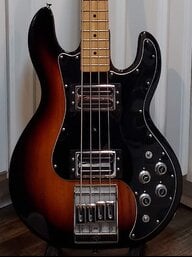
As long as it's spikedCan't resist............
View attachment 4036976
I don't really know how to verbally describe "punch" for bass guitar but IMHO, punch is based on the kind of strings used, amp setting and frequency range. IMHO, punch resides in the A note of 55 hz to G note of 98 hz range. Any lower or higher, punch doesn't present itself so good. That's just my opinion.
Punch doesn't go from 0 to 100 mph. It goes from 100 mph to 100 mph immediately. It's a sound that's like getting "gut punched". Firm. Solid. Strong. Perhaps a low-midrange sound.
In the meantime.............punch anyone?


I'm with the quick-transient hi-mid articulation definition of "punch". That's what it's always meant to me because that's what it takes to be heard well in the mixes I play in. I'd imagine it means something a lot different to people who play different music. Growl, snarl, woody, and clank seem a bit more self-evident but who knows... The one that always gets me is "warm".
‘Warm’ is used quite a lot in studio / synth circles too, in reference to the ‘physical’ feel and complex sound of subs and lows / low mids in analog gear, as opposed to the perfect clinical and dry sound of digital equipment. Warm to me is like the difference between an old Ampeg B15 (warm) vs a B15 amp sim emulation (it’s ok but lacking the warmth of the real thing).

“I think you heard me just fine, punchy”
One bass player, fingers, two different basses, same kind of punchy...
Last edited:

Say “punch thru”. My thoughts are.. how many concerts you’ve been to , watching the bass player and his/her fret hand moving but just hear a low “blur” of notes mixing with the kick with no clear note standing out.... no punch ! My taste in live sound with two guitarists is to find my space so it will be heard and felt. “Punch thru” the mix