

Enjoy the benefits of a premium membership!
Upgrade Account
-
TalkBass has been independent since 1998. Add your voice.
Create a free account to reply to discussions, view embedded media, and browse with fewer display ads.
Join free Log in
Want zero display ads or expanded classifieds tools? Compare plans.
You are using an out of date browser. It may not display this or other websites correctly.
You should upgrade or use an alternative browser.
You should upgrade or use an alternative browser.
So why do people mic a cab, vs. just using a line out?
- Thread starter Damani311
- Start date
More options
Who Replied?2 schools of thought on bass amplification:
1. The sound is in the bass, an amplifier should reproduce this sound as accurately as possible with no coloration. These tend to be transistor amplifiers with crossover equipped multi-driver speaker systems. In this case a DI is most likely appropriate.
2. The bass+amp+cab is a single system, the sound is the sum of all of these parts. In this case putting a DI before the amp removes 2/3 of the components which make up the sound of the instrument. Using a line out from the amp removes 1/3 of the components. In this case a mic is most likely appropriate.
I subscribe to philosophy 2, it seems I am in the minority around here. My favorite gigs are in smaller, traditionally 'jazz' venues. No PA at all, just a bass amp, guitar amp and acoustic drum set. To me this is what my band actually sounds like, trying to do anything other than this is a compromise. In larger venues I am always trying to get the sound to be like that, only louder. A decent mic on the rig will almost always be closer than a DI on some part of the rig.
1. The sound is in the bass, an amplifier should reproduce this sound as accurately as possible with no coloration. These tend to be transistor amplifiers with crossover equipped multi-driver speaker systems. In this case a DI is most likely appropriate.
2. The bass+amp+cab is a single system, the sound is the sum of all of these parts. In this case putting a DI before the amp removes 2/3 of the components which make up the sound of the instrument. Using a line out from the amp removes 1/3 of the components. In this case a mic is most likely appropriate.
I subscribe to philosophy 2, it seems I am in the minority around here. My favorite gigs are in smaller, traditionally 'jazz' venues. No PA at all, just a bass amp, guitar amp and acoustic drum set. To me this is what my band actually sounds like, trying to do anything other than this is a compromise. In larger venues I am always trying to get the sound to be like that, only louder. A decent mic on the rig will almost always be closer than a DI on some part of the rig.

To me, miking is the best way to assure that what you hear is what everyone else does. I've just had wierd luck with DI. Sometimes I've had a hum (possibly a ground loop), at one gig I had a section where I volume pedaled my effects loop down and up to create a more emotional effect, but then I hear bass still ringing through. I still swear that my DI was set to post-preamp, but it doesn't matter because if I was miked, I would have known what was out there.
I'm partial to the DI myself as most of my sound is in my bass & fingers and I seem to have more consistency that way.. I have miked my cabs in the studio/live and the sound difference to me is that there's a little more "air" in it which can be a really good thing, depending on the song/style.. when in doubt, I just run both and decide what to do in the mix..

2 schools of thought on bass amplification:
1. The sound is in the bass, an amplifier should reproduce this sound as accurately as possible with no coloration. These tend to be transistor amplifiers with crossover equipped multi-driver speaker systems. In this case a DI is most likely appropriate.
2. The bass+amp+cab is a single system, the sound is the sum of all of these parts. In this case putting a DI before the amp removes 2/3 of the components which make up the sound of the instrument. Using a line out from the amp removes 1/3 of the components. In this case a mic is most likely appropriate.
I subscribe to philosophy 2, it seems I am in the minority around here. My favorite gigs are in smaller, traditionally 'jazz' venues. No PA at all, just a bass amp, guitar amp and acoustic drum set. To me this is what my band actually sounds like, trying to do anything other than this is a compromise. In larger venues I am always trying to get the sound to be like that, only louder. A decent mic on the rig will almost always be closer than a DI on some part of the rig.
I tend to go with #2 as well. Sort of a guitarist's POV I suppose, where in most cases the amp is very very much indeed a big part of the tonal equation.
I've done just clean straight DI to the board before with satisfactory results, but I much prefer the flavor an amp and speaker (or amp/speaker simulator) brings to the table. There's more "dimension" or "movement" (or other such vague subjective terms
 ) in the tone.
It totally depends on what sound you're going for. It also depends on what conditions you're recording in. If you're in a live situation, often a DI or XLR out from the head is going to be cleaner than using a mic. In a studio, it depends a lot on what gear the bassist is using and what options you've got for mics and preamps. 1 mic/preamp/DI is not going to sound the best for every bass player. The best you can do is capture as many quality signals as possible and listen to them, decide what sounds best, combine them if you want, then go with that.

Live, I'm a DI guy all the way - preamp out to board. I literally use my power amp and cab as my monitor, if at all, and let the sound guy worry about whether the crowd can hear me or not. I've gigged (a long time ago) with nothing but a bass, tuner, and preamp. Showed up with everything I needed in one gig bag.
In studio situations, gotta mic the cab - too sterile-sounding in that environment. I think the cab warms my sound.
In studio situations, gotta mic the cab - too sterile-sounding in that environment. I think the cab warms my sound.
I think it totally depends on what your working with. I have yet to find a good line out on an amp. I havent looked that hard but on your run of the mill backline stuff id much rather use my radial DI than the line out on the head. I prefer micing my amp tonewise, i prefer going into a di for convienance.
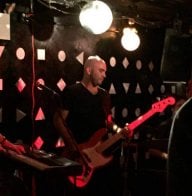
I go DI out+mic in the studio, but to be honest, I'm really happy with how my bass sounds by itself with just a touch of compression. Live, I just go DI andlet the sound guy deal with the crowd.
I prefer DI 99% of the time for both recording as well as live. (as a bassist and engineer). Cleaner signal, deeper lows...also if you're using multiple driver sizes, a mic is a bad compromise IMO. Say you're using a 15", a 4x10 with a horn, no sane FOH engineer is going to give you the 3 mics necessary to get all that sound into the PA system.
Like neuroticism, I've played gigs with just a DI, or sometimes with a head and a floor monitor for just me. Let the FOH get the sound that works well in a room.
Like neuroticism, I've played gigs with just a DI, or sometimes with a head and a floor monitor for just me. Let the FOH get the sound that works well in a room.
I like using a Line6 Bass XT Pro as my DI live and to record with. Having all the Amp/cab models to play with ,I can change my sound with the turn of a knob or two maybe three..

So much depends on what makes up your sound ...
I'm pretty well on record as one who is just unwilling to hand it all over to the sound guy, not after I've heard comments from them like "It's just bass let me handle it"
Guess that makes me an option #2 guy.
You see part of the deal for me is I use effects, so that kinda throws a wrench into the straight clean active bass to the PA thing. So I come prepared with either an MXR M-80 active DI and/or a Radial JDI, In addition I use a cab with a single driver designed just for this, and my own mics, either an AKG D112 or a Shure SM57 and a stand. I prefer a split signal with the DI straight in with no effects and the effects sound miced. Some effects may be too much straight into the FOH and if that happens most sound guys are gonna just fade you down.
Give them the option of a mix and respect what the do with it.
 ... May sound like a lot of work but it's not, and sound guys are usually blown away if you have your own mic.
I'm pretty well on record as one who is just unwilling to hand it all over to the sound guy, not after I've heard comments from them like "It's just bass let me handle it"
Guess that makes me an option #2 guy.
You see part of the deal for me is I use effects, so that kinda throws a wrench into the straight clean active bass to the PA thing. So I come prepared with either an MXR M-80 active DI and/or a Radial JDI, In addition I use a cab with a single driver designed just for this, and my own mics, either an AKG D112 or a Shure SM57 and a stand. I prefer a split signal with the DI straight in with no effects and the effects sound miced. Some effects may be too much straight into the FOH and if that happens most sound guys are gonna just fade you down.
Give them the option of a mix and respect what the do with it.
... May sound like a lot of work but it's not, and sound guys are usually blown away if you have your own mic.I'm for DI in most recording or big live situations. I will change some setting, though, because the recipe for my sound is different when I go straight to the DI. It also makes the sound guys happier. I've had mostly positive experiences with them up to now so I might change my mind later.
Do I need to add that I love the "post-effects" and "post-EQ" buttons beside my DI output?
Do I need to add that I love the "post-effects" and "post-EQ" buttons beside my DI output?

Some cabs are "familiar" to sound of certain genre of certain music.
A lot of software has very good cabinet emulation. Called "convolution", an impulse response (IR) of an actual cabinet is use to emulate the sound of actually playing through a cabinet including mic placement.
Revalver, Ampeg-SVX, and even the free Voxengo Boogex can load IR of real cabinets. You can find some IR of cabs to try at noisevault.com
This allow you to record DI, then add amps and cabinets afterwards, trying several combinations in the mix to see what sounds best to you. "Familiar" might not be the best, only you'd know.
A lot of software has very good cabinet emulation. Called "convolution", an impulse response (IR) of an actual cabinet is use to emulate the sound of actually playing through a cabinet including mic placement.
Revalver, Ampeg-SVX, and even the free Voxengo Boogex can load IR of real cabinets. You can find some IR of cabs to try at noisevault.com
This allow you to record DI, then add amps and cabinets afterwards, trying several combinations in the mix to see what sounds best to you. "Familiar" might not be the best, only you'd know.
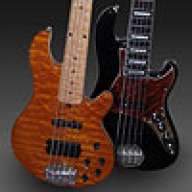
When recording, there's a certain thing called "air" that you get with a mic on a cab that you don't get with DI, and emulators attempt to capture, but typically fall short at. It's the real physics... speaker moving --> mic + room... and of course other potential factors, like the pre used for the mic, or channel strip and anything that may be in between. What works for you depends on what kind of sound you're going for though. A lot of times, engineers will mic and DI for recordings and mix them together as desired.
---
c
---
c
There's a difference between going DI and using a mic on the cab that you'll hear in the control room when you listen just to the bass. In many, many circumstances, the difference gets pretty much completely swamped in a real mix and you'd be very hard pushed to tell one from the other listening in most everyday situations.
the amp+cab+mic system would require each of the three to be real pro quality and it can work out into an far more expensive set up than a straight good quality transparent sounding DI
- Jun 15, 2005
- 160
- 74
- Disclosures
- Endorsing artist: Skjold basses,Zon basses,Aguilar,D'Addario,GruvGear
DI's are easier to manage, etc... BUT, your sound in the house is now dependant upon that DI. Crappy DI = crappy tone in the house & any board recordings (plus, I play Zons, which have a graphite neck, it can sound REALLY glassy & brittle through a crappy DI). I used to always carry a nice Tube DI with me on the road. Now, I'm using an Alembic F1-X tube pre in my rig and that DI sounds wonderful (post EQ), so I'm covered.
Ideally, you have both a mic & DI running, then the soundman can use his (hopefully good) judgement for the house and board recordings.
Ideally, you have both a mic & DI running, then the soundman can use his (hopefully good) judgement for the house and board recordings.

being a bit obvious here, but...
what if the player overdrives his/her amp and/or speakers, achieving a grunt that´s imperal to his sound? a DI from instrument won´t do that...
I worked with a bassist whose goal was an "overdriven grunt", and we (working together) achieved it by taking a DI line straight from the bass for lows, and miked his rig (post effects, an overdriven marshall amp and a bassman cab) for the hi-end. not feasible at all venues, but necessary for the desired sound... at a studio, this shouldn´t be an obstacle. if it is, switch studios...
what if the player overdrives his/her amp and/or speakers, achieving a grunt that´s imperal to his sound? a DI from instrument won´t do that...
I worked with a bassist whose goal was an "overdriven grunt", and we (working together) achieved it by taking a DI line straight from the bass for lows, and miked his rig (post effects, an overdriven marshall amp and a bassman cab) for the hi-end. not feasible at all venues, but necessary for the desired sound... at a studio, this shouldn´t be an obstacle. if it is, switch studios...


