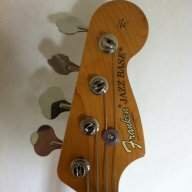
I'll add a little more here. I've started a part time guitar repair and maintenance shop at my house. 44 reviews on my FB page is anyone is curious, all 5-stars. So people like my work a lot. I do a lot of wiring work, as well as quite a bit of shielding work. A couple bits I'll add here, as part of my experience to date with shielding. I'll explain in lay terms because those are the only terms I know since I'm not an engineer. First, to clear up a point here, the point of shielding is to provide a home for unwanted electronic interference. This is done by essentially directing that interference to ground. In order to achieve that, we need an easy pathway for the interference, with as little resistance as possible. Resistance means that the interference would get to ground less effectively. The interference is a type of signal, and we want that particular signal to move to ground quickly and efficiently, without resistance. That is why an ohm-meter (multi-meter) is important. Copper tape will give you a signal of 0 on your ohm-meter, meaning that if the tape is all installed properly with no gaps in connectivity, e.g. the pieces are all touching one another, then you will have a very efficient method to direct those unwanted frequencies to ground. So to clarify, you want to create a connection with as little resistance as possible, so that the unwanted frequencies move easily to ground by way of your shielding work.
I think there are enough of us out there (if you are reading this, you are probably one!) who own, or would be interested in purchasing, a multi-meter. I check all of my work on each shielding job because its critical to know that you have a complete circuit. An incomplete circuit means an incomplete job, and results in a lot of time spent taking apart a completed job to find and fix the break in connectivity.
I find that copper tape yields a 0 reading on my ohm meter, and shielding paint reads .08 or thereabouts. No audible difference in effectiveness, to my ears. Since paint takes a fraction of the time as tape, I typically use paint for most of the shielding, with copper tape for the flat surfaces that are easy to reach. I use tape with conductive adhesive. The combination of tape and paint is most cost effective and people rave about my shielding jobs, including many pro players. I'm working on a shielding job for a bass body now, which was sent to me by a TB-er in Ohio, because he liked what he had read about me. Thanks, TB!
One other nice part of shielding is that any point of the shielding can be used as a ground. If you prefer to solder to the copper tape, have at it. Its way easier than soldering to the backs of the pots. By the way, I suggest soldering to the tape before applying it to the guitar surface. The pots need to be grounded together and to the jack, but mechanically they will also be grounded to your shielding by virtue of the tape on the back of the pickguard, although I also run a ground line from the pots to the shielding for added ground connectivity. You can run your pickup ground wires and or your bridge ground wire to the copper tape if you prefer that over soldering to the pot casing. I personally find star grounding to be unnecessary in a bass or guitar. See other threads on star grounding for more if you are interested.
I never solder the tape joints since I use paint in combo with copper tape. But on the few jobs I did that were just tape with paint for the wire tunnels connecting the pickup cavity to the control cavity, I didn't bother with soldering the joints together. There was more than adequate overlap between the tape pieces, again IMO.
My last thought is in regards to shielding the inside of the plastic pickup covers. Initially I did shield the inside of the covers, then decided it was a lot of work so I began to see if there was a noticeable difference when I opted not to shield the inside of the pickup covers. I could not notice a difference. So I stopped. All of my customers are happy with the results. Thrilled is a more accurate term. "Holy expletive, the bass/guitar is so quiet! Amazing!" is the typical reaction.
As always, take this advice or don't. Your results will not vary if you do a thorough job. But I'm sure some out there may claim that some/all of what I'm saying is bunk. That is why I referenced my reviews on FB, to give my post a little bit of added validity. Good luck and happy shielding! Its been a lot of fun learning how to do it, and helping others as well!