• TalkBass has been independent since 1998. Add your voice.
    Create a free account to reply to discussions, view embedded media, and browse with fewer display ads.
    Join freeLog in
    Want zero display ads or expanded classifieds tools? Compare plans.

Some real talk about Pickup Placement.....

Where type of pickup placement do you prefer?


  • Total voters
    374
I can't get down with the whole "most of us agree" premise of the poll. I mean... I agree that pickup position plays a role in your sound, but I wouldn't say that it a bigger variable than the strings you are using.

Also: analyzing the minutiae of bass tone outside of a mix is pretty useless in the real world. Even then, does anyone ever go see a band and complain that they would sound better if the bassist had different pickup spacing?
 
I can't get down with the whole "most of us agree" premise of the poll. I mean... I agree that pickup position plays a role in your sound, but I wouldn't say that it a bigger variable than the strings you are using.

Also: analyzing the minutiae of bass tone outside of a mix is pretty useless in the real world. Even then, does anyone ever go see a band and complain that they would sound better if the bassist had different pickup spacing?

I would politely disagree, more then any other reason a Smith sounds like a Smith because of the pickup placement, a Precision sounds like a precision because of it's pickup and location, jazz bass too.
 
  • Like
Reactions: TonyP-
Ok, that's weird. I have six Precisions and none of them sound the same at all to me.

Now if one of them sounded like a jazz bass or a musician or a smith that would be weird. Of course there are degrees of difference between each piece. They aren't going to sound identical that was your words not mine. I bet they all sound like p basses. If you swap a different P pickup into one of your basses it will sound different too.

This seems overly obvious I'm not sure there is any debate.
 
Now if one of them sounded like a jazz bass or a musician or a smith that would be weird. Of course there are degrees of difference between each piece. They aren't going to sound identical that was your words not mine. I bet they all sound like p basses. If you swap a different P pickup into one of your basses it will sound different too.

This seems overly obvious I'm not sure there is any debate.

I too, am wondering what you are attempting to debate about.
 
  • Like
Reactions: merseymale
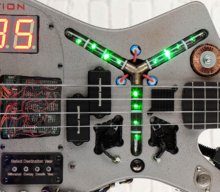
Anyone who doubts the affect on tone of pickup placement has not played one of these:View attachment 790419
I always thought the Grabber sliding pickup was a cool concept. If I was building a custom with the sky being the limit I would have two sliding pickups - one covering all of the J bridge positions and the other a bit closer to the neck than normal J positions (to go from roughly J to Ric positions). If I was really going nuts it would have removable / switchable pickups a la the Ampeg Dan Armstrong that slide in and out and connect with 1/4" jack. Another cool concept that never really caught on. I guess I would call it the "Chameleon Bass"...


Wonder why this concept never caught on.
I think it's a really good idea in concept.

I'd go for a shortscale with moveable pickups.
 
I too, am wondering what you are attempting to debate about.
I can't get down with the whole "most of us agree" premise of the poll. I mean... I agree that pickup position plays a role in your sound, but I wouldn't say that it a bigger variable than the strings you are using.

Also: analyzing the minutiae of bass tone outside of a mix is pretty useless in the real world. Even then, does anyone ever go see a band and complain that they would sound better if the bassist had different pickup spacing?

My point was more that pickup placement is very important. In a mix a jazz bass is very different then a precision regardless of string choice and it is because the type of pickups and where they are placed more then anything.

Yes string choice is an easy way to change the sound of the bass but it's a variable that we can change like string height. Pickup placement is a design element.
 
  • Like
Reactions: Bioflava
Pickup location is a huge factor in tone, especially when you don't have an onboard preamp to dial in different sounds. I like to use 4 band preamps but also prefer triple pickups. The six pack (three dual coils) below has 63 possible coil combinations for a little more versatility.

I didn't vote either, because with the many basses I have owned have the years my discovery has been that the possibilities are infinite, depending upon placement, winding, blend, pre-amp or not etc.
The only option I have no personal like for is the bridge only.

This "3P" that I put together gives the most possible passive combinations I have found in a V-V-V-T setup, in that the loading stays in balance, and blend possibilities are numerous.
I also don't agree with the idea that a neck pickup near the butt of the neck automatically gives you mud. Active-like versatility in this setup.

DSCF0822.JPG


I have a Guild JS-1 which is roughly the Guild equivalent of a Gibson EB-0 which has a new issue guild DS-1 pickup installed. It will do anything from baritone twang to dub mud, Ric splash and clank or cover anything a P or J would in between.in between. It's probably one of the greatest tone chameleons I've owned. Of course, knowing how to get those sounds by technique is a big part as well.

Furthermore, I also don't buy into the flat amp theory. A good amp and or pre-amp you are not afraid to dial in and the right bass will cover many if not most possibilities.
 
I didn't vote either, because with the many basses I have owned have the years my discovery has been that the possibilities are infinite, depending upon placement, winding, blend, pre-amp or not etc.
The only option I have no personal like for is the bridge only.

This "3P" that I put together gives the most possible passive combinations I have found in a V-V-V-T setup, in that the loading stays in balance, and blend possibilities are numerous.
I also don't agree with the idea that a neck pickup near the butt of the neck automatically gives you mud. Active-like versatility in this setup.

View attachment 980201

I have a Guild JS-1 which is roughly the Guild equivalent of a Gibson EB-0 which has a new issue guild DS-1 pickup installed. It will do anything from baritone twang to dub mud, Ric splash and clank or cover anything a P or J would in between.in between. It's probably one of the greatest tone chameleons I've owned. Of course, knowing how to get those sounds by technique is a big part as well.

Furthermore, I also don't buy into the flat amp theory. A good amp and or pre-amp you are not afraid to dial in and the right bass will cover many if not most possibilities.

I love your 3P! It's a setup I have oft considered and it's good to see what it looks like. Sometime I want to see a photoshop version of a reversed 3P. Not sure how it would look but I would prefer the tone.
 
I didn't vote either, because with the many basses I have owned have the years my discovery has been that the possibilities are infinite, depending upon placement, winding, blend, pre-amp or not etc.
The only option I have no personal like for is the bridge only.

This "3P" that I put together gives the most possible passive combinations I have found in a V-V-V-T setup, in that the loading stays in balance, and blend possibilities are numerous.
I also don't agree with the idea that a neck pickup near the butt of the neck automatically gives you mud. Active-like versatility in this setup.

View attachment 980201

I have a Guild JS-1 which is roughly the Guild equivalent of a Gibson EB-0 which has a new issue guild DS-1 pickup installed. It will do anything from baritone twang to dub mud, Ric splash and clank or cover anything a P or J would in between.in between. It's probably one of the greatest tone chameleons I've owned. Of course, knowing how to get those sounds by technique is a big part as well.

Furthermore, I also don't buy into the flat amp theory. A good amp and or pre-amp you are not afraid to dial in and the right bass will cover many if not most possibilities.

I love your 3P! It's a setup I have oft considered and it's good to see what it looks like. Sometime I want to see a photoshop version of a reversed 3P. Not sure how it would look but I would prefer the tone.
 
  • Like
Reactions: merseymale
I love your 3P! It's a setup I have oft considered and it's good to see what it looks like. Sometime I want to see a photoshop version of a reversed 3P. Not sure how it would look but I would prefer the tone.

Steve this was a happy accident. This body which is a very nice custom build by I don't remember whom, was sold by a TB member who had it on the local classifieds and the bay at the same time. I always fantasized about a 3P, I like natural wood grain and I put a J neck on it, and it's probably the only bass I dreamed up that actually met all my fancied expectations.

I might even argue that having 3 balanced pickups in a passive circuits will give one better versatility w/o loading issues than some other designs, at least the ones I have built or owned. I do imagine in your case you have worked out those issues in your incredibly well thought out beautiful creations.

I tend to go for simple form meets function builds.
 
  • Like
Reactions: Doner Designs
Steve this was a happy accident. This body which is a very nice custom build by I don't remember whom, was sold by a TB member who had it on the local classifieds and the bay at the same time. I always fantasized about a 3P, I like natural wood grain and I put a J neck on it, and it's probably the only bass I dreamed up that actually met all my fancied expectations.

I might even argue that having 3 balanced pickups in a passive circuits will give one better versatility w/o loading issues than some other designs, at least the ones I have built or owned. I do imagine in your case you have worked out those issues in your incredibly well thought out beautiful creations.

I tend to go for simple form meets function builds.

Something like yours with the pickups a little closer together would potentially allow for P and reverse P wiring. It would be easy if all the coils were in parallel (just have an on/off switch for each coil), but normal series wiring would make it more complicated to do both.
 
My main bass will probably always be a two-pickup, jazz style. For one thing, part of my tone is based upon the positioning of my hands and where I strike the strings, which is founded in part on using the jazz-placement bridge and neck pickups as anchors. I dig the tone of one-pickup basses in many applications, but I tend to find them to sound "incomplete" for purposes of everything I need my main bass to do.
Yep. I totally agree. I was in guitar center just the other day and I tried an American precision bass. It sounded awesome, but I was hastily reminded of why I went with a jazz bass. I just gotta have a bridge pickup. One of my favorite tones EVER is slap on a P-J
 
  • Like
Reactions: EmuBass
I know I'm verging on Zombie Thread territory here.

I'm here because I'm building the Stunt Bass. My default tone is that of a P-Bass. This will be my first fretless P, although I've played more fretless basses on gigs than anything.

I'm completely happy with the P-Bass tone (passive) into a flat-ish rig . I can get most tonal changes I need to hear myself by changing plucking positions. It's been good to me.

I agree with the posters that say that pickup location has a huge impact on the sound of the bass but I'm a fan of coil switching as well. The type of pickup you are playing through (parallel, single coil, series) has as much a influence on the tone as the position. One can't substitute for another, but they interact.

I spent a fair bit of time deciding whether I preferred to pluck toward the neck and use the bridge pickup or pluck toward the bridge and use the neck pickup. I don't like to blend pickups (to each their own). I tend to think that a parallel neck pickup and a series bridge pickup tend to suit me.

The Stunt Bass will have a P-Bass neck pickup and a G&L MFD humbucker bridge pickup. The first bass I loved was a G&L L-1000. I am here to decide where to put the MFD pickup. I've decided not to interfere with the standard P-Bass pick guard. It will be just toward the bridge of that, which is more "bridgeward" than the L-2000's. It will have coil switching and a pull pot for series vs. "OMG mode".

Anyway, trying to contribute to this discussion, pickup configuration matters about as much as location. I truly appreciate the PabloMigraine images. This is about preferences. I like a P-Bass pickups, single pickups, coil switching and passive on board electronics. I have other basses that <* gasp *> migrate from P-Bass location and I'm happy enough with them, too. I dislike having too many on board choices (it's over whelming) and active electronics (a whole 'nother layer of things that can go wrong). With a few on board tonal options and plucking options I can usually get myself out of timbral issues. Then there's the amp's EQ section and other acoustic options.

I am not the Zen Master. If you have strong preferences that contradict mine, I'm glad you've found a solution that works for you. A P-Bass (fretted or fretless) can do almost anything I need. I don't expect that to be true for everyone.

Anyway, this thread has been very helpful to me. I'm probably going to make a jig to test my proposed position before I route out the body. I appreciated the information I found in this and other threads. It helped me move forward with my project. Many thanks to all of the contributors who helped me decide what I thought was the best way forward.

KO
 
I know I'm verging on Zombie Thread territory here.

I'm here because I'm building the Stunt Bass. My default tone is that of a P-Bass. This will be my first fretless P, although I've played more fretless basses on gigs than anything.

I'm completely happy with the P-Bass tone (passive) into a flat-ish rig . I can get most tonal changes I need to hear myself by changing plucking positions. It's been good to me.

I agree with the posters that say that pickup location has a huge impact on the sound of the bass but I'm a fan of coil switching as well. The type of pickup you are playing through (parallel, single coil, series) has as much a influence on the tone as the position. One can't substitute for another, but they interact.

I spent a fair bit of time deciding whether I preferred to pluck toward the neck and use the bridge pickup or pluck toward the bridge and use the neck pickup. I don't like to blend pickups (to each their own). I tend to think that a parallel neck pickup and a series bridge pickup tend to suit me.

The Stunt Bass will have a P-Bass neck pickup and a G&L MFD humbucker bridge pickup. The first bass I loved was a G&L L-1000. I am here to decide where to put the MFD pickup. I've decided not to interfere with the standard P-Bass pick guard. It will be just toward the bridge of that, which is more "bridgeward" than the L-2000's. It will have coil switching and a pull pot for series vs. "OMG mode".

Anyway, trying to contribute to this discussion, pickup configuration matters about as much as location. I truly appreciate the PabloMigraine images. This is about preferences. I like a P-Bass pickups, single pickups, coil switching and passive on board electronics. I have other basses that <* gasp *> migrate from P-Bass location and I'm happy enough with them, too. I dislike having too many on board choices (it's over whelming) and active electronics (a whole 'nother layer of things that can go wrong). With a few on board tonal options and plucking options I can usually get myself out of timbral issues. Then there's the amp's EQ section and other acoustic options.

I am not the Zen Master. If you have strong preferences that contradict mine, I'm glad you've found a solution that works for you. A P-Bass (fretted or fretless) can do almost anything I need. I don't expect that to be true for everyone.

Anyway, this thread has been very helpful to me. I'm probably going to make a jig to test my proposed position before I route out the body. I appreciated the information I found in this and other threads. It helped me move forward with my project. Many thanks to all of the contributors who helped me decide what I thought was the best way forward.

KO

What you say here makes sense to me for what it's worth.

One thing to note - mixing pickups normally results in a mid scoop. That may be what you don't like about it. Note that the further apart the pickups are the lower the frequency of the scoop. I personally prefer the sound of a bridge pickup with another pickup close to the neck heel. Very hollow throaty sound vs the typical J bass tone. At the other extreme is a two coil humbucking pickup. In that case you get a little loss at the high end rather than mids.

Here's my new lineup by the way. I sold my JPJ bass (to Andy Irvine) to help fund the koa and ebony fretless included here on the left. It only has two pickup shells but they operate as four separate split coil pickups. Two Big Splits and two split J pickups. The J's (inner coils) are in the normal position and the Bigs (outer coils) are pushed further apart to get that tone I prefer.

IMG_1687crop2.jpg
 
  • Like
Reactions: Schizo Sapiens
There have to be about 200 threads about this already.... so I thought... WHY NOT ANOTHER.... be sure to vote on this one!


So I think most of us agree that pickup placement is one of the greatest determining factors in an instrument's overall tone, equal to or in many cases more so than the brand / model of pickups used.

Musicman basses have for many years advertised their single-pickup models as being right at the "Sweet Spot. And that's true... nearly all instruments designed by Leo Fender have some "science" regarding a string's vibrational behavior behind the chosen positions... except that all that goes out the window as soon as you change the scale length by fretting a note!! (See below)

Many basses and their imitators are defined by the specific tone given by their respective pup placement. Great examples would be;
  1. G&L L2000 / L-2500: Known for being very aggressive and midrangey
  2. Musicman: Known for being very punchy and full
  3. Fender P: Known for being very full but bright
  4. Warwick Thumb: Known for being very aggressive and very percussive
And that's not even getting into the entire school of thought involving Jazz Basses and the distinctive tones we get from varying blends of the two pups. Right now I'm in the middle of a custom build where the luthier affords me the choice of both pickup type and placement... and even knowing a little about it I'm pulling my hair out trying to decide.

Lots of times here on TB we hear people ask questions like;
  1. These two basses have the same woods and the same pickups, why do they sound so much different?
  2. Which of these basses will cut thru in a mix?
  3. I want my bass to sound more like "X" bass, if I put the "X" bass pickups in will it sound the same?
In most cases, we come to find out that the PLACEMENT of the pickups is the issue at hand, not the woods, or the brand of pickups involved. Below is a great video which started out with the intention of comparing the inherent tone of 3 different basses but, IMO, turned out to be more about pickup type and placement... Have a LISTEN HERE.

All my experience (limited compared to some) has taught me that, when going for a particular tone, the placement and type of pickup (Single coil J, Dual Coil, P, Reverse P, Musicman etc) has more to do with the sound I will hear than just about anything else. For this custom I'm ordering now.... its probably going to be dual soapbars with the Bridge in the 70's J position and the neck pup moved about an inch back from the bridge.

What have your experiences been talkbass?

amyvj4.jpg
Poll doesn't have an option for "other." I do think it makes a huge difference, but my preferred pickup locations are.

I like my pickups to be about 4-5" from the bridge, and fairly close to the neck. About where the 36th and 24th frets would be.
 
  • Like
Reactions: merseymale
What you say here makes sense to me for what it's worth.

One thing to note - mixing pickups normally results in a mid scoop. That may be what you don't like about it. Note that the further apart the pickups are the lower the frequency of the scoop. I personally prefer the sound of a bridge pickup with another pickup close to the neck heel. Very hollow throaty sound vs the typical J bass tone. At the other extreme is a two coil humbucking pickup. In that case you get a little loss at the high end rather than mids.

Here's my new lineup by the way. I sold my JPJ bass (to Andy Irvine) to help fund the koa and ebony fretless included here on the left. It only has two pickup shells but they operate as four separate split coil pickups. Two Big Splits and two split J pickups. The J's (inner coils) are in the normal position and the Bigs (outer coils) are pushed further apart to get that tone I prefer.

View attachment 1022803
I'm very aware of the mid-scoop/comb filtering effect of multiple pickups. I usually avoid contour switches on the amp as well. I learned early in my bass career (and keep learning) that the things that make a bass sound good solo'd are the things that make it so you can't hear yourself in the mix and yet are continuously asked to turn down. Usually when someone says "there's too much bass" the mean the frequency, not the instrument. Don't turn down, dial back the low end and bring up the mids somehow.

What sounds good to you as a player will screw up the mix. Learn to make peace with it.