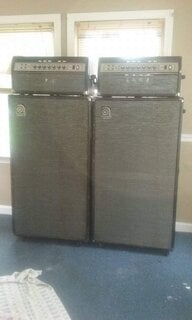
It also depends on what your guitarists are using. I used to play with 2 les Paul's through marshal stacks. Had to go full on the mids to cut through.

TalkBass has been independent since 1998. Add your voice.
Create a free account to reply to discussions, view embedded media, and browse with fewer display ads.
Join free Log in
Want zero display ads or expanded classifieds tools? Compare plans.


"If something's wrong with that tone"
I'm not sure it's the setting of the nobs. I've tried everything. Don't you here the crisp tone that the guy in the video is getting? It's so clear and vibrant compared to what I am getting. Sure, I can crank the highs of basss up to the max, but still my tone is rather dull.
Take a listen (attachment):
But just so I understand you. You don't think there is anything wrong with my tone. It's just how my bass sounds. Do I understand you correctly?
Here is another example of a vibrant, bright bass tone:

Hey everyone,
I started out playing the guitar, but I found a band that I wanted to join. Since they needed a bass player, I picked up a bass guitar.
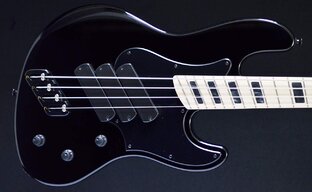
I bought this one, since I thought it looked cool, and I didn't want to spend too much money on my first bass:
Invalid Link Removed
Now, I'm currently trying to get a good tone and I'm really struggling. What I found was that my Bass DI tone sounds a lot more dull compared to other DI tones I found on YouTube.
So here is an example of what I found on YouTube (but in many videos the basses sound like this):
I've attached a file of what my Bass DI tone sounds like when I leave all the EQ nobs and the pickup nob at their center position.
My strings are relatively new (2 weeks old) and also I've changed them many timey, so it's definitely not the strings.
So I guess my question is: does that specific bass just have a very dull tone or is something wrong with my bass?
Thank you so much for your answers!
The OPs bass is active. It has a 3-band EQ.
- John
I think they are just like the black beauties, (more or less) just a different color. you gotta crimp 'em. I've never had tapewounds. Do have to crimp those as well?
This is from elsewhere on TB:
bend strings before cutting?
That's not worth any more than stuff said here or any other internet forum. Here's a better quote from the package for my DR Black Beauties:I don't know about the DR color stings first hand, but believe they are a slightly different flavor of the black beauties, that are constructed similarly. I'm on my second set of them and have always crimped, never had a problem. Love those strings!!
"We flatten a small section of the core wire at a spot that should lie past the nut at the top of the fingerboard, and between the tuning machines of your instrument. This flat section provides an anchor for the wrap wire to grip the core wire. You should be able to feel this flattened area between your fingers as you touch the end of the string opposite the ball end.
Without the anchor the string is likely to unwind, go "dead" and fail to intonate properly.
If you need to cut or trim your strings between the anchor and the ball end . . . carefully and severely bend, or "crimp," your string as illustrated. The severe bend (crimp) will provide an anchor for the round core."
Note, this applies to round core strings only. I put more stock in this than anything said so far. The manufacturer is concerned enough about the outer wrap unwinding that they add an extra step to the manufacturing of the string and post a big warning inside the package.
I just listened to the clip of your bass with flat EQ: it sounded fine to me, maybe not the tone I would use but at least in the same neighbourhood.I've attached a file of what my Bass DI tone sounds like
I just listened to the clip of your bass with flat EQ: it sounded fine to me, maybe not the tone I would use but at least in the same neighbourhood.
Then I listened to the two YouTube clips and I didn't like the tones in either clip, though I suppose the second one was OK in context with drums and stuff in that style. They're very clanky tones and I wouldn't want my bass to sound like that.
I think bassists in most genres other than post-2000 metal styles would want something more like the tone you're getting than the tone in those YouTube videos.
Of course. And my selection of that year was pretty arbitrary. But large though that volume of work is I think it's vastly outnumbered by non-metal styles. And older metal is more likely to have a more old-school bass tone.post 2000 is like 20 years of metal. that's a lot of bands and influence.


Next time buy one because it SOUNDS cool.H
I bought this one, since I thought it looked cool,

 where newness/freshness rules...its a constant battle to conserve string life on the main players....this is why I own cheap "beater basses" to practice on and dont worry about changing their strings

Is there a difference between how basses sound?
When they hit the strings would be my guess...Thank you all so much for your input! I guess that's just how a bass sounds for that price.
I will try extra bright strings now and maybe moving up my pickups. But I've never done that. How far up is too far?