• TalkBass has been independent since 1998. Add your voice.
    Create a free account to reply to discussions, view embedded media, and browse with fewer display ads.
    Join freeLog in
    Want zero display ads or expanded classifieds tools? Compare plans.

Speaker Size

The internet. Before it most players went to music stores and tried gear before buying, so they knew what they were getting. Today most players buy their gear on-line, never having heard it. There's no way to predict how different combinations will work. With matched cabs you know exactly what you're getting. And if you take someones advice based on their taste how do you know your tastes are the same?


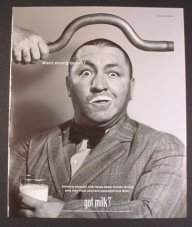
^ This man knows what he's talking about.

Mixed cabs are a crap shoot. Identical cabs are the best solution.
 
Of course different rooms will present different acoustical challenges. Just when you use speakers with identical frequency and phase response, clean power handling, distortion characteristics, etc., you're eliminating an entire set of problems rather than piling on. This makes it a whole lot easier to remedy the other issues.

When's the last time anyone saw a PA system with a bunch of different full range drivers in all being powered by one signal/source/amplifier? There's a reason for that.
 
OR, maybe the 2 different speaker cabs mitigate some of those problems. As said, it can "unpredictable" (but live sound is always unpredictable if you're playing in different places).

Really the only thing you can come close to controlling is the sound in the immediate area of the cabs, so why not focus on that and let the chips fall where they may, instead of trying to chase down some spectre that is impossible to beat? Phase response and dispersion are real issues and they can affect the sound of a setup, but they don't magically trump everything else that goes into the way a cab setup sounds.

Anyway, mix if you want. Or don't. Nothing disastrous is going to happen either way, despite what the matching cabs mafia will try to beat you over the head with.
 
OR, maybe the 2 different speaker cabs mitigate some of those problems. As said, it can "unpredictable" (but live sound is always unpredictable if you're playing in different places).

Really the only thing you can come close to controlling is the sound in the immediate area of the cabs, so why not focus on that and let the chips fall where they may, instead of trying to chase down some spectre that is impossible to beat? Phase response and dispersion are real issues and they can affect the sound of a setup, but they don't magically trump everything else that goes into the way a cab setup sounds.
Dispersion for me, not so much. But phasing issues drive me completely nuts. And yes, while the room can also be an offender, I don't think there's any sense adding to it. And no, mixed cabs don't mitigate phasing problems...a rig is either not phasing or it is. The best you can hope for is not phasing...which is accomplished by matching cabs, and hopefully the room won't add its own phase problems. Mixed cabs cannot improve on that.
 
You're probably worn out on this and not even reading anymore, but if you want one more opinion…
First, the gospel truth that's been said here is that a cabinet that is properly designed and tuned to the drivers it uses is more a factor than the size of the drivers themselves. Second, do not buy with your eyes, use your ears. Do not assume that a 1x15 will have more bottom end than a 4x10, or a good 2x10 for that matter, just because it's a bigger speaker. Do not assume that a 10" will be more thin and shrill than a 15 or a 12. Ignore all of that and listen to the cabs.
The classic example is when I got into the Hartke cabs back in the mid 80's when they were first introduced. Everywhere you looked you'd see players that matched the single 15 on bottom with the 410 on top. Because they show it that way in the catalog, and some famous player x uses them that way. Besides, everyone knows a 15 is going to outperform a 10 in bass response, right? Wrong. All you had to do is play through the cabs one at a time for 30 seconds, and it was totally obvious that the 410 could way outperform the 115 in every way. And to make it even more ridiculous, the classic pairing at that time was the GK 800RB, so many would run the 115/410 combo biamped, so their best performing bass speaker, the 410, wasn't getting anything below midrange, and the 115 was huffing and puffing trying to carry the whole bottom. Invariably if we played a gig where I was running my dual 410's full range and the other band's bassist had the 115/410 combo, the other player would wonder why my rig was blowing his out into the alley. Especially since they had a mighty 15 and I was limping along with wimpy 10's. I would try to explain it but they would never want to hear or believe.
Regarding the drivers, you have to look at the usable excursion of the speaker and the total cone area of the drivers in the cab, which adds up to how much air you're pushing. In the case of the Harke's there wasn't just a huge difference at all in the excursion of the 10's and the 15, so basically you had 40" of speaker cone pushing air in the 410, 15" of speaker cone in the 115. The other huge advantage most 10" will have over most 15" is it is much lower mass, so it can be controlled much more accurately by the power amp if you have an amp with a good damping factor, which gives a much more distinct and clear tone.
Bottom line, listen to the cabs, get the one that delivers the sound you're gong for and don't worry about the size of the drivers.
 
~ 15s Rule!!! ~ :D

+1

I know there is no hope in swinging everyone over to crossed over designs, if we cant get people to understand the tech behind matched drivers. So if you are going to go with full range cabs, something loaded with a 3015 non LF or one of those tasty Faital Pro 15's would be my top choice. Get three or four of them and a 2 Ohm stable amp and crush!
 
Bottom line, listen to the cabs, get the one that delivers the sound you're gong for and don't worry about the size of the drivers.
+1, but again, who has the ability to do so in a day when few stores carry a decent selection? That's where the internet can be of benefit, as you can get expert opinions from those who have literally written books on the subject. But you need a good BS filter set too, as for every expert opinion posted there are at least two from wannabees who haven't even read a book on the subject, let alone having the experience and knowledge to write one.
 
+1

I know there is no hope in swinging everyone over to crossed over designs, if we cant get people to understand the tech behind matched drivers. So if you are going to go with full range cabs, something loaded with a 3015 non LF or one of those tasty Faital Pro 15's would be my top choice. Get three or four of them and a 2 Ohm stable amp and crush!

The big problem here is with the EXTREME arrogance of your reply. You just assume that because someone doesn't agree with you and the matched cabs mafia, that OBVIOUSLY they "dont understand the tech". Sorry, but even if that WERE true, it's still a jerk thing to say (and it's not true anyway).

I understand all that stuff just fine. What I also understand (that you and your matched cabs mafia brothers apparently dont), is that those are only a PART of what goes into making a rig sound good or bad, and are rarely the deciding factor.

My knowledge of the science, combined with my personal experience over the last couple decades, leads me to believe that while matching may be more "predictable", mixing is often more cost effective, in terms of what quality of sound you get for your money.

Everyone knows that ANY speaker cab is a compromise. People often say out of loud, low, and light, you can have 2, and that's not even taking into account "cheap". With 2 different cabs you can work around some of the limitations a single cab would face, and often not have to compromise as much (because each cab can be optimally chosen to complement the other). And that's without factoring in that having 2 different types of cab opens up your options when you have different types of gigs, recording sessions, etc...

 
Really, I just wish the "M-C-M" would get off their high horse and stop with the chicken little "the sky is falling" routine any time someone brings up the possibility of mixing different types of cabs. Somehow it's "risky" (how is trying some cabs out in a store "risky"?) and unpredictable, and they make it seem to unsuspecting novices like bad things will happen to them and their families if they don't have matching cabs.

Instead, maybe they could just come in, say "well, I prefer matching cabs, and if you mix, you MAY experience some issues because this, that, and the other thing", instead of making it sound like the world will explode if you pair a 1x15 and a 2x10 without a crossover, or if you use "full range" cabs in a bi-amp setup (aside: a true "full range" cab would be 20-20k, I don't know of ANY bass cabs that can pull that off. Most are going to have as much as an octave or so on the bottom, and an octave or so on top where they don't overlap, and more with a tweeter vs without; they should more appropriately be referred to as wide range cabs). Just stop talking in absolutes (or near absolutes) all the time, because that just doesn't reflect reality in general. Yeah, ON AVERAGE a 4x10 will probably outpace a 1x15, BUT NOT ALWAYS. That grey area (in a lot of aspects) is often relevant to the discussion and it seems to get ignored a vast majority of the time by the M-C-M.

Lastly, if music was all about the science, Stephen Hawking would be outselling Pink Floyd, but guess what, he's not.
 
The big problem here is with the EXTREME arrogance of your reply. You just assume that because someone doesn't agree with you and the matched cabs mafia, that OBVIOUSLY they "dont understand the tech". Sorry, but even if that WERE true, it's still a jerk thing to say (and it's not true anyway).

I understand all that stuff just fine. What I also understand (that you and your matched cabs mafia brothers apparently dont), is that those are only a PART of what goes into making a rig sound good or bad, and are rarely the deciding factor.

My knowledge of the science, combined with my personal experience over the last couple decades, leads me to believe that while matching may be more "predictable", mixing is often more cost effective, in terms of what quality of sound you get for your money.

Everyone knows that ANY speaker cab is a compromise. People often say out of loud, low, and light, you can have 2, and that's not even taking into account "cheap". With 2 different cabs you can work around some of the limitations a single cab would face, and often not have to compromise as much (because each cab can be optimally chosen to complement the other). And that's without factoring in that having 2 different types of cab opens up your options when you have different types of gigs, recording sessions, etc...

Excuse me, but isn't it arrogant---no, rude---to call others "matched cabs mafia brothers?"
 
Excuse me, but isn't it arrogant---no, rude---to call others "matched cabs mafia brothers?"

Yes, and it's time that this term was retired in threads like this. Further use of it will lead to entirely foreseeable results. Consider that a warning or a promise, whichever gets the message across. Let's all try to make our points more respectfully and have this be a discussion rather than trying to participate in and win a long distance urination competition.