
Enjoy the benefits of a premium membership!
Upgrade Account
-
TalkBass has been independent since 1998. Add your voice.
Create a free account to reply to discussions, view embedded media, and browse with fewer display ads.
Join free Log in
Want zero display ads or expanded classifieds tools? Compare plans.
You are using an out of date browser. It may not display this or other websites correctly.
You should upgrade or use an alternative browser.
You should upgrade or use an alternative browser.
Special Edition Build Off: The Paper Birch Precision
- Thread starter AK4570
- Start date
More options
Who Replied?

A question for those that have tried it...
Does Varathane WB work over Tru-Oil? I’d like to use something that will pop the colors/grain of the wood prior to clear coating.
(I’ll cross post this to the Water Based finishing thread but thought I’d ask here as well...)
I wouldn't use water base over an oil base. Too much chance of delaminating. I've been refinishing and building for over 20 years and IMHO either use the Truoil or use water base, not both. For natural wood finish, I prefer either a hand applied urethane jell or the Truoil. If a higher gloss is preferred, I use a sprayed automotive grade catalyzed urethane. Others opinions may differ, but hope this helps a little.

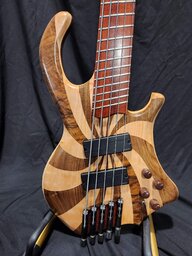
I love Tru Oil on maple. It has some amber coloring to it, so it darkens and mellows it out. I used it on quilted birdseye. It looks great. That is the challenge with Varathane alone. The Varathane doesn't do a lot to bring out the figuring.Thank you, JIsch... that’s super helpful.
How does Tru Oil work on maple? The neck is in dire need of some color/ambering
This is Tru Oil on a recent build:
BTW I would agree with Thumpin6string above. I did Varathane over Tru Oil on my WBO bass, but if I had to do it over again, I'd just use Tru Oil. It's not really any harder to apply and I like the way my wax treatment sticks to Tru Oil - it doesn't stick to the Varathane (see my comments in the other thread).


Just remember that roasting any wood is going to shrink it. So you definitely do not want to take a body that has been cut in anyway and roast it. Be sure to plan extra so that the dimensions will be OK when you do go to cut it.

my upright is constructed of Birch ply. not that it matters here. just stating.
It'd matter, (and I'd be impressed) if you wore it on a strap around your neck at gigs.
To Darkhorse’s comment, the body has already been cut to shape with no plans to allow it anywhere near the oven... I might give roasting a try with an off cut and maybe incorporate it into number 2... yes, I’m already planning the next one. Apparently resistance truly is futile!
Ah well, it’s better than all the vices I’ve already given up... except for coffee... mmm, coffee
Ah well, it’s better than all the vices I’ve already given up... except for coffee... mmm, coffee
Work has been insane, but I probably shouldn’t allow my vocation to cut into my bass building…
…I’m sure you all understand.
Started off the evening by giving the body blank a good once-over with 100 grit on the RO Sander (no pictures… imagine a vaguely annoying low-grade hum with hand-numbing vibration and you’ve pretty much got it)…
Made one more template...
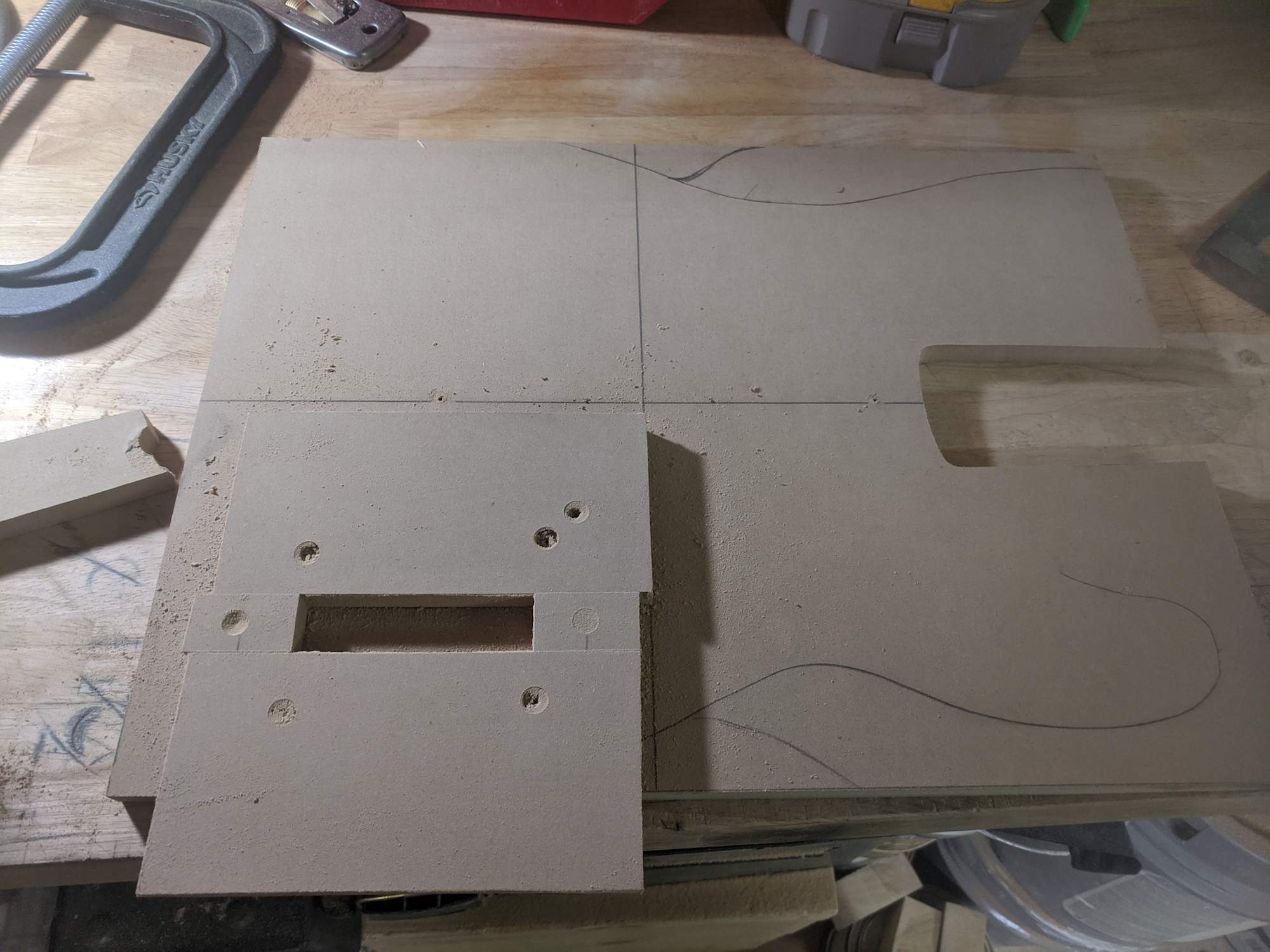
Screwed it down… and there’s no going back now!
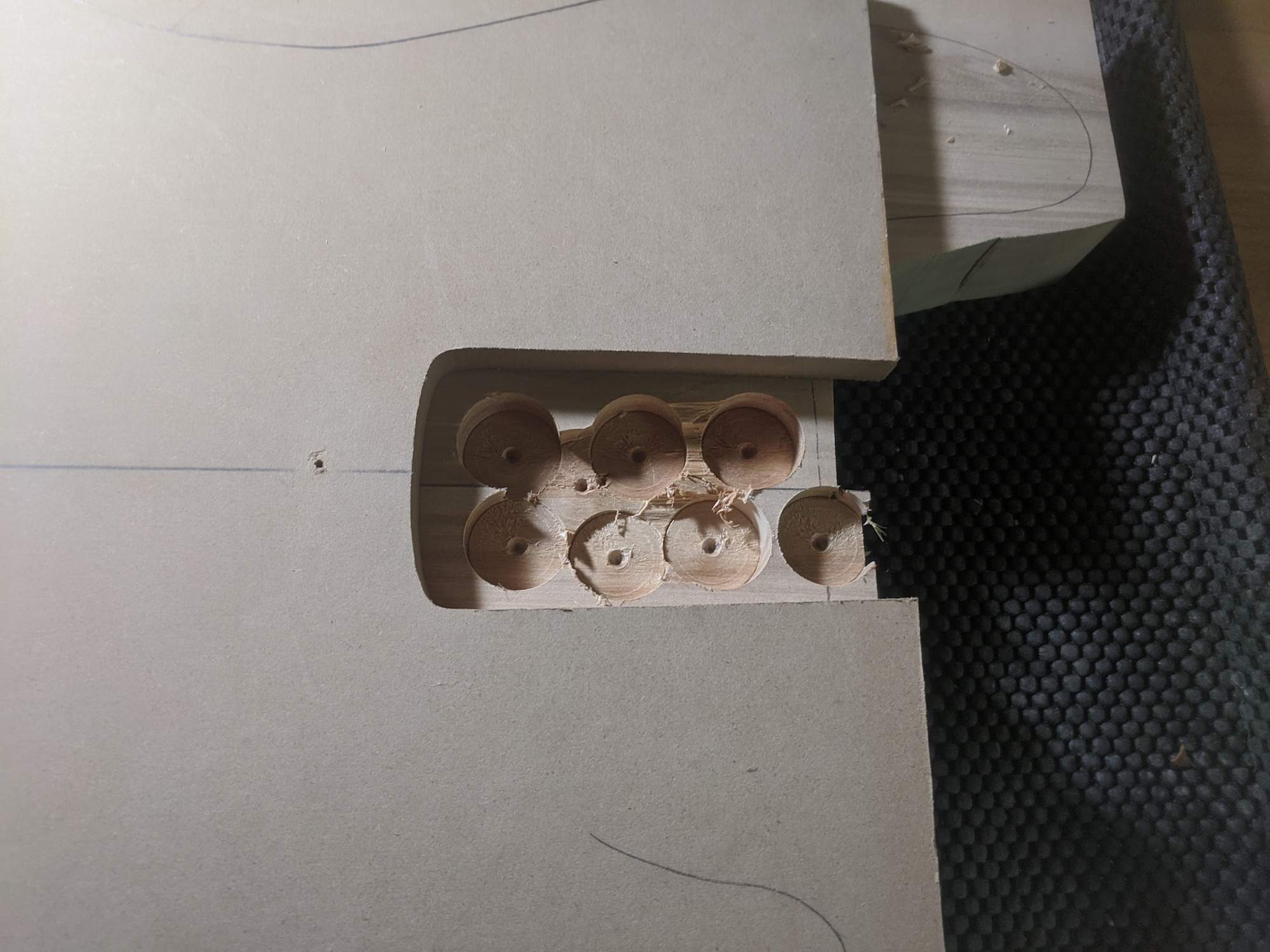
…I’m sure you all understand.
Started off the evening by giving the body blank a good once-over with 100 grit on the RO Sander (no pictures… imagine a vaguely annoying low-grade hum with hand-numbing vibration and you’ve pretty much got it)…
Made one more template...
Screwed it down… and there’s no going back now!
Slapped on the pickup template…
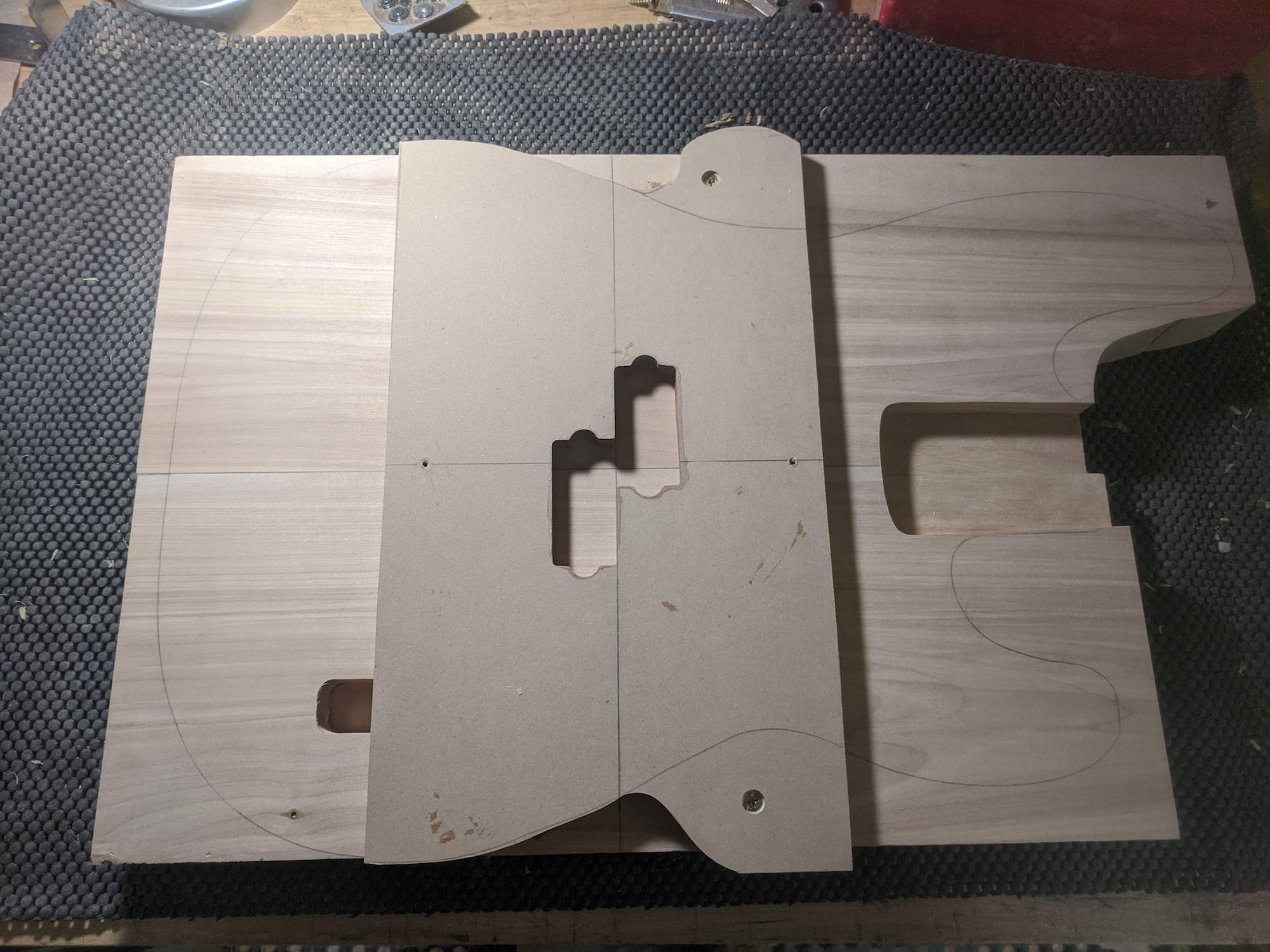
…hit the “go” button,

… and they fit!
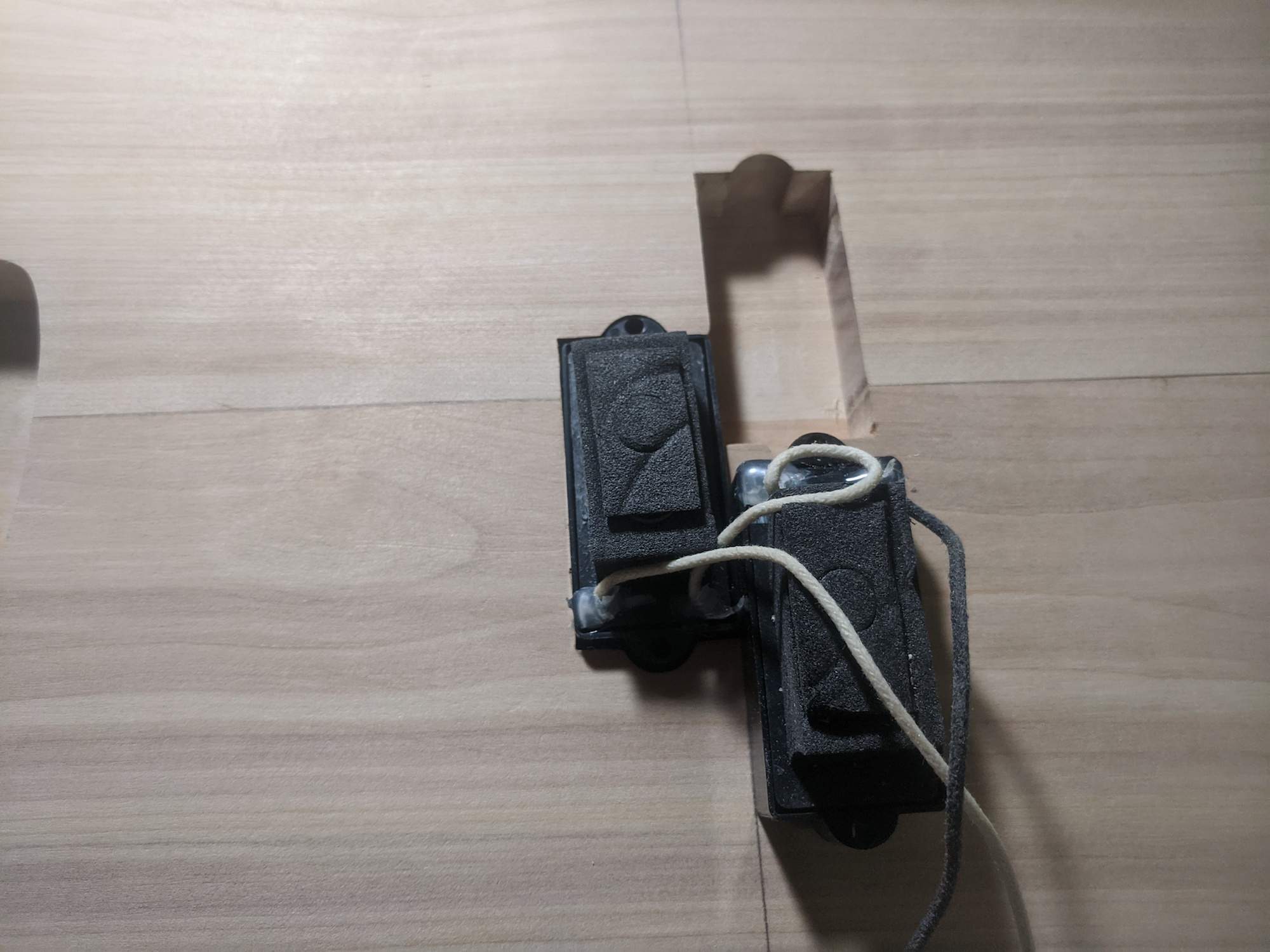
…hit the “go” button,
… and they fit!
Spent a tense 30 minutes on the scroll saw (definitely NOT the right tool for the job)
…and we’ve got a bass-shaped-object! (only broke 2 blades…)
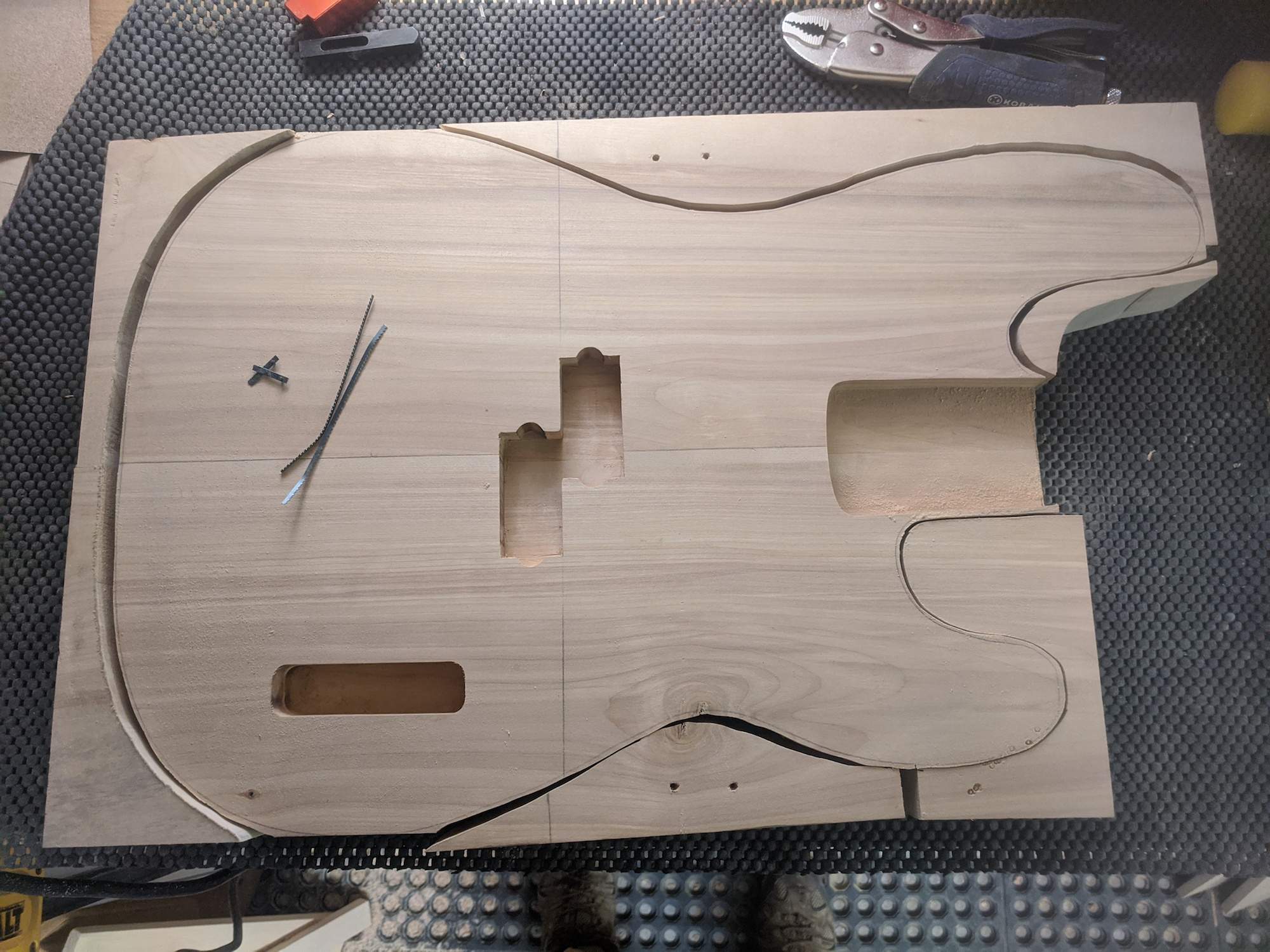
Here she is in all of her birchy glory

And it seems the diet plan is working as well...

…and we’ve got a bass-shaped-object! (only broke 2 blades…)
Here she is in all of her birchy glory
And it seems the diet plan is working as well...
Last edited:
Ran into a bit of an issue with the pickguard I’ve got for this build. It’s cut for a tele bass neck (square stern), and I’ve got the regular rounded neck.

I do a little kydex bending as a side-gig so…
…break out the .063 thick material and I’ll be making my own! (it will probably be a better fit anyway as I can match everything up)
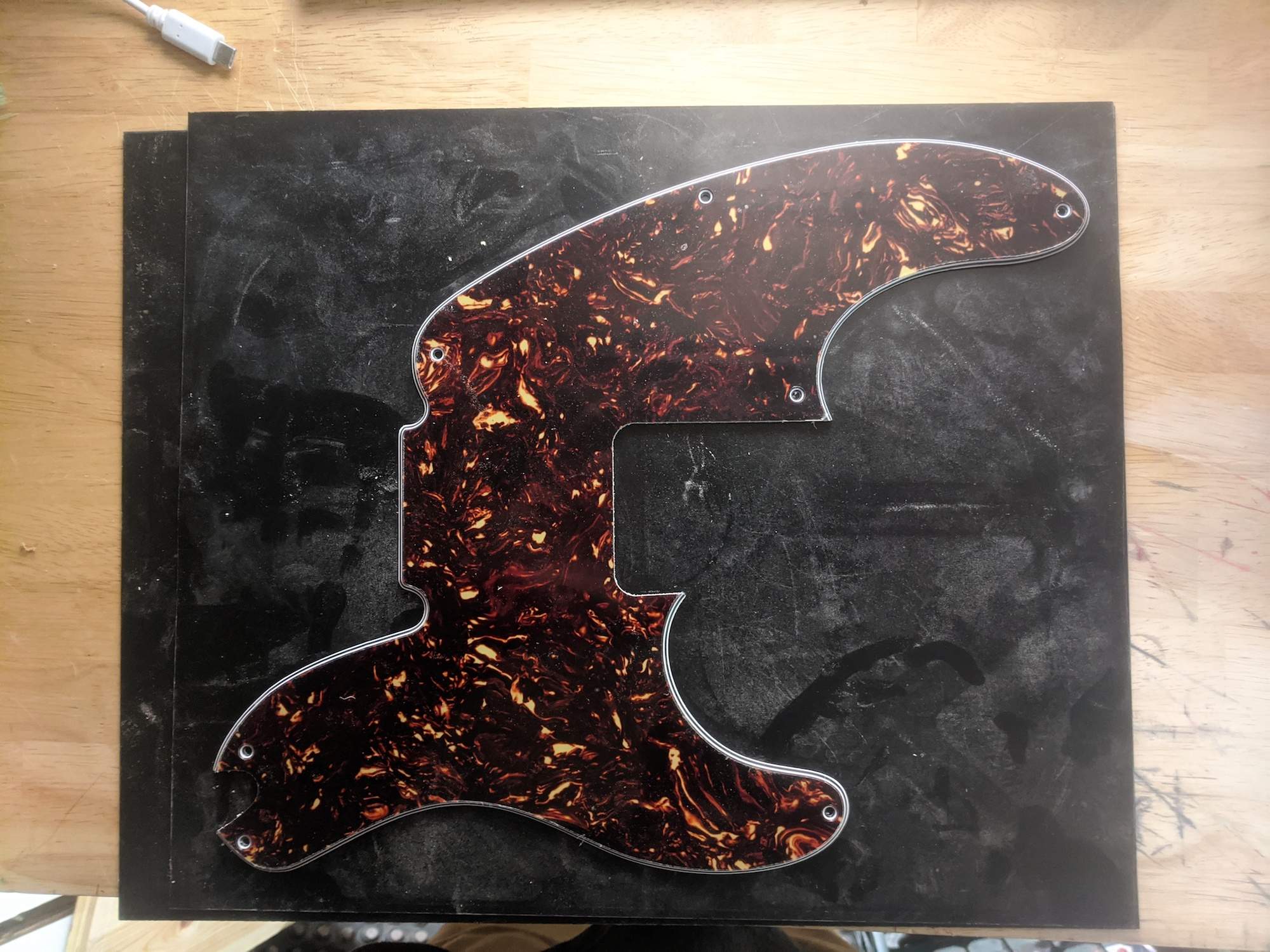
I do a little kydex bending as a side-gig so…
…break out the .063 thick material and I’ll be making my own! (it will probably be a better fit anyway as I can match everything up)
Question for you all:
That knot I noted previously is making itself known (wow, that was unintentionally alliterated…) Any thoughts on how to address this prior to applying the roundover? My concern is less with the appearance than that it may explode under the router. It’s not soft... rather brittle actually.
I flooded it with CA to see if that will help but I'm open to alternatives. My thoughts currently are to just avoid that area when routing roundovers and do that section by hand... Curious how you all would approach it.
Thanks, y'all!

That knot I noted previously is making itself known (wow, that was unintentionally alliterated…) Any thoughts on how to address this prior to applying the roundover? My concern is less with the appearance than that it may explode under the router. It’s not soft... rather brittle actually.
I flooded it with CA to see if that will help but I'm open to alternatives. My thoughts currently are to just avoid that area when routing roundovers and do that section by hand... Curious how you all would approach it.
Thanks, y'all!

Question for you all:
That knot I noted previously is making itself known (wow, that was unintentionally alliterated…) Any thoughts on how to address this prior to applying the roundover? My concern is less with the appearance than that it may explode under the router. It’s not soft... rather brittle actually.
I flooded it with CA to see if that will help but I'm open to alternatives. My thoughts currently are to just avoid that area when routing roundovers and do that section by hand... Curious how you all would approach it.
Thanks, y'all!
View attachment 3800053
Looking good.
 I think that avoiding it altogether will be the safest approach. If you have some rasps, files or other carving tools, you should be able to blend it in.
 Another approach would be to start the roundover by hand... essentially knock down the corners and soften it all up before you start with the router.
Whatever approach you take, make multiple shallow passes with the roundover bit for the entire body.

Coming along nicely!
I'd probably fill that knot with more CA, get it solid. Or epoxy for that matter. Less chance of tearout from routing or even handworking it
I'd probably fill that knot with more CA, get it solid. Or epoxy for that matter. Less chance of tearout from routing or even handworking it

Question for you all:
That knot I noted previously is making itself known (wow, that was unintentionally alliterated…) Any thoughts on how to address this prior to applying the roundover? My concern is less with the appearance than that it may explode under the router. It’s not soft... rather brittle actually.
I flooded it with CA to see if that will help but I'm open to alternatives. My thoughts currently are to just avoid that area when routing roundovers and do that section by hand... Curious how you all would approach it.
Thanks, y'all!
View attachment 3800053
I suggest you look at the knot as a feature.

The grain being circular there I would do it by hand, but then again I avoid the router as much as possible - I'm the tearout king.

What scoops said... as long as that knot isn’t a structural issue I’d revel in its uniqueness.
Thanks for taking the time to photograph your progress and describe your approach in detail; it’s inspiring to read stuff like this as a very late bloomer of woodworking interest.
Thanks for taking the time to photograph your progress and describe your approach in detail; it’s inspiring to read stuff like this as a very late bloomer of woodworking interest.


