
I watched the Five Watt World video. Pretty good. I like all his videos. Thanks for posting!

TalkBass has been independent since 1998. Add your voice.
Create a free account to reply to discussions, view embedded media, and browse with fewer display ads.
Join free Log in
Want zero display ads or expanded classifieds tools? Compare plans.


Might not be the same one the OP watched, but it's good. I like Five Watt's short history series.

I've played just about every different Fender/Squier Precisions and Jazzes manufactured/assembled from all the various places around the world over the last 45+ years.Will probably catch some flak here, but IMO the best Squiers I've played were the MIJ ones from early '80s to early '90s. I remember when I first started playing in the early '80s going into a local music store run by blue-blood Americans who had fought in WWII, they were brokenhearted to admit that the MIJ Squiers (and Fernandes) they had in stock were as good as the CBS American-made Fenders of the era, and way cheaper. I've played some "great for their price" Squiers since then but don't quite understand all the rave reviews on TB claiming they're way better than MIA Fenders.

Sometimes, one of us finds an instrument that feels "just right" in their hands. It's hard to zero-in on the "whys" of it, but if I've learned anything in my thirty years as a practicing massage/neuromuscular/sports therapist, it's that we may all be built along the same, basic, bilateral symmetrical blueprint, but that's where the similarity stops. (And yes, there are times when even that symmetry is not there, but that's a whole 'nother conversation.) Once you check off that box, everyone is built differently...in little and large ways.Will probably catch some flak here, but IMO the best Squiers I've played were the MIJ ones from early '80s to early '90s. I remember when I first started playing in the early '80s going into a local music store run by blue-blood Americans who had fought in WWII, they were brokenhearted to admit that the MIJ Squiers (and Fernandes) they had in stock were as good as the CBS American-made Fenders of the era, and way cheaper. I've played some "great for their price" Squiers since then but don't quite understand all the rave reviews on TB claiming they're way better than MIA Fenders.

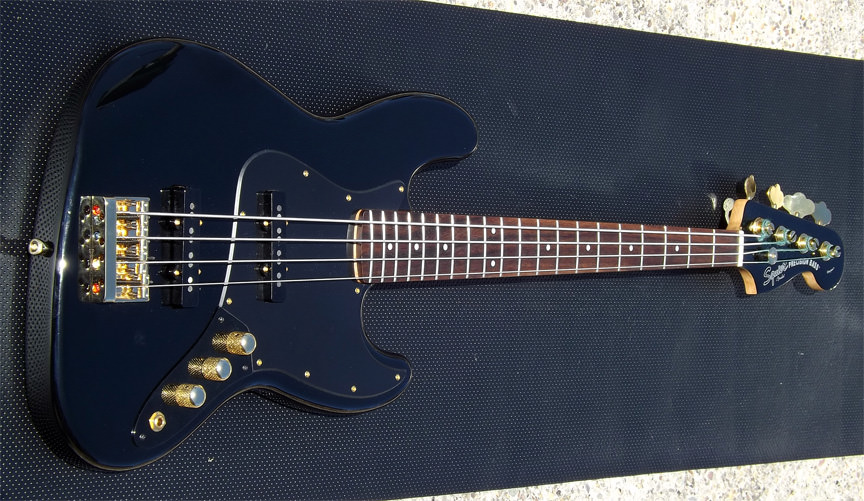
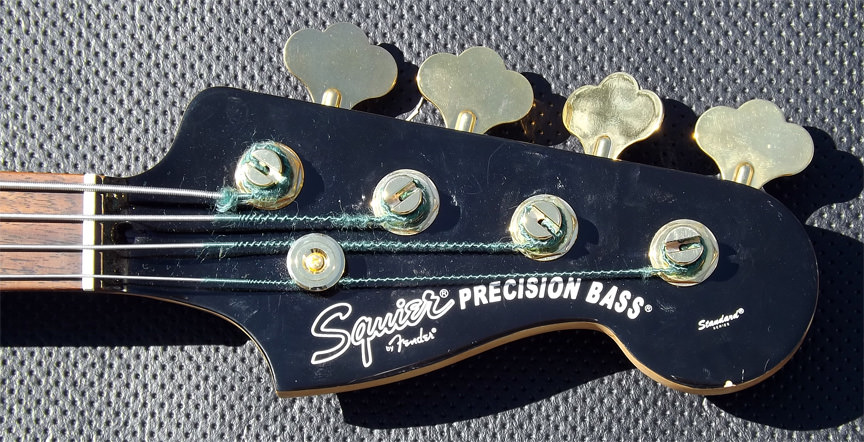


Love that scraptchplate. Did you make it?I’m very happy with my Squier P bass with Jazz-width neck.
View attachment 7257647
View attachment 7257648
The fret ends could use some filing but they’re not bad enough that I’ve done anything about it yet.

No, found it on Etsy.Love that scraptchplate. Did you make it?

Given that I'll be over 100 years old by then, I guess they'll need to at least hold up for another 10-15.Sometimes, one of us finds an instrument that feels "just right" in their hands. It's hard to zero-in on the "whys" of it, but if I've learned anything in my thirty years as a practicing massage/neuromuscular/sports therapist, it's that we may all be built along the same, basic, bilateral symmetrical blueprint, but that's where the similarity stops. (And yes, there are times when even that symmetry is not there, but that's a whole 'nother conversation.) Once you check off that box, everyone is built differently...in little and large ways.
And then, there are the times when one of us catches one helluva lucky break!
My other favorite, Squier-based story happened when I brought this parts-bass to a convention.
I had just put this beastie together from a Fender MIM Geddy body, a Squier Standard "Black & Chrome" P-Bass Special neck and a variety of other parts in the hopes that one of the musician/actor guests I know would get a chance to check it out. Well, a different guest, a real tough critic (re: a definite gear-snob) I'd met previously, came to the room I was working, saw the bass and asked to give it a look-see. I said go for it and waited for the condemnation.
Much to my surprise, he starts gliding his hand up-and-down the neck repeatedly, getting more focused with each passing moment. Eventually, he asks me, "Did you file down the frets or anything?" I said no and his head turns back to the neck saying, "And this was made in Indonesia?" I said it was, waited a few seconds and said, "Look...a good piece of wood is a good piece of wood, no matter it's country of origin."
The looks he kept giving me the rest of his time in my department could best be described "barely restrained incredulity"!
Going back to my first, "everyone is built a little differently" point, there's a very informative blog post by a violinist who took part in a double-blind test comparing three modern and three antique violins. She makes a number of great points that should be considered when assessing both quality and consistency. One of my big takeaways from the article was modern instruments can be excellent, but it's yet to be known if they can hold up to the test of time.
What Really Happened in that Double-Blind Violin Sound Test
www.violinist.com
From what I've heard, the earliest, Japanese-made Squiers seem to be holding up extremely well, given they're forty or more years old. The question is, "The more recent, kick-ass Squiers can be quite excellent, but will they go the distance?"


Sometimes, one of us finds an instrument that feels "just right" in their hands.