• TalkBass has been independent since 1998. Add your voice.
    Create a free account to reply to discussions, view embedded media, and browse with fewer display ads.
    Join freeLog in
    Want zero display ads or expanded classifieds tools? Compare plans.

Standards: How far outside?

LBS-bass

Guest
Nov 22, 2017
16,465
87,326
I've been learning a bunch of jazz standards to sing and play. I'm finding that it's easy to settle into patterns as I play, and I'm learning to base my solos around the melodies. But I don't find myself pushing far beyond the 1, 3, 5, 7 etc as I walk, and I think my note selections under the singing parts (or guitar parts, if I can ever get back together with the guitarist) are kind of boring from a player's standpoint. But they work, and they serve the song.

I have some theory books on order that I hope will expand the way I arpeggiate these chords, but I'm wondering how much y'all think is really needed from the bass line in these kinds of songs. When I listen to others play them, sometimes they are even more sparse and straight than I'm playing, sometimes they go way outside. Ideally I can reach a little when I'm not also singing, but I'm not finding a compelling reason to do it.

Or is this just something I should approach as an exercise and keep expanding on?
 
Great question, following! :)

I started my bass journey in jazz combo, just getting by with arpeggios. I quickly moved into rock and funk playing, so I didn’t really develop my jazz playing much beyond that...

Just about a year ago, I decided to work on my jazz lines; Not necessarily because I’m playing a lot or want to play more jazz, but just because it makes me a better musician! :thumbsup: (Silver lining of quarantine, plenty of time to woodshed! :laugh:)

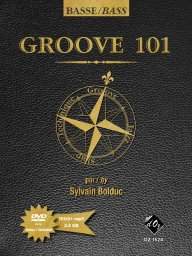
So I got a few books, and one I’m really enjoying is this Jay Hungerford book. It’s basic, but I’m getting a lot out of it. I like learning the “how to” (like in the Red Book above) but it’s also nice to just have an example. I can take those patterns, and apply them to other songs/keys. And it lets me work on my reading! Here’s an example:
CFD53124-9052-427E-B865-D466E8CAF36A.jpeg

The linear (scalar and chromatic) movement sounds more mature; and are just plain fun to play! I do find when I memorize a line like this, I get lost easier, as I’ve trained my ear to follow the arpeggios- so it’s a challenge.

Sorry if my ramblings wandered too far off topic :) my primary goal is to develop and push my own personal musicianship; but I have wondered how the difference affects and fits in to the greater scheme of the genre, and What other players look for in a bass line.
 
  • Like
Reactions: LBS-bass
May I suggest a few things:

Go get some of the free walking bass transcriptions. Especially Paul Chambers.

Understand what scale progressions are implied by the chords. For ii V 1, t he default is dorian, mixolydian, ionian, but you are not tied to that. For ii V i , the minor 2 5 1, I would feel either a harmonic or melodic minor and that Vb9 is a good option.

Learn the melody and play off that.

Listen and follow the piano player or soloist.

Walking is not so mysterious when you hear what you want to play.

Praxis macht den Meister.
 
It depends on the situation. If you play with tracks it won't work to well.

If you are playing live for folks in a restaurant it might not work there too lol

If you are playing in a jazz club then things will fire up with more rhythmic punches, pedal points, tritone subs and dynamics and interaction. That will work !!!
 
  • Like
Reactions: Groove Doctor
I don't find myself pushing far beyond the 1, 3, 5, 7 etc as I walk
The linear (scalar and chromatic) movement sounds more mature

Yeah, when I first started playing walking lines over jazz standards 40-odd years ago you could almost guarantee that if the chord progression was
G-7, C7, Fmaj7
that my walking line went
G-Bb-D-F, C-E-G-Bb, F-A-C-E

iow, arpeggiating the changes was all I knew.

But then after a few years of listening and analyzing and subjecting myself to intense self-scrutiny, I started to recognize the value of linear motion: step-wise lines, chromatic approach notes, finding ways to connect the changes rather than outline the changes. Holy crap did my walking lines improve tenfold!!!

You wanna know a great exercise for working on this? Pop open your Real Book to whatever standard you want to shed, start on the root note of whatever the first chord of the tune is, and start walking such that your line never moves by a larger interval than a 2nd.*

Bonus points if you see how far you can get through the tune without changing direction.

Once you're used to walking over standards with small step-wise lines, larger [sic] leaps of thirds/fourths/fifths/sixths and actual arpeggiations become a piquant delectable spice rather than a remedial rote repetitive pattern.


*in fairness, I consider the augmented 2nd a valid interval to use when shedding this exercise.
 
Yeah, when I first started playing walking lines over jazz standards 40-odd years ago you could almost guarantee that if the chord progression was
G-7, C7, Fmaj7
that my walking line went
G-Bb-D-F, C-E-G-Bb, F-A-C-E

iow, arpeggiating the changes was all I knew.

But then after a few years of listening and analyzing and subjecting myself to intense self-scrutiny, I started to recognize the value of linear motion: step-wise lines, chromatic approach notes, finding ways to connect the changes rather than outline the changes. Holy crap did my walking lines improve tenfold!!!

You wanna know a great exercise for working on this? Pop open your Real Book to whatever standard you want to shed, start on the root note of whatever the first chord of the tune is, and start walking such that your line never moves by a larger interval than a 2nd.*

Bonus points if you see how far you can get through the tune without changing direction.

Once you're used to walking over standards with small step-wise lines, larger [sic] leaps of thirds/fourths/fifths/sixths and actual arpeggiations become a piquant delectable spice rather than a remedial rote repetitive pattern.


*in fairness, I consider the augmented 2nd a valid interval to use when shedding this exercise.

This sounds like a worthwhile exercise. I've gotten a lot of good advice, both in this thread and through direct message. Should be enough to keep me entertained for a bit :)
 
  • Like
Reactions: alanloomis1980