
Enjoy the benefits of a premium membership!
Upgrade Account
-
TalkBass has been independent since 1998. Add your voice.
Create a free account to reply to discussions, view embedded media, and browse with fewer display ads.
Join free Log in
Want zero display ads or expanded classifieds tools? Compare plans.
You are using an out of date browser. It may not display this or other websites correctly.
You should upgrade or use an alternative browser.
You should upgrade or use an alternative browser.
Steinberger L2
- Thread starter murph7489
- Start date
More options
Who Replied?

This thread needs more pictures!
From the way-back machine, circa 1983-5:
View attachment 3070935
View attachment 3070924
View attachment 3070925
...back when I was skinny!
Great photos! The photo I posted and neglected to caption was a wedding in '83 at Congressional CC. Steinbergers sure went well with a tux! That bass was perfect for those gigs. Along with that little GK amp solved many parking and load in issues in Washington DC.



“Sound of a metal trash can beaten by a 2x4”. Hmmmm. Not hearing that in this video, never heard it in person either. Guess some people “hear” with their eyes. Try closing them and listen:

I have both an L2 and an early XL2. I prefer the XL2 a little over the L2. The change Ned made to the boomerang in position on the body and the shape is more desirable for how I play. As for tone they are near identicle. I also have a XM2 and have had 2 previous XP2's. Once I played a Steinberger back in the early 80's, I loved the balance so much, and the bass never went out of tune. I like the double ball strings(complete string change in 2 min). Those who have spent anytime playing one know the fine attributes, others only see them as a fashion thing.....too bad. If your looking to buy one let me know, or give Don a call at Headless USA and Rock On.
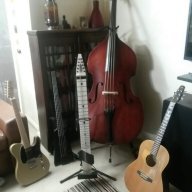
I had the Hohner with the two humbuckers. No, it wasn't a Steiny but it was a great little bass that was tough and sounded good.
I did add a strap extender to help it balance right. Used that bass quite a bit.
I still have a full carbon fibre bass in the same style built by talkbasser MPU. That is a different animal again. Awesome.
I did add a strap extender to help it balance right. Used that bass quite a bit.
I still have a full carbon fibre bass in the same style built by talkbasser MPU. That is a different animal again. Awesome.
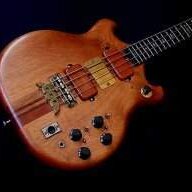

Imperfections...
What might have been a downfall intrinsic to the core design of L2 was the fact - IME, I don't know whether long-time owners like @Bob_Ross would agree - that its hi-fi nature brings out the imperfections in one's playing style like no bass that I've ever recorded and I've recorded many...there's literally nowhere to hide. Sure, one can "mask" certain aspects, but the positioning in the mix that these basses simply "grab" makes it a *lot* more difficult when compared to most - if not all - other pieces.
My $0.02 only...
Buying a L2 made me play better
Best thing I ever did for my Left (fretting) hand
That's a great observation and one I found to be true for the L2. preamped Alembics and maple fretboard basses. They are less "forgiving" of imprecise fretting and fingers using more strength than needed. They amplify everything and require a more thoughtful deliberate touch. I saw Sting play his on multiple occasions and knew that I had to try one. Took a lot of work to avoid percussive extraneous sounds but when I did, I was far more expressive, saving the aggressive approach for slap pop, a style that few basses can exceed the beauty of an L2. I'd also note that few players string L2s with flat wounds, but I do and that in and of itself smooths away most extraneous noises.Buying a L2 made me play better
Best thing I ever did for my Left (fretting) hand
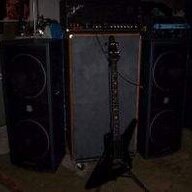
Mine was cheap. Here's why:
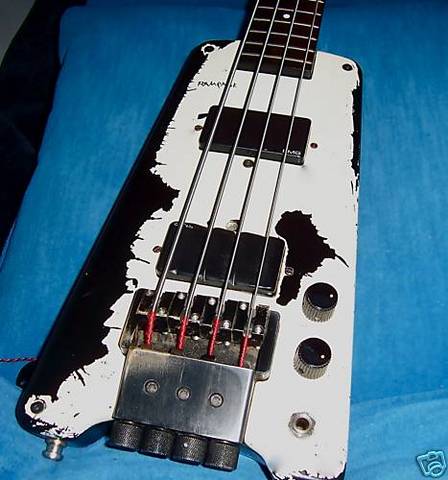
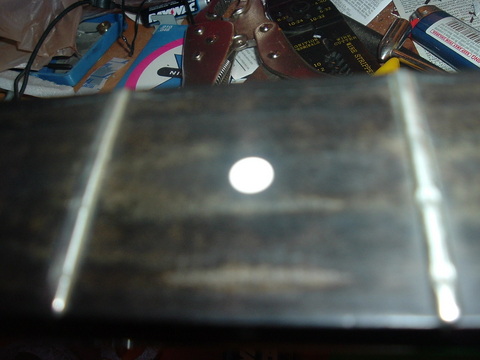
Note the grooves worn not just into frets but into pickups. Painted white and "RAMPAGE" tastefully gouged into it. All bridge components were frozen in place with crud and corrosion. I believe the bass was the victim of a vicious attack by a crazed gang of headstock supremacists.
Note also the rear strap button; an added feature, at least the primate didn't shatter the composite while drilling it. I can't remember which pot was removed to make room for the relocated output jack, in the front as Leo intended. The screw in that corner of the faceplate has broken off; the lower half is now part of the threaded insert in the body while the top half of the screw fell out. Another strap button was installed at the heel. There were at least 3 different types of screws securing the strings down past the zero fret.
With all that it somehow worked, and sounded great, but I had to reverse what damage I could. Without spending any money I didn't have. I researched the electronics and replaced the pot with one of the correct value and put the jack back where Ned intended. Got the bridge apart and clean, but had to drill a new hole and thread it for an Allen screw, the old one was part of the bridge. Made a DIY pivot device that could use improvement but at least it's being supported properly. 4 new string screws so I no longer need 3 tools to change strings. It's really a fantastic bass, somehow. Shouldn't even play, to look at it.
These things need the pivot plate. Why did 80% of the original owners throw them away? Did they think they were boomerangs, only to find out they didn't come back?
Note the grooves worn not just into frets but into pickups. Painted white and "RAMPAGE" tastefully gouged into it. All bridge components were frozen in place with crud and corrosion. I believe the bass was the victim of a vicious attack by a crazed gang of headstock supremacists.
Note also the rear strap button; an added feature, at least the primate didn't shatter the composite while drilling it. I can't remember which pot was removed to make room for the relocated output jack, in the front as Leo intended. The screw in that corner of the faceplate has broken off; the lower half is now part of the threaded insert in the body while the top half of the screw fell out. Another strap button was installed at the heel. There were at least 3 different types of screws securing the strings down past the zero fret.
With all that it somehow worked, and sounded great, but I had to reverse what damage I could. Without spending any money I didn't have. I researched the electronics and replaced the pot with one of the correct value and put the jack back where Ned intended. Got the bridge apart and clean, but had to drill a new hole and thread it for an Allen screw, the old one was part of the bridge. Made a DIY pivot device that could use improvement but at least it's being supported properly. 4 new string screws so I no longer need 3 tools to change strings. It's really a fantastic bass, somehow. Shouldn't even play, to look at it.
These things need the pivot plate. Why did 80% of the original owners throw them away? Did they think they were boomerangs, only to find out they didn't come back?
That's a great observation and one I found to be true for the L2. preamped Alembics and maple fretboard basses. They are less "forgiving" of imprecise fretting and fingers using more strength than needed. They amplify everything and require a more thoughtful deliberate touch. I saw Sting play his on multiple occasions and knew that I had to try one. Took a lot of work to avoid percussive extraneous sounds but when I did, I was far more expressive, saving the aggressive approach for slap pop, a style that few basses can exceed the beauty of an L2. I'd also note that few players string L2s with flat wounds, but I do and that in and of itself smooths away most extraneous noises.
Tough to get flat wound double ball end in NZ bro!
Btw do you use the LaBella ones? I know Status UK have a flat wound set but I don't want to buy 10 sets lol.
Only the L2 allows the use of single ended strings of any manufacture. I use Ernie Ball group 4 flats. The nut on the L2s has a set of screws that hold down any strings and you can cut or Dremel cut off the extra length. The XL2 does not have that capability.
Only the L2 allows the use of single ended strings of any manufacture. I use Ernie Ball group 4 flats. The nut on the L2s has a set of screws that hold down any strings and you can cut or Dremel cut off the extra length. The XL2 does not have that capability.
Cheers I'll have a look tomorrow
I just assumed you had to use double ball
Only the L2 since 1991...
Only the L2 allows the use of single ended strings of any manufacture. I use Ernie Ball group 4 flats. The nut on the L2s has a set of screws that hold down any strings and you can cut or Dremel cut off the extra length. The XL2 does not have that capability.
Sorry tone a pain
In your photo the basses have double ball strings
Are EB group 4 flats double ball?
Here is a picture of the string retainer and locking screws that allow any string, double ball or regular to be put on an L2. Many times they are lost. I used to cut the ends off with a wire cutter but a friend told me to use a Dremel tool to remove the excess.

I bought that same widget to use regular strings on my XP-2, it didn’t work too well for me. The set screws tended to bite through the outer windings causing the string to fail. Ive never had any trouble getting double ball strings in gauges I like, so I stopped using anything but D.B. strings. Still available online, don’t know why you’d bother with single ball unless your preferred gauge doesn’t exist.
The original L2s work fine in terms of the string tree and the screws. Can't speak to third party solutions. The reason they originally had them was that there weren't double ball ended strings on the market until the L2 was introduced and at that time, initially, Steinberger was the only string made double ball ended.
OK, I get it, thought I was looking at the "add-on" gadget Steinberger provided for later models, so that setscrew setup was actually incorporated into the L2 headpiece. They dropped that for the XL-2 (I think?)and the definitely on XP series. The add-on setscrew gadget I had was bought directly from Steinberger, a disappointment at the time, and not Ned's finest effort. I assume they actually made it, since they sold it, but maybe they subbed it out to some machine shop.The original L2s work fine in terms of the string tree and the screws. Can't speak to third party solutions. The reason they originally had them was that there weren't double ball ended strings on the market until the L2 was introduced and at that time, initially, Steinberger was the only string made double ball ended.
BG Stainless has a replacement head piece for the XL2 for regular strings. I myself love the double ball. I have used all the different types, Tape wounds, flats, SS rounds, nickel, half/pressure wounds. Status sells single sets of most all of them. I found that when I headed into the studio I brought a variety of strings for the Steiny instead of a variety of different basses.


