I've always had a soft spot in my heart for audio effects. Stompboxes were one of the main reasons I became interested in designing music gear because I just had to know how they worked. I decided to post this thread because I figured a few other people may be interested too. The octaver is one of my favorites and it's also one of the more easy to understand effects. If there is any interest here, I may put up more effects simulations, possibly by request because I like a good simulation challenge. First, a little bit of background...
Most everyone who plays bass knows that the pickup generates a voltage because of the strings vibrating over pickups. We're going to call this a signal. Amplifiers make this signal large enough and strong enough to drive speakers. Obviously, stompboxes are inserted in the chain somewhere. Stompboxes change or modify the signal. The technical name for a stompbox is a signal processor. Many stompbox types came from circuits originally designed for radios, telephones, and computers by engineers and technicians screwing around trying to make weird sci-fi noises.
An octaver is based around an electronic device called a flip flop. These are usually packaged in chips. Flip flops are used for all kinds of stuff. There are the foundation of computer memory for example because they are capable of storing digital bits. One other thing they are used for is processing clock signals, and that's where they come in handy for octavers.
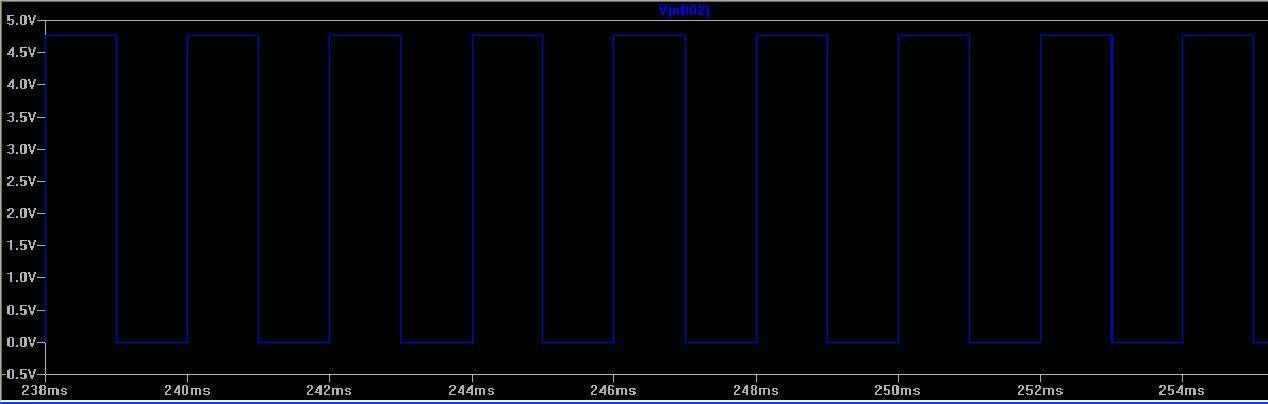
First pic is an example of what a clock signal may look like:
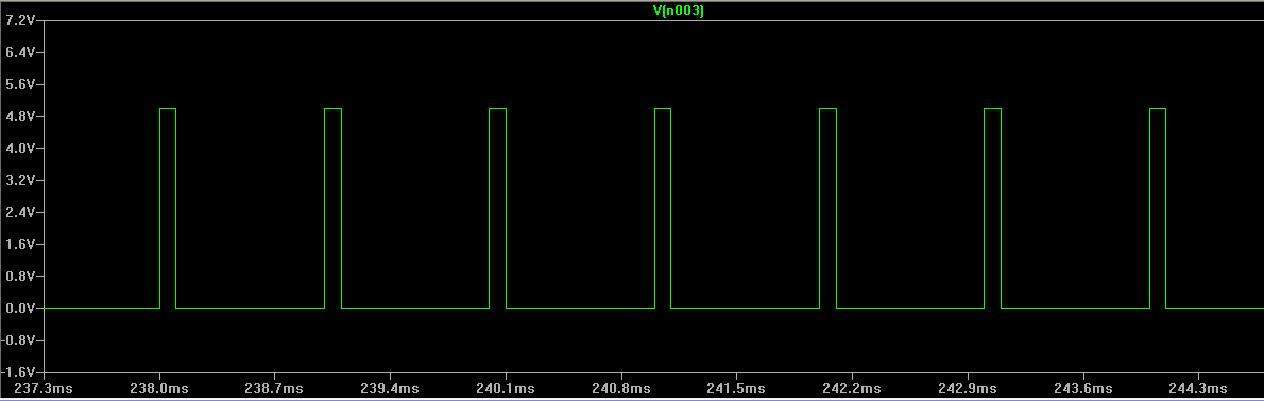
This is just a stream of pulses that makes a type of square wave. We are switching back and forth between 0 volts (off) and 5 volts (on)--those are the horizontal sections of the wave. The vertical lines that connect the horizontal sections are called transition points. If you think about it, some of the transition points go up, and some go down. When passed through a flip flop, we get this on the output:
Now, I'm going to plot both and zoom in a little to show what's happening:

The green wave is input and the blue wave is the output. If you notice, the flip flop output changes direction only when the input wave is going up (on). We have 4 upward clock pulses going in, and we have 2 upward going clock pulses out.
So how can a clock divider process a bass guitar signal? Well, first, let's look at a simulated bass guitar signal:
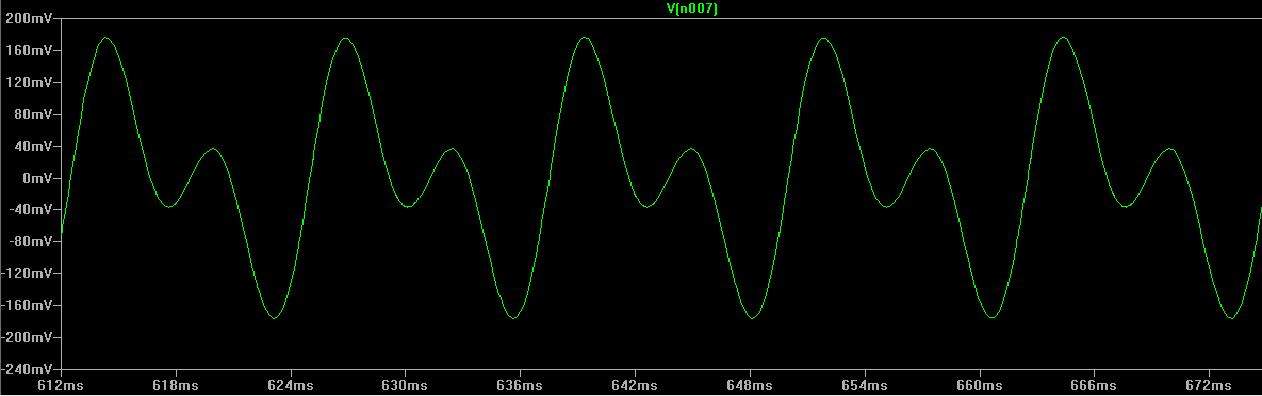
This wave is not squared off--it's said to be sinusoidal in shape. This is a mix of more than one sine wave because your bass signal is full of harmonics. When you play a note, the note itself has a defined frequency called a fundamental that determines the pitch. The harmonics are the part that when you hear them mixed in just the right way, you know you are listening to a bass guitar and not a tuba. The harmonics in your voice are what makes you sound like you when you are talking or singing.
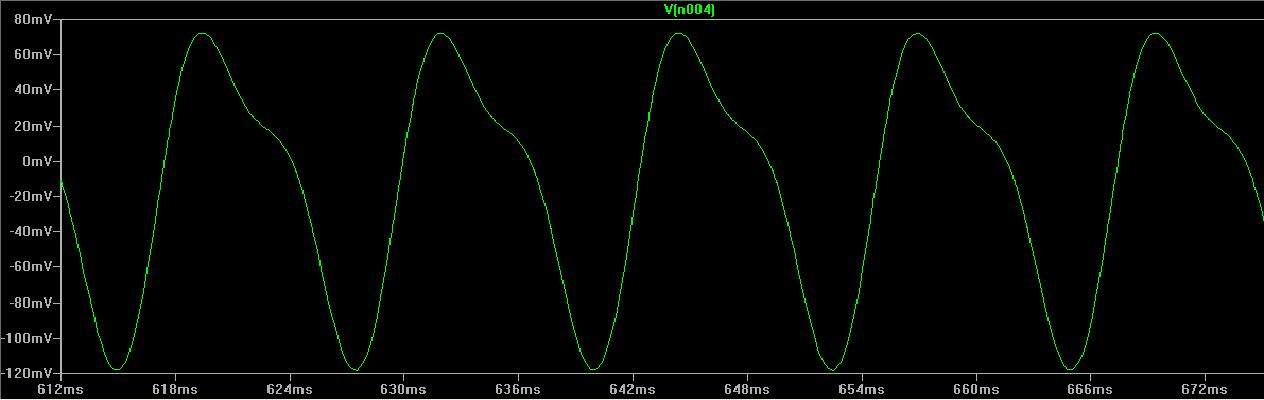
Now, let's plug our bass guitar into the octaver...the first bit of processing is to clean up the signal by filtering out the harmonics a little. This is done with a low pass filter, which passes lows and blocks the highs somewhat. This leaves mostly just the fundamental:
The next step is to amplify the signal, except that we are going to use a whole lot of gain. There is so much gain, we are going to cause clipping:
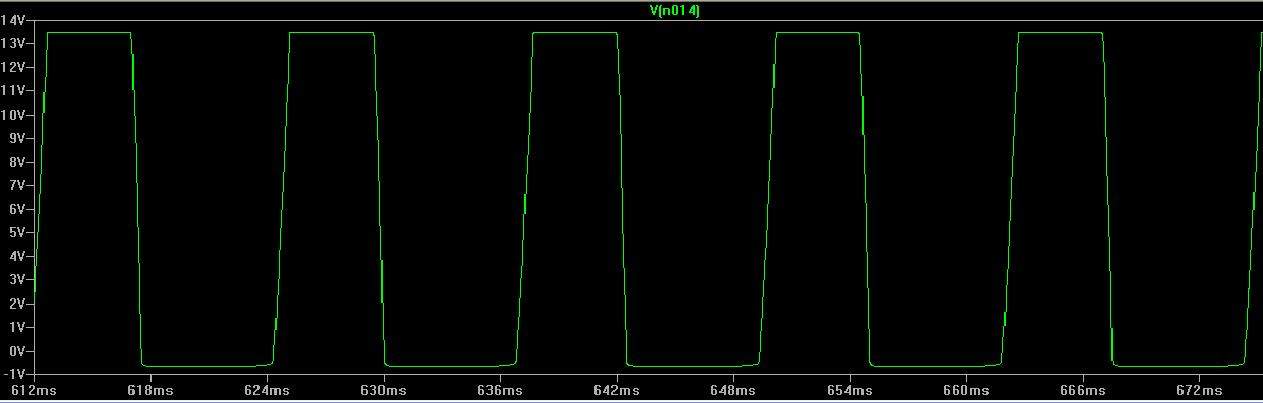
If we listened to what we have so far, it'd sound like a jacked up fuzz box. We have converted our sinusoidal wave into a square wave. Hopefully, I've done a good job explaining so far and you can already see where this is going...
I'll continue with a new post.
Most everyone who plays bass knows that the pickup generates a voltage because of the strings vibrating over pickups. We're going to call this a signal. Amplifiers make this signal large enough and strong enough to drive speakers. Obviously, stompboxes are inserted in the chain somewhere. Stompboxes change or modify the signal. The technical name for a stompbox is a signal processor. Many stompbox types came from circuits originally designed for radios, telephones, and computers by engineers and technicians screwing around trying to make weird sci-fi noises.
An octaver is based around an electronic device called a flip flop. These are usually packaged in chips. Flip flops are used for all kinds of stuff. There are the foundation of computer memory for example because they are capable of storing digital bits. One other thing they are used for is processing clock signals, and that's where they come in handy for octavers.
First pic is an example of what a clock signal may look like:
This is just a stream of pulses that makes a type of square wave. We are switching back and forth between 0 volts (off) and 5 volts (on)--those are the horizontal sections of the wave. The vertical lines that connect the horizontal sections are called transition points. If you think about it, some of the transition points go up, and some go down. When passed through a flip flop, we get this on the output:
Now, I'm going to plot both and zoom in a little to show what's happening:
The green wave is input and the blue wave is the output. If you notice, the flip flop output changes direction only when the input wave is going up (on). We have 4 upward clock pulses going in, and we have 2 upward going clock pulses out.
So how can a clock divider process a bass guitar signal? Well, first, let's look at a simulated bass guitar signal:
This wave is not squared off--it's said to be sinusoidal in shape. This is a mix of more than one sine wave because your bass signal is full of harmonics. When you play a note, the note itself has a defined frequency called a fundamental that determines the pitch. The harmonics are the part that when you hear them mixed in just the right way, you know you are listening to a bass guitar and not a tuba. The harmonics in your voice are what makes you sound like you when you are talking or singing.
Now, let's plug our bass guitar into the octaver...the first bit of processing is to clean up the signal by filtering out the harmonics a little. This is done with a low pass filter, which passes lows and blocks the highs somewhat. This leaves mostly just the fundamental:
The next step is to amplify the signal, except that we are going to use a whole lot of gain. There is so much gain, we are going to cause clipping:
If we listened to what we have so far, it'd sound like a jacked up fuzz box. We have converted our sinusoidal wave into a square wave. Hopefully, I've done a good job explaining so far and you can already see where this is going...
I'll continue with a new post.
Last edited:





 .
.