• TalkBass has been independent since 1998. Add your voice.
    Create a free account to reply to discussions, view embedded media, and browse with fewer display ads.
    Join freeLog in
    Want zero display ads or expanded classifieds tools? Compare plans.

String gauge and neck relief

How much of an affect does gauge have on neck relief? I switched from pre-installed (no idea what gauge, I don't remember) strings, and have tried out a few different gauges. Most recently light gauge D'Addario Half Rounds. I think this may be a lighter gauge than I had previously, because I've noticed fret buzz where I didn't before, and the action is awfully low. I like low action, but it's just a tad too low.

Here's the kicker. We're going into the studio this week, so I won't have time to get it into a tech. I'm thinking of trying Medium gauge strings (DR Sunbeams) to see if that settles some of the fret buzz. I like a little bit more tension anyway. Will this possibly help the neck situation? I'd like to avoid messing with the bridge or truss myself, so as not to mess anything up for the studio.

Thanks!

PS - Bass is a Peavey T-40.
 
:hmm: I experienced that the tension of the d'Addario half rounds is quite low. They buzzed on my Ibby as well, with the action set to my likings. This could be your problem as well. A heavier string is a little less floppy and might not buzz against the frets.
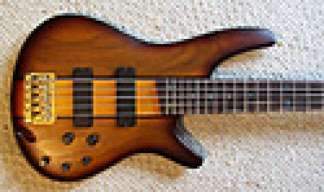
A well built modern bass doesn't react that much on a few pounds of tension more or less. As you didn't experience fret buzz with the original strings on, I recon that a regular set, ranging from .045 to .100 or .050 to .105 may do the job. If the buzz stays, you may have to raise the action, which isn't that much work. For the time being, you might play a little closer to the bridge, which also helps you to prevent buzz.
 
In this case NOT adjusting the bridge is what will mess things up in the studio.
All you need to do is raise the strings up a little bit. Usually each string has it's own saddle and that has screws. Screwing the screws down pushes the saddles up. Keep the saddles in an arch that is similar to the arch of the neck (in other words, raise the middle ones a bit higher than the outer ones.
If you're nervous about your abilities, get a buddy who has done it before. It can be a guitar player as well as a bass player. If you're concerned about adjusting the wrong way, keep track of how far you turned it (a half turn, a full turn etc.), and if that doesn't work - undo it by turning back the other way.
If your bass doesn't look like what I described, mention the brand here and maybe someone with that brand can give you advice.
 
Adjust the truss rod. And if needed, the bridge saddles. Its easy and untill you learn to do this you will never have the bass playing perfectly for you. In all likelyhood its just a simple case of loosen truss rod a quarter turn or slightly more so you have a little bit of relief. Lighter gauge ussually means less tension on neck. Untill you learn to do this your playing wont be as good as it can be.
 
Well, post studio report. Went better than expected. I switched up to Sunbeam .105's, and it took almost all of the unpleasant buzzing away. As I said, I like low action for both tone and playability, so it's still got some fret noise mixed in (big Geddy Lee fan), but it's manageable now. I really think the neck had started adjusting to the smaller strings.

I agree that I need to learn more about this, but I was quite literally just about to head in, and I really didn't relish the idea of messing around too much with something like that.

Thanks for all the feedback!
 

Latest posts