
Enjoy the benefits of a premium membership!
Upgrade Account
-
TalkBass has been independent since 1998. Add your voice.
Create a free account to reply to discussions, view embedded media, and browse with fewer display ads.
Join free Log in
Want zero display ads or expanded classifieds tools? Compare plans.
You are using an out of date browser. It may not display this or other websites correctly.
You should upgrade or use an alternative browser.
You should upgrade or use an alternative browser.
Sustain - Is it Overrated?
- Thread starter TheCouchBassist
- Start date
More options
Who Replied?


Never played a bass guitar that didn’t provide me with more sustain than I required. I mute strings all the time. I never have to fight to get more sustain out of them. Even with flats.
If you actually do need extremely long note sustain for something, your options (somewhat in order) are: (a) an amp with a better gain structure; (b) a clean boost pedal; (c) a compressor; (d) an EBow or similar string exciter; (e) a sample-hold effect like the EHX Freeze or Gamechanger Audio’s PLUS Sustain pedal - or - (f) consider switching over to a keyboard bass synth for extremely long/infinite drone passages.
We’re bass players. We are not without resources.
If you actually do need extremely long note sustain for something, your options (somewhat in order) are: (a) an amp with a better gain structure; (b) a clean boost pedal; (c) a compressor; (d) an EBow or similar string exciter; (e) a sample-hold effect like the EHX Freeze or Gamechanger Audio’s PLUS Sustain pedal - or - (f) consider switching over to a keyboard bass synth for extremely long/infinite drone passages.
We’re bass players. We are not without resources.

Caring about sustain is like caring about your car being able to stop from 60 in under 120 feet. It something that you almost never need to use at full capacity, but once in a while it is totally necessary.

The longest note I regularly play is 2 bars.
I've not run into many basses that can't hold a note for 2 bars.
I've not run into many basses that can't hold a note for 2 bars.

I agree the obsession with sustain goes back to the first electric basses with their felt mutes. I never used the mute on my Gibson EB-2 and always thought it was absurd, but Gibson didn't. The sustain from my current basses are all more than adequate, although they vary slightly. Is more better than less? Not for me. If I have enough sustain, more isn't better.

I'll be honest, all of my bases sustain about the same. They all have steel saddles, and (I think) synthetic nuts.
The strings are what makes the most difference for me. Technique too, but out of the things you buy, strings are the largest deciding factor.
The strings are what makes the most difference for me. Technique too, but out of the things you buy, strings are the largest deciding factor.

Play a few church services, where you underscore someone speaking for a few minutes - adding some low end to a pad that the keyboard player is holding for minutes without any effort. You'll suddenly know thing like which of your basses have more sustain on the open A string, and which have more sustain on the 5th fret of the E string.
Yes, I know for some folks, sustain isn't an issue. For what I do, knowing how to get as much as you can, and how to work around the limits you do have, is a very important part of what I do on a weekly basis.
Yes, I know for some folks, sustain isn't an issue. For what I do, knowing how to get as much as you can, and how to work around the limits you do have, is a very important part of what I do on a weekly basis.

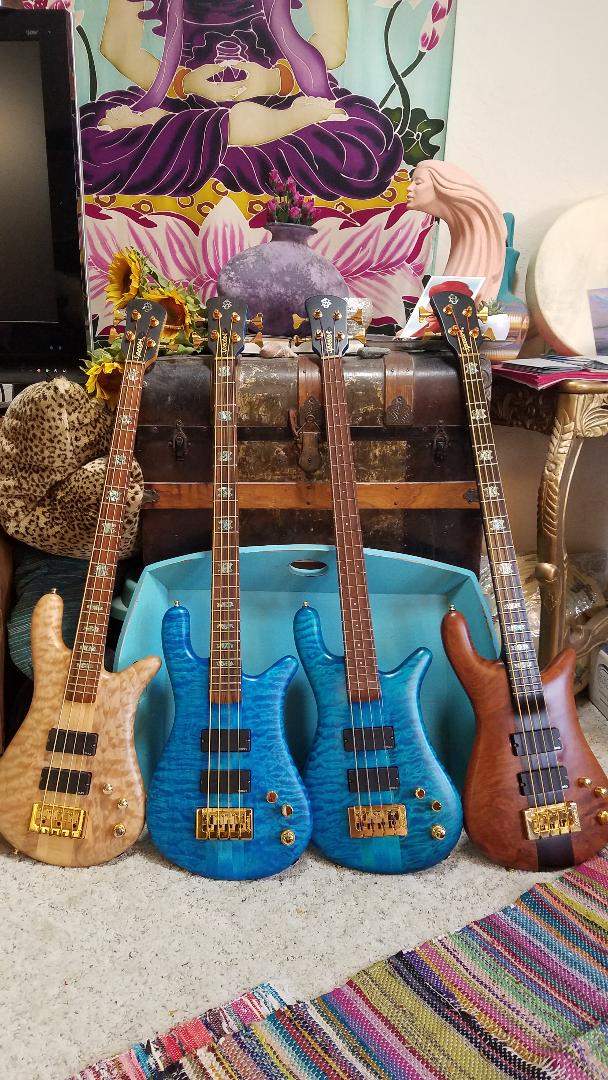
IMHO don't think sustain is over-rated. But sure is nice to have and play with. Personally, that is why I play my Neck Through Spectors. I love it.

Play a few church services, where you underscore someone speaking for a few minutes - adding some low end to a pad that the keyboard player is holding for minutes without any effort. You'll suddenly know thing like which of your basses have more sustain on the open A string, and which have more sustain on the 5th fret of the E string.
Yes, I know for some folks, sustain isn't an issue. For what I do, knowing how to get as much as you can, and how to work around the limits you do have, is a very important part of what I do on a weekly basis.
Yep. Church is the only playing I do where sustain becomes an issue.
The OP brought up dead spots. IMO, this is a totally different issue than a bass that has limited sustain across the board. A dead note sounds bad, even if it isn't held for long. If you have bass with a serious dead spot you have to play around it.
If you're playing Jaco stuff it might be important, if you're playing rock or punk, it's generally not a factor.
For my own purpose, I have never played a bass lacking in sustain. I generally have the opposite problem.
That's why I prefer bolt on necks vs through body and set necks.
For my own purpose, I have never played a bass lacking in sustain. I generally have the opposite problem.
That's why I prefer bolt on necks vs through body and set necks.
I think I prefer a bass with a bit less natural sustain and enhancing what’s there with a little compression. You get a little more of an evolving quality to the sound.
I also don’t want to have to wrestle with the bass too much when I want specific notes to NOT sustain. My muting technique is getting better, but it’s a work in progress.
I also don’t want to have to wrestle with the bass too much when I want specific notes to NOT sustain. My muting technique is getting better, but it’s a work in progress.
IMHO don't think sustain is over-rated. But sure is nice to have and play with. Personally, that is why I play my Neck Through Spectors. I love it.
View attachment 3589860
Neck through isn't a guarantee of good sustain. My first bass (a Rick 4001) had the least sustain of any bass I've ever owned. Most sustain was from a couple bolt on Kramers (the aluminum helped). Nowadays, I detest heavy instruments and neck dive, so I work with roasted maple graphite reinforced Warmoth necks. Works pretty well on the sustain front.
My only bass right now is a neck-through '83 24 fret Ibanez Musician with no dead spots. Even with dead ground wounds it gets enough stain that I use foam and palm mute (a lot) when needed.IMHO don't think sustain is over-rated. But sure is nice to have and play with. Personally, that is why I play my Neck Through Spectors. I love it.
View attachment 3589860
Seems to me that sustain became more important when piano bass tone emulation became popular.
Last edited:

I've posted on TB about the (to me) weird obsession with eternal sustain, as if there was anything that really called for a 1:37 whole note.
And I play PROG. Drone notes are left to bass pedals or keyboards or open notes and a delay/loop.
OTOH, I am ALWAYS concerned with muting. Strings over-ringing or goofy harmonics beaming out from one string because of a poorly fretted note on another string (should've muted the nearby strings!) Muting too quickly so the note is cut short when it shouldn't be. Jumping strings and hitting an open something that wasn't muted and it muddies up my intended note. Muting for punch. Muting for effect, as in doubling the kick drum or a quick guitar muted sweep. Muting, muting, muting. Muting on bass on nearly every note to one degree or another, rarely am I ever worried if a note will not sustain long enough or not.
Yes I am concerned about playing the correct note length, but it's never been the length of a tax audit.
I suppose if you're big into atmospheric, experimental stuff, bass note sustain would be of some concern, but again I think bass pedals, keys, something other than say, the real world vagrancies of a vibrating string.
And I play PROG. Drone notes are left to bass pedals or keyboards or open notes and a delay/loop.
OTOH, I am ALWAYS concerned with muting. Strings over-ringing or goofy harmonics beaming out from one string because of a poorly fretted note on another string (should've muted the nearby strings!) Muting too quickly so the note is cut short when it shouldn't be. Jumping strings and hitting an open something that wasn't muted and it muddies up my intended note. Muting for punch. Muting for effect, as in doubling the kick drum or a quick guitar muted sweep. Muting, muting, muting. Muting on bass on nearly every note to one degree or another, rarely am I ever worried if a note will not sustain long enough or not.
Yes I am concerned about playing the correct note length, but it's never been the length of a tax audit.
I suppose if you're big into atmospheric, experimental stuff, bass note sustain would be of some concern, but again I think bass pedals, keys, something other than say, the real world vagrancies of a vibrating string.

So I’ve been playing for around 10 or 11 years now and have been a TalkBass junkie for pretty much the entire time. I’ve had around 20-25 different basses during this timeframe from $300-$400 models all the up to ones in the $2,500 range. With all those basses I’m not sure I’ve ever had one that truly (by definition) didn’t have at least one dead spot. Obviously some were more pronounced than others. That said one of thing I’ve learned with playing is the importance of your technique especially in the sense of muting strings so you don’t get the sympathetic vibration string noise (I.e. playing cleanly). I play primarily with my fingers so it’s usually some variation of the floating thumb technique. My point and question is this, it seems like controlling the dynamics and/or unwanted sustain/ringing of the wrong notes is more important than sustain and yet it seems we fixate on finding the unicorn bass where each note rings out perfectly on every fret on every string. I get the importance of sustain from a guitars perspective, but do we overrate sustain when it comes to bass? For example, so many of or 60’s and 70’s bass heroes used flats and stuck sponges under the strings close to the bridge. That seems to suggest sustain wasn’t at all important to them. Why then has it become so important to us?
I think it's just a style thing that is popular with a lot of modern music. What's funny is that I am wanting a stingray 5 or modulus type of thing to be able to get that squeaky clean and bright effect, but I get way more gig mileage out of my jazz with rounds and a piece of foam jammed down by the bridge.
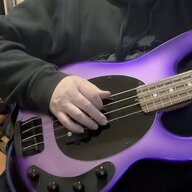
I think it boils down to playing situations and taste. Also modern instruments are more capable of sustain than some of the older instruments. So we get more of it by default. Do people over obsess about it? Sure. But then again that happens with everything music and is entirely dependent on what is important to us at a specific point in time. Look at all the details people here on TB focus on and then read why they are focused there. Lots of valid reasons.
Personally I think it is more important to focus on your technique and what resources are needed to achieve your musical goals for a given situation. Do you need piano like tone with lots of sustain or do you need thump with a fast decay. Can you get both from the same bass and if so how are you going to do it? One reason I have Precisions with flats and some with rounds and active 5-strings. FWIW even on my P bass with flats I sometimes have use mutes to get that real old school sound. Either way I dial into what I need regarding sustain. I like a bass with grind, thump and the ability to sustain a note if needed. But that is just me.
It is also more interesting to me to figure out each instrument’s personality to see how it will help me achieve the music I want to create or cover.
So if people are obsessing over sustain I think it is okay because they probably have a good reason for needing/wanting it.
That is my pre-coffee rant on the subject.
Personally I think it is more important to focus on your technique and what resources are needed to achieve your musical goals for a given situation. Do you need piano like tone with lots of sustain or do you need thump with a fast decay. Can you get both from the same bass and if so how are you going to do it? One reason I have Precisions with flats and some with rounds and active 5-strings. FWIW even on my P bass with flats I sometimes have use mutes to get that real old school sound. Either way I dial into what I need regarding sustain. I like a bass with grind, thump and the ability to sustain a note if needed. But that is just me.
It is also more interesting to me to figure out each instrument’s personality to see how it will help me achieve the music I want to create or cover.
So if people are obsessing over sustain I think it is okay because they probably have a good reason for needing/wanting it.
That is my pre-coffee rant on the subject.

I'm not a real bassist, so my opinion is worth what you've paid. I do feel that sustain is important, BUT, that extra tenth of a second of sustain isn't. I don't know that I've ever played a bass that didn't have plenty of sustain, barring dead-spots on the neck. Fretting about minutiae in order to get a negligible extension to your sustain seems to be a waste of energy.
I can't say what is best for anyone else, obviously. You may have found that your style isn't achievable on a bass with "just average" sustain. I haven't found that, at all, despite playing unconventional stuff.
Now, it is also possible that people looking for more sustain are more interested in the way the note develops, in terms of attack / decay / sustain, with more emphasis on the balance of the ADS, and less on the actual time it takes for the note to die. They want less of a thump. That seems very reasonable for a lot of styles.
I can't say what is best for anyone else, obviously. You may have found that your style isn't achievable on a bass with "just average" sustain. I haven't found that, at all, despite playing unconventional stuff.
Now, it is also possible that people looking for more sustain are more interested in the way the note develops, in terms of attack / decay / sustain, with more emphasis on the balance of the ADS, and less on the actual time it takes for the note to die. They want less of a thump. That seems very reasonable for a lot of styles.
So I’ve been playing for around 10 or 11 years now and have been a TalkBass junkie for pretty much the entire time. I’ve had around 20-25 different basses during this timeframe from $300-$400 models all the up to ones in the $2,500 range. With all those basses I’m not sure I’ve ever had one that truly (by definition) didn’t have at least one dead spot. Obviously some were more pronounced than others. That said one of thing I’ve learned with playing is the importance of your technique especially in the sense of muting strings so you don’t get the sympathetic vibration string noise (I.e. playing cleanly). I play primarily with my fingers so it’s usually some variation of the floating thumb technique. My point and question is this, it seems like controlling the dynamics and/or unwanted sustain/ringing of the wrong notes is more important than sustain and yet it seems we fixate on finding the unicorn bass where each note rings out perfectly on every fret on every string. I get the importance of sustain from a guitars perspective, but do we overrate sustain when it comes to bass? For example, so many of or 60’s and 70’s bass heroes used flats and stuck sponges under the strings close to the bridge. That seems to suggest sustain wasn’t at all important to them. Why then has it become so important to us?
I think it's more a case of 'quality vs. quantity'... for me, a bass with "amazing sustain" is one with an extremely pleasing harmonic signature as a long note decays. Think "A Day In A Life" final chord, etc... 

Controlling dynamics and/or unwanted sustain is important. So is controlling wanted sustain. These aren't mutually exclusive. Just like I want to mute a note to prevent sustain, I also want sustain when I want sustain.it seems like controlling the dynamics and/or unwanted sustain/ringing of the wrong notes is more important than sustain and yet it seems we fixate on finding the unicorn bass where each note rings out perfectly on every fret on every string.
Why wouldn't I want a bass where each note on each string sounds great? I wouldn't buy a bass with dead spots, or had notes that decay significantly faster than others. So yeah, I'm picky.


