• TalkBass has been independent since 1998. Add your voice.
    Create a free account to reply to discussions, view embedded media, and browse with fewer display ads.
    Join freeLog in
    Want zero display ads or expanded classifieds tools? Compare plans.

Sustain - Is it Overrated?

I've posted on TB about the (to me) weird obsession with eternal sustain, as if there was anything that really called for a 1:37 whole note.

And I play PROG. Drone notes are left to bass pedals or keyboards or open notes and a delay/loop.

OTOH, I am ALWAYS concerned with muting. Strings over-ringing or goofy harmonics beaming out from one string because of a poorly fretted note on another string (should've muted the nearby strings!)

^This.

And same here. I’m mainly a prog player, which is a genre noted for unapologetic excess across the board. (Note; We’re not proud of it. We just want to be loved for who we truly are. ;):laugh::thumbsup:)

And even with prog, sustain is rarely if ever an issue with bass. Muting, however, is extremely important.
 
My issue isn't sustain, rather it's dead/hot spots. I prefer a more even response from an instrument and I find it in short scales which in my experience with a bunch of them are much better at controlling dead/hot spots than any long scale I've played (save one) and the shorties can be had for very reasonable prices.
 
  • Like
Reactions: The Spankster
One of the reasons I love my Quantum is because of the sustain. I don't like staccato in my legato. I prefer to have very controlled attacks and releases, and do a ton of work towards muting activities, but if I want ring out a long note under a long passage, it's nice to have the option. I think I did it once in last night's show, but it sounded dramatic.
 
  • Like
Reactions: Afc70
So I’ve been playing for around 10 or 11 years now and have been a TalkBass junkie for pretty much the entire time. I’ve had around 20-25 different basses during this timeframe from $300-$400 models all the up to ones in the $2,500 range. With all those basses I’m not sure I’ve ever had one that truly (by definition) didn’t have at least one dead spot. Obviously some were more pronounced than others. That said one of thing I’ve learned with playing is the importance of your technique especially in the sense of muting strings so you don’t get the sympathetic vibration string noise (I.e. playing cleanly). I play primarily with my fingers so it’s usually some variation of the floating thumb technique. My point and question is this, it seems like controlling the dynamics and/or unwanted sustain/ringing of the wrong notes is more important than sustain and yet it seems we fixate on finding the unicorn bass where each note rings out perfectly on every fret on every string. I get the importance of sustain from a guitars perspective, but do we overrate sustain when it comes to bass? For example, so many of or 60’s and 70’s bass heroes used flats and stuck sponges under the strings close to the bridge. That seems to suggest sustain wasn’t at all important to them. Why then has it become so important to us?
Indeed, I believe sustain is overrated.

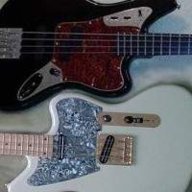
The best sounding bass I have ever owned, is my Fender Jaguar. This particular one has a neck which noticeably changes relief from temp changes throughout the day. And of course, it also has the typical Fender bent plate bridge. Unplugged, its the loudest, fullest, punchiest bass. And for this bass, that directly translates to its plugged in sound.
 
I prefer high mass locking bridges. I have had better luck with them staying in tune/intonated; I also don't like the look of vintage style bridges. I've had problems with traditional bridges, the real reason of course being the overall quality of the instruments, but the experience still sways my opinion. Sustain is just a bonus, although the real difference is small. There are a few spots in the live set I'm performing now where a loud pronounced drawn out note sounds great. Maybe 1% of the set.
 
I don't understand the goal of your post. Are you trying to convince players that value sustain that they are misguided? Why?
No, that wasn't my intent at all.
Rather, I was interested in getting other TBr's opinions.
Bass is a hobby that I enjoy, but I'm nowhere near being a regular gigging bassist.
Therefore, I wanted to hear from the gigging bassists regarding this topic.
Don't get me wrong, if I found a bass with literally no dead spots I'd buy it in a heartbeat.
This next statement may offend some, but tend to think the majority of the none of my basses have any dead spots either a) don't know what a dead spot is or b) have never really checked. I'm not saying EVERYONE is guilty of this, but I tend to believe the majority do. I've handled pre-CBS Fender's, Custom Shop Fenders, USA Lakland's (etc.) and they have all had a least one slight dead spot.
I was getting so fixated on it that I started to think "why am I so fixated on it?"
Honestly, I've come to the conclusion that a big part of it is because I want to brag on TB about my bass with no dead spots.......HA HA HA.
I've played one bass with no discnernable dead-spots (and I swear I'm an expert finding them) which was a Nash PB63 that Willies American Guitar had.
Anywho, it just seemed like a good discussion topic.
 
I get the importance of sustain from a guitars perspective, but do we overrate sustain when it comes to bass? For example, so many of or 60’s and 70’s bass heroes used flats and stuck sponges under the strings close to the bridge. That seems to suggest sustain wasn’t at all important to them. Why then has it become so important to us?


This may come as some shock to you, but not all of us like the same things. For example, you don't like sustain, not do those cats who stick foam under their bridges. That's fine! There's nothing at all wrong with that. But I don't play the same kind of music. I need a lot of sustain and I built a bass capable of giving it to me complete with graphite neck, high mass bridge, solid tuners and a tight neck joint. Sometimes I even use an ebow for really long synth like notes. Not everyone would like what I play. But that's fine because we don't all like the same things and there's nothing wrong with that.
 
Its overrated in my opinion. A perfect marketing tool. If the wood used in the bass is a quality one, the bass doesnt really need any special components. The natural resonance and sustain that only matters. Speaking of sustain, how much sustain a person needs?
 
There are times, particularly when playing music other than rock, that I've required decent sustain. For a lot of rock, and some jazz and rnb, I slightly mute the strings just beside the bridge when needed to mimick upright attack or rickenbacker bridge mutes... because it sounds better, matches other players in the group, or suits the genre everyone is expecting it to sound like.

I need it, but I like to reduce it at times. Without sustain though, I'd be far too limited in my versatility.
 
So I’ve been playing for around 10 or 11 years now and have been a TalkBass junkie for pretty much the entire time. I’ve had around 20-25 different basses during this timeframe from $300-$400 models all the up to ones in the $2,500 range. With all those basses I’m not sure I’ve ever had one that truly (by definition) didn’t have at least one dead spot. Obviously some were more pronounced than others. That said one of thing I’ve learned with playing is the importance of your technique especially in the sense of muting strings so you don’t get the sympathetic vibration string noise (I.e. playing cleanly). I play primarily with my fingers so it’s usually some variation of the floating thumb technique. My point and question is this, it seems like controlling the dynamics and/or unwanted sustain/ringing of the wrong notes is more important than sustain and yet it seems we fixate on finding the unicorn bass where each note rings out perfectly on every fret on every string. I get the importance of sustain from a guitars perspective, but do we overrate sustain when it comes to bass? For example, so many of or 60’s and 70’s bass heroes used flats and stuck sponges under the strings close to the bridge. That seems to suggest sustain wasn’t at all important to them. Why then has it become so important to us?
You want near infinite sustain?
Try a bass with a Lightwave pickup.
Without the magnetic field choking it of, the vibrations go on and on unimpeded.