
Enjoy the benefits of a premium membership!
Upgrade Account
-
TalkBass has been independent since 1998. Add your voice.
Create a free account to reply to discussions, view embedded media, and browse with fewer display ads.
Join free Log in
Want zero display ads or expanded classifieds tools? Compare plans.
You are using an out of date browser. It may not display this or other websites correctly.
You should upgrade or use an alternative browser.
You should upgrade or use an alternative browser.
The Amp Of The Future
- Thread starter Code Brown
- Start date
More options
Who Replied?
All the digital stuff aside I think there's a good chance we see 'micro' amps like the Elf and Gnome putting out 800w in the not too distant future. ICE seems to be putting out smaller and more powerful modules every year so just a matter of time really. It will be interesting to see if the tech can get much smaller than it already has.

Like bassists, replaced by AI
Apple just announced Logic Pro 11 and guess what it has…AI bass player and AI keyboard player similar to the existing AI Drummer.

"The end...for them" said historians viewing this moment in time. "As the last bassists, keyboardists, and drummers got their final gigs, an era ended. Although TalkBass kept the thought of bass in a few stragglers' heads, by 2099, each and every rhythm section player had passed away. The last one, Ellen Alaverdyan, made her living on YouTube and not gigging, but she kept playing until the end."Apple just announced Logic Pro 11 and guess what it has…AI bass player and AI keyboard player similar to the existing AI Drummer.
View attachment 5441057
Apple just announced Logic Pro 11 and guess what it has…AI bass player and AI keyboard player similar to the existing AI Drummer.
View attachment 5441057
Did you happen to see Rihana’s Super Bowl performance?
As I said more than a few times, we are dinosaurs trudging to the tar pits of the human experience.

Fortunately, arena shows aren't predictive of live musical performance. In the live music scene that I occupy, there's utterly no interest in replacing musicians with live tracks, AI, or anything like that. Bandleaders will dip into their own profit before leaving out the bassist.Did you happen to see Rihana’s Super Bowl performance?
As I said more than a few times, we are dinosaurs trudging to the tar pits of the human experience.
Granted, things could change, but those who prophetically remind me that I can't predict the future, can't predict the future either.
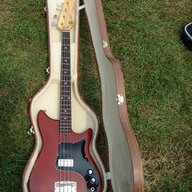
I was going to connect these two things together to have my own version of a fancy new computer controlled amplifier.
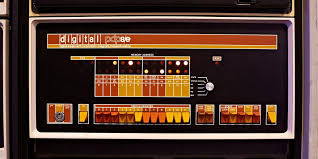
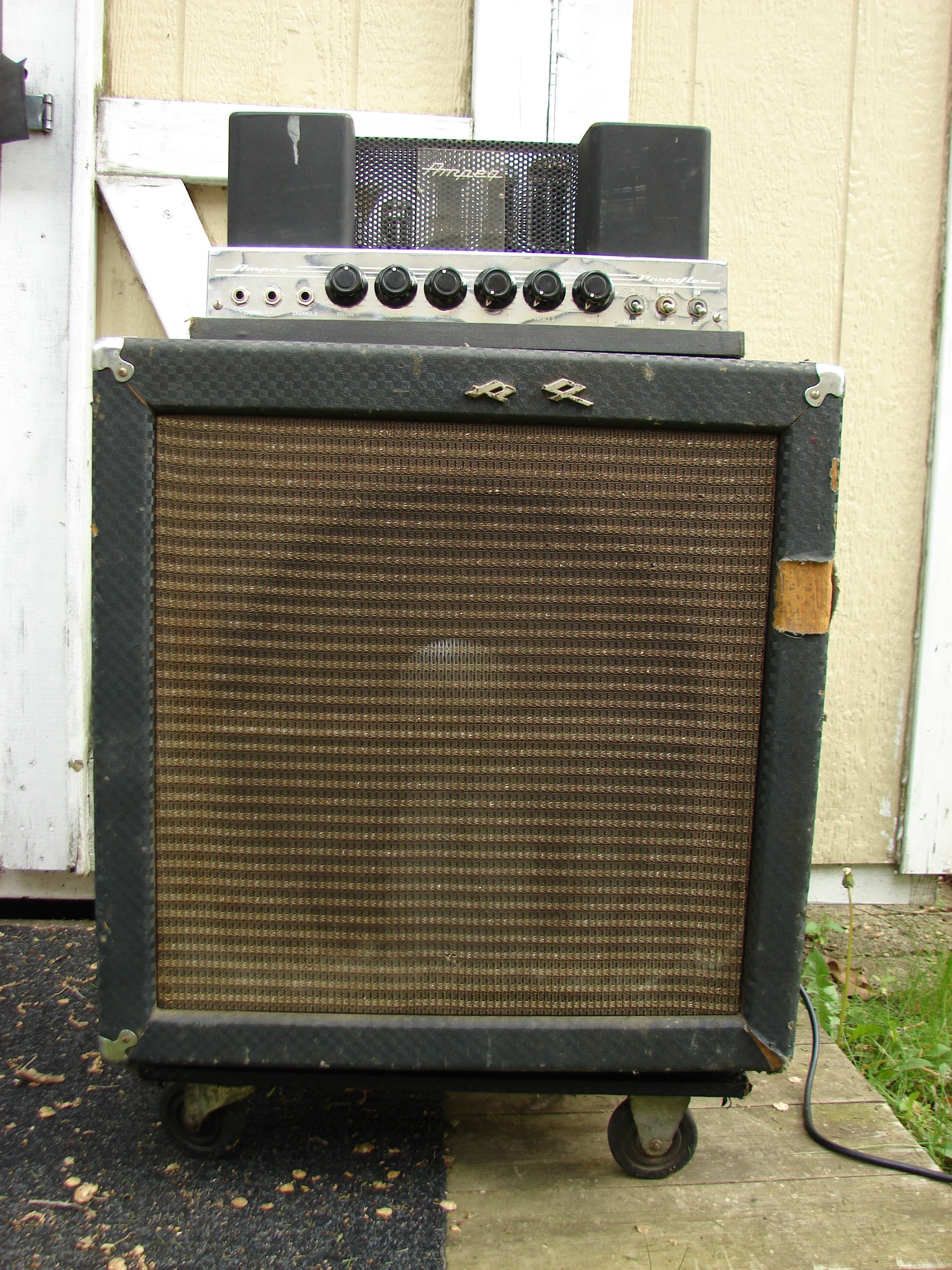
Maybe I should post my version of it here instead:
https://www.talkbass.com/threads/tell-me-youre-old-without-telling-me-youre-old.1614083/
(Edit to add, I used to work as an electronics technician in a GE Medical Systems circuit board lab many years ago, and among the vast array of electronics test equipment we had, I often operated a General Radio automated test system that had a Digital Equipment PDP8E computer exactly like the one pictured above to test and troubleshoot very complex circuit boards, The '63 B15 in the lower photo resides in my living room).
Maybe I should post my version of it here instead:
https://www.talkbass.com/threads/tell-me-youre-old-without-telling-me-youre-old.1614083/
(Edit to add, I used to work as an electronics technician in a GE Medical Systems circuit board lab many years ago, and among the vast array of electronics test equipment we had, I often operated a General Radio automated test system that had a Digital Equipment PDP8E computer exactly like the one pictured above to test and troubleshoot very complex circuit boards, The '63 B15 in the lower photo resides in my living room).
Last edited:
Fortunately, arena shows aren't predictive of live musical performance. In the live music scene that I occupy, there's utterly no interest in replacing musicians with live tracks, AI, or anything like that. Bandleaders will dip into their own profit before leaving out the bassist.
Granted, things could change, but those who prophetically remind me that I can't predict the future, can't predict the future either.
Might be where you live, I’ve been in 3 states 5 cities, and live music is dying. On city, a state capital, there are only 3 count three venues that live band music.

- Feb 12, 2006
- 61,038
- 5
- 220,973
- Disclosures
- Development Engineer-Mesa Boogie, Development Engineer-Genzler (pedals), Product Support-Genz Benz
I was going to connect these two things together to have my own version of a fancy new computer controlled amplifier.
View attachment 5441243 View attachment 5441245
Maybe I should post my version of it here instead:
https://www.talkbass.com/threads/tell-me-youre-old-without-telling-me-youre-old.1614083/
(Edit to add, I used to work as an electronics technician in a GE Medical Systems circuit board lab many years ago, and among the vast array of electronics test equipment we had, I often operated a General Radio automated test system that had a Digital Equipment PDP8E computer exactly like the one pictured above to test and troubleshoot very complex circuit boards, and the '63 B15 in the lower photo resides in my living room).
I learned on a PDP-11 back in the 1970's, dreadful machine, dreadful language.
I asked the AI police and they said we won’t even have a job as musicians in the future, so no new amplifiers for anyone.
The top of his girlfriends head?What will my drummer set his keys, drink, and cell phone on?

My mom worked on those, in Fortran, Cobol, and Machine language. I seem to recall she had interesting epithets for them.I learned on a PDP-11 back in the 1970's, dreadful machine, dreadful language.

Neil Young has a whizzer that’s used to control the knobs on his 1959 Fender Deluxe.

Wondering out loud:
The new generation of digital cameras for the professional/advanced hobbyist (think current Fujifilm, Canon RF mount, Nikon Z mount) are all employing in-camera correction for optical problems in the lenses that heretofore could only be addressed by playing with the glass and construction of the lenses themselves. Now the practice is to get them close, and in-camera processing finishes the corrections: We see lens test results from these systems that almost look fake for anyone who's watched this sort of thing for a long time (I started in the 60's with a folding, roll-film camera).
So I wonder if the 'Amp of the Future' might address cabinet and/or driver shortcomings in such a manner, or if that's even possible, or economically viable? Inquiring (complete electronic idiot, me) minds wonder about it.
The new generation of digital cameras for the professional/advanced hobbyist (think current Fujifilm, Canon RF mount, Nikon Z mount) are all employing in-camera correction for optical problems in the lenses that heretofore could only be addressed by playing with the glass and construction of the lenses themselves. Now the practice is to get them close, and in-camera processing finishes the corrections: We see lens test results from these systems that almost look fake for anyone who's watched this sort of thing for a long time (I started in the 60's with a folding, roll-film camera).
So I wonder if the 'Amp of the Future' might address cabinet and/or driver shortcomings in such a manner, or if that's even possible, or economically viable? Inquiring (complete electronic idiot, me) minds wonder about it.
Someone came out with a flat screen guitar cabinet at NAMM this year.Wondering out loud:
The new generation of digital cameras for the professional/advanced hobbyist (think current Fujifilm, Canon RF mount, Nikon Z mount) are all employing in-camera correction for optical problems in the lenses that heretofore could only be addressed by playing with the glass and construction of the lenses themselves. Now the practice is to get them close, and in-camera processing finishes the corrections: We see lens test results from these systems that almost look fake for anyone who's watched this sort of thing for a long time (I started in the 60's with a folding, roll-film camera).
So I wonder if the 'Amp of the Future' might address cabinet and/or driver shortcomings in such a manner, or if that's even possible, or economically viable? Inquiring (complete electronic idiot, me) minds wonder about it.
If that's not Jetsons I don't know what is.
Wondering out loud:
The new generation of digital cameras for the professional/advanced hobbyist (think current Fujifilm, Canon RF mount, Nikon Z mount) are all employing in-camera correction for optical problems in the lenses that heretofore could only be addressed by playing with the glass and construction of the lenses themselves. Now the practice is to get them close, and in-camera processing finishes the corrections: We see lens test results from these systems that almost look fake for anyone who's watched this sort of thing for a long time (I started in the 60's with a folding, roll-film camera).
So I wonder if the 'Amp of the Future' might address cabinet and/or driver shortcomings in such a manner, or if that's even possible, or economically viable? Inquiring (complete electronic idiot, me) minds wonder about it.
High quality lenses are difficult, and expensive to manufacture.
At this point, it's probably more economically viable to just install adequate lenses, and correct for distortion digitally.
In a classic case of the cart leading the horse, I encountered several instances of digital visual effects supervisors pressuring directors in to shooting using spherical lenses, because it is a pain in the backside for them to have to deal with anamorphic footage.
Digital correction has been around for a while, and seems to be maturing rapidly (I seem to remember NASA relying on it several years ago, to correct for some flaws that revealed themselves after the ship had already sailed - I'm afraid I can't remember the specific case, off the top of my head).
I guess the important thing is the results : if there are no detectable artefacts, does it really matter that the lenses have flaws?
- Feb 12, 2006
- 61,038
- 5
- 220,973
- Disclosures
- Development Engineer-Mesa Boogie, Development Engineer-Genzler (pedals), Product Support-Genz Benz


