
You can't tell how an image is distorted unless you have a good model of the lens' flaws. Which is not really an issue for the vast majority of photography/videography (people mess up photos more with Instagram filters than any lens could). For scientific photography (such as in space telescopes) we derive what we know about the universe from the images we make of it, and if those images are flawed in ways we aren't accurately compensating for it can be a problem.I guess the important thing is the results : if there are no detectable artefacts, does it really matter that the lenses have flaws?

Enjoy the benefits of a premium membership!
Upgrade Account
-
TalkBass has been independent since 1998. Add your voice.
Create a free account to reply to discussions, view embedded media, and browse with fewer display ads.
Join free Log in
Want zero display ads or expanded classifieds tools? Compare plans.
You are using an out of date browser. It may not display this or other websites correctly.
You should upgrade or use an alternative browser.
You should upgrade or use an alternative browser.
The Amp Of The Future
- Thread starter Code Brown
- Start date
More options
Who Replied?
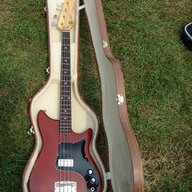
Neil Young has a whizzer that’s used to control the knobs on his 1959 Fender Deluxe.
I have imagined making a contraption like this to use when providing sound for bands that include idiot guitar players who play obnoxiously loud so we can control their amp from the desk when they are cranked up so loud so as to completely ruin the sound in the house. My version is a universal device that controls the volume control on just about any amplifier.
Last edited:

- Feb 12, 2006
- 61,031
- 5
- 220,922
- Disclosures
- Development Engineer-Mesa Boogie, Development Engineer-Genzler (pedals), Product Support-Genz Benz
Anybody remember the Fender CyberTwin?I have imagined making a contraption like this to use when providing sound for bands that include idiot guitar players who play obnoxiously loud so we can control their amp from the desk when they are cranked up so loud so as to completely ruin the sound in the house. My version is a universal device that controls the volume control on just about any amplifier.

My guitar player uses a Champ XD and its a great sounding little amp. It has a digital pre and tube power section.Anybody remember the Fender CyberTwin?
It has like 10 models on one knob and 10 FX on another.
I had to print out a list of what each one is on sticker paper and paste to permanently to the top of the amp. Without it, it was pretty much useless, because there was just no way anyone could possibly remember what model “#7” was supposed to be or what effect “#6” was.
But all in all, its a great sounding amp.
Planar speakers have been around for longer than the Fender Jazz bass has. The Quad ESL series speakers have been in production almost continuously since the mid-1950s.Someone came out with a flat screen guitar cabinet at NAMM this year.
If that's not Jetsons I don't know what is.
The guitar amp you're talking about is from Eminent Technology which mostly makes esoteric home hi-fi speakers, like rotary subwoofers and planar magnetic speakers. The >$2k pricetag on that guitar amp is about in line with what a large planar magnetic speaker would cost. I have a pair of orthodynamic headphones, same technology; they sound great but are really heavy for their size because instead of a relatively small magnetic field around a speaker coil, you need a large magnetic field across the entire surface of the transducer, and that amounts to a lot of magnets. So it might be more compact than the 412 speaker it claims it can replace, but it's going to be heavy and probably pretty tippy if you've got a high-energy guitarist whipping around on stage. (btw no shade meant on the quality of Eminent Tech's products since I don't know anything more about them than what I've written here, but the company desperately need somebody to fix their websites.)

FWIW, a DSP controlled class D amp could just have a half dozen modled bass amps on a rotary switch with with modern EQ (Bass, Treble, 2 sweepable mids, and a HPF)Ok, just putting on my professional UX design hat:
The idea of a small, portable brick with lots of DSP is appealing, and in fact practical with modern SoCs.
The interface isn’t really practical at that size. Certainly not for live use.
And while ICE power amps are small they’re not that small, and still require cooling.
So even if we had an all-DSP amp with a Class D power section, if it’s intended for live use, it needs to be rugged, easy to set up and use on a dark stage. It’s going to have a certain minimum size to accommodate heat sinks and cooling fans.
From a usability perspective, it needs to match some basic rules (adapted from Jakob Nielsen’s heuristics)
Too often, music gear and software is not designed with usability in mind; trying to cram a desktop interface into a pedalboard is a recipe for frustration.
- Visibility of system status. It should be clear what’s going on with the system at all times.
- Match between the system and the real world. Use common language to describe and label things, don’t assume users know things or use technical jargon. Controls and inputs map intuitively, vs requiring menu diving or “modes”.
- User control and freedom. This means both designing the system to avoid errors, and providing ways for users to undo a mistake.
- Consistency and standards. It shouldn’t feel totally alien, rather, it should map to users’ experiences with similar products. Symbols and terminology should be standardized - the user shouldn’t have to guess what something means or what the result of an action will be.
- Aesthetic and minimal design - which doesn’t mean minimalism per se, but the user interface and physical design should not be confusing or include irrelevant information.
Even analog gear can suffer from this - there’s lots of full-featured preamp pedals that sound great, for instance, but have confusing layouts, labelling, signal paths, tiny side switches, etc.
Things like the choice of knobs affects this - how often do you see ones without line pointers or whose indicators aren’t easily visible (especially on pedals?)
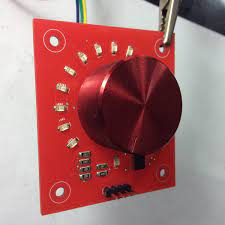
There are things like rotary encoders with built-in displays that could be used, to preserve that analog knob feel while giving users a clear setting indication visible at a distance. This one is the open-source RoenDi:
View attachment 5440606
Hubble telescope
They may have done something more recently in that regard, but with its original myopia, they had to actually go up there, and instal some corrective hardware.

The amp would cost $4k and then you would have to buy a $99/year subscription to access the effects and cab/sim profiles. Meanwhile, firmware updates make the amp slower and slower until you have to buy the v2 updated amp 3 years later.
"I'm sorry, you've attached something besides a Fender musical instrument. You'll need to upgrade to our 'Gibson and More' package for an additional $15/month to use that instrument...But for only $25/month more we'll throw in Ibanez, Steinberger, Peavey, and Chapman Stick too! Please hurry, as we're doing a limited run of 5,000 licenses planet-wide!!"
We laugh....but they'd do it if they could get by with it.

IMO, the “amp” of the future, or rather the method of sound delivery in the future, may be an evolution of the in-ears system. Seems nearly everyone has and uses some form of ear buds. In my ideal future-world, audience members will use their own very high fidelity in-ears that will wirelessly (bluetooth?) connect to the sound board. Patron scans a QR code which connects them to a website where they can receive, adjust volume/eq of the mix and perhaps even see a set list. If it’s a paid entry gig, only the patrons who have paid the fee/cover are given the QR code. Everyone hears the band the way they wish, the neighbors are happy, and nobody gets blown away sitting in the front row or tables at a venue (unless they choose to).
IMO, the “amp” of the future, or rather the method of sound delivery in the future, may be an evolution of the in-ears system. Seems nearly everyone has and uses some form of ear buds. In my ideal future-world, audience members will use their own very high fidelity in-ears that will wirelessly (bluetooth?) connect to the sound board. Patron scans a QR code which connects them to a website where they can receive, adjust volume/eq of the mix and perhaps even see a set list. If it’s a paid entry gig, only the patrons who have paid the fee/cover are given the QR code. Everyone hears the band the way they wish, the neighbors are happy, and nobody gets blown away sitting in the front row or tables at a venue (unless they choose to).
Some future technology could completely bypass the acoustical system of speakers sending sound waves to the human ear and feed an audio signal directly into the listeners nervous system. I am almost 70 years old, so I most likely won't live long enough to see anything like that, but I could see it happening some day.

If the folks at Neuralink are successful, I don't see this as being too far off into the future.Some future technology could completely bypass the acoustical system of speakers sending sound waves to the human ear and feed an audio signal directly into the listeners nervous system. I am almost 70 years old, so I most likely won't live long enough to see anything like that, but I could see it happening some day.
Silent clubs have been around for a few decades now.IMO, the “amp” of the future, or rather the method of sound delivery in the future, may be an evolution of the in-ears system. Seems nearly everyone has and uses some form of ear buds. In my ideal future-world, audience members will use their own very high fidelity in-ears that will wirelessly (bluetooth?) connect to the sound board. Patron scans a QR code which connects them to a website where they can receive, adjust volume/eq of the mix and perhaps even see a set list. If it’s a paid entry gig, only the patrons who have paid the fee/cover are given the QR code. Everyone hears the band the way they wish, the neighbors are happy, and nobody gets blown away sitting in the front row or tables at a venue (unless they choose to).
Some future technology could completely bypass the acoustical system of speakers sending sound waves to the human ear and feed an audio signal directly into the listeners nervous system. I am almost 70 years old, so I most likely won't live long enough to see anything like that, but I could see it happening some day.
Given how recently it all happened, I'm ashamed to say I've forgotten the specifics - but during the pandemic, somebody (and I'm thinking maybe it was David Byrne) put on concerts where the audience had to enter the venue one at a time, in a specific sequence, in order to sanitize, and climb into a plastic bubble (they had to leave in reverse of the sequence, and get the attention of ushers, if they needed a toilet break).
Inside the bubble was sanitizer, towels, fresh water, a wearable fan, and headphones.
The band played amplessly, and the audience all bounced around, listening on headphones, in an otherwise silent venue.
I think they only had individual control of volume, and possibly tone - but it's not hard to imagine a provision for sub groups, or discrete channels, if there's audience demand for it.
It seemed like a fun, novel, and very welcome solution under the circumstances - but everyone was relieved when we went back to regular, old fashioned gigs.

Still need a cab for it.
I've played too many shows with bad PAs where bands with fancy racks have trouble setting up, slow down the band rotation and cause the other bands to go on late, or you just can hear them.
If I was in a touring band playing theaters, sure. The dumps I play? Not a chance.
I've played too many shows with bad PAs where bands with fancy racks have trouble setting up, slow down the band rotation and cause the other bands to go on late, or you just can hear them.
If I was in a touring band playing theaters, sure. The dumps I play? Not a chance.

The first neural implants have already been installed. Some man with stuck syndrome (not the correct medical term).Some future technology could completely bypass the acoustical system of speakers sending sound waves to the human ear and feed an audio signal directly into the listeners nervous system. I am almost 70 years old, so I most likely won't live long enough to see anything like that, but I could see it happening some day.
Implants like this can allow a stuck paralyzed person to operate a cursor on a computer (and eventually so much more).
The future is now.
I worked at a machine shop where we modifed the base that held the telescope for work in their shop.Hubble telescope
They spec'd this massive stand that had drill bushings and very little clearance for fasteners.
The thing had to have been 6' tall and was magnificant. But there was zero clearance, and some of it wasn't prefect. We ended up boring the mounting bushings and creating some slop so they could mount the stand to the telescope.
An engineer we worked with said the lens was ground 1.00000" out of spec. It was a math error and they were able to hold 5 decimal places, albeit 1" out.

I design optics for my day job, for scientific instruments. I also develop the software corrections and calibration procedures that ensure the accuracy of each instrument. Using digital correction is not just about cost. It can achieve levels of performance and compactness that are not practical with conventional designs.
Although... I won't turn up my nose at a cost reduction that doesn't sacrifice quality.
At the present state of the art, some aberrations can be corrected in this way, others can't. Things like image distortion can be readily corrected, allowing for wider apertures and larger zoom ranges. But it's much harder to un-blur a blurry image. For instance when the Hubble went into operation, astronomers applied digital processing to manage image blur, but it was at the expense of sensitivity. A corrective lens was the only pragmatic option for restoring full use of the scope. It was a stroke of luck that the precise source of error was discovered, allowing for equal precision in the design of the corrective optic.
Although... I won't turn up my nose at a cost reduction that doesn't sacrifice quality.
At the present state of the art, some aberrations can be corrected in this way, others can't. Things like image distortion can be readily corrected, allowing for wider apertures and larger zoom ranges. But it's much harder to un-blur a blurry image. For instance when the Hubble went into operation, astronomers applied digital processing to manage image blur, but it was at the expense of sensitivity. A corrective lens was the only pragmatic option for restoring full use of the scope. It was a stroke of luck that the precise source of error was discovered, allowing for equal precision in the design of the corrective optic.

For bigger gigs, and tours, and such, what you are describing is not the future - it's the past. Like it or not, the stuff made for guitars is where we see our future, and what you are describing is essentially a Kemper from 8 or 10 years ago.
The need for foot switching in a lot of situations has driven a form factor change - once you put a device with enough foot switches on the floor in front of the payer, putting the circuitry there simplifies things, gets rid of unnecessary cables, and makes the rig more robust. In my world (medium to very large church gigs), nobody (guitars or basses) has an amp on stage any more (that happened 10 or more years ago), and the early Kempers ( and their competitors) have all transitioned from the "head with optional foot switch" model to selling mostly floor units.
The need for foot switching in a lot of situations has driven a form factor change - once you put a device with enough foot switches on the floor in front of the payer, putting the circuitry there simplifies things, gets rid of unnecessary cables, and makes the rig more robust. In my world (medium to very large church gigs), nobody (guitars or basses) has an amp on stage any more (that happened 10 or more years ago), and the early Kempers ( and their competitors) have all transitioned from the "head with optional foot switch" model to selling mostly floor units.

I used to (*) dream about what the perfect digital amp would be…
(*) but I no longer do
- It would have to feature physical knobs for instant access to the classic gain/EQ/master volume controls.
- It would have to use rotary encoders with led ring for all these controls: when you recall a preset, each knob would display its newly current value. Otherwise, with classic knobs the amp shows the last physical setting you have made instead of the newly recalled value.
(*) but I no longer do
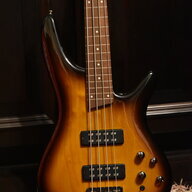
That's literally the TC Electronic Rh450 and 750 I talked about GAS'ing for in another thread...I used to (*) dream about what the perfect digital amp would be…
View attachment 5444559
- It would have to feature physical knobs for instant access to the classic gain/EQ/master volume controls.
- It would have to use rotary encoders with led ring for all these controls: when you recall a preset, each knob would display its newly current value. Otherwise, with classic knobs the amp shows the last physical setting you have made instead of the newly recalled value.
(*) but I no longer do


