• TalkBass has been independent since 1998. Add your voice.
    Create a free account to reply to discussions, view embedded media, and browse with fewer display ads.
    Join freeLog in
    Want zero display ads or expanded classifieds tools? Compare plans.

The basic flaw in the p-bass

Exactly - sometimes they don't even know they're hearing bass until it's not there.

+1.

I've always looked at it like this:

#1. If the singer screws up, the audience will usually know right away that it was the singer.

#2. If the guitar players hit some bum notes, it's also easy to pinpoint which band member it was.

#3. If the drummer drops the ball on the beat, people know right away who it was.

#4. If the bass player starts playing badly, the general audience has no idea what's going on - except that the band, overall, suddenly sounds really sour.

 
I have several that do all of those things ...

In magical unicorn rainbow land, maybe.

Most basses can do a respectable imitation of another bass/sound, for example the T-40 is said to be a master in this, but it will never be the real thing.

I don't want to start the debate here all over again, but the 'jazz bass neck pick-up makes a good impression of a P-bass'-statement comes to mind. IMPRESSION: it's not exactly the same.
 
Only skimmed the whole thread, but I'll say this - standing close to your own rig, a P with the tone opened up will always sound 'lighter' due to vastly increased auditory content. But personally I can still feel the low end virtually unchanged.

Best way to judge is out in the audience/room.
 
Only skimmed the whole thread, but I'll say this - standing close to your own rig, a P with the tone opened up will always sound 'lighter' due to vastly increased auditory content. But personally I can still feel the low end virtually unchanged.

Best way to judge is out in the audience/room.

Or in a recording. My P w/flats does still have a lot of bite/zing with my style of playing soloed, but in the mix it all 'dissapears' and becomes a thing called 'definition'. :ninja:
 
And if you're headed to the studio for payed session work, you can bring all of your fancy favorites with you, but 30 minutes in, you ARE going to be plucking or picking away on a P-bass. Bet that.


^This!

Found this out a long time ago, back when my main bass was a Ric 4003 and I didn't consider Fenders because they were "too common".

Once my band hit the studio I learned REAL quick why Fender Precisions rightly enjoy the king of the hill status.

:bassist:
 
Actually I require my bass to do the Geddy and Squire tone and do Jamerson and Dunn tone as well. If it can't do all of that then it doesn't work for me.

I have several that do all of those things ...

No sarcasm or agenda here - I would sincerely love to hear a quick recording of you running a bass or two through a few of these diverse tones. Along with a description of the bass and other equipment used, this could be an educational and eye-opening listen.
 
I like versatility, but I don't think there's much fun in it.

Just my opinion - but - I'd rather have 2 or 3 basses to cover the bases (see what I did there? heheh :hiding:) than have just 1 that does everything I want.
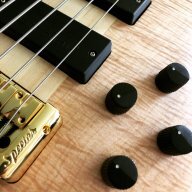
Having said that, I still think the one-trick Precision does its one-trick well enough to cover most bases.

But still, I like having a variety of basses - not just a bass with variety.
 
I like versatility, but I don't think there's much fun in it.

Just my opinion - but - I'd rather have 2 or 3 basses to cover the bases (see what I did there? heheh :hiding:) than have just 1 that does everything I want.

Having said that, I still think the one-trick Precision does its one-trick well enough to cover most bases.

But still, I like having a variety of basses - not just a bass with variety.

Yup. This. This I why I'm thinking about buying the new Modern Player Jazz V alongside my P. VERSATILITY!
 
I don't actually feel the P-bass is one-trick. Played with fingers/pick at various locations on the string, slapping, typewriter-style, thumb-plucked, flats vs. rounds, and different tone settings, not to mention different P-basses sound different... There are a lot of variations.
Of course, I'm still thinking about adding a J-type pickup to my P's, as I don't really like switching basses on a gig.

And of course, the dirty little secret that we all know but would rather not speak in public - In 99% of playing situations, if a bass instrument has enough body (mids and lows) and definition (attack and highs), nobody but the player cares or notices what instrument you are playing. Subtlety doesn't count for that much in bass tone, even though almost all our money is spent on that subtlety.
 
And of course, the dirty little secret that we all know but would rather not speak in public - In 99% of playing situations, if a bass instrument has enough body (mids and lows) and definition (attack and highs), nobody but the player cares or notices what instrument you are playing. Subtlety doesn't count for that much in bass tone, even though almost all our money is spent on that subtlety.


This is the sad truth, at least in gig situations.
 
I do not totally agree. Let's say that you're in a funk band. The difference between a P with flats plucked at the PU, and a J with rounds plucked near the bridge with the bridge PU soloed is far from subtle. Everyone would hear the difference. They both do their job in a different way.

Maybe. But I maintain that you are listening as a musician, and specifically as a bassist. My wife hears all the diverse tones I can get out of my different basses, and says, "yep, that one sounds like a bass too!". I think a lot of listeners hear that way, and they are not wrong.
In some bands I have switched from an active 35" Jazz with rounds to a passive P5 with flats. The band hears the difference only when I call their attention to it. These are not bad musicians either. They are just not focusing on the bass sound, instead they are judging the full mix and feel of the songs.
 
Maybe. But I maintain that you are listening as a musician, and specifically as a bassist. My wife hears all the diverse tones I can get out of my different basses, and says, "yep, that one sounds like a bass too!". I think a lot of listeners hear that way, and they are not wrong.
In some bands I have switched from an active 35" Jazz with rounds to a passive P5 with flats. The band hears the difference only when I call their attention to it. These are not bad musicians either. They are just not focusing on the bass sound, instead they are judging the full mix and feel of the songs.

I know it's still a bass. As said, you make a valid point. But I think that if I recorded the bassline of the same song with the two said basses/strings/PU/plucking position, people will definitely notice the difference in character it gives the song.
 

Latest posts