I'm curious why you feel an fx loop is in any way useful at all for bass?
I'm probably missing a part of the equation here, but as an audio engineer, bassist, and guitarist, I understand that:
- the fx loop generally comes after the amp's preamp/eq/processing section, before the power amp
- the power amp section is generally very neutral (effectively full range, more or less hi fi)
- the preamp section of any amp includes the tone controls (and sometimes a baked in tone/eq that you can't adjust out with the tone controls)
- if your amp includes preamp overdrive capabilities (like most guitar amps do, and occasional bass amps do), the fuzz/overdrive would be before the fx loop, and that same fuzz/overdrive will generally be before the eq section (Tone stack), so that you can cut the treble/fuzz or scoop it etc how you like, again before the fx loop
- overdrive/distortion/fuzz/compressor (in most situations)/wah (more often than not) all sound better before the input to the guitar amp, because again most of those sound better with the tone stack after them, and many people like wah pedals before amp overdrive. Those who don't have an overdrive or distortion pedal as well and place it before the wah pedal, before the amp's input.
- delay/reverb/echo pedals sound better, generally speaking, after the guitar amp's preamp, and this is pretty much THE reason why fx loops were invented for guitar amps.
- yes there are exceptions to everything I outlined... but these are the basic concepts.
Now, when modelling pedals enter the situation, everything is different. Amp modellers are, generally, going to sound best with their outputs sent to the power amp in on your guitar amp, or the fx return (same thing, more or less), if you use amp modelling and if your amp modeller is set for all processing except for cab emulation. There are so many variations in options here I won't get into them. But that main concept does need to be understood - amp modelling generally is designed to replace the PREAMP part of your rig, so everything that gives you your main tone... and optionally also the cab sound you use (in which case your amp is kind of moot other than to make things louder on stage).
********
For Bass, of course we have somewhat different scenarios:
- most bass amps are much more hifi than most guitar amps (exceptions exist, of course)
- some, but not all, bass amps, do have tone stacks/preamp sections that impart their tone on the signal and never allow a full frequency output to go through no matter how you set the tone controls. This is where fx loops do enter the picture for bass amps, generally.
- some bassists use overdrive/distortion pedals. For bassists, MOST bass specific overdrive pedals have built in Low Pass Filters (treble cut) on the output, generally configurable, which means you can put them in front of a hifi bass amp and they will sound great, unlike MOST guitar overdrive/distortion pedals that require the amp to cut the high frequencies. This is because, as noted, many (possibly most) bass amps do not cut the high frequencies nearly as much as most guitar amps do in the preamp section.
- Time/delay/reverb pedals on bass amps don't generally get used much, so fx loops are not common. When used before a bass amp input, the signal is generally hifi enough that everything still sounds great and there is still shimmer etc when desired.
- Bass amp modelling pedals, however, have the same general setup choices as they do for guitarists...They are generally best used before a clean power amp, skipping the preamp entirely, unless you go through the process of making a sound that pre-compensates for your preamp's inherent tone and tone control settings.... something that is generally not a good idea since you cannot then DI that modeller to FOH without it needed the same compensation (so your fx out in your fx loop would be needed), which is just adding a bunch of processing for no reason. So amp modelling generally circumvents the need for a bass amp at all... focusing more on power amp output with, optionally, a neutral preamp.
*********
ok all that background info being described (and probably ignored by everybody here LoL, which is fine, but I needed to explain my thoughts)... what is your intended use for the fx loop for your micro bass head choice? I'm NOT saying that it is wrong... I'm simply asking for my own learning experience to find out what I'm missing from the above conclusions I've made in my own experiences. Probably I'm not using the same processors as you are, and I'm wondering what you use that sounds better with an fx loop!
Cheers!





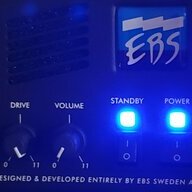


 and Acoustic Image is (for the moment at least) defunct. The Clarus SL has everything the OP was looking for, including 650 watts at 4 ohms and *no fan* whatsoever, as it shunts excess heat to the external shell. It is/was such a terrific amp and so uncoloured that you can use it for a multitude of purposes with the right choice for a front end. Parallel effects loop, really useful DI, the whole shebang.