
I did not find any discussion like this, so sorry if this is all redundant.
Looking back at the evolution of this Instrument and its milestones makes me appreciate 50 years of human endeavor of many who have helped me receive an inspiring instrument today:
1951 - Fender Precision Bass - the origin of the storm
1957 - Rickenbacker 4000, Double Truss Rod, Neck Thru Construction (Predecessor of the 4001) brought bright into focus
1960 - Fender Jazz Bass - the two pick up entry from Fender, exhibiting greater midrange which has made this instrument inseparable from modern music,
1966 - Rotosound Swing Bass 66 Strings - by John Entwistle - Guages emitting best sustain and tone achieved for all
1969 - Alembic - The Rise of the Boutiques - Multi-ply Stringer Necks, exotic woods, Active Electronics, in 1976 Graphite/Carbon Fiber Necks
1976 - Music Man Stingray Bass - an Icon of modern Rock Tone. Pickup position and configuration would impact further production in the Boutique market. Probably second most popular recording instrument to the Fender Jazz Bass, it brought in active electronics, and mid control to production Instruments
Late 1970’s - Carl Thompson’s Contra Bass Guitar - the 6 String is Born
1993 - Tunable Mixed Composite - BassLab - Claimed to not be sterile like Carbon Fiber, but more tuneable to the tone wishes of the client, similar to selecting a wood but in space aged material.
2001 - Lightwave S2 Optical Pickup System - I will not even begin to explain how important this is.
We all have come a longway baby!
Technology has not outpaced us, as with computers, as the above summary covers 50 years of development, as opposed to 20.
Not having thousands of dollars to spend on the top of the line Luthiers, Technology and wood, it appears that we commoners looking for the most for our limited buck have some considerations to insist upon in our instruments as very decent Technology is now very affordable:
Dual Stringer Necks
Dual Truss Rod Adjustments
Bartolini Pickups
18V Active Electronics
Variable Mid-Range Sweep Electronics - this is important and not to be overlooked! The 18V preamp exists because traveling bassists wanted to be able to plug into a power amp and Speaker and go. Don’t let the Manufacturers forget this!
17.5-20mm String Spacing at the Bridge
Still, even though I have all of this in my Ibanez BTB’s which I find nothing less than INSPIRING, all of that is yesterday, and is the least we should expect as purchasers/end users.
The future will be known when we see the Work of Basslab and Lightwave combined.
I might want to completely forget about even looking at the Status S-2 (except for settling for that as my Modern Instrument), and see that the future is a union of BassLab and LightWave marrying Material and Transmission Systems.
But I remember I was ridiculed by a Guitarist in High School when I got excited about the introduction of digitization of music on to chips and into programs. (Wonder where he is now? NOT!)
Wow…I am actually starting to get excited.
Looking back at the evolution of this Instrument and its milestones makes me appreciate 50 years of human endeavor of many who have helped me receive an inspiring instrument today:
1951 - Fender Precision Bass - the origin of the storm
1957 - Rickenbacker 4000, Double Truss Rod, Neck Thru Construction (Predecessor of the 4001) brought bright into focus
1960 - Fender Jazz Bass - the two pick up entry from Fender, exhibiting greater midrange which has made this instrument inseparable from modern music,
1966 - Rotosound Swing Bass 66 Strings - by John Entwistle - Guages emitting best sustain and tone achieved for all
1969 - Alembic - The Rise of the Boutiques - Multi-ply Stringer Necks, exotic woods, Active Electronics, in 1976 Graphite/Carbon Fiber Necks
1976 - Music Man Stingray Bass - an Icon of modern Rock Tone. Pickup position and configuration would impact further production in the Boutique market. Probably second most popular recording instrument to the Fender Jazz Bass, it brought in active electronics, and mid control to production Instruments
Late 1970’s - Carl Thompson’s Contra Bass Guitar - the 6 String is Born
1993 - Tunable Mixed Composite - BassLab - Claimed to not be sterile like Carbon Fiber, but more tuneable to the tone wishes of the client, similar to selecting a wood but in space aged material.
2001 - Lightwave S2 Optical Pickup System - I will not even begin to explain how important this is.
We all have come a longway baby!
Technology has not outpaced us, as with computers, as the above summary covers 50 years of development, as opposed to 20.
Not having thousands of dollars to spend on the top of the line Luthiers, Technology and wood, it appears that we commoners looking for the most for our limited buck have some considerations to insist upon in our instruments as very decent Technology is now very affordable:
Dual Stringer Necks
Dual Truss Rod Adjustments
Bartolini Pickups
18V Active Electronics
Variable Mid-Range Sweep Electronics - this is important and not to be overlooked! The 18V preamp exists because traveling bassists wanted to be able to plug into a power amp and Speaker and go. Don’t let the Manufacturers forget this!
17.5-20mm String Spacing at the Bridge
Still, even though I have all of this in my Ibanez BTB’s which I find nothing less than INSPIRING, all of that is yesterday, and is the least we should expect as purchasers/end users.
The future will be known when we see the Work of Basslab and Lightwave combined.
I might want to completely forget about even looking at the Status S-2 (except for settling for that as my Modern Instrument), and see that the future is a union of BassLab and LightWave marrying Material and Transmission Systems.
But I remember I was ridiculed by a Guitarist in High School when I got excited about the introduction of digitization of music on to chips and into programs. (Wonder where he is now? NOT!)
Wow…I am actually starting to get excited.



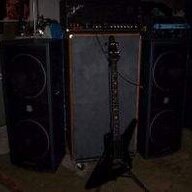






 bass - First humbucker config.


