• TalkBass has been independent since 1998. Add your voice.
    Create a free account to reply to discussions, view embedded media, and browse with fewer display ads.
    Join freeLog in
    Want zero display ads or expanded classifieds tools? Compare plans.

The importance of design...

I don't know, This ones pretty Uhmm :)
 

Attachments

  • pterodactyl 1.jpg
    pterodactyl 1.jpg
    126.1 KB · Views: 109
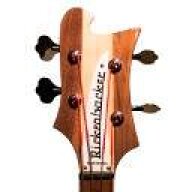
I wonder how important for all of you is the design of a bass. There are many well built instruments that sell poorly due to an ugly or poorly conceived design. One particular issue is the headstock: must of them are horrendous. Is it me, or some of the bass builders have a poor understanding of the value of design?

It sounds better if you like how it looks :thumbsup:
 
Right now the ergonomic design of a bass is extremely important to me. Due to a recent medical condition I'm stuck with I can no longer tolerate playing while standing or having my right shoulder raised up when playing seated. Both situations result in considerable pain which limits my playing time.

My most recent solution is to mod my Squier Jaguar SS bass by cutting off the lower bout on the bass side which lowers my shoulder and provides a wider area for my right arm to rest upon which makes the bass much easier to control so it doesn't slip away from me while playing. It looks unusual, kind of like one of those 60s different body shapes, but so far it seems to help some.

I spoke to a local luthier pre-Covid and I may have them build me a custom version after I finish my prototyping experiments.
 
  • Like
Reactions: JRA
So by "design", you actually mean "appearance", correct?

Not to split hairs but, "design" implies engineering, ergonomics, general playability...things like that (at least to me), not just the "look" of the instrument. Since the term appears in the thread title, "appearance" might've been a better one to use, if that's what you meant.

Dang: I sound like somebody's mom: must've gotten up on the wrong side of the bed this morning...


But to answer your question: sound is, obviously, the paramount consideration. But yes, appearance also matters to me. If I'm going to have to look at the thing every time I pick it up to play it, I want to like what I see. Something I've noticed about several of the big, boutique bass makers is that, though they may be masterful wood workers, their sense of visual aesthetics leaves a lot to be desired (at least, IMHO). Just because a person knows their way around lumber doesn't mean that he has a good eye for beauty (or a good business sense, for that matter). Appearance-wise, "different" can be better, but isn't, necessarily, in and of itself. Sometimes I think they're trying too hard to make their instruments look "distinctive".

Another pet peeve of mine is finish color. Since this is totally subjective, I'm not going to name names, but there is one bass maker in particular who seems to have a really ghastly sense of color. Love the way his basses sound and his build quality is impeccable, but the colors? Almost all bilious.

And while we're on the subject of color: most basses are made of wood. I like wood and want to see the grain. As a result, I'd much rather that any color applied is translucent. If an individual bass sounds great and feels great, I'll grudgingly settle for opaque finish on the body, but if they've also hosed down the back of the neck and the entire headstock with it, I'm out. To me, it looks cheesy and suggests that they used second-rate wood. My bet is that, years ago, when they started using solid colors in the first place, it was in order to hide imperfections in the wood grain.


My mother was pretty tough on me about my grammar. She was an executive secretary whose job it was to make those big picture guys sound educated and intelligent, whether they were or not. I got hit over the head with it before I started school.

RE: Bilious

Are you sure your Mom wasn’t on your case as well?

As for design, I prefer function over flash or fashion, leaning towards a natural or classic look.

In the end, I agree with you. The “voice” rules the day. If I wanted something just to view, there are better things on this earth to view than a bass. JMO.
 
It's an interesting topic for sure. It's a fun topic because as a market basis, musical instruments are not typically designed for performance, but aesthetics.

If you look at physics (acoustics, vibrations, tension/compression) headless basses simply perform better. In a purely engineering context, double ball end strings are physically better, they are stronger. But the aesthetics present a challenge to the market. An instrument string is pulled in tension to "tune" but traditionally 1 end is anchored (ball) and bent over a cantilever (bridge) and the other end rolls through a nut and is then wrapped around a peg.
OK, why then? Bass strings work this way because stringed instruments have been tuned with cylindrical tuning pegs since at least the Han Dynasty, more than 200 years BC, not because it is best but because it is oldest. A cable in tension anchored equally on both ends will last longer and overall perform better in any application, not just bass guitars. But "We" don't like the way double ball basses look so we don't buy them, no matter what.
Even if you don't care for Steinberger type instruments (I personally do not like the aesthetics) you cannot argue that no head = no neck dive. Also, let's talk about dead spots. No headstock almost completely eliminates the possibility of dead spots.

We do not "like" carbon fiber. There is not a wood from any tree in nature that conducts musical vibrations more effectively than properly aligned fiber. But it's not bubinga or ebony or ash or maple. So we gloss over the part about "not as good" and stick with what we "like". Instruments have been made from wood for as long as humans have made instruments. But it's easy to prove in a lab that wood is a distant second place to graphite composite.

Even if you (and I ) love traditional wood "single pull" strung basses with headstocks, can we at least acknowledge that the least effective, least comfortable, most obstructive method of holding them is a guitar strap? Placing the weight of a large bass guitar across your collar simply and conclusively impedes your range of motion and increases stress that ultimately impedes your plucking/slapping and performance. But ain't nobody gonna pivot their bass on a waist belt. But why not? Because we are used to wearing shoulder straps.

34" scale? Leo Fender's folks said so.
Magnetic cylinder pickups? Because we simply haven't embraced optical pups even though they are 2 orders of magnitude more precise and more adaptable. Mags worked in the '40's so why change?
Nuts instead of zero fret? Really? No reason whatsoever, just a habit leftover from violins.
Jacks on the top of the control plate? Think about it. If you step wrongly you break the cable, the plate, or the jack. Or if it's on the bottom side, you step on the cable and it falls out, saving your bass. Duh.
Control plates? Pick guards? Thumb rests / tug bars? Ash tray bridge covers? Single coil option switches on a humbucker? Those ballpoint pen springs that they put on bridges? Bolt-on necks? Really?

So rant over, it's all about the aesthetics and meeting the historic status quo, and actual industrial design almost never touches our industry. But I like it anyway. We like wood and headstocks and tort and leather straps and tubes. Even if we know better.
 
It really bothers me that most companies just copy the Jazz bass control plate and pickguard - without spending 30 minutes to do something unique.

To me, it says that they are not willing to put out a little design effort and it lowers my impression of the instrument. Reminds me of a lot of companies I have worked with run by accountants or engineers (or musicians in this case).
 
  • Like
Reactions: Watchootognbout
It really bothers me that most companies just copy the Jazz bass control plate and pickguard - without spending 30 minutes to do something unique.

To me, it says that they are not willing to put out a little design effort and it lowers my impression of the instrument. Reminds me of a lot of companies I have worked with run by accountants or engineers (or musicians in this case).
True, but it also shows that the market isn't really looking much further. I'm guilty. Most boutique basses (not all but most) are just really well appointed P copies, obviously. But there's also some pressure to not walk on with an unusual looking instrument. I get it. But you're spot on, it is a habit.
 
I wonder how important for all of you is the design of a bass. There are many well built instruments that sell poorly due to an ugly or poorly conceived design. One particular issue is the headstock: must of them are horrendous. Is it me, or some of the bass builders have a poor understanding of the value of design?
You mean functional design or aesthetic design?

I tend to be a form-follows-function guy. I will accept some level of aesthetic degradation in exchange for better function, but only some.

For example, I prefer a 2x2 tilt-back headstock with truss access at the nut over a 4-inline straight headstock with truss rod access at the body. I like the looks of the 4-inline but much prefer the function of the 2x2 tilt.

I like the looks of the J body but don't like the way the offset lower bout gets in the way so for functional reasons I prefer the Stingray or P body.

I owned a loved a G&L even with the funky headstock. Sold it because another functionally better bass took its place.
 
It really bothers me that most companies just copy the Jazz bass control plate and pickguard - without spending 30 minutes to do something unique.

To me, it says that they are not willing to put out a little design effort and it lowers my impression of the instrument. Reminds me of a lot of companies I have worked with run by accountants or engineers (or musicians in this case).

Clearly there is a market for Fender lookalikes (with different pickups, different bridges, different colors, "relic" finishes, etc.), but I agree with you. If a guitar look just like a Fender (or Gibson, or whatever) except for some minimal changes that are necessary to avoid being sued, it turns me off.
 
  • Like
Reactions: KaraQ
It's an interesting topic for sure. It's a fun topic because as a market basis, musical instruments are not typically designed for performance, but aesthetics.

If you look at physics (acoustics, vibrations, tension/compression) headless basses simply perform better. In a purely engineering context, double ball end strings are physically better, they are stronger. But the aesthetics present a challenge to the market. An instrument string is pulled in tension to "tune" but traditionally 1 end is anchored (ball) and bent over a cantilever (bridge) and the other end rolls through a nut and is then wrapped around a peg.
OK, why then? Bass strings work this way because stringed instruments have been tuned with cylindrical tuning pegs since at least the Han Dynasty, more than 200 years BC, not because it is best but because it is oldest. A cable in tension anchored equally on both ends will last longer and overall perform better in any application, not just bass guitars. But "We" don't like the way double ball basses look so we don't buy them, no matter what.
Even if you don't care for Steinberger type instruments (I personally do not like the aesthetics) you cannot argue that no head = no neck dive. Also, let's talk about dead spots. No headstock almost completely eliminates the possibility of dead spots.

We do not "like" carbon fiber. There is not a wood from any tree in nature that conducts musical vibrations more effectively than properly aligned fiber. But it's not bubinga or ebony or ash or maple. So we gloss over the part about "not as good" and stick with what we "like". Instruments have been made from wood for as long as humans have made instruments. But it's easy to prove in a lab that wood is a distant second place to graphite composite.

Even if you (and I ) love traditional wood "single pull" strung basses with headstocks, can we at least acknowledge that the least effective, least comfortable, most obstructive method of holding them is a guitar strap? Placing the weight of a large bass guitar across your collar simply and conclusively impedes your range of motion and increases stress that ultimately impedes your plucking/slapping and performance. But ain't nobody gonna pivot their bass on a waist belt. But why not? Because we are used to wearing shoulder straps.

34" scale? Leo Fender's folks said so.
Magnetic cylinder pickups? Because we simply haven't embraced optical pups even though they are 2 orders of magnitude more precise and more adaptable. Mags worked in the '40's so why change?
Nuts instead of zero fret? Really? No reason whatsoever, just a habit leftover from violins.
Jacks on the top of the control plate? Think about it. If you step wrongly you break the cable, the plate, or the jack. Or if it's on the bottom side, you step on the cable and it falls out, saving your bass. Duh.
Control plates? Pick guards? Thumb rests / tug bars? Ash tray bridge covers? Single coil option switches on a humbucker? Those ballpoint pen springs that they put on bridges? Bolt-on necks? Really?

So rant over, it's all about the aesthetics and meeting the historic status quo, and actual industrial design almost never touches our industry. But I like it anyway. We like wood and headstocks and tort and leather straps and tubes. Even if we know better.

Let me add to that... Quarter-inch Phone plugs/jacks. What else on this planet still uses THOSE?
 
It obviously matters how instruments look to players. What one likes, another dislikes. Someone on TB a few days ago said they could no longer play a “pointy 80s bass“ because of its look. The bass didn’t change its shape - the player changed. I like pointy shapes like Explorers - some people don’t. I’ve always thought the Ovation Breadwinner was the ugliest guitar I’ve ever seen, but it’s headstock is fine. A lot of people think that guitar is beautiful.
I like the headstock to fit with the design style of the body - not look like an afterthought. So many look too generic for the body, or too complicated for it.
2B923441-0D16-4E78-BFE6-37838F01D3F0.jpeg
 
Last edited:
I admit that there are basses I wouldn't even try based on looks.

Nothing really specific - certain colors will turn me off and some headstock designs rub me wrong - essentially I prefer a natural wood look. My P asses are painted (black/red), but all my other basses are natural wood, the more grain/spalted the better.

Body needs to be somewhat traditional shape for me. No hollow bodies or violin shape. Warming to the single cut, but still prefer the double horns. No Vs for sure.

Head stock is a little less important as long as it gels with the rest of the design. I playa 5s and prefer the 3 over 2 peg layout, I tolerate with t 4 over 1 P headstock on the Fender/Squier. Prefer 2 over 2 vs 4 over 0 on a 4 string. Headless? Just no.

Pickguard OK on painted, but not on natural finish.

Don't know what I'd do if you placed butta in my hands with eyes closed and then found the looks disagreeable.
 
A big part of buying a bass is about how it looks for me, probably more than most. An ugly headstock can be the only thing I dislike about a bass but it will be enough to put me off.

Couple of specific examples spring to mind - Sire V basses, great basses but awful headstocks. Considered buying a Schecter Diamond J bass at one point but again the headstock put me off.
 
  • Like
Reactions: Watchootognbout
So by "design", you actually mean "appearance", correct?

Not to split hairs but, "design" implies engineering, ergonomics, general playability...things like that (at least to me), not just the "look" of the instrument. Since the term appears in the thread title, "appearance" might've been a better one to use, if that's what you meant.

Dang: I sound like somebody's mom: must've gotten up on the wrong side of the bed this morning...
I was thinking the same thing. Design could be everything from aesthetic to sound to playability to... anything!
 
  • Like
Reactions: maplebar
I've avoided buying some instruments because of the headstock. Carvin, now Kiesel have some nice designs but I can't get past their headstocks. They finally have an update on the wooden shoe headstock from the SB days and the new one looks like a Peavey copy. I also dislike G&L headstocks quite a bit.
 
  • Like
Reactions: teh-slb
I play because of the sound, not the looks.
Functionality is far more important to me, so the strap-button needs to be near the 12th fret & the headstock should be a 2x2.
I hate neck-dive more than Bob Geldof hates Mondays:


At least one manufacturer has spoken out about neck-dive, claiming the users just need to get better straps. I will NEVER buy one of their instruments!