• TalkBass has been independent since 1998. Add your voice.
    Create a free account to reply to discussions, view embedded media, and browse with fewer display ads.
    Join freeLog in
    Want zero display ads or expanded classifieds tools? Compare plans.

The importance of design...

regarding headstocks; as an acoustic guitar builder (primarily) it took me about 2 years to come up with something that didn't look like a martin paddle head, a gibson bible, or a larson, or any other maker's design and works well with the overall impact of my guitars. it ain't no easy thing when choices are limited and lawyers are lurking everywhere. and i use slot heads to boot. i proto-typed and studied the implications both tonally, structurally and visually. this year we made a final tweak after we had watched a ton of antique roadshows and thought that i should do a bit more than cut 2 slots with a mill and leave it at that. there are now a few little features that tie into other elements on the guitar and bring it all together

one of the things i see a lot are designs that don't resolve. they don't conclude, they leave you with questions. you shouldn't have to leave a viewer guessing what or why. and i see a lot of designs that are so "crafted-up" they no longer tie into any other design element on the guitar whatsoever. weird bits of wood or inlay that make no sense imo.
 
So by "design", you actually mean "appearance", correct?

Not to split hairs but, "design" implies engineering, ergonomics, general playability...things like that (at least to me), not just the "look" of the instrument. Since the term appears in the thread title, "appearance" might've been a better one to use, if that's what you meant.

Dang: I sound like somebody's mom: must've gotten up on the wrong side of the bed this morning...


But to answer your question: sound is, obviously, the paramount consideration. But yes, appearance also matters to me. If I'm going to have to look at the thing every time I pick it up to play it, I want to like what I see. Something I've noticed about several of the big, boutique bass makers is that, though they may be masterful wood workers, their sense of visual aesthetics leaves a lot to be desired (at least, IMHO). Just because a person knows their way around lumber doesn't mean that he has a good eye for beauty (or a good business sense, for that matter). Appearance-wise, "different" can be better, but isn't, necessarily, in and of itself. Sometimes I think they're trying too hard to make their instruments look "distinctive".

Another pet peeve of mine is finish color. Since this is totally subjective, I'm not going to name names, but there is one bass maker in particular who seems to have a really ghastly sense of color. Love the way his basses sound and his build quality is impeccable, but the colors? Almost all bilious.

And while we're on the subject of color: most basses are made of wood. I like wood and want to see the grain. As a result, I'd much rather that any color applied is translucent. If an individual bass sounds great and feels great, I'll grudgingly settle for opaque finish on the body, but if they've also hosed down the back of the neck and the entire headstock with it, I'm out. To me, it looks cheesy and suggests that they used second-rate wood. My bet is that, years ago, when they started using solid colors in the first place, it was in order to hide imperfections in the wood grain.

Industrial Design informs form, function, and aesthetics. As such it overlaps engineering design. The use of the term “design” is appropriate for this discussion.
 
+1 on the importance of ergonomics. If a bass isn't comfortable for you to play, for whatever reason, you simply won't play it. Weight distribution, how it balances on your body, how far the reach is to first position... those are all things I heavily consider in an instrument.

And, of course, some ergonomics designs that fit some people like a snuggly blanket simply don't work for others. Spectors come to mind. People either love or hate how they feel. I once had a Spector 5-string where I loved the light weight and the curved back body shape... but I didn't love how the bass balanced almost horizontally and made first position an uncomfortably long and awkward reach. I had the same problem with a Warwick Corvette Standard 4-string I used to own. I guess compact bodies simply don't work for me. I guess I simply prefer a wider, longer body on my basses. Maybe I'd love a Surine bass, I don't know.

But why should I GAS for a Surine when my Carvin SB5000 is an absolute joy to play? It ergonomically suits me and I wouldn't change a thing. On the other hand, some people would disagree and say it's a poorly-designed ergonomic nightmare for them.
 
Last edited:
fwiw, i have a black jackson warrior. a most awesome (imo) shred guitar of immense power and gnar that allows me to play to my limits and beyond, but arguable not something to take to the country fair and play merle covers with nor hang out with a trad combo at peet's coffee. it's body is an x shape consisting of 4 of the charvel/jackson pointy headstocks one on each end of the x shape and a reverse headstock.

the use of a guitar informs certain ascetics and implies certain rules to be followed. in the case of the warrior, extreme metal, shred, djent, or anything obscene and loud are where it physically fits in. a fender strat with a maple neck would not look right in this scene nor would a ric 360. in the classical guitar world experienced taste makers gasp at a instrument that doesn't have a slotted headstock with ornate carving in it. a paddle head rarely is considered appropriate for that style of play. traditional bluegrass? it's martin's paddle head (or clones) or nothing.

so while most any guitar can "get the job" done, in a live performance setting looks do matter as does the buyers internal vision of themselves. do they see themselves internally other than the reality of how they appear externally? i might see my self as a death metal god, but i can assure you that i don't look like one.

so as we circle back, you could engineer a square block with 4 or whatever holes in it and it will work. how you shape it gives it character and purpose. how it's refined gives it a home.
 
Industrial Design informs form, function, and aesthetics. As such it overlaps engineering design. The use of the term “design” is appropriate for this discussion.

Clearly all of those things are relevant to evaluating a bass, but I think the OP phrased it in such a way as to imply he was only talking about the aesthetics—that's certainly how I interpreted it. I think that's what @Mustang Surly was reacting to.

Anyway, @Killing Floor has it almost completely right. If you handed a modern engineer the specs for what you wanted and the instruction to build what would work best, not to be constrained by current convention, you'd get something that's almost certainly better in terms of sound, durability, ergonomics, etc.: a carbon fiber headless with optical pickups, etc. (Probably expensive, though.) We are slaves to both tradition and aesthetics. As someone who was originally trained as an engineer (though I'm not one by profession), I have to say when I see things like the Chapman Railboard some part of me just knows that's a better design in many ways.

This is not unique to basses, either: a great many musical instruments could probably be improved by a radical modern redesign. But most people won't go there. That's not necessarily wrong, either—there's value in the familiar and in working with limitations.
 
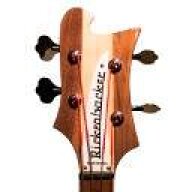
I wonder how important for all of you is the design of a bass. There are many well built instruments that sell poorly due to an ugly or poorly conceived design. One particular issue is the headstock: must of them are horrendous. Is it me, or some of the bass builders have a poor understanding of the value of design?
While it's important to separate aesthetics from function, a good design intertwines the two. Thus, IMO, a truly good design generally does not force a choice between the two.

my Epi Toby Std. IV is stunning in it's design, overall looks, and a winning headstock, I'm dying to find a set of flats to make it even better. Tobias is said to have had 0 input on this bass but I like it more than the mega bux Tobias I tried.
I've also heard Tobias had nothing to do with those basses, but it's pretty obvious that it's derivative of his previous work. A good design, is a good design.
 
  • Like
Reactions: Bass V
If you handed a modern engineer the specs for what you wanted and the instruction to build what would work best, not to be constrained by current convention, you'd get something that's almost certainly better in terms of sound, durability, ergonomics, etc.: a carbon fiber headless with optical pickups, etc.

I disagree to the extent that these things are subjective.

Whether a radically different type of pickup would provide "better" sound depends on what kind of sound you want. Most players' ideas of what they want to sound like is based on their past experience of hearing other players on record and in concert, and on what they hear when their own playing is put into a band mix. Naturally, to date this sound relates to the characteristics of magnetic pickups in an RCL circuit. Optical pickups might be more hi-fi or a more accurate representation of what the vibrating string is doing, but that's not what players are asking for and probably not what they want.

Durability of strings is probably a non-issue. Most players don't replace strings only when they break, but when they get dirty or rusty and stop sounding and feeling good. I don't think double-ball strings are relevant to that.

Designers sometimes think that ergonomics are objective and applicable to everyone, but that's partially true at best.

If you build an instrument that you think is objectively "better", but nobody wants it, then for all practical purposes, you're wrong.
 
Last edited:
To me, design = looks, sound, and construction (engineering/craftsmanship, ergonomics, etc). It’s about getting the trade offs in balance. There are exceptions, but the one design rule I find most appealing is simplicity (in the sense of elegance). And I think the best way to get to simplicity is by removing what’s not needed. Like pickguards, string trees, paint, active electronics, etc... :)

That said, one could arrive to several different designs following similar principles, perhaps largely in the service of the instruments’ purpose (and their users). For example, both the good ol P bass (even with its pickguard, string trees and paint...) and the Fodera Presentstion II hybrid are essentially very simple basses (I find the story of Presentation models quite fascinating). So there is no “ultimate” design, but indeed several viable options, each with its own balance of features and trade offs...
 
Last edited:
  • Like
Reactions: Killed_by_Death
All I look for a straight pull from the nut to the tuners on the headstock. Some instruments have too much angle or fan which can cause the string to bind in the nut. Other than that I don’t care what the headstock looks like. Lol.
 
  • Like
Reactions: DTRN
Good design and how well it's built do not automatically accompany each other. In a few cases it is, but the designer's vision may well not suit the broad market, who automatically buy the same two or three best-selling electric guitars and electric basses (in most cases, the same axes their fathers or even grandfathers played) so they can be 'different'. It's worked for Gibson, Fender, and Harley-Davidson for years, and when they try to innovate, they lose their shirt. Occasionally, the designer can marry the two, and magic happens, like Steinberger's NS design Spector; however, that they DON'T outsell PBasses and Jazz Basses tells me a lot.
 
Headless basses?

Graphite necks?

Optical pickups?

If you guys aren't careful, as a reminder, I'm gonna resurrect the old "Les Paul Cutaway Body Binding Width" scandal that ravaged the electric guitar community some years back...

Stopping short of that, suffice it to say that many musicians have a fairly narrow definition of what "looks right" in terms of instrument appearance (and optimal function be damned)! Supposedly wild and rebellious rock-n-rollers can be surprisingly stodgy when it comes to some things.