
You know sorry, Played that on the Gretsch Bass,,,losing my mind my avatar pic is the Gretsch, I used

TalkBass has been independent since 1998. Add your voice.
Create a free account to reply to discussions, view embedded media, and browse with fewer display ads.
Join free Log in
Want zero display ads or expanded classifieds tools? Compare plans.

It still sounds great. Thanks again.You know sorry, Played that on the Gretsch Bass,,,losing my mind my avatar pic is the Gretsch, I used


This is a song I wrote corona hit before we got vocals recorded, but that's the Rumblekat with those SD mini's
Did this for Memorial Day
Thanks, I appreciate your feelings, retired Navy myselfYou guys did a fantastic job! I am so torn by military and war ( I am former Navy SeaBee ) but I don't want to start anything political so i won't elaborate. Good tone on the rumble cat!
You guys did a fantastic job! I am so torn by military and war ( I am former Navy SeaBee ) but I don't want to start anything political so i won't elaborate. Good tone on the rumble cat!
Thanks, contextually a solid song. Cant wait to hear the finished song.Here is a copy of the lyrics if your interested, hope to get back to studio soon
sorry took so long here's the finished versionThanks, contextually a solid song. Cant wait to hear the finished song.
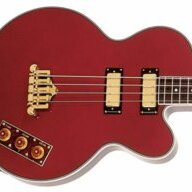
Welcome to the club, any questions always feel free to ask, I run .100 lights and 3.00 mm at 12th fret if that helps, just like the feel of the lights, but it all depends on setup and preferenceI recently bought a Rumblekat -- my first bass -- and created an account to join this thread.
I've played guitar for 20 years but rarely picked up a bass unless in a guitar shop for 30 seconds and didn't like how foreign long scale felt coming from guitar. Huge Beatles/Macca fan. I've been short-scale-bass-curious for years. Saw a Rumblekat used, jumped on it.
This is 100% a keeper. So far I've made a new nut (and previous owner or someone put a TON of crazyglue on the nut, what a mess). It benefited from a complete setup as well and has a few buzzes at 2.5mm/2.0mm action. Level/Crown/Polish down the road. You guys got me interested in a bridge upgrade down the road.
Think I have stock strings -- red silk and measure 45/65/80/105 which from my brief research on TB seems stock.
Finally, and sorry for the further discussion on string gauge, but that set of gauges isn't available at my usual sources (and sometimes international shipping to Canada gets stupid pricy on shipping).
I'd like to try to a light gauge strings with a 0.100 E-string, but I'm worried about that big guy getting too floppy. He's pretty loose now @ 0.105 and I kinda like how it adds to the rumble er grit or something on this string... but I'm afraid a .100 will be just too loose.
I even saw some people were using a 0.095, so I guess it's fine. It's just that most of my buzz issues are on the E string... and again, definitely could use a level-crown.
Sorry for the Rumblekat ramble... very excited about
Ditto, welcome @maj34
If you decide to give light-gauge strings a try, report back and let us know how it worked out.
I wouldn’t be certain that tension across the same gauges of different strings would be equivalent, as different brands use different gauges of core and wrap wires to get to those similar final overall gauges (particularly when comparing a different design like the Pressurewounds, which I’ve found to be fairly stiff for the gauges vs rounds). Still somewhat useful for generalizations between similar strings. One thing to consider before buying new strings is that any string with silk on the ball-end side of the string will have the silk extend over the saddle due to the bridge’s short clearance. You can put some sort of spacer (washers, nuts, etc) between the ball end and back of the bridge to extend the string somewhat to compensate or get one of these (or a Supertone of course, thoughts on that below): GIBSON® EPIPHONE® BASS BRIDGE 3-POINT (MOD-BAR!) | eBayWill do. Probably will be a while before I try new strings though. Going to do a level/crown/polish first (later this year prob). Maybe get the Hipshot Supertone. $200 Canadian - ouch. Still, this is an instrument worth of some TLC and a couple of upgrades if I ever saw one.
I did spend an hour analyzing string tensions though, because that's also fun for me. I used StringJoy and built a spreadsheet:
View attachment 4225054
[I'm assuming my used Rumblekat came with the stock gauges, those are the gauges measured with my caliper.]
I made this graph:
View attachment 4225053
The Legend here correlates with the brand/type of strings in the table above.
The GHS Pressurewound are interesting to me. The Pressurewounds are obviously a lower tension set, but they're a relatively equal tension set.
Now, I'm no expert on string dynamics or bass setups, but I feel like right now my E string could use more relief (i.e. bit floppy). All other strings are happy with typical/lowish relief (0.010). I could just add more relief to make the E happier but I also happen to have bad buzzing on frets 6 & 7... the straighter neck helps with the low frets I have in the middle of the neck.
My theory is that an equal tension set would allow me, or even someone with a better leveled board, to setup the neck so that all strings were calling for closer-to-equal relief.
Again, apologies for bringing it back around to strings, but thought some people might be interested in the graph.
... different brands use different gauges of core and wrap wires to get to those similar final overall gauges (particularly when comparing a different design like the Pressurewounds, which I’ve found to be fairly stiff for the gauges vs rounds). Still somewhat useful for generalizations between similar strings.
One thing to consider before buying new strings is that any string with silk on the ball-end side of the string will have the silk extend over the saddle due to the bridge’s short clearance. ... My stock Rumblekat strings had no silks or any other characteristic markings (like colored ball ends, etc)
I had a Supertone on my Rumblekat for a short time, but honestly I think it sounded (and even looked) better with the stock bridge.
I did upgrade my bridge and it's one SERIOUS upgrade as about tone and playability. Hipshot is way to go. Yes, it's expensive. But, it's worth every dime.
At least for me, I've sometimes found "sustain" to not be a desirable characteristic on all basses. I preferred the woody thump of the Rumblekat with the stock bridge after trying both, but of course this is all subjective. I felt the exact opposite on my Jack Casady bass, where the Hipshot really was an improvement for my taste.Hipshot is completelly next level in sustain and playability. You cannot accomplish it with that Gibson junk.
I wouldn’t be certain that tension across the same gauges of different strings would be equivalent, as different brands use different gauges of core and wrap wires to get to those similar final overall gauges (particularly when comparing a different design like the Pressurewounds, which I’ve found to be fairly stiff for the gauges vs rounds). Still somewhat useful for generalizations between similar strings. One thing to consider before buying new strings is that any string with silk on the ball-end side of the string will have the silk extend over the saddle due to the bridge’s short clearance. You can put some sort of spacer (washers, nuts, etc) between the ball end and back of the bridge to extend the string somewhat to compensate or get one of these (or a Supertone of course, thoughts on that below): GIBSON® EPIPHONE® BASS BRIDGE 3-POINT (MOD-BAR!) | eBay
My stock Rumblekat strings had no silks or any other characteristic markings (like colored ball ends, etc), FWIW. I really liked the tone of them on that bass though, so wish I knew what they were! I suspect the strings put on them from the factory have not remained consistent over the years though, probably whatever was cheapest in bulk at the time.
I had a Supertone on my Rumblekat for a short time, but honestly I think it sounded (and even looked) better with the stock bridge. The Hipshot is great for adjustability and string changes, but it’s really ideally for a flat-topped bass like a Thunderbird where it can sit flush on the wood (though I actually have it on my Jack Casady now and prefer it quite a bit on that bass- though it requires significant shimming to not put pressure on the curved top).


