• TalkBass has been independent since 1998. Add your voice.
    Create a free account to reply to discussions, view embedded media, and browse with fewer display ads.
    Join freeLog in
    Want zero display ads or expanded classifieds tools? Compare plans.

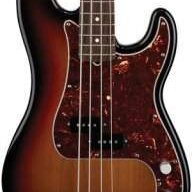
The P-Bass in This Day And Age...

So looking back through the anals of history, there was a time when record producers salivated over the P-bass because it had a mix sound they liked and could also be recorded well......

But that was late mid-last-century.......

Times have changed, electronics have advanced, new gear by the truckload has come out since then....

I can't see how recording studios would be using exactly the same stuff now that they used back then.

Much of the old stuff was analog and now there's a proliferance of digital equipment with all the tweaks you could ever think of....

They miked a lot of the old instruments straight from the amp when they recorded...now a lot of times they plug direct instead.

Maybe I'm wrong.....if you are a record producer please enlighten me on how you'd make a record today compared to 1963.

And whether the P-bass is still really important...or can it be replaced by any bass more or less......because nowadays you can make anything sound like anything you want in a well-equipped studio....?
 
DI was prevalent back in the day.
The Real James Jamerson Amp | TalkBass.com

Getting the most out of the medium is what good producers do. For a slab bass, DI back then, DI today. For the starting track.
With software, and dsp, you can effectively sound like whatever you want at gads less money than it ever cost before.
Time for some new sounds, new tech can do that too ;) Break the out of the pack.
 
I record albums now like I would in 1963 except that the track counts are way higher, the mixing (mine anyway) is done on a computer rather than a board, and the computer happens to be the tape machine as well. The tracking really isn't all that different. Good instruments played in good rooms by good players that are captured by good microphones with good placement and good preamps pushing good converters (didn't have those in 1963!) all in the context of a good song with a good arrangement will result in a good end product when you're ready to mix. The P-Bass fits the "good" category for a surprising number of genres and tunes, and thus it's not going anywhere. They'll still be using them in 2063 as best I can tell.
 
It may seem weird that many studios try to capture the sound that old recordings produced, but they do. Flip through any high end recording mags and you'll see terms like "the sound heard on thousands of recordings" or "tube warmth", etc. There's a reason those are marketing terms and it's because some really great recordings were made with very simple, very analog gear. You don't often hear a piece of analog gear whose makers extol the virtues of its "digital" sound, but you very often hear the opposite.
 
Not really an attack on P-basses.....

Just trying to categorize the differences at this point in time.....with a focus on emulative equipment that is inexistence.....as well as eq's on the instruments themselves, the wider choice of strings,mics and amps and of course mixing software, consoles and what-have-you...

As said, the "P has been a record producers mainstay many a time......

(BazzTard.....many stereo recordings were around by 1963......)
 
Last edited:
Producers love a P-bass for the same reason live sound engineers love an SM58: consistency. A producer knows how to quickly dial in a P-bass and doesn't have to waste studio time fiddling with another esoteric spalted bubinga wood bass with a 21 piece neck and 37.8 volt preamp with 9 knobs and 16 switches made by the one-eyed fugitive luthier who is routinely probed by aliens.
 
The sound of recordings was noticeably different then because of the equipment being used by the studio and by the musicians. The P-bass, which really was the first electric bass with frets, had a tone that recorded well for the time. They have a solid attack and warm mids; old recording equipment loves that.
The P bass sound is still very much in use, and many here will swear by it. As much as I love Geezer Butler and Steve Harris, I don't want to sound like them. If someone handed me a P bass for free I wouldn't say no, but if a producer or band told me what instrument to play I'd tell them to #%$& off. I'll play what I want, how I want, thank you very much.
 
Producers love a P-bass for the same reason live sound engineers love an SM58: consistency. A producer knows how to quickly dial in a P-bass and doesn't have to waste studio time fiddling with another esoteric spalted bubinga wood bass with a 21 piece neck and 37.8 volt preamp with 9 knobs and 16 switches made by the one-eyed fugitive luthier who is routinely probed by aliens.

I've heard/read this reason a million times. Yet, I know there are people who record - and sound amazing - on a esoteric spalted bubinga wood bass with a 21 piece neck and 37.8 volt preamp with 9 knobs and 16 switches made by the one-eyed fugitive luthier who is routinely probed by aliens.
 
If someone handed me a P bass for free I wouldn't say no, but if a producer or band told me what instrument to play I'd tell them to #%$& off. I'll play what I want, how I want, thank you very much.

How can you get paid work if you don't do what the producer wants? This attitude seems counterproductive. Might be more flexibility with the band in on the decision (especially if they don't know much about basses and how specific gear affects tone). But producers are not only supposed to know this stuff ... they also sign your check! Just sayin.... ;)
 
I've heard/read this reason a million times. Yet, I know there are people who record - and sound amazing - on a esoteric spalted bubinga wood bass with a 21 piece neck and 37.8 volt preamp with 9 knobs and 16 switches made by the one-eyed fugitive luthier who is routinely probed by aliens.

Of course there are, and if you have the credits/experience/rapport with the producer to use such an instrument than all is good. But if the producer doesn't know you and sees you hooking up the jumper cables to charge the flux capacitor of your onboard preamp/juicer, don't be surprised to see them longingly stare at the house p-bass in the corner.
 
How can you get paid work if you don't do what the producer wants? This attitude seems counterproductive. Might be more flexibility with the band in on the decision (especially if they don't know much about basses and how specific gear affects tone). But producers are not only supposed to know this stuff ... they also sign your check! Just sayin.... ;)
By not being a hired gun.
Despite the popular belief on TB not every bass player works for someone else. If it is your band, your music, you call the shots.
I get that big time bass players don't have the time to hang around on TB, so they aren't well represented here, most are bar/backup band players that would find themselves in that sort of situation. However there are thousands of bass players in the world that get paid just fine playing whatever bass they want and telling a producer what they want to sound like, not the other way around.
 
And whether the P-bass is still really important...or can it be replaced by any bass more or less......because nowadays you can make anything sound like anything you want in a well-equipped studio....?

You can't. No method has been developed to e.g. make one bass sound like it had the pickup in a different position than it actually does.
 

Latest posts