Your G&L is super versatile and the best bass for you, no doubt about that. But its presenting variations on already existing themes, not reinventing the wheel. No bass since the late 70's has truly reinvented the wheel, just tweaked what has come before. Innovations? Definitely. Major game-changing innovations? Not so much.
Guitarists and bass players are both fundamentally conservative in their approach to the instrument they hold in their hands. Innovations to amplification and recording have been huge but innovations to basses is just in little bits and pieces.
I agree with the amplification and recording thing. Why are there not more modeling and midi basses? But not so much for the G&L.
Oddly most bass innovations seem to all spring from Leo!
1. P-bass. First bass guitar (frets as opposed to fretless uprights and electric uprights making it a "guitar") Also later the split coil humbucker that gives single coil tone without the hum.
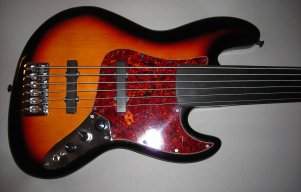
2. Jazz bass. Actually sort of an upgrade to a p-bass, but the two single coil pickups gives a much wider range of tone for the first time.
3. Stingray. Large dual coil humbucker, the "stingray" pickup position plus a very strong active circuit to modify the tone. The result was a VERY unique active bass concept totally different from J and P basses.
4. G&L "L" series. This is in a way a refinement of all before but at the same time a step forward into much greater versatility. It is uniquely active AND passive. It covers an amazing range of tone through the use of two large humbucking pickups, wiring switches and active EQ. It is like the ultimate extension and refinement of a Jazz bass.
There are other non-Leo developments including graphite neck, fretless basses and extended range basses with many strings. (although Leo did play around a bit with this last idea early on)
But that's really about where we are. Midi basses, modeling basses, oddball pickups (light wave), digital basses, none of these things seem to have inspired anyone. Sure there seem to be a lot of jaw-dropping LOOKING basses built since the first plank P-basses, but a close examination shows they are basically all operating on the same underlying principles in spite of the amazing cosmetic wood.


 I still play through a blackline SVT and 810. New bass + old rig = awesome. Everyone's stoked on their rigs. I was stoked on my 70s BB into this same rig. I just think the L2K is better. I do agree that small improvements over a long period of time can seem less than big improvements over a short period of time though... We see that all the time in the software world.