
Enjoy the benefits of a premium membership!
Upgrade Account
-
TalkBass has been independent since 1998. Add your voice.
Create a free account to reply to discussions, view embedded media, and browse with fewer display ads.
Join free Log in
Want zero display ads or expanded classifieds tools? Compare plans.
You are using an out of date browser. It may not display this or other websites correctly.
You should upgrade or use an alternative browser.
You should upgrade or use an alternative browser.
The Tube Challenge
- Thread starter JimmyM
- Start date
More options
Who Replied?
- Jul 8, 2007
- 1,272
- 9
- Disclosures
- Lead Designer, Zeibek Boutique Pedals
I have to admit, both sounds pretty good. Other than what was mentioned (signal chain and recording environment), I need add one more variable that should be considered when doing such comparison.
Tube growl and chime is more appearant when the amp is cranked. In other words, you need to push the power tubes to the edge of the saturation to actually feel there are tubes present. Preamp tubes is of a little consequence to achieve the true tube amp tone and if you do not push the power amp at least to degree, the resulting sound as good as it may be, is not that much distinguishable than SS.
This fact lost its importance over the years due to some marketting and feasibility restrictions. Preamp tubes can go over 20 years without the maintance and replacement, but power tubes should be replaced at least in 3 years. So when the first DSP units were introduced, they chose to use preamp tubes in the design and advertise them as tube preamps. There was nothing wrong here, but further inference on musician's end was not that spot on, as in these DSP preamps were believed to be replacements of tube amps and tube amp sound. I can not say manufacturers were not responsible for this assumption, they certainly advertised their units having tube warmness. In fact, failure of hybrid amps also is an example of where the actual tube sound comes from.
The compressed feeling and not-so-much hi-fi sound (slightly dirty) can only be achieved by pushing the power tubes and at higher volume. Based on these samples alone, I cheated and vote 2nd amp as a tube amp. Not because I immediately recognised the tube sound, but second sample sounded more like ampeg to me
Tube growl and chime is more appearant when the amp is cranked. In other words, you need to push the power tubes to the edge of the saturation to actually feel there are tubes present. Preamp tubes is of a little consequence to achieve the true tube amp tone and if you do not push the power amp at least to degree, the resulting sound as good as it may be, is not that much distinguishable than SS.
This fact lost its importance over the years due to some marketting and feasibility restrictions. Preamp tubes can go over 20 years without the maintance and replacement, but power tubes should be replaced at least in 3 years. So when the first DSP units were introduced, they chose to use preamp tubes in the design and advertise them as tube preamps. There was nothing wrong here, but further inference on musician's end was not that spot on, as in these DSP preamps were believed to be replacements of tube amps and tube amp sound. I can not say manufacturers were not responsible for this assumption, they certainly advertised their units having tube warmness. In fact, failure of hybrid amps also is an example of where the actual tube sound comes from.
The compressed feeling and not-so-much hi-fi sound (slightly dirty) can only be achieved by pushing the power tubes and at higher volume. Based on these samples alone, I cheated and vote 2nd amp as a tube amp. Not because I immediately recognised the tube sound, but second sample sounded more like ampeg to me
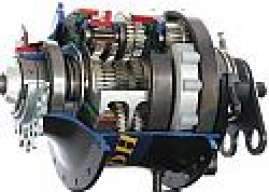

Preamp tubes can go over 20 years without the maintance and replacement, but power tubes should be replaced at least in 3 years.
Preamp tubes last a LOT longer than that, as do power tubes. Even modern power tubes can expect at LEAST 20 years of regular use.
BTW, I'm waiting for the .wav files.
Am I missing something, or would the ART pre not add enough colouring to the recording so as to make this comparison useless?
I can link the WAV's later today if you want, but really, the MP3 isn't any worse sounding.
heh heh...through my monitoring system, i assure you the mp3 is worse sounding. with LAME, you'll want to encode at a minimum of 192k to avoid artifacts in the upper frequencies.
+1 to the post mentioning volume as well - these clips should be recorded with each amp driven fairly hard...
i'm sure markbass stuff sounds good or the many pro's that lurk here would not tout the stuff, but one thing i cannot get past is the fact that on the face plate it says "tube inside".
the whole starved plate design scam is a real sore spot with me. the tubes in these units get such an insignificantly low voltage that they offer almost nothing to the sound. never mind the fact that some of the "warmer" (dear god, what an over-used word) mic pre's ever made are solid state - FET's & transformers can really sound gorgeous.
if anyone is interested, the only consumer mic pre that i know of that actually has a circuit where the tubes recieve a strong enough current to be considered an (arguably) "tube" mic pre is the electroharmonix 12ay7. it is housed in the same chassis as a big muff pedal and sounds great - tons of detail. the designer hangs out on the tape-op forum and there are many happy owners of these little pre's, myself included. bass players occasionally use them for DI's and no, i don't work for EHX.
sorry to get off topic, i will take a stab at this comparison when the higher rez files arrive - and then probably get it wrong ;-)
Even modern power tubes can expect at LEAST 20 years of regular use.
wouldn't that be nice.....is this a typo?
- Jul 8, 2007
- 1,272
- 9
- Disclosures
- Lead Designer, Zeibek Boutique Pedals
Preamp tubes last a LOT longer than that, as do power tubes. Even modern power tubes can expect at LEAST 20 years of regular use.
BTW, I'm waiting for the .wav files.
I kindly disagree. I may be true for preamp tubes last more than 20 years, but for power tubes it simply do not sound logical. I generally run my amps near full volume and use power attenuators to adjust the voltage that goes the cabs. I can only guess, power tubes may last longer than 5 years if you do not push them hard. Here is R.G Keens take on tube replacement that I found while I was trying to make sure about my previous comment
R.G. Keen:
"It depends heavily on use. In a closet, the tubes will last forever, of course. For practice in a bedroom a couple of times a week at modest volumes, you'll probably get five to ten years out of them. If you practice twice a week for a couple of hours at full volume and play two gigs a weekend, count on one to two years out of a set of output tubes. Note that this assumes that you got good ones to begin with and that you had them properly biased when they were put in."
wouldn't that be nice.....is this a typo?
I've been fixing amps longer than most posters here have been alive and I stand by that statement.
I kindly disagree. I may be true for preamp tubes last more than 20 years, but for power tubes it simply do not sound logical. I generally run my amps near full volume and use power attenuators to adjust the voltage that goes the cabs.
You're running the piss out of your tubes and wasting their output into those attenuators. That's NOT typical operation and I'd be surprised if you got three years out of them that way. Why on earth do you do that?
I can only guess, power tubes may last longer than 5 years if you do not push them hard.
I know you're relatively new, but please do a search on this subject. I'm tired of reposting the same info over and over. Better yet, take a poll of people using vintage amps here equipped with tubes. The average age of them will be around 35, which is just a smidge more than five years.
Here is R.G Keens take on tube replacement that I found while I was trying to make sure about my previous comment
R.G. Keen:
"It depends heavily on use. In a closet, the tubes will last forever, of course. For practice in a bedroom a couple of times a week at modest volumes, you'll probably get five to ten years out of them. If you practice twice a week for a couple of hours at full volume and play two gigs a weekend, count on one to two years out of a set of output tubes. Note that this assumes that you got good ones to begin with and that you had them properly biased when they were put in."
... and if you're going to bias your amp using estimated current emmission, as he recommends, or better yet "hot" for "tone" in a guitar amp, those comments make sense. Even among SVT's with 700 volts on the plates, 70's made 6550's are common and still pegging the meters on testers.
i'm sure markbass stuff sounds good or the many pro's that lurk here would not tout the stuff, but one thing i cannot get past is the fact that on the face plate it says "tube inside".
the LMII doesnt have a tube inside.
I also hope that anyone getting an SS amp with a single 12AX7 doesnt even remotely expects his rig to sound like an all-tube amp.
the LMII doesnt have a tube inside.
i stand corrected - wrong model.
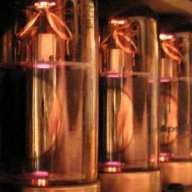
Have to agree with PBG on the power tubes lasting longer than 3 years.
My SVT-II was used as a rent out (she was a whore!), used by touring bands, used for days at a time on big festivals etc etc. So it had ALOT of use. And it still had the stock tubes in it! (They got changed a couple years back, which would make the tubes a ripe sweet 16)
My SVT-II was used as a rent out (she was a whore!), used by touring bands, used for days at a time on big festivals etc etc. So it had ALOT of use. And it still had the stock tubes in it! (They got changed a couple years back, which would make the tubes a ripe sweet 16)
I've been fixing amps longer than most posters here have been alive and I stand by that statement.
but wouldn't you admit that it is unrealstic to EXPECT power tubes to last 20 years? this is the exception and not the norm, certainly, for rigs that are gigged/rehearsed at performance volume weekly...most of my pro experience is as a guitarist through marshalls, boogies, etc., so i'm open to the fact that your claims are possible and find it encouraging.

AMP 1:
...
an ART Dual MP tube pre,
...
Well there's an "out"
Even with MP3 it doesn't seem cut and dry. There are side distortions that some trained ears could hear like ripple inter-modulation distortion. (Bussey, Haigler, IEEE 1981)
I wouldn't mind seeing a re-amp test.
Record yourself DI,
Re-amp and record at different levels.
Have like 20 clips that people have to pick from.
I doubt you'll get a statistical edge of one over the other but it would be interesting to see.

A neat test, but ultimately unuseful - both amps may sound good medium volumes, but when the drummer comes in and you have the crank your head to be heard, it's the tube amp that's still going to sound good.
Record the same clips again with everything on 10 on both amps and I guarantee we can tell the difference
Record the same clips again with everything on 10 on both amps and I guarantee we can tell the difference

A neat test, but ultimately unuseful - both amps may sound good medium volumes, but when the drummer comes in and you have the crank your head to be heard, it's the tube amp that's still going to sound good.
Record the same clips again with everything on 10 on both amps and I guarantee we can tell the difference
The reason I actually do not care for tube amps is because at loud volumes its dirty no matter what.
I agree though, thats the signature of a tube amp.
I can't tell which is which.
Jonathan
We're kind of loosing sight of what the thread is about, Ironically, all of your arguing about tubes made me change my answer. I actually voted #1 as the tube amp because it sounded so warm when I listened to it in my headphones, but now that I think about it, u'd have to warm up a tube amp to get that sound, so now I think #2 is the tube (and now I want an LMII)
- Jul 8, 2007
- 1,272
- 9
- Disclosures
- Lead Designer, Zeibek Boutique Pedals
I've been fixing amps longer than most posters here have been alive and I stand by that statement.
You're running the piss out of your tubes and wasting their output into those attenuators. That's NOT typical operation and I'd be surprised if you got three years out of them that way. Why on earth do you do that?
I know you're relatively new, but please do a search on this subject. I'm tired of reposting the same info over and over. Better yet, take a poll of people using vintage amps here equipped with tubes. The average age of them will be around 35, which is just a smidge more than five years.
... and if you're going to bias your amp using estimated current emmission, as he recommends, or better yet "hot" for "tone" in a guitar amp, those comments make sense. Even among SVT's with 700 volts on the plates, 70's made 6550's are common and still pegging the meters on testers.
I do value your opion and shared your point of view in more than dozen ocasions.
As I said, I used to (I don't do that now, since I do not play live gigs and I am not interested in doing so) run my amps almost at full volume to get the compression effect and to slightly overdrive the power tubes. It's a good and really organic effect, puts out the tube dirt I really like. I only utilized power attenuators for get the same tone with lower volumes, depending on many reasons. It is not a power waste, honestly I don't know how can power be wasted. Applying the same logic, are dimmer switches and even volume pots all examples of power waste? If I don't want that much volume and try to get the same tone, I don't see a reason why people shouldn't use power attenuators. Isn't this the reason they are here for?
On top of all these, I can't see me being young (27 this summer) or "new at this" has anything to do with it. I am all about researching about these subjects and certainly don't need to be reminded to do so.
With Respect,
Os
but wouldn't you admit that it is unrealstic to EXPECT power tubes to last 20 years?
Nope.
this is the exception and not the norm, certainly, for rigs that are gigged/rehearsed at performance volume weekly...
Nope
most of my pro experience is as a guitarist through marshalls, boogies, etc., so i'm open to the fact that your claims are possible and find it encouraging.
Lots of guitar amps are grossly underbiased which ages their tubes very fast. Also, 99% of the tubes that most people swear are "bad," aren't.
I'm not sharing an opinion. I'm sharing a technical observation, which lots of other technically experienced people have also shared here. I don't expect you to simply take my word for it, which is why I suggested a search.
As I said, I used to (I don't do that now, since I do not play live gigs and I am not interested in doing so) run my amps almost at full volume to get the compression effect and to slightly overdrive the power tubes. It's a good and really organic effect, puts out the tube dirt I really like. I only utilized power attenuators for get the same tone with lower volumes, depending on many reasons. It is not a power waste, honestly I don't know how can power be wasted.
Just stop there. I can answer your "rhetorical" question and explain in simple language what it means. You've been posting as though you have some technical expertise over and above that of the average poster, so I made an assumption that you would have a technical reason for your post. You don't. Had I understood that, I would have phrased my response differently.
Applying the same logic, are dimmer switches and even volume pots all examples of power waste?
As I said before, I apologize for engaging you in a way that you don't understand. Power and voltage attenuators are NOT the same things. The difference is current and the wasted by-product is heat.
If I don't want that much volume and try to get the same tone, I don't see a reason why people shouldn't use power attenuators. Isn't this the reason they are here for?
I don't mean this as a put down, but you're primarily a guitar player aren't you? "Tone" is not a by-product of unnecessarily killing output tubes. If your amp is too loud for a gig, it's too big. I understand that certain distortion tones cannot be replicated without driving an amp to the edge, but if you're constantly having to pad down your output, you're wasting money on tubes when a smaller amp would do the job without all the extra hassle.
On top of all these, I can't see me being young (27 this summer) or "new at this" has anything to do with it.
You also should work on your reading comprehension and stop getting all P.O.'ed before understand what my post says. What I said was:
I know you're relatively new
...in reference to this forum, because if you had spent any decent amount of time here you would have seen one of the DOZENS of other threads here that discuss this. It wasn't a put-down. Why are you being so defensive? As to my comment about 35 years-old, it should be clear that is in reference to tubes, but I thought the rest of my post was pretty clear, too.


