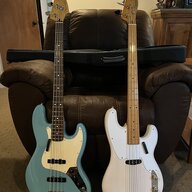
Putting TI Jazz rounds on my American Standard P bass and prefer loading strings through the bridge not the body but the silk wrap is on the E saddle. I don’t like removing the silk as I might damage the outer wrap. Not sure if should just string the E through the body, or take my chances and cut away the silk?

Enjoy the benefits of a premium membership!
Upgrade Account
-
TalkBass has been independent since 1998. Add your voice.
Create a free account to reply to discussions, view embedded media, and browse with fewer display ads.
Join free Log in
Want zero display ads or expanded classifieds tools? Compare plans.
You are using an out of date browser. It may not display this or other websites correctly.
You should upgrade or use an alternative browser.
You should upgrade or use an alternative browser.
Thomastik Jazz Rounds install opinion….
- Thread starter MrRiff
- Start date
More options
Who Replied?
I would just run it through the body. Never really notice a significant difference between through bridge or through body as long as the strings could handle through body (since some do not always fit right that way).

Maybe thread the string through a ball-end from some old string, before mounting the string on the bridge. And consider switching out the bridge for one where you don't have to thread the entire string through a small hole.

Carefully removing part of the silk will not damage the outer wire wrap in any way. However the string may then have a bit of taper resting on the saddle (may require a bridge height adjustment).
The silk is not there for the integrity of the string; it is intended to protect instrument hardware (and somewhat for cosmetic purposes).
The silk is not there for the integrity of the string; it is intended to protect instrument hardware (and somewhat for cosmetic purposes).

Those strings are delicate. I wouldn't cut away the silk. You should just string that one through the body.
I don't believe these strings are delicate at all, cut the silk if you must. If you have a string through body bridge, why not just go with that? I have TIJFs through body on 3 of my basses and one of those for nearly 20 years. You should be so lucky to get the satisfying tone that I enjoy on that bass!

Mount it how you prefer. I didn’t realize the silk was that long. On my newer P basses the 2 mounting options are almost identical length. Not noticed any sound difference but through body holds the grommets in place.
Does the silk on the bridge saddle have any discernible effect on tone? I don't know, I'm just asking. I suppose in theory it is insulating the metal of the string from the metal of the bridge saddle but I doubt it would have any effect on string vibration.
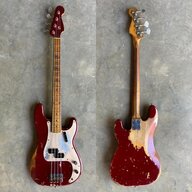
I put TI strings through the body of my American Standard with no issues and they were perfect for a few years. When I sold the American Standard, I put them on my Moollon and they have been great on the Moollon for the last 2 years. There was a bend in the strings when I put them on the Moollon but they straightened out and you can't see or feel where the bend was.
The rounds are more delicate than the flats, in my experience.I don't believe these strings are delicate at all, cut the silk if you must. If you have a string through body bridge, why not just go with that? I have TIJFs through body on 3 of my basses and one of those for nearly 20 years. You should be so lucky to get the satisfying tone that I enjoy on that bass!

Carefully removing part of the silk will not damage the outer wire wrap in any way. However the string may then have a bit of taper resting on the saddle (may require a bridge height adjustment).
The silk is not there for the integrity of the string; it is intended to protect instrument hardware (and somewhat for cosmetic purposes).
This. But Ken is correct in stating that some of the silk (taper) may rest on the saddle. Mine was actually the B string. But in spite of some of the Silk Taper resting on the saddle, the string still surprisingly intonated OK.
Exactly! and they cost more to boot. There’s a lot going on inside these strings under the hood. Ideally I’ll try and safely cut away the silk to get metal on the saddle I just don’t like putting these rounds through the body with the sharp break angle. On my two jazz basses I don’t have this issue but my P has a different bridge. photo is my jazz bass on left and P on right. The P has a high mass bridge all together different.The rounds are more delicate than the flats, in my experience.
Attachments



Still waiting after all these years for bass bridge makers to create more space between the bridge tail and the saddles.
The Leo Quan Badass bridges were an improvement in this area when they first came out.
Someday, I'm going to make a bridge that has the tail well back of the mounting holes. Or sell the idea to Hipshot. Or just ask them to do it.
The saddle intonation screws would have to be longer. No big deal.
Moving the tail back would also help avoid winding the E string silk around the tuner post on Fender style headstocks.
The Leo Quan Badass bridges were an improvement in this area when they first came out.
Someday, I'm going to make a bridge that has the tail well back of the mounting holes. Or sell the idea to Hipshot. Or just ask them to do it.
The saddle intonation screws would have to be longer. No big deal.
Moving the tail back would also help avoid winding the E string silk around the tuner post on Fender style headstocks.
Great point! feel the same way, it’s frustrating. To make it worse I run out of room on the G string to intonate, look at my photo you can see the screw is too short and to make it worse the G is the most important saddle because it determines the scale of the bass and the other strings work off that one. it’s really kinda sad that we still deal with this stuff.Still waiting after all these years for bass bridge makers to create more space between the bridge tail and the saddles.
The Leo Quan Badass bridges were an improvement in this area when they first came out.
Someday, I'm going to make a bridge that has the tail well back of the mounting holes. Or sell the idea to Hipshot. Or just ask them to do it.
The saddle intonation screws would have to be longer. No big deal.
Moving the tail back would also help avoid winding the E string silk around the tuner post on Fender style headstocks.
Attachments


That describes the Hipshot Kickass, the Omega, the Fender Himass etc…Still waiting after all these years for bass bridge makers to create more space between the bridge tail and the saddles.
The Leo Quan Badass bridges were an improvement in this area when they first came out.
Someday, I'm going to make a bridge that has the tail well back of the mounting holes. Or sell the idea to Hipshot. Or just ask them to do it.
The saddle intonation screws would have to be longer. No big deal.
Moving the tail back would also help avoid winding the E string silk around the tuner post on Fender style headstocks.
Warwick and other 2piece bridges address this, as does a trapeze,

In my experience, the TJ rounds tend to rust after about a year or so. The flats never do.The rounds are more delicate than the flats, in my experience.

Personally? I'd just string that one thru the body (being careful not to twist it in the process - which is my only major objection to thru-body stringing), and call it a day. Trust me; you won't be the first person to do it, either...Putting TI Jazz rounds on my American Standard P bass and prefer loading strings through the bridge not the body but the silk wrap is on the E saddle. I don’t like removing the silk as I might damage the outer wrap. Not sure if should just string the E through the body, or take my chances and cut away the silk?

Latest posts
-

-

-

-
 Uber Eats class action lawsuit alleges their priority delivery is a scam
- Latest: Gopherbassist
-